Basic subtraction practice Worksheets for Ages 5-7
3 filtered results
-
From - To
Explore our engaging Basic Subtraction Practice Worksheets designed specifically for children aged 5-7. These worksheets provide a fun and interactive way for young learners to develop their subtraction skills through colorful illustrations and relatable themes. With a variety of exercises including visual aids, simple problems, and gradual difficulties, your child will build confidence in their math abilities. Perfect for both classroom and home practice, these worksheets also support essential problem-solving skills. Encourage your child’s progress in math while making learning enjoyable. Download our free subtraction worksheets today and watch your little one excel in their arithmetic journey!
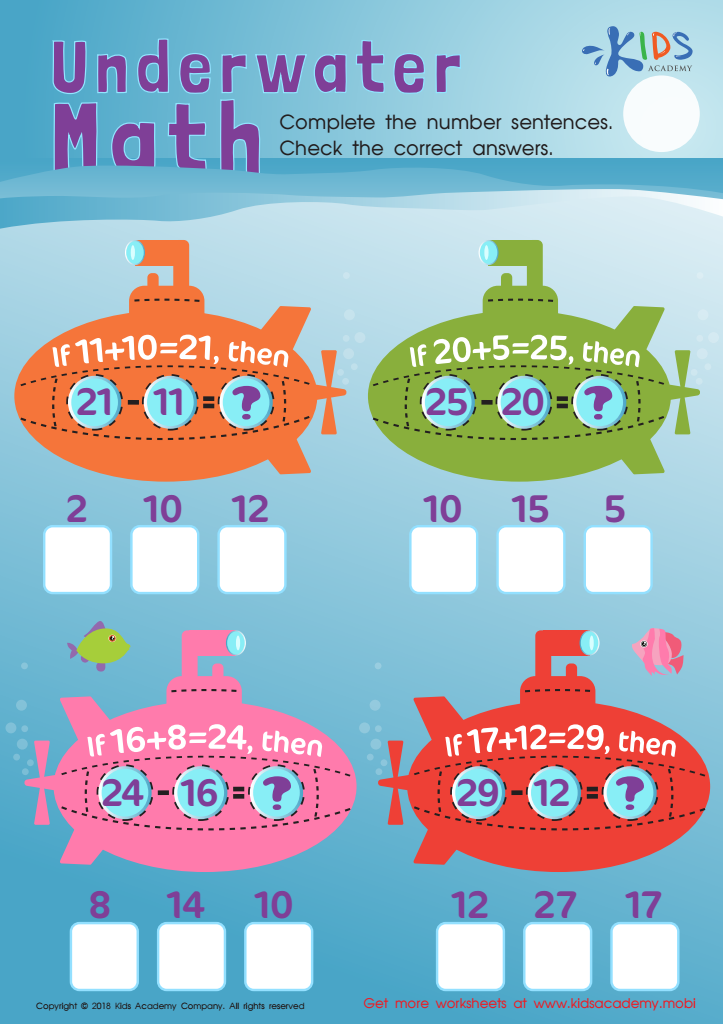
Addition and Subtraction: Underwater Math Worksheet
 Assign to My Students
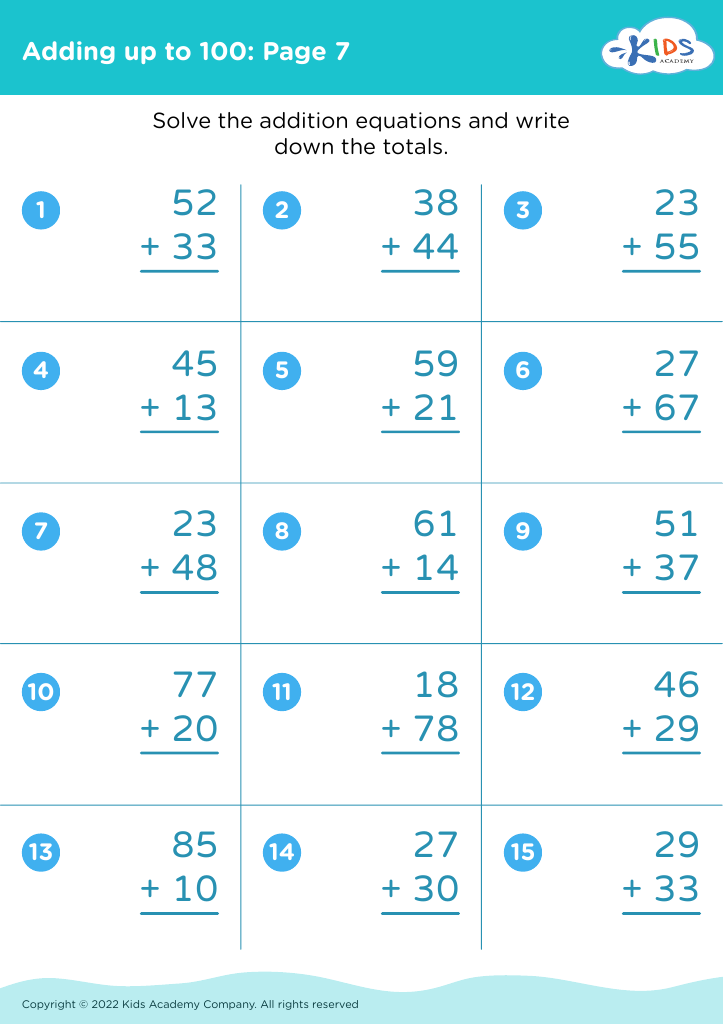








Basic subtraction practice is crucial for children aged 5-7 as it lays the foundation for their mathematical understanding and problem-solving skills. During these formative years, children are developing critical cognitive abilities, and subtraction is one of the core arithmetic operations that helps enhance their number sense. When children regularly practice subtraction, they improve their ability to manage numbers, understand relationships between them, and approach more complex mathematical concepts in later grades.
Moreover, mastering basic subtraction boosts children’s confidence and fosters a positive attitude towards mathematics. This confidence translates into a willingness to tackle challenges, both in math and other subjects. Additionally, practicing subtraction can enhance fine motor skills through the use of manipulatives, while also encouraging important social skills during group activities.
For parents, reinforcing subtraction skills at home complements classroom learning and creates a supportive environment for their child's educational growth. Engaging children in fun math games or real-life scenarios helps them appreciate the relevance of subtraction in their everyday lives.
In summary, basic subtraction practice is essential for developing essential skills, building confidence, and instilling a lifelong love for learning mathematics. Parents and teachers play a vital role in creating rich experiences around these concepts.








