Building vocabulary Worksheets for Ages 5-7
7 filtered results
-
From - To
Discover our engaging "Building Vocabulary Worksheets for Ages 5-7," designed to enhance young learners' language skills through fun activities. These carefully crafted worksheets cover essential vocabulary development, incorporating colorful illustrations, interactive exercises, and age-appropriate themes. From word matching to fill-in-the-blank challenges, each resource encourages children to expand their vocabulary while boosting comprehension and expression. Suitable for both classroom and at-home learning, our worksheets cater to diverse learning styles, making language mastery enjoyable and accessible. Help your child build a strong foundation in communication skills with these dynamic and interactive worksheets tailored specifically for early learners. Explore our collection today!
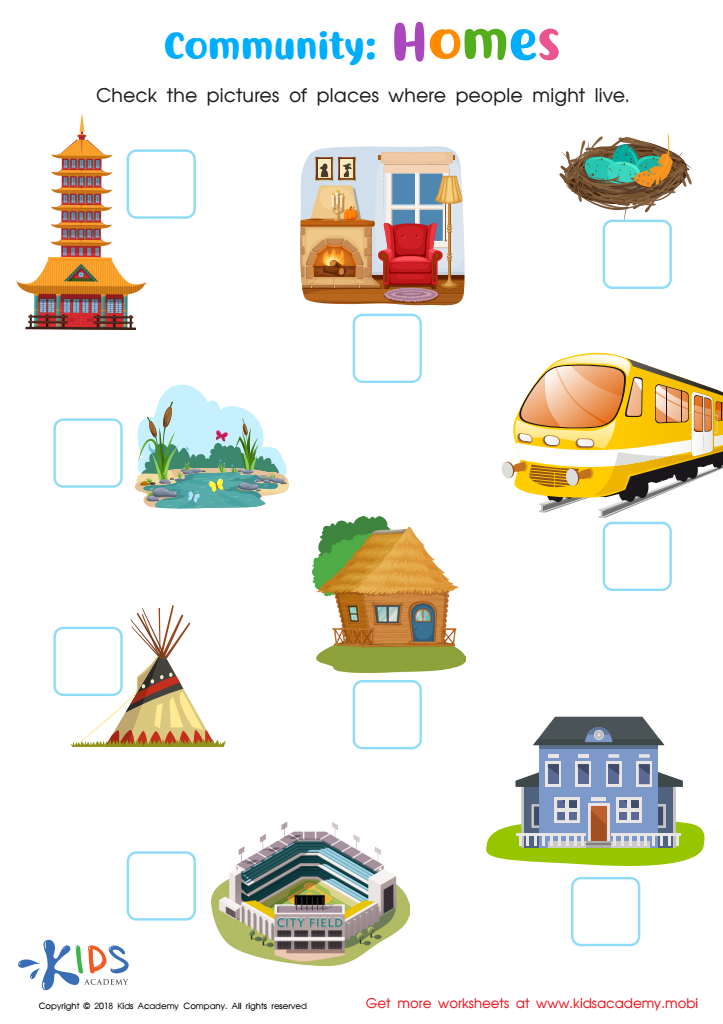
Community: Homes Worksheet
 Assign to My Students
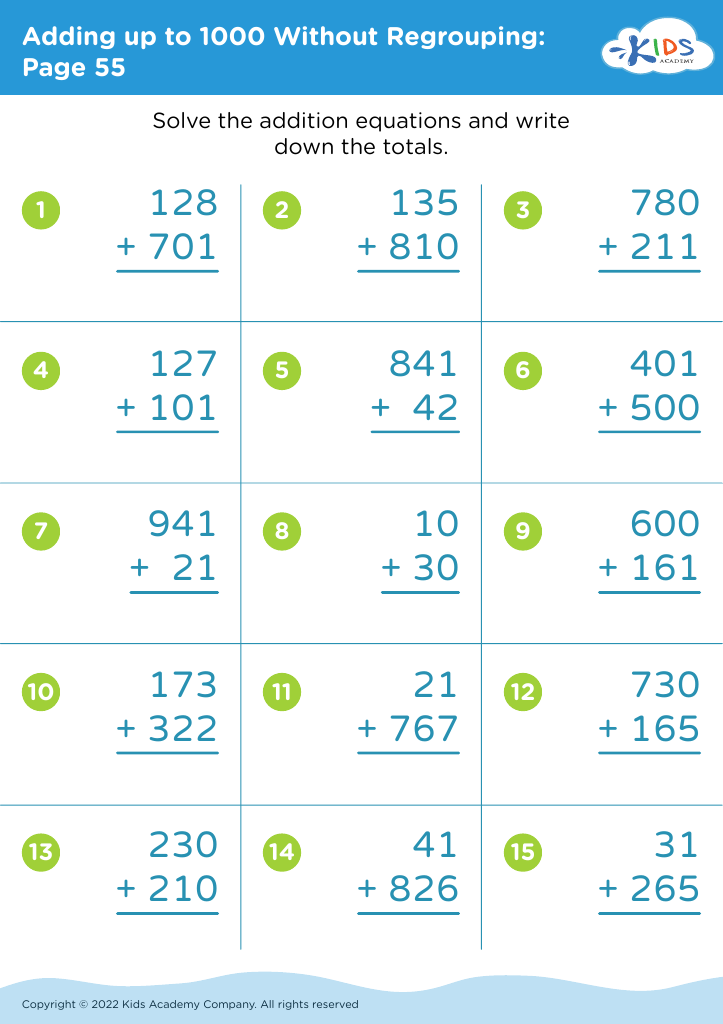
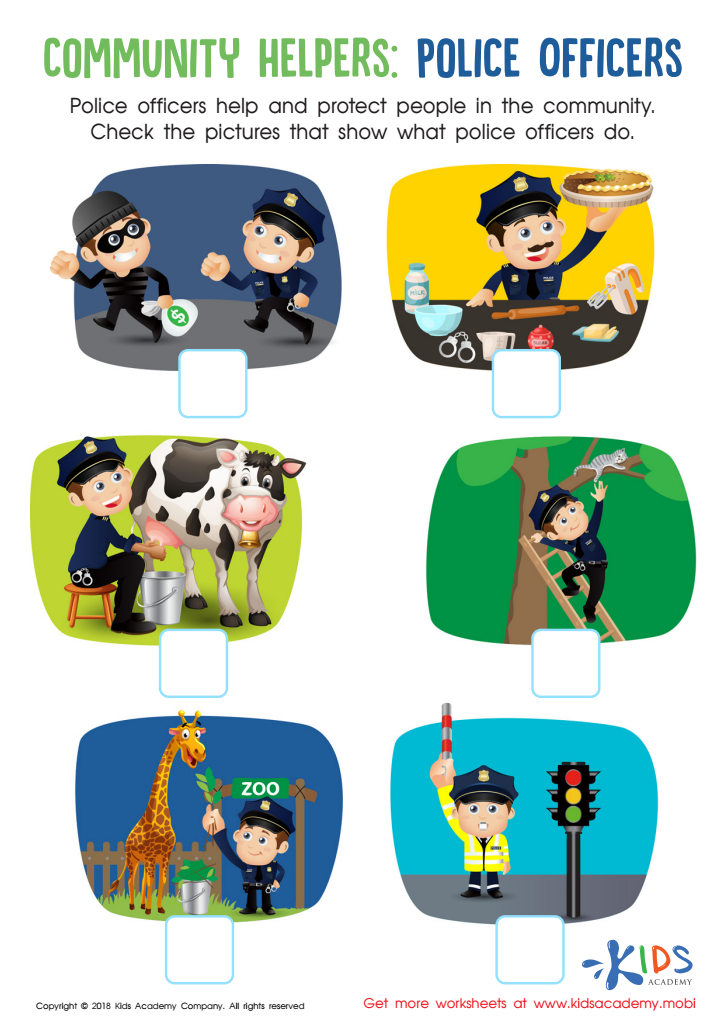
Police Officers Community Helpers Worksheet
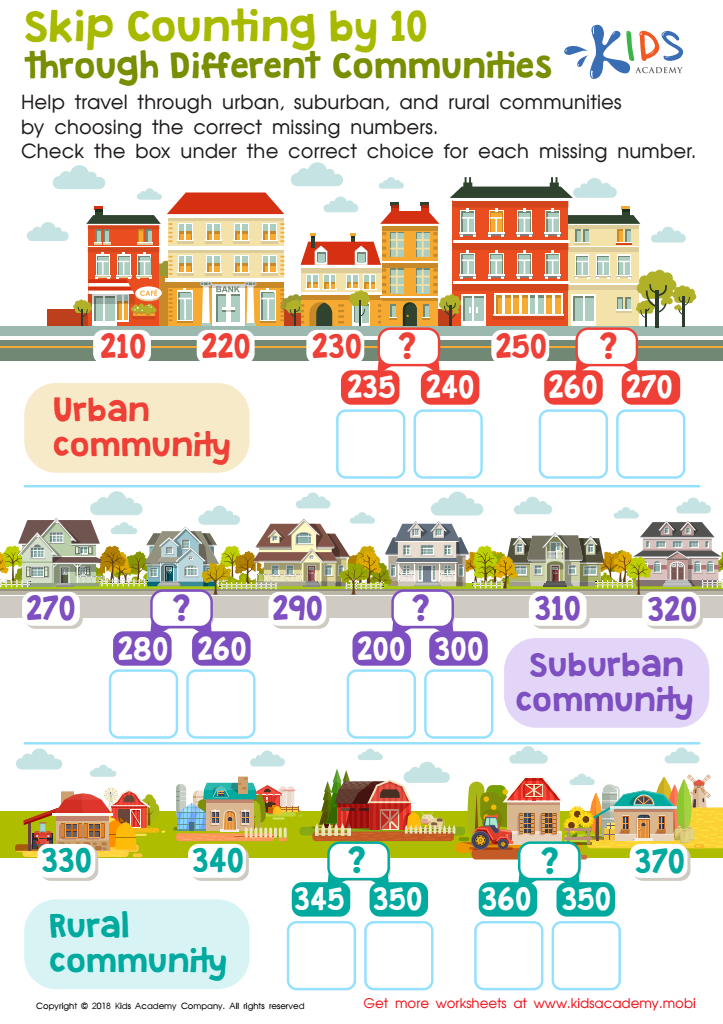
Skip Counting by 10 through Different Communities Worksheet
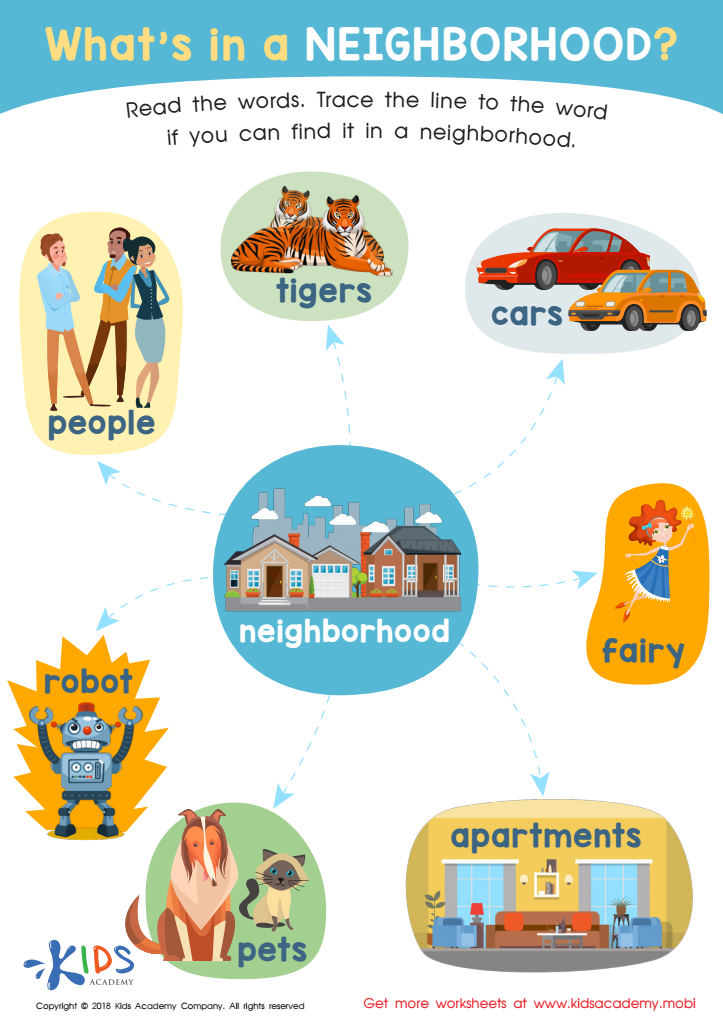
What's in a Neighborhood? Worksheet
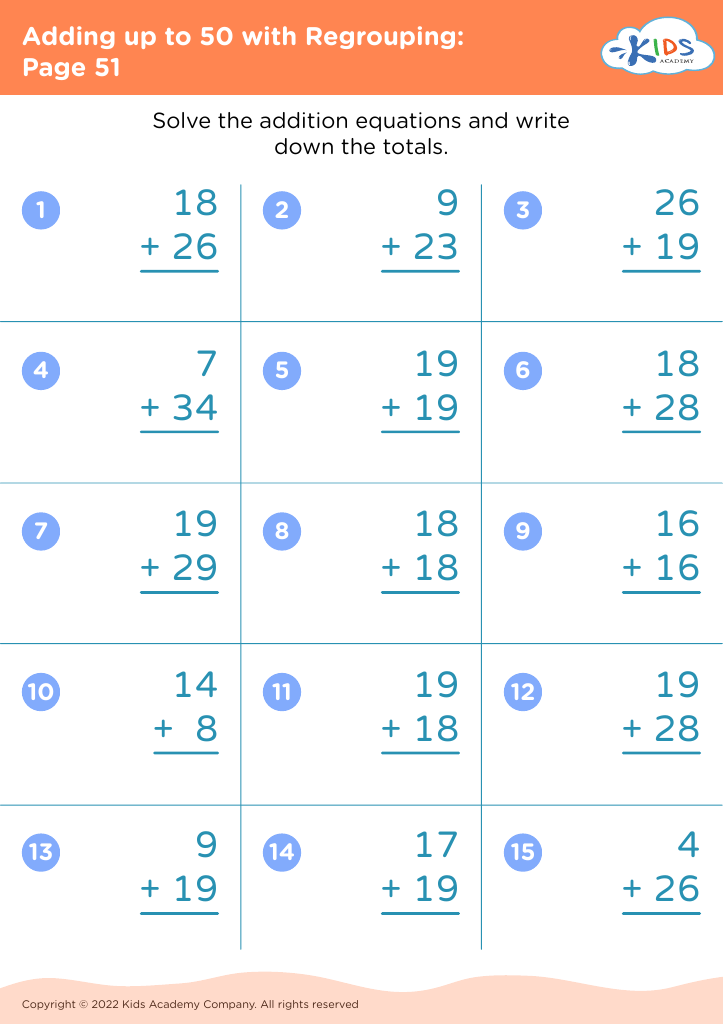
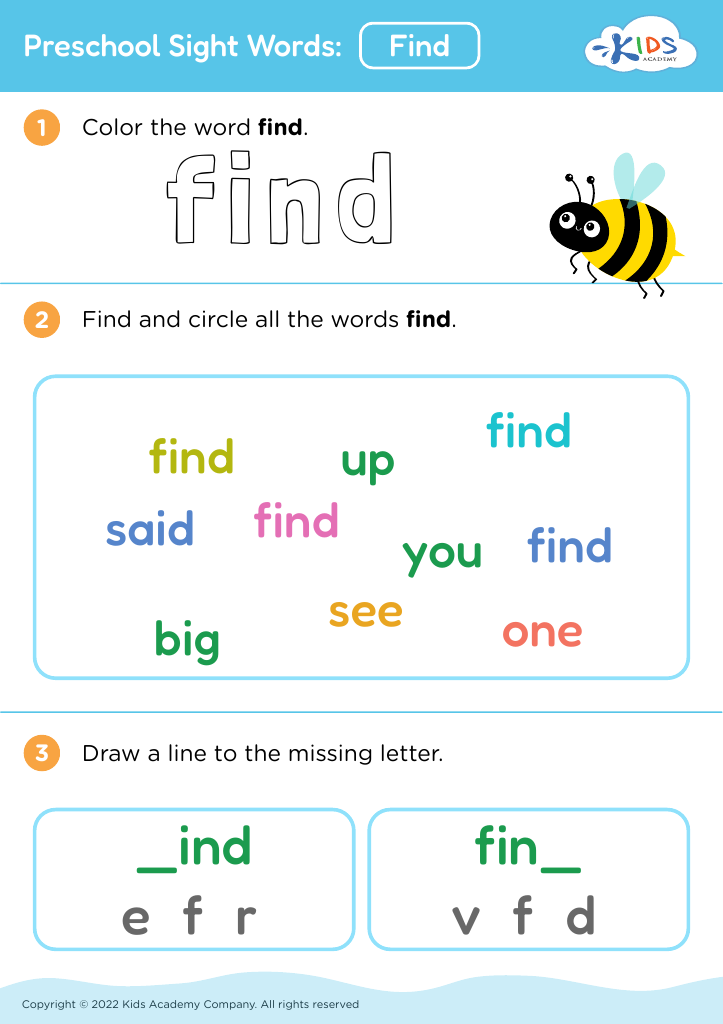






.jpg)

Building vocabulary for children aged 5 to 7 is crucial for their overall development and academic success. At this stage, children's brains undergo rapid growth, making it a prime time for language acquisition. A rich vocabulary enhances their ability to express thoughts, understand instructions, and communicate effectively. When parents and teachers prioritize vocabulary development, they're laying the groundwork for improved reading comprehension, writing skills, and critical thinking abilities.
Additionally, a strong vocabulary fosters confidence in children. When they can articulate their ideas clearly, they're more likely to participate in discussions and engage in classroom activities. This, in turn, encourages a love for learning, encouraging them to explore new subjects and ideas.
Moreover, vocabulary is closely tied to a child's socio-emotional development. Children with a broader vocabulary can better describe their emotions, leading to improved interpersonal skills and better relationships with peers and adults.
Finally, as literacy is linked to future academic and career opportunities, helping children develop their vocabulary now sets them up for success in later stages of their education. Parents and teachers can help cultivate this essential skill by reading together, engaging in conversations, and introducing new words in context.








