
Comparing heights Worksheets for Ages 5-7
3 filtered results
Difficulty Level
Grade
Age
-
From - To
Subject
Activity
Standards
Introduce young learners to the concept of measurement with our exciting "Comparing Heights Worksheets for Ages 5-7." These worksheets are designed to engage children as they compare the heights of various objects and characters. Toddlers will develop critical thinking and observational skills by identifying which items are taller or shorter. Perfect for both classroom and home use, these printable activities make learning fun and interactive. Help your child build a solid foundation in measurement with visually appealing and age-appropriate exercises that boost confidence and promote a love for learning! Download now to embark on a height comparison adventure!
Favorites
With answer key
Interactive
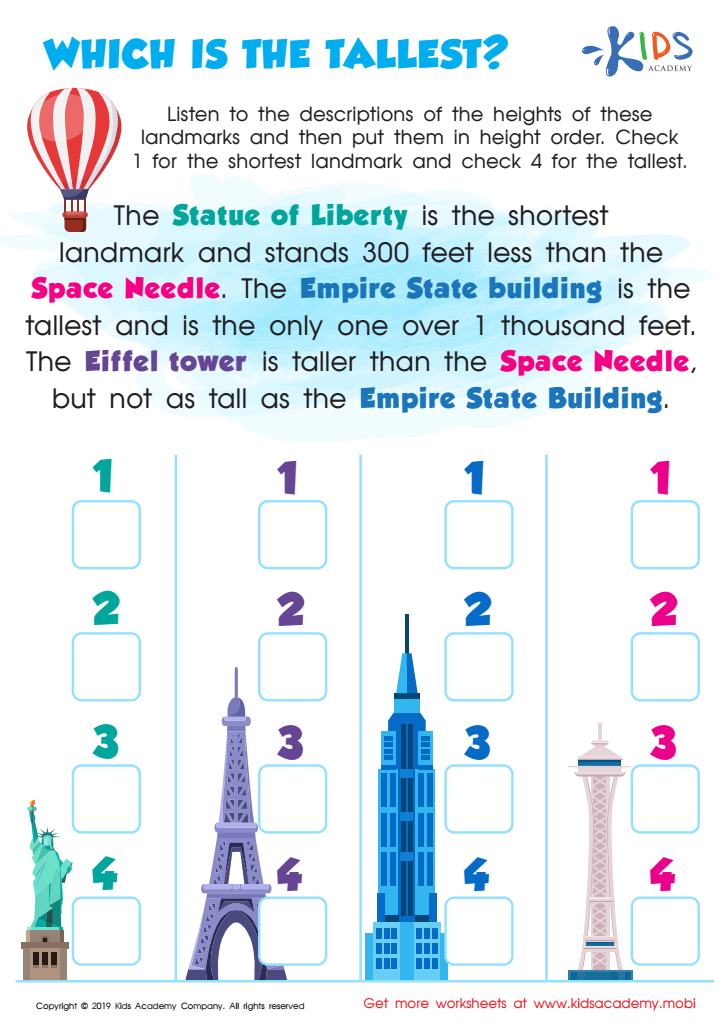
Which is the Tallest? Worksheet
Help your kids arrange the buildings in order of height: highest (4) to lowest (1). Ask them if they can think of other ways things can be measured. Read the texts describing the buildings and check 4 for the tallest and 1 for the shortest.
 Assign to My Students
Which is the Tallest? Worksheet
Worksheet
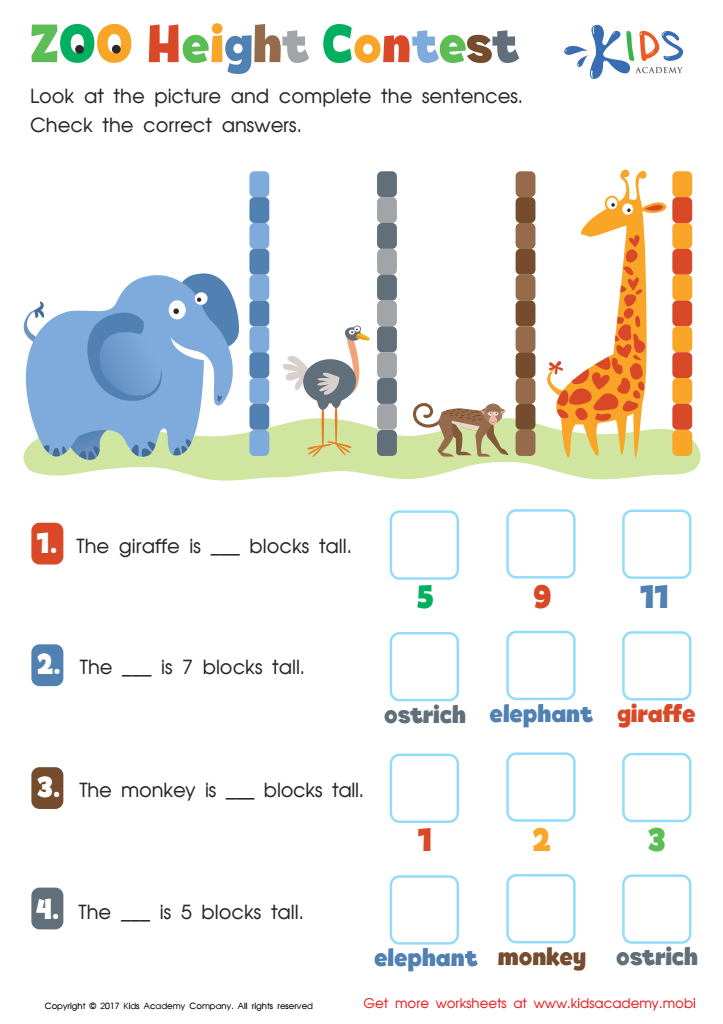
Zoo Height Contest Worksheet
Let's head to the zoo and use colorful blocks to measure your child's favorite animals! With this Kids Academy worksheet, help them practice and prepare for learning measurement. Guide them in looking at the zoo animals and counting blocks to find the height. Then, read the questions and check the box next to the correct answer.
Zoo Height Contest Worksheet
Worksheet
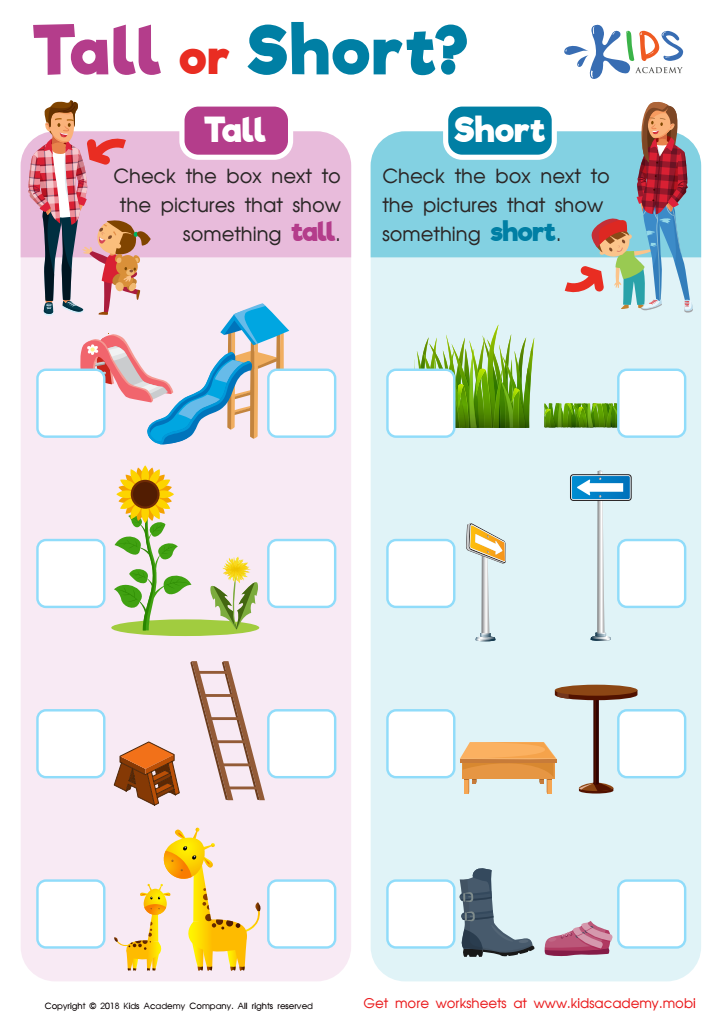
Tall or Short? Worksheet
Comparing tall and short objects is an early math skill. Our free worksheet uses fun colors and pictures to help kids practice. This will give them a head start for higher-level measurement skills, and they'll remember tangible objects for comparison.
Tall or Short? Worksheet
Worksheet
Join Kids Academy for Free
Who is primarily going to use this learning content?




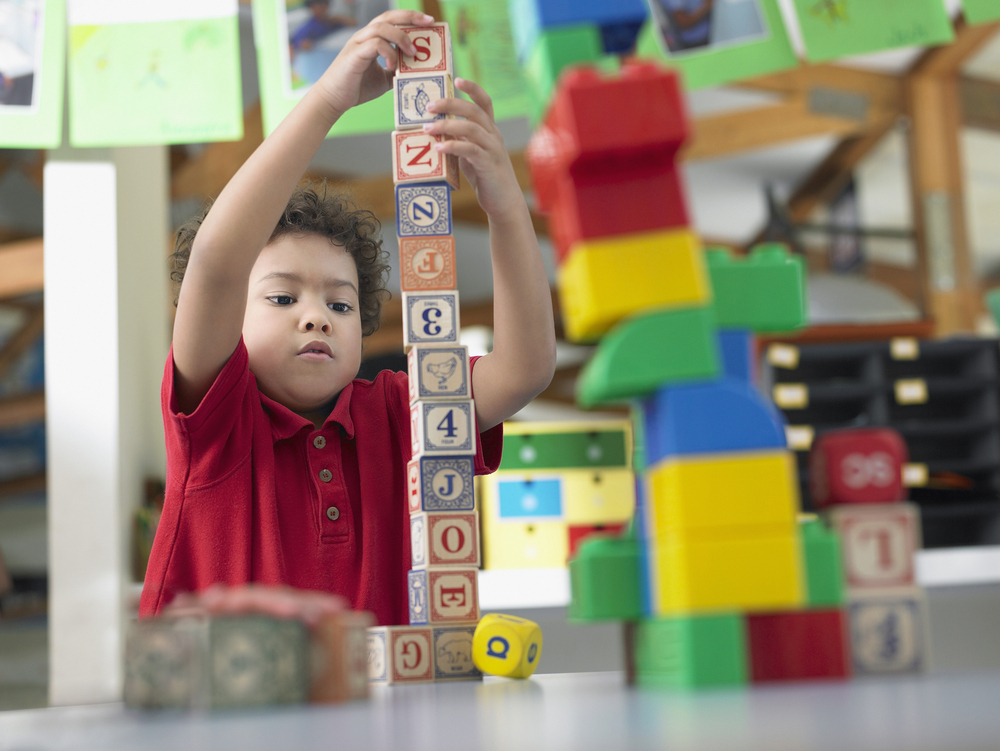

Comparing heights in children ages 5-7 is a valuable exercise for multiple reasons, contributing to both development and well-being. Firstly, it provides a practical way to introduce basic mathematical concepts such as measurement, comparison, and number sense. Understanding which item is shorter, taller, or the same height sets a foundation for math skills essential throughout education.
Moreover, height comparison activities can promote social skills and a sense of empathy. By engaging in group discussions or collaborative projects related to measuring, students learn patience, turn-taking, and how to listen to their peers. Encouraging children to notice and appreciate differences in a positive and supportive environment fosters inclusivity and acceptance.
From a health perspective, monitoring height can offer early indicators of a child's growth trajectory. Any significant deviations from expected growth patterns can prompt timely discussion with pediatricians, ensuring potential health issues are addressed early.
Finally, height comparison can boost a child’s self-esteem and awareness about their physical development. Completing straightforward tasks like these builds a sense of accomplishment and self-confidence, encouraging a positive attitude toward learning and self-awareness.
In summary, integrating activities that compare heights supports academic, social, and health-related growth, underscoring its importance for early childhood development.








