Comprehension development Worksheets for Ages 5-7
3 filtered results
-
From - To
Discover our engaging Comprehension Development Worksheets designed specifically for children aged 5-7! These resources promote critical thinking and reading skills through fun, age-appropriate activities. Each worksheet encourages young learners to enhance their understanding of texts, develop vocabulary, and answer comprehension questions. With a variety of themes and formats, our worksheets make learning enjoyable while reinforcing essential foundational skills. As kids work through these interactive exercises, they will gain confidence in their reading abilities, leading to improved comprehension. Perfect for classroom use or at-home learning, our worksheets are an excellent tool for fostering a love of reading in early learners. Start exploring today!
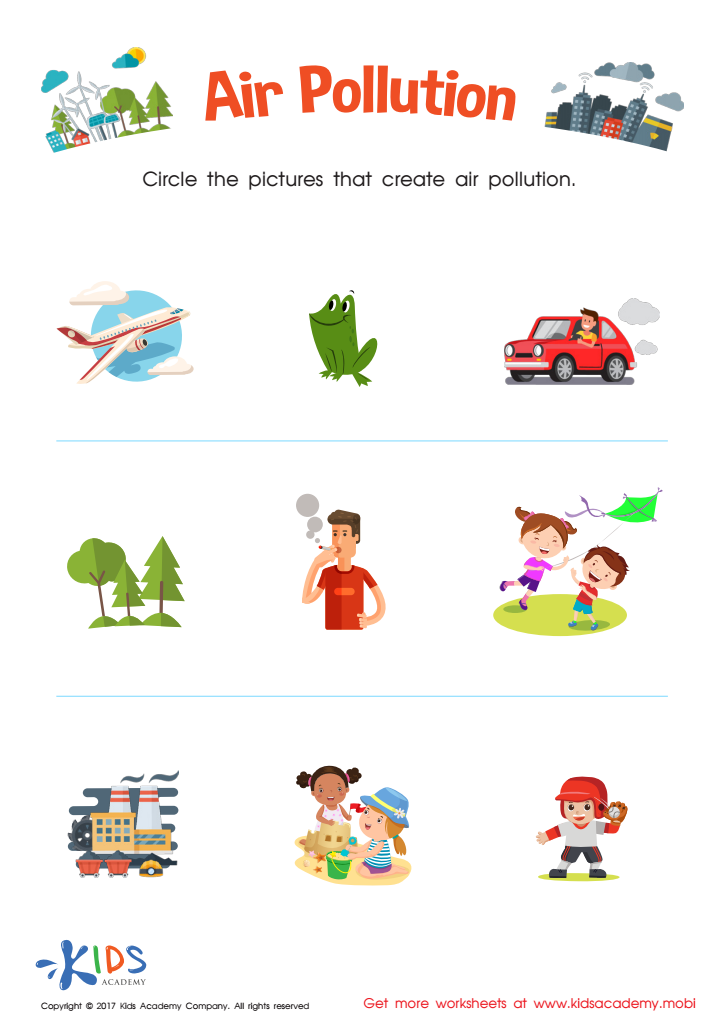
Air Pollution Worksheet
 Assign to My Students
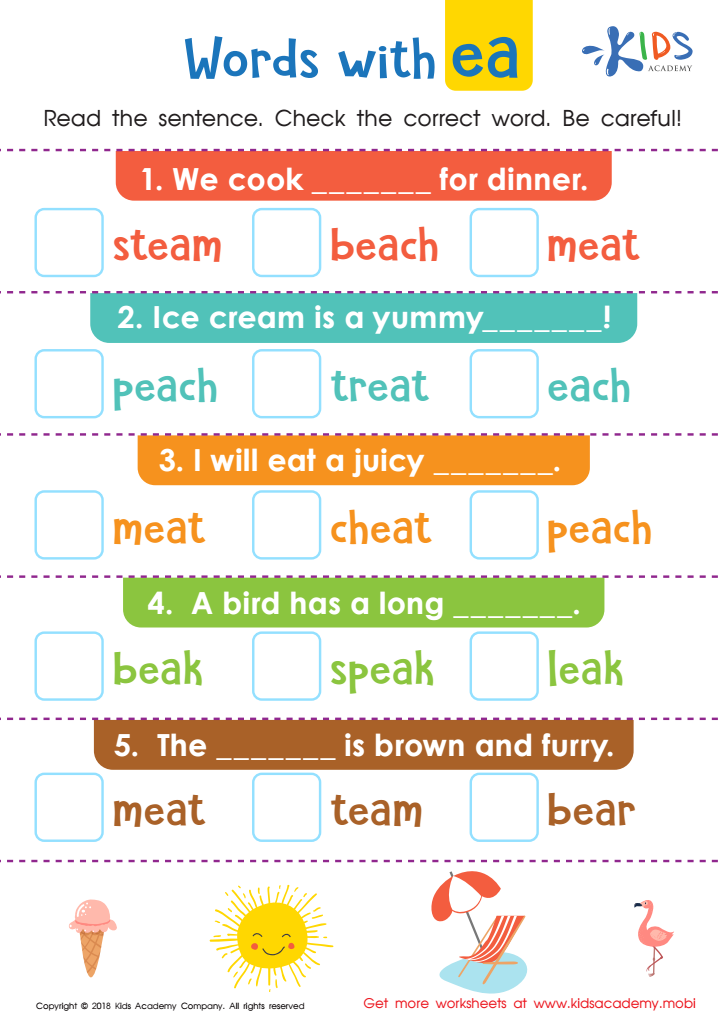
Words with ea Worksheet
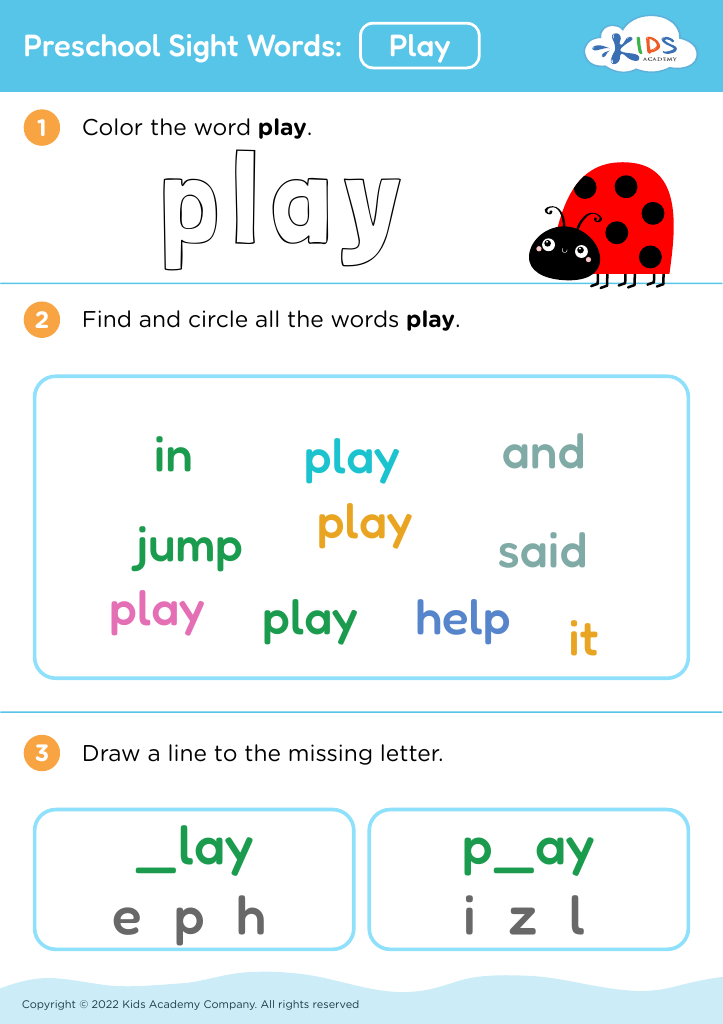







Comprehension development is crucial for children aged 5-7, training their ability to understand and interpret texts, which lays the foundation for all future learning. At this age, children transition from learning to read to reading to learn. If they cannot grasp the meaning behind words, they struggle academically across all subjects.
Parents and teachers play vital roles in nurturing this skill, fostering not only literacy but critical thinking and imagination. Engaging with stories helps children expand their vocabulary and enhances their ability to express thoughts. Additionally, discussions about texts promote social interaction and encourage children to articulate their ideas, building confidence.
Furthermore, comprehension influences overall academic success. Poor comprehension skills can lead to difficulties in math word problems, science explanations, and writing assignments, creating a ripple effect affecting a child’s enthusiasm for learning.
By prioritizing comprehension, parents and teachers equip children with essential skills for effective communication and lifelong learning. Active engagement strategies, such as asking questions and making connections to children’s experiences, encourage a love for reading and support intellectual curiosity. Therefore, investing in comprehension at this critical age helps children become competent, confident learners prepared for future academic challenges.








