
Counting objects Worksheets for Ages 5-7
25 filtered results
Difficulty Level
Grade
Age
-
From - To
Subject
Activity
Standards
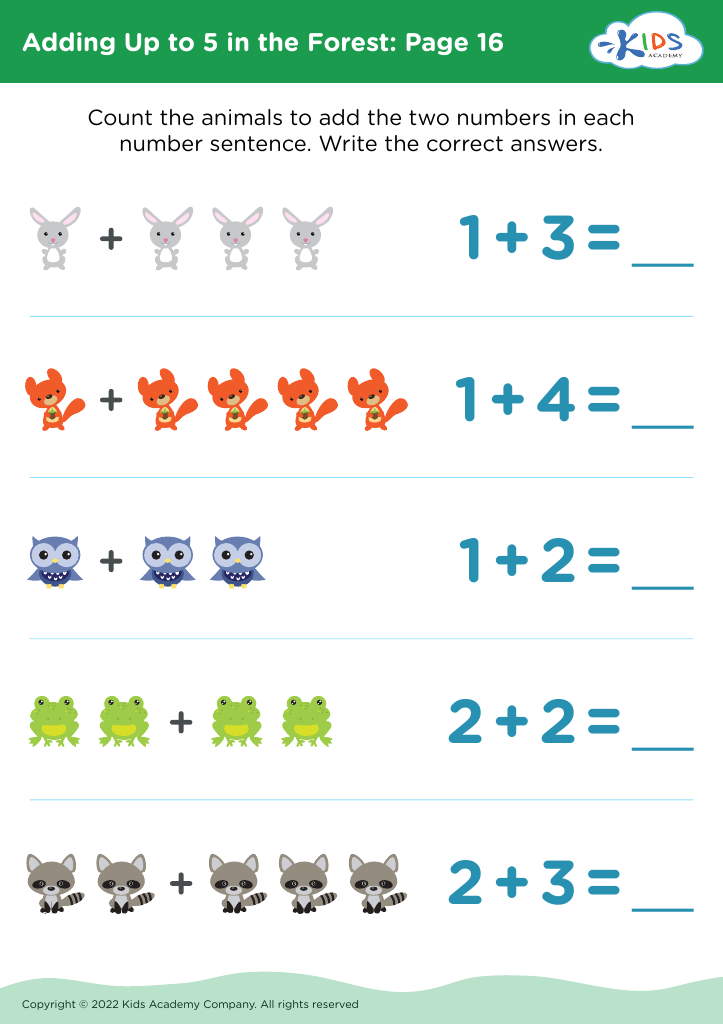
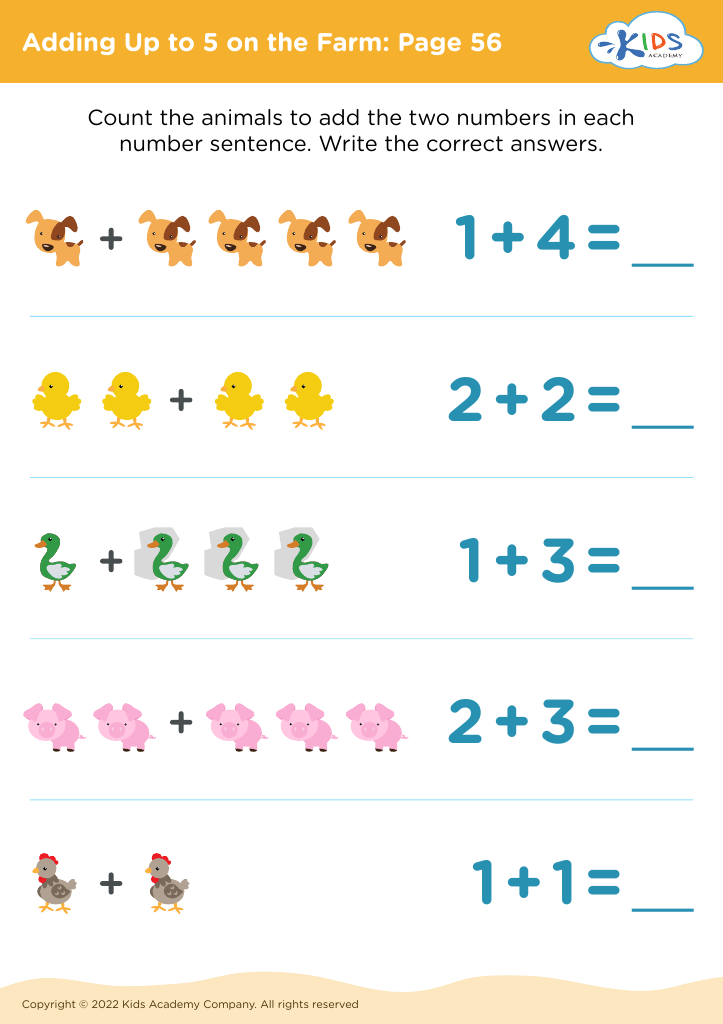
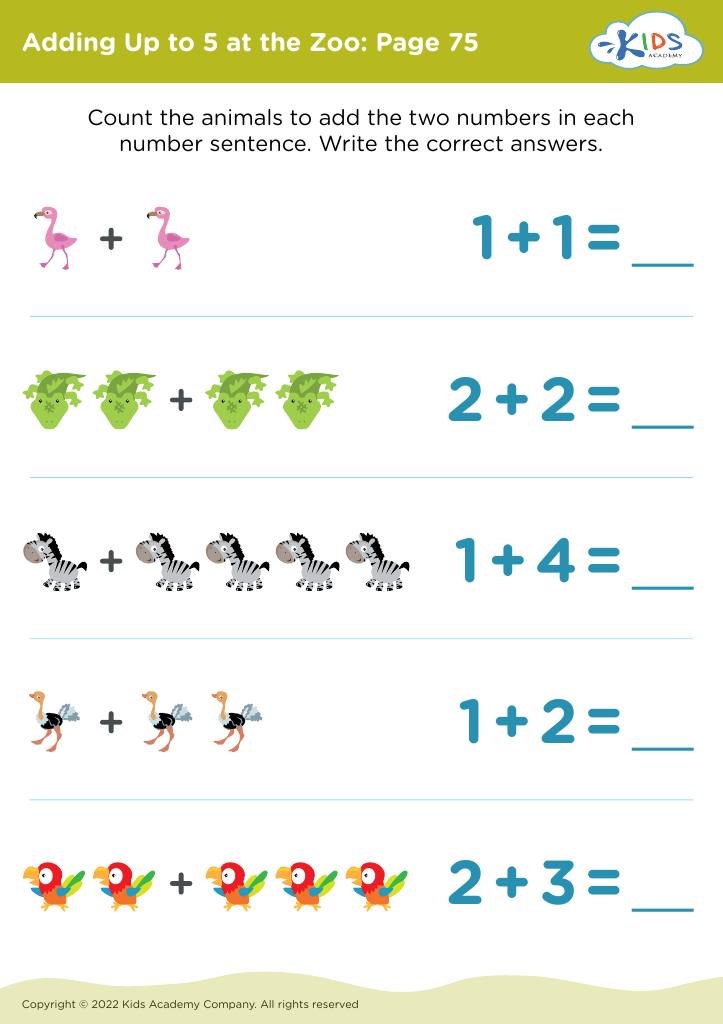
Discover our engaging Counting Objects Worksheets for Ages 5-7 at Kids Academy! Perfectly crafted to enhance early math skills, these printable worksheets offer fun and interactive ways for young learners to practice counting. With colorful illustrations and diverse exercises, children can count different objects, boosting their numeracy skills, and building a strong foundation for future math success. Ideal for both classroom and home use, these worksheets are designed to captivate toddlers’ interest while promoting concentration and cognitive development. Visit Kids Academy today to help your child master counting with confidence and joy!
Favorites
With answer key
Interactive
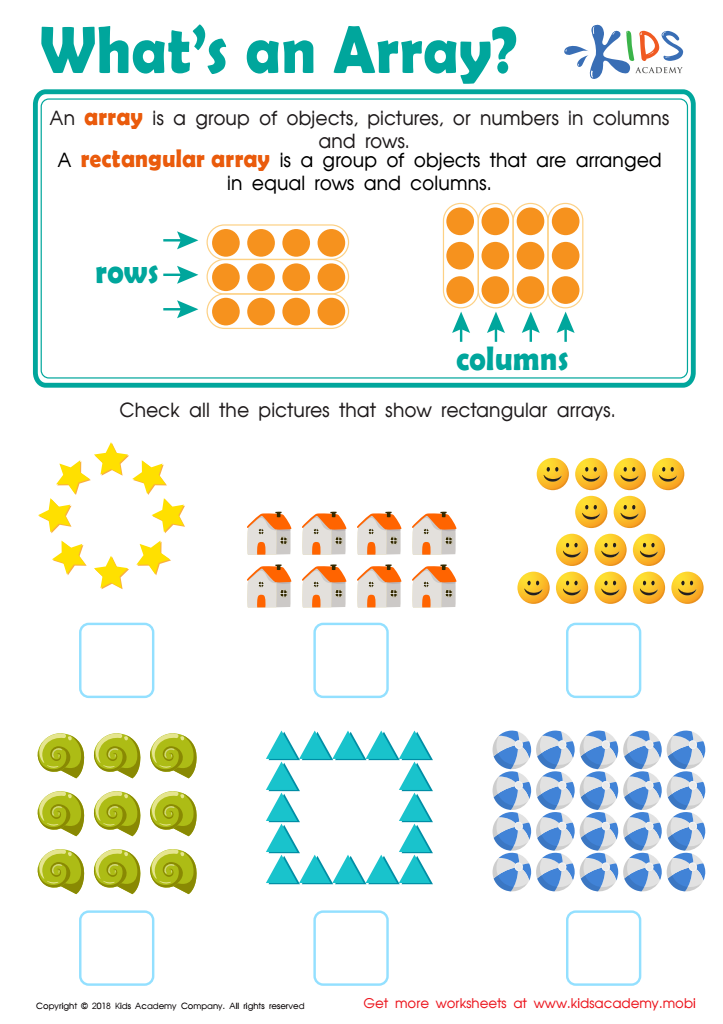
What's an Array? Worksheet
Explain to your child that an array is a group of objects, pictures, or numbers in columns and rows. Show them a rectangular array is a group of objects in equal rows and columns. Guide them to check the pictures in the worksheet to spot any rectangular arrays. Help them remember this concept.
 Assign to My Students
What's an Array? Worksheet
Worksheet
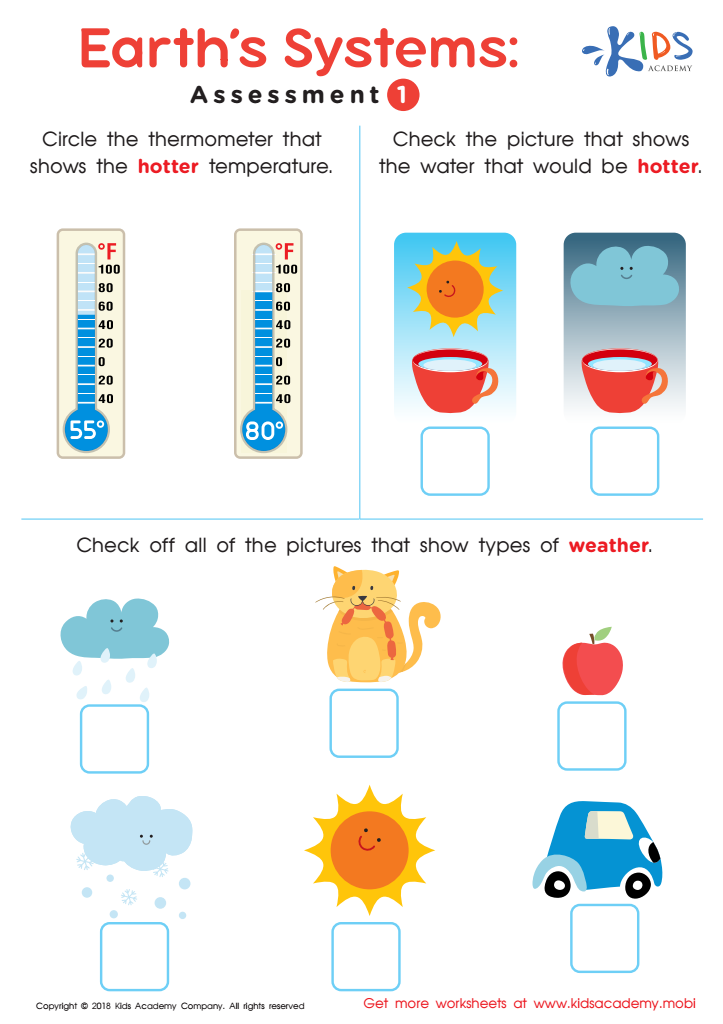
Earth's Systems: Assessment 1
Check your child's knowledge of weather basics with this quick printable worksheet! Using colorful pictures, instruct them to determine which thermometer shows a hotter reading and if water would be warmer in the sun or under clouds. Encourage kids to identify types of weather on the bottom of the page. Assess their readiness to move on!
Earth's Systems: Assessment 1
Worksheet
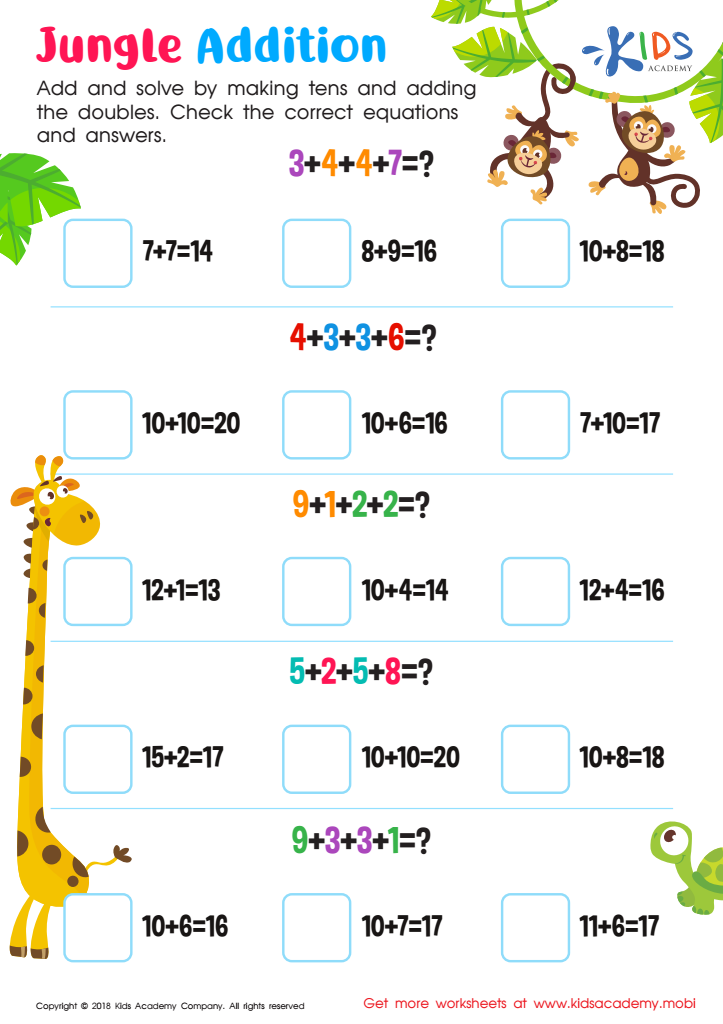
Jungle Addition Worksheet
With this worksheet, kids can use the strategies of making tens and adding doubles to add numbers with more than three addends. They'll practice choosing the right method and become more confident in their calculations, enabling quicker, more efficient computation.
Jungle Addition Worksheet
Worksheet
Join Kids Academy for Free
Who is primarily going to use this learning content?







Counting objects is an essential foundational skill for children ages 5-7 that parents and teachers should prioritize for several compelling reasons. Firstly, it drives the development of number sense, which is the ability to understand and work with numbers. This foundational skill is crucial for more advanced mathematical concepts that children will encounter later, such as addition, subtraction, and even multiplication.
Furthermore, counting objects isn't just about maths; it enriches cognitive development. Engaging children in counting activities bolsters their analytical and reasoning skills, as they must discern quantities, recognize numeric patterns, and make comparisons. These experiences nurture critical thinking and problem-solving capacities vital in academic and real-life contexts.
Children at this age are also in a prime stage for improving fine motor skills, which are honed during hands-on counting activities like moving counters, blocks, or pebbles. Additionally, through counting and comparing objects, children cultivate a sense of order and sequencing, reinforcing early literacy skills by cultivating an ability to follow instructions and narrate their thought process.
Socially, collaborative counting exercises promote communication and teamwork, helping young children learn to share information and ideas, listen to others, and work towards a common goal. Hence, focusing on counting objects supports a well-rounded developmental trajectory in these early formative years.








