Filters

132 filtered results

Clear all filters
Favorites
With answer key
Interactive

132 filtered results

Difficulty Level

Grade


Check out this FREE "Critical Thinking" Trial Lesson for age 5-7!

Special Moves: Promotion

Favorites
With answer key
Interactive
  • 5-7
  • Critical Thinking
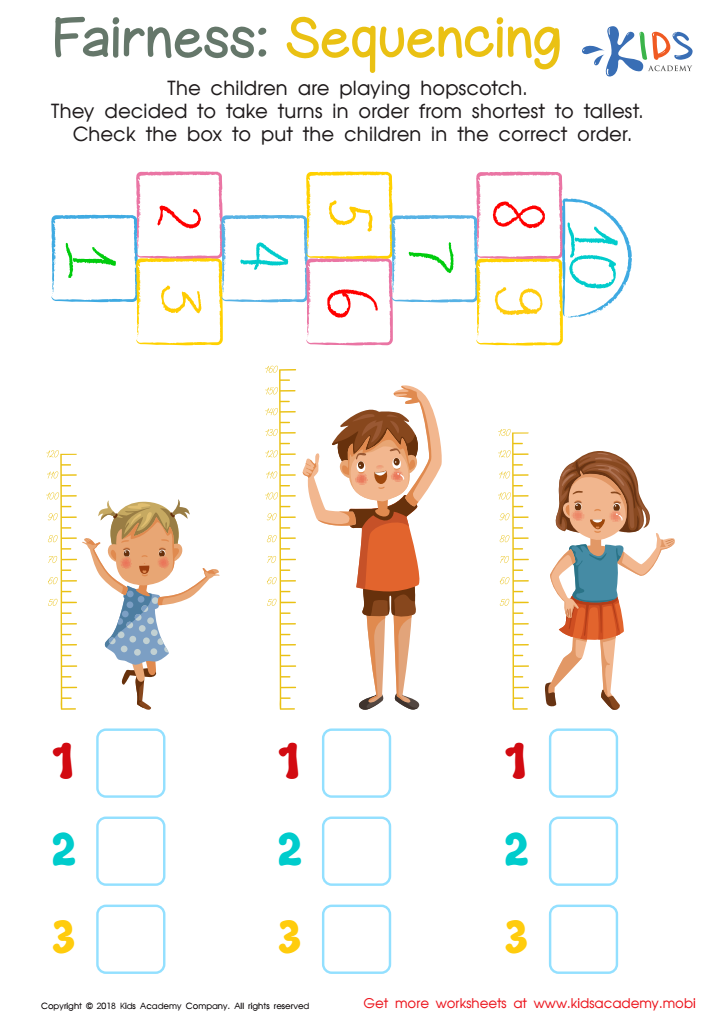
Fairness: Sequencing Worksheet

Fairness: Sequencing Worksheet

Kids likely already know how to play hopscotch. Ask them to show you the shortest, tallest and middle child in the worksheet. Then, help them order them from shortest to tallest by checking the boxes.
Fairness: Sequencing Worksheet
Worksheet
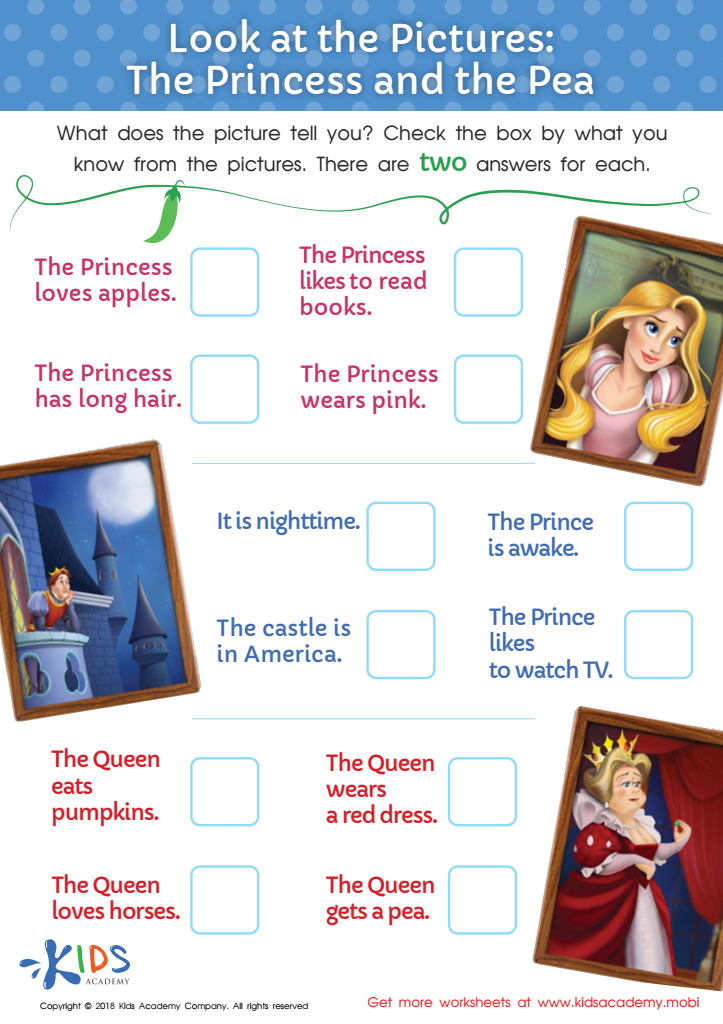
Look at the Pictures: The Princess and the Pea Worksheet

Look at the Pictures: The Princess and the Pea Worksheet

Early readers can benefit from picture clues to understand stories and text. Looking at images helps them learn the meaning of words and comprehend events. Use this worksheet on The Princess and the Pea to let students observe and learn from the pictures. It's a great way to help them comprehend early reading materials.
Look at the Pictures: The Princess and the Pea Worksheet
Worksheet
George Washington Printable Worksheet

George Washington Timeline Worksheet
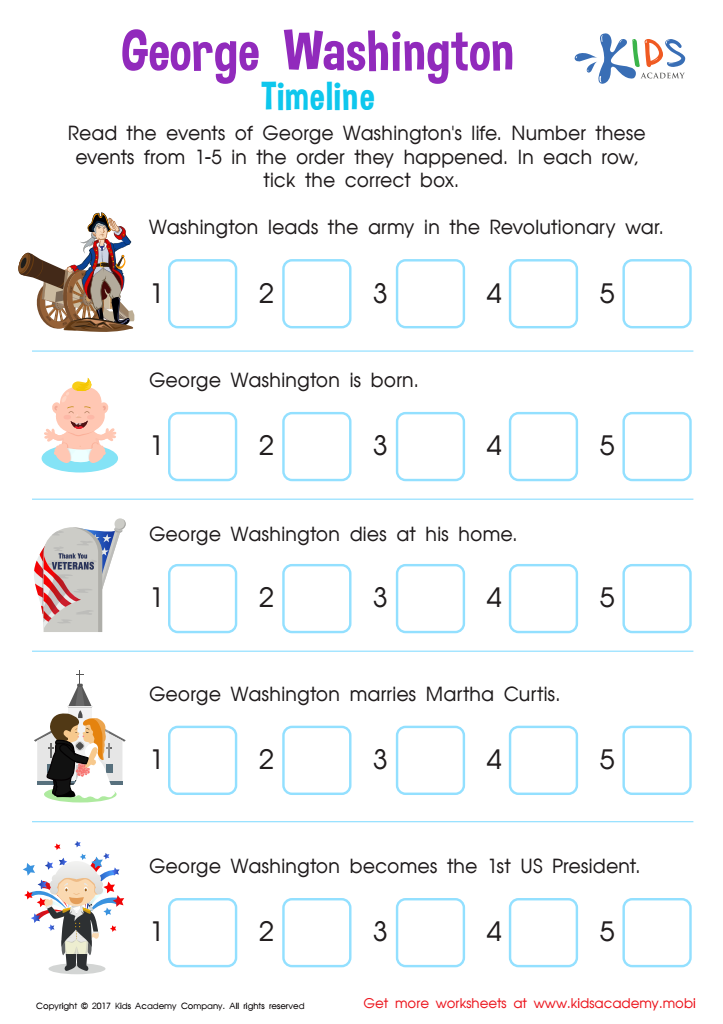
Help your child learn about George Washington and practice sequencing events! This printable worksheet will boost their reading and comprehension skills while they review historical facts. It's a great challenge to keep them engaged and learning.
George Washington Timeline Worksheet
Worksheet
Promotion Practice Worksheet

Promotion Practice Worksheet

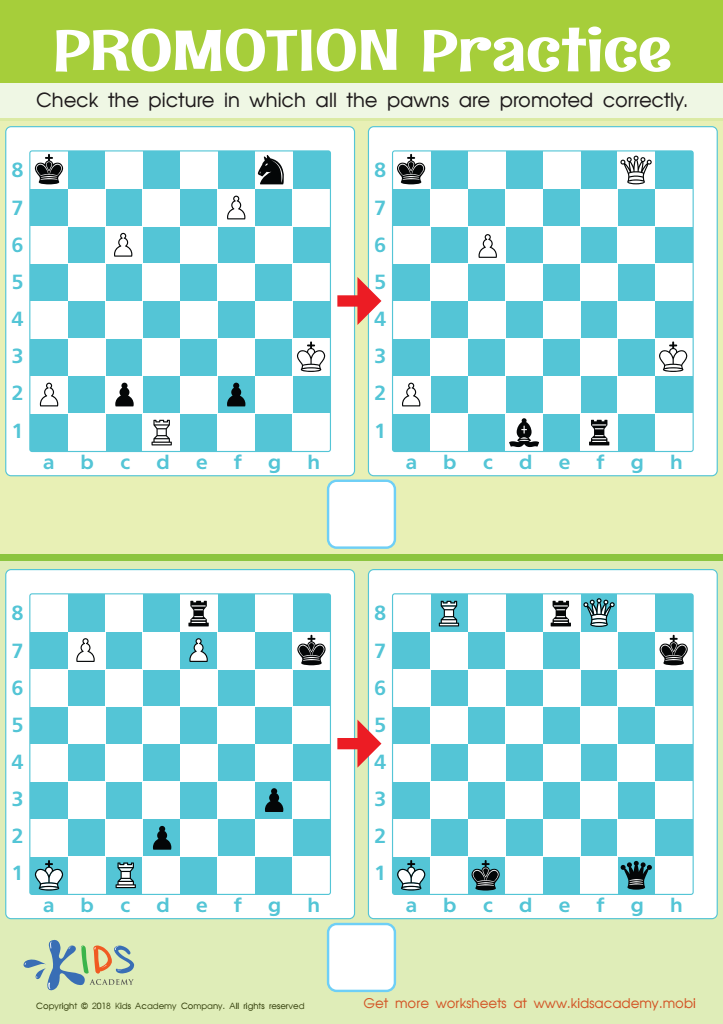
Test your kids' promotions skills with this worksheet! Ask them to find the pictures in which the pawns are correctly promoted. Remember, when a pawn reaches the last rank it may be promoted to a queen, bishop, knight or rook. In addition, a pawn can be promoted when it captures a chess piece on the last rank.
Promotion Practice Worksheet
Worksheet
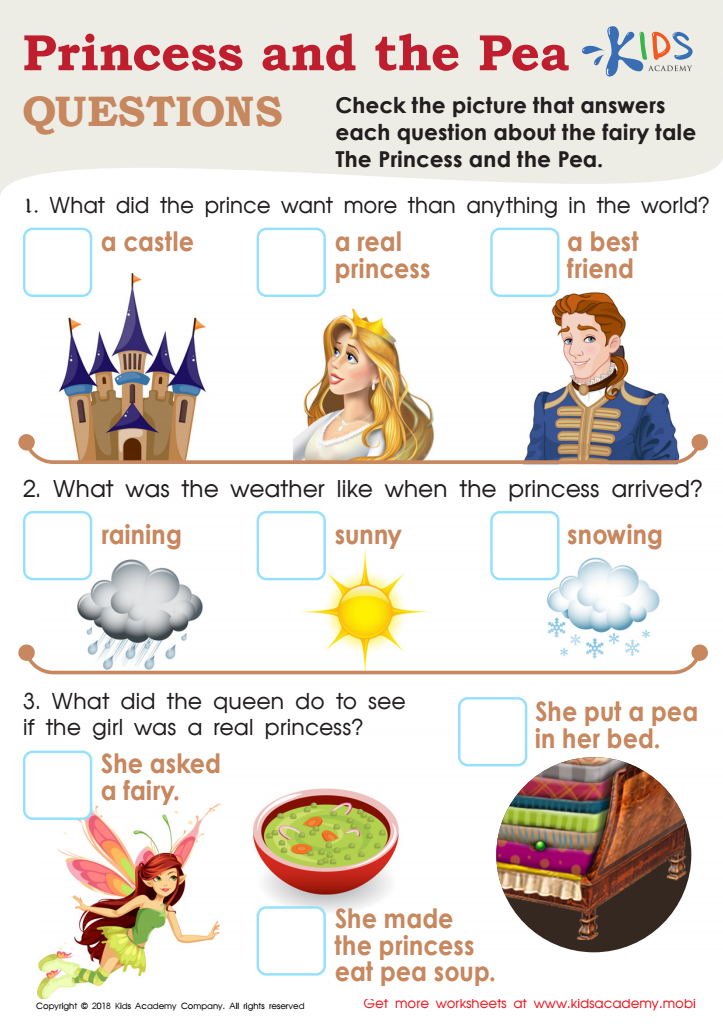
Princess and the Pea Questions Worksheet

Princess and the Pea Questions Worksheet

Your kid knows The Princess and the Pea inside-out? Test their knowledge with this worksheet. Ask your little one to read the questions and match each one to the picture. It's a fun way to see just how much attention they've paid to their bedtime story.
Princess and the Pea Questions Worksheet
Worksheet
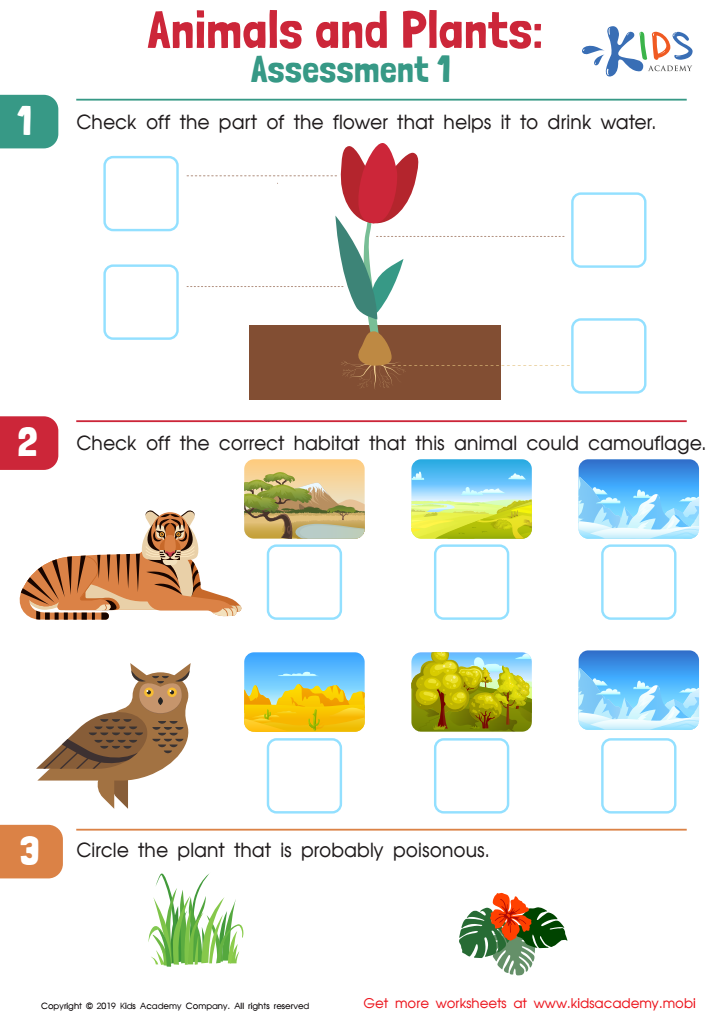
Animals and Plants: Assesment 1 Worksheet

Animals and Plants: Assessment 1 Worksheet
Do you want to easily assess your child's understanding of basic science concepts? This colorful PDF offers a free opportunity for them to test their knowledge about parts of a flower, poisonous plants, animal habitats and more! Bright pictures make it fun and easy for you to see what they know.
Animals and Plants: Assessment 1 Worksheet
Worksheet
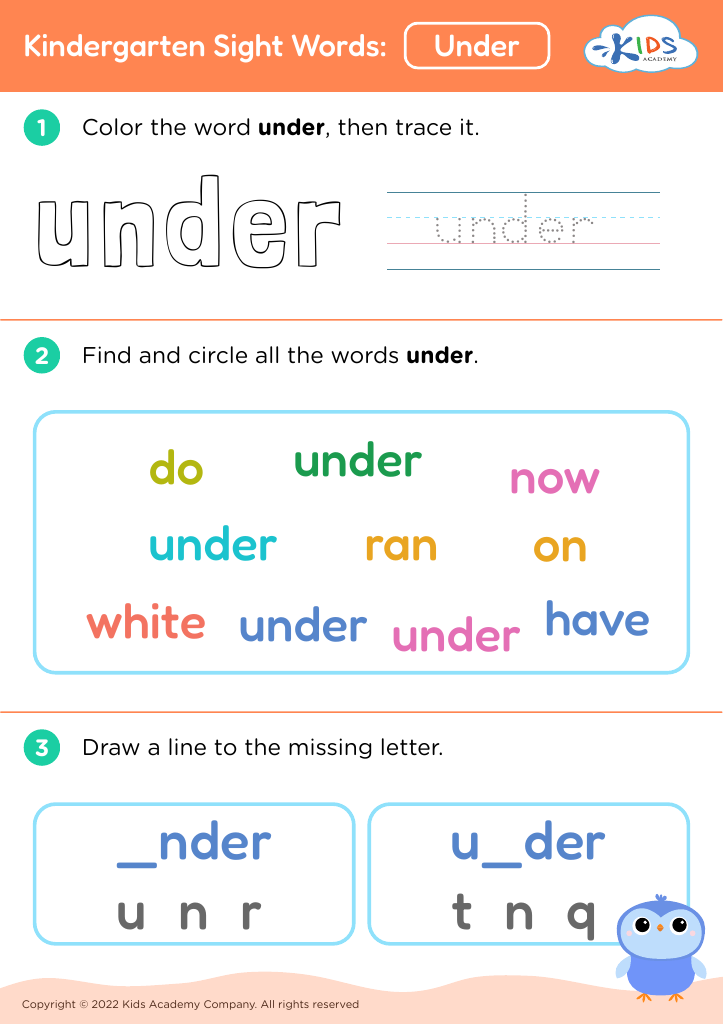
Kindergarten Sight Words: Under

Kindergarten Sight Words: Under

Kindergarten Sight Words: Under
Worksheet
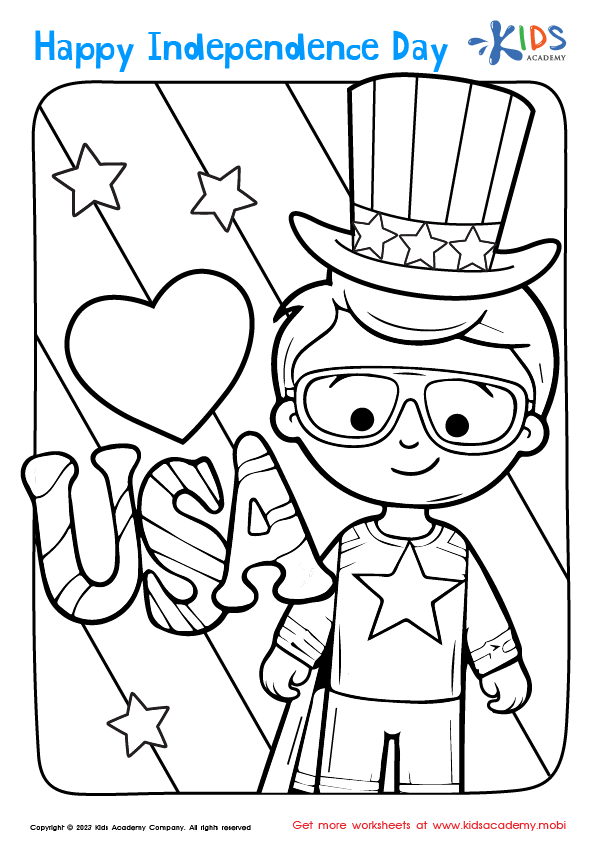
Independence Day: Boy
Independence Day: Boy Coloring Page for Kids
Worksheet
Independence Day: Drum
Independence Day: Drum Coloring Page for Kids
Worksheet
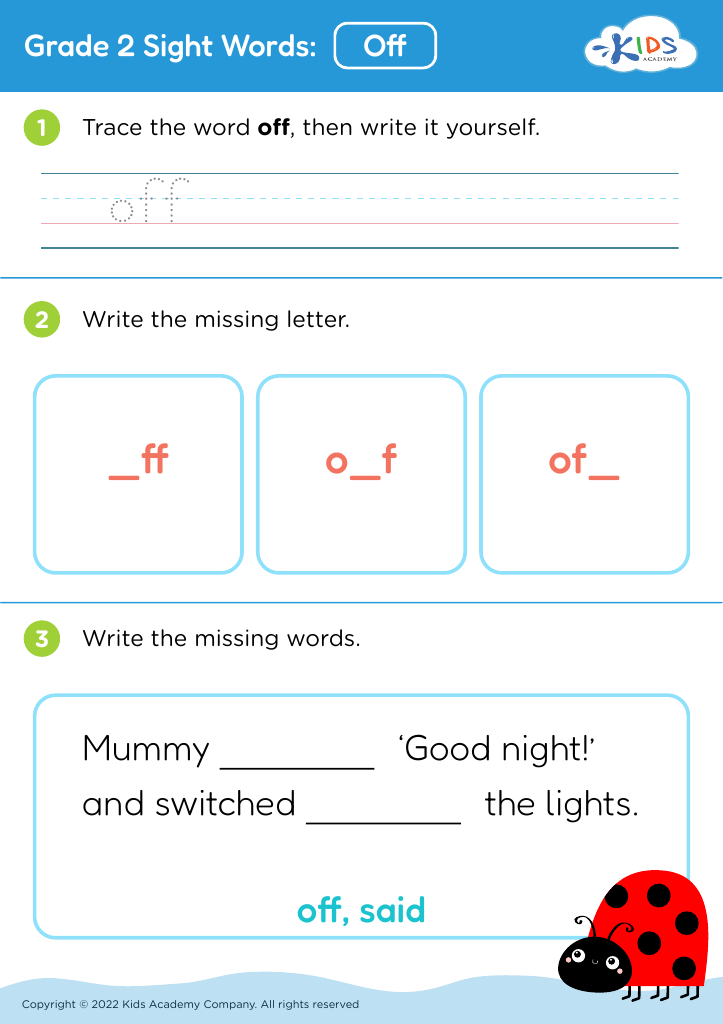
Grade 2 Sight Words: Off

Grade 2 Sight Words: Off

Grade 2 Sight Words: Off
Worksheet
Grade 1 Sight Words: As

Grade 1 Sight Words: As

Grade 1 Sight Words: As
Worksheet
Grade 2 Sight Words: Around

Grade 2 Sight Words: Around

Grade 2 Sight Words: Around
Worksheet


... 5 6

Critical thinking for children ages 5-7 is foundational for their development because it equips them with essential skills to understand and interact with the world more effectively. At this impressionable age, children's brains are rapidly developing, making it an ideal time to instill the ability to think clearly, analyze information, and solve problems.

Encouraging critical thinking helps young children become active learners rather than passive recipients of information. They learn to ask questions, evaluate evidence, and consider multiple perspectives. For instance, when they weigh the pros and cons of sharing their toys, they start learning about empathy, fairness, and negotiation.

Developing these skills early also sets the stage for academic success. Subjects like math and science are fundamentally rooted in logical thinking and problem-solving. For example, understanding cause-and-effect relationships can enhance their grasp of basic scientific concepts, or solving puzzles can improve mathematical skills.

Moreover, critical thinking fosters self-confidence and independence. When children know how to approach problems and make informed decisions, they become more capable of handling social interactions and daily challenges. This kind of resilience is invaluable throughout life.

In summary, fostering critical thinking in young children provides them with a toolkit for lifelong learning, helps them succeed academically, and prepares them to be thoughtful, capable individuals. Thus, it's crucial for both parents and teachers to prioritize these skills early on.