Drawing conclusions Worksheets for Ages 5-7
3 filtered results
-
From - To
Unlock your child's critical thinking skills with our Drawing Conclusions Worksheets for Ages 5-7! Designed to engage young minds, these interactive worksheets help kids learn how to interpret information and make informed decisions. Through fun and relatable scenarios, children will develop the ability to draw conclusions from illustrations, text, and real-life situations. Perfect for home or classroom use, these worksheets promote comprehension and reasoning skills while fostering creativity and imagination. Watch your child flourish as they learn to connect the dots and enhance their understanding of the world around them. Start cultivating your young learner's potential today!
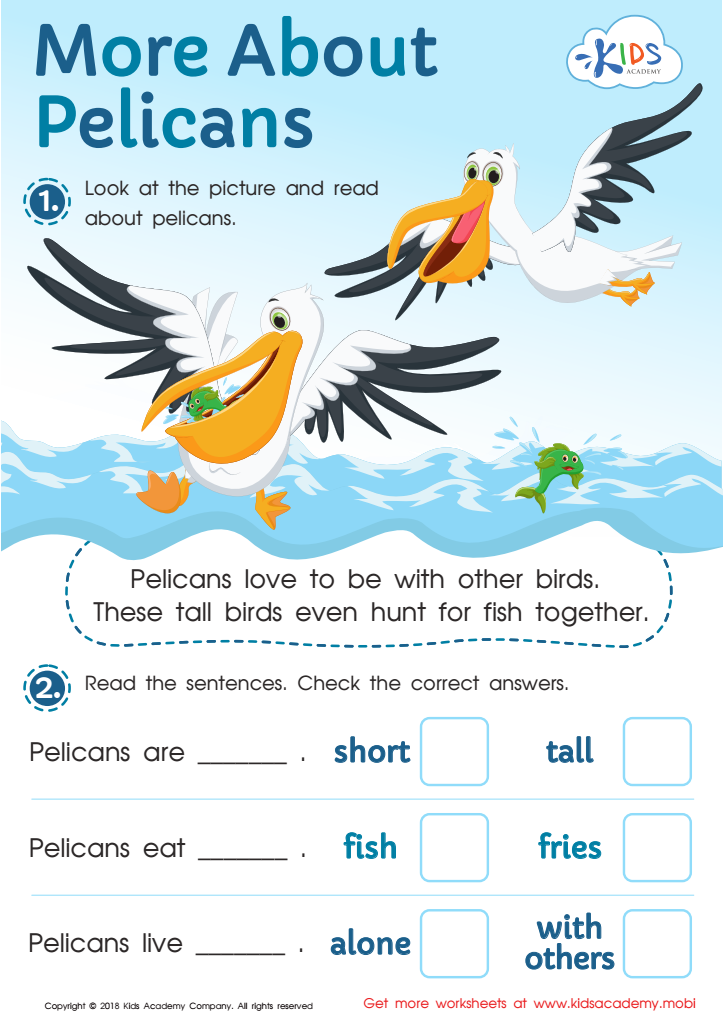
More About Pelicans Worksheet
 Assign to My Students
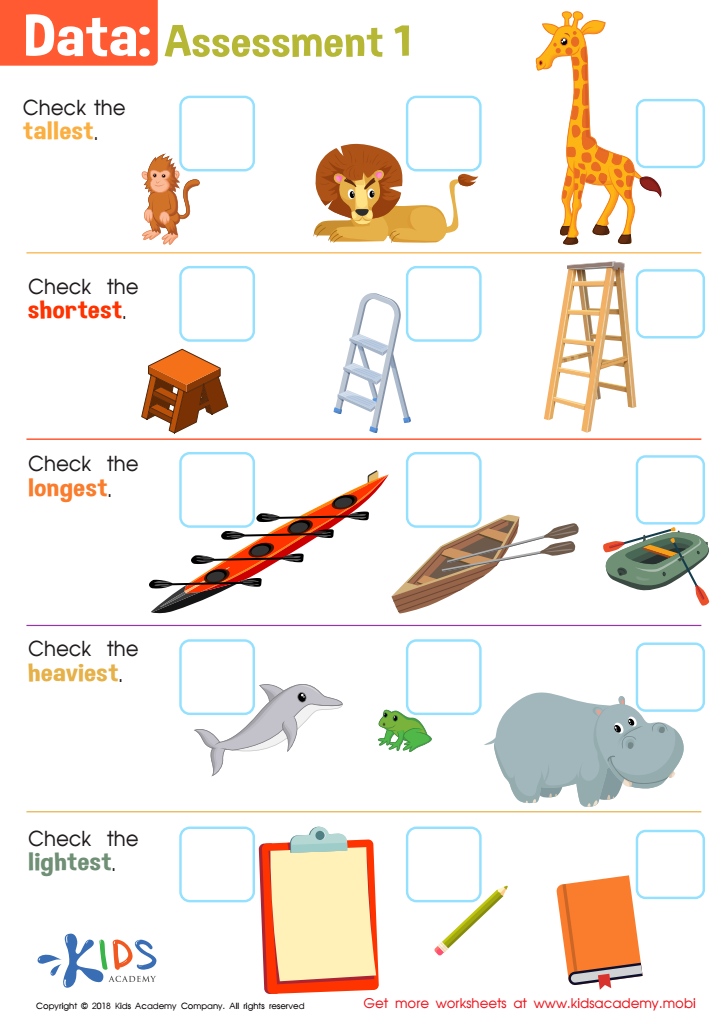
Data: Assessment 1 Worksheet







Drawing conclusions is a vital skill for children aged 5-7, as it significantly enhances their critical thinking and comprehension abilities. At this foundational stage, children begin to understand that stories, lessons, and everyday situations often have underlying messages or meanings that require interpretation beyond the surface level.
For parents and teachers, fostering this skill promotes analytical thinking. When children learn to draw conclusions, they become more adept at connecting various pieces of information, leading to deeper understanding and retention of what they learn. Drawing conclusions encourages them to ask questions, explore possibilities, and view scenarios from different perspectives, which is essential for effective problem-solving.
Moreover, as children engage with texts and ask, "What does this tell me?" or "How does this connect to what I already know?" they develop their language and expression. This growth not only improves their academic performance but also nurtures self-confidence, preparing them for future academic endeavors.
Incorporating activities that promote drawing conclusions—like discussing stories or analyzing real-life situations—helps lush a rich learning environment. By focusing on this essential skill, parents and teachers can cultivate inquisitive and thoughtful young learners able to navigate both academic and personal challenges with ease.








