Improve observational skills Worksheets for Ages 5-7
3 filtered results
-
From - To
Enhance your child's observational skills with our engaging worksheets designed for ages 5-7! These thoughtfully crafted activities encourage young learners to hone their attention to detail while having fun. Each worksheet features colorful illustrations and captivating scenarios that promote critical thinking and enhance memory retention. Through activities like matching, finding differences, and completing visual puzzles, children will develop their ability to notice and actively engage with their environment. Our worksheets are perfect for use at home or in the classroom, providing a valuable resource for educators and parents alike. Start helping your child become more observant today with our enriching materials!
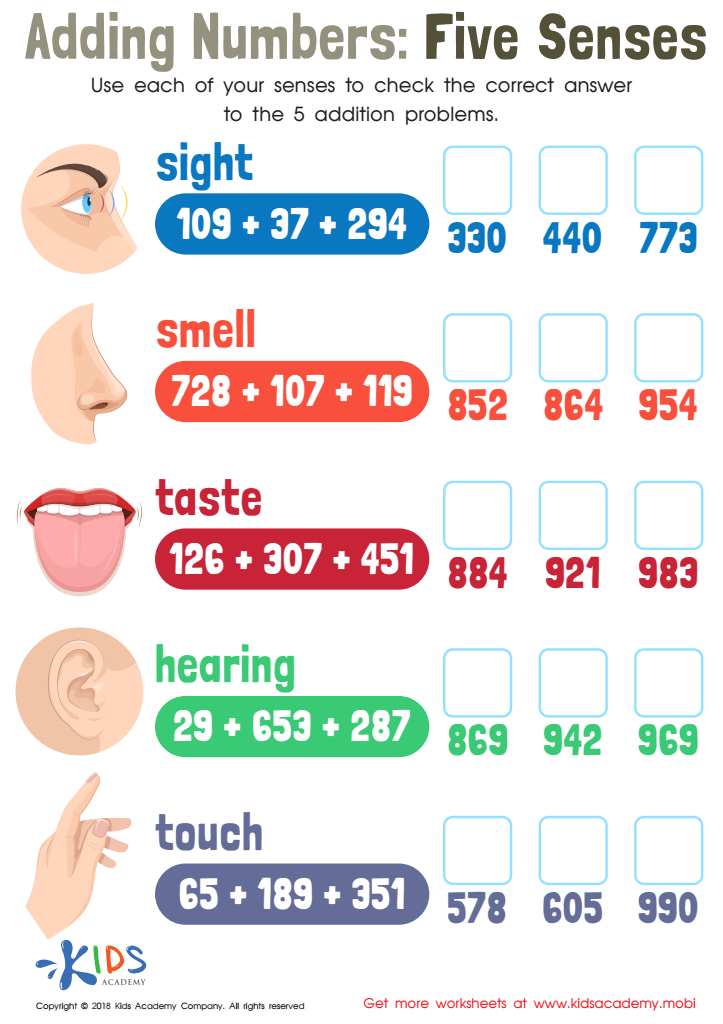
Adding Numbers: Five Senses Worksheet
 Assign to My Students
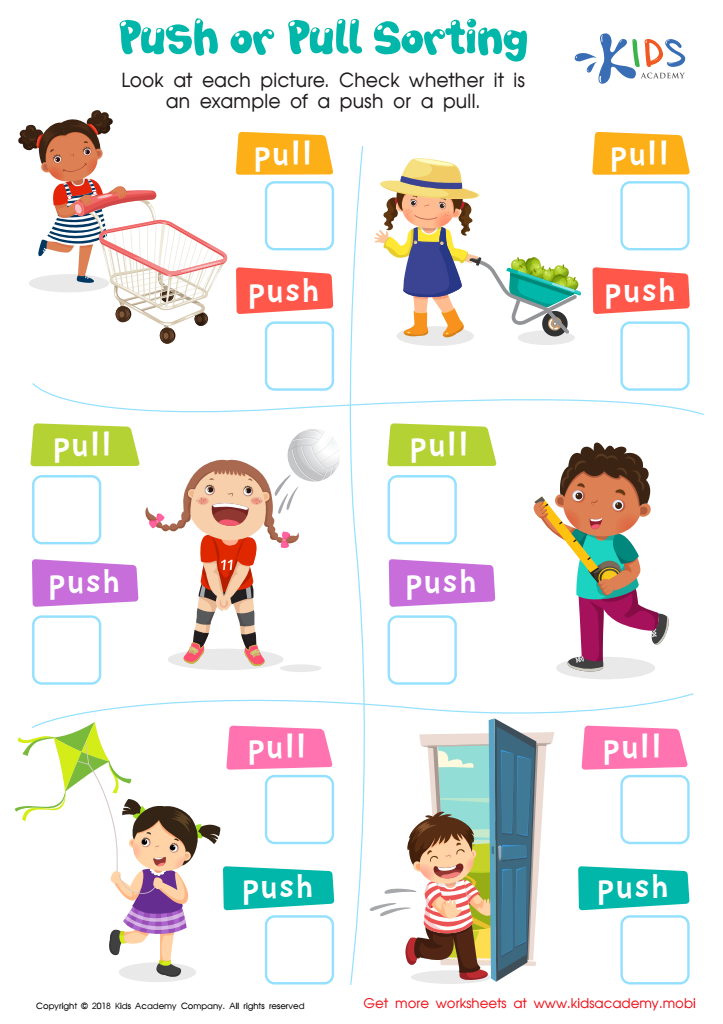
Push or Pull Sorting Worksheet




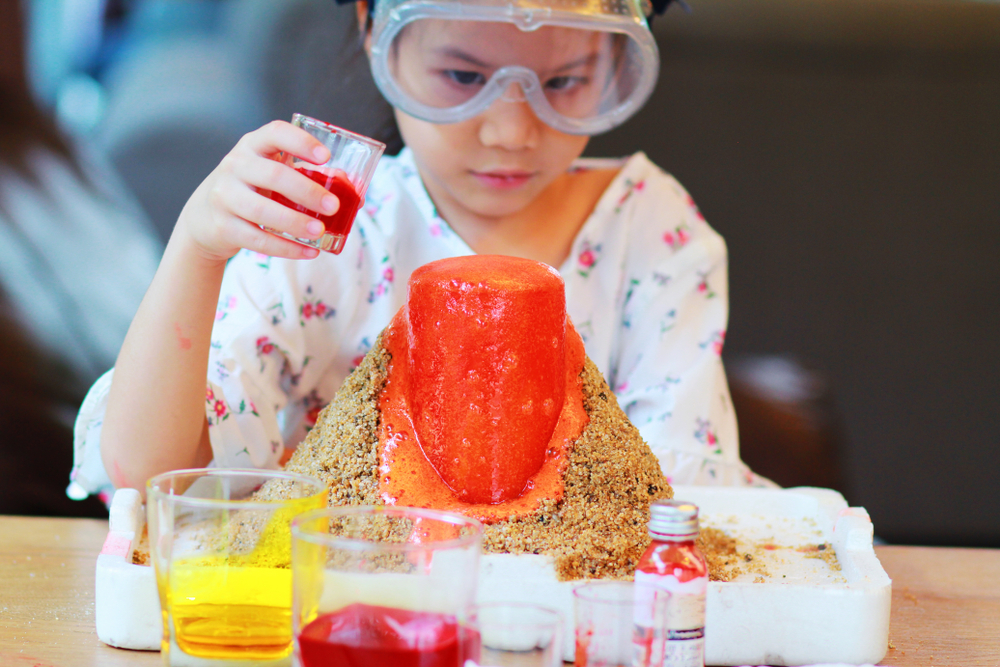


Improving observational skills in children aged 5-7 is crucial for their overall development. During these formative years, children are naturally curious and eager to explore the world around them. By honing their observational skills, parents and teachers can nurture this curiosity, enhancing critical thinking, problem-solving abilities, and creativity.
Observational skills enable children to notice details in their environment, understand relationships between objects, and recognize patterns, which are foundational skills for math and science. When children learn to observe carefully, they become more adept at asking questions and making connections, enriching their learning experience.
In addition to academic benefits, strong observational skills support social development. They help children recognize and interpret social cues, understand the feelings of others, and navigate interpersonal interactions more effectively. This emotional intelligence is vital for building healthy relationships.
Moreover, engaged observation can promote mindfulness, encouraging children to be present in the moment and appreciate their surroundings. By fostering these skills, parents and teachers not only prepare children for academic success but also equip them with valuable life skills, encouraging them to become thoughtful, observant, and engaged members of society. Every moment spent observing can lead to a deeper understanding of the world around them.








