Improving observation Worksheets for Ages 5-7
3 filtered results
-
From - To
Elevate your child's observational skills with our expertly designed worksheets tailored for ages 5-7. These engaging activities sharpen attention to detail, fostering keen observation while improving visual discrimination and memory. Our varied exercises include fun, interactive tasks like identifying differences, matching pairs, and discerning patterns. Ideal for home or classroom use, these worksheets enhance critical thinking and problem-solving abilities, setting a solid foundation for future learning. Perfectly aligned with early education standards, Kids Academy’s observation worksheets make learning enjoyable and effective, preparing young minds for academic success. Enhance your child's perceptual skills today with our innovative and entertaining resources!
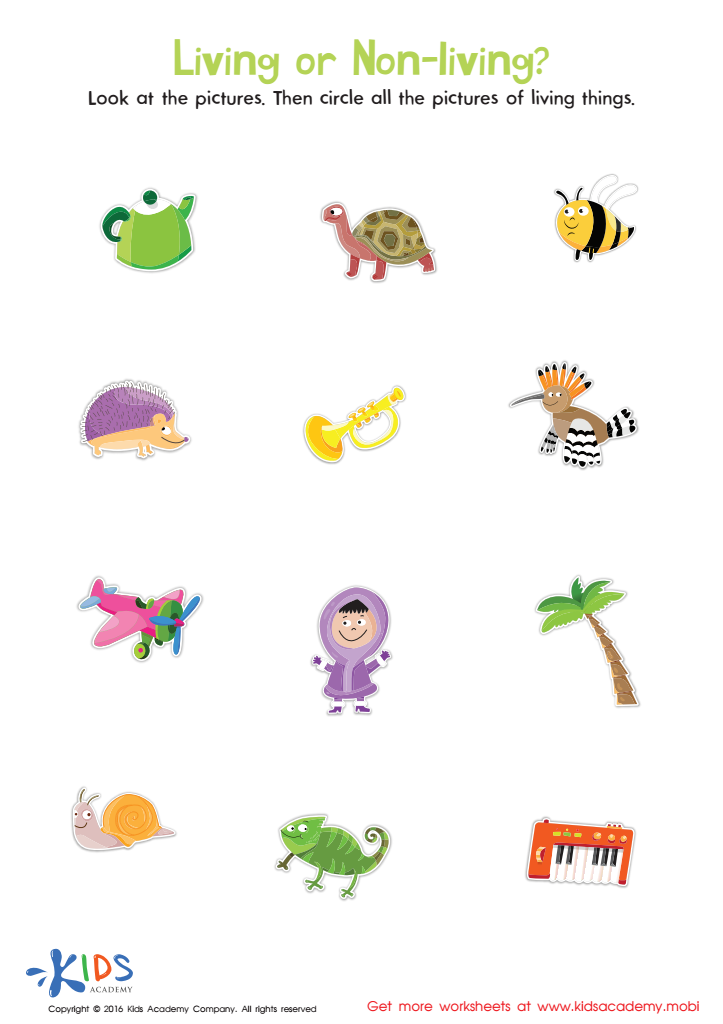
Identifying Living and Non–living Things Sorting Worksheet
 Assign to My Students
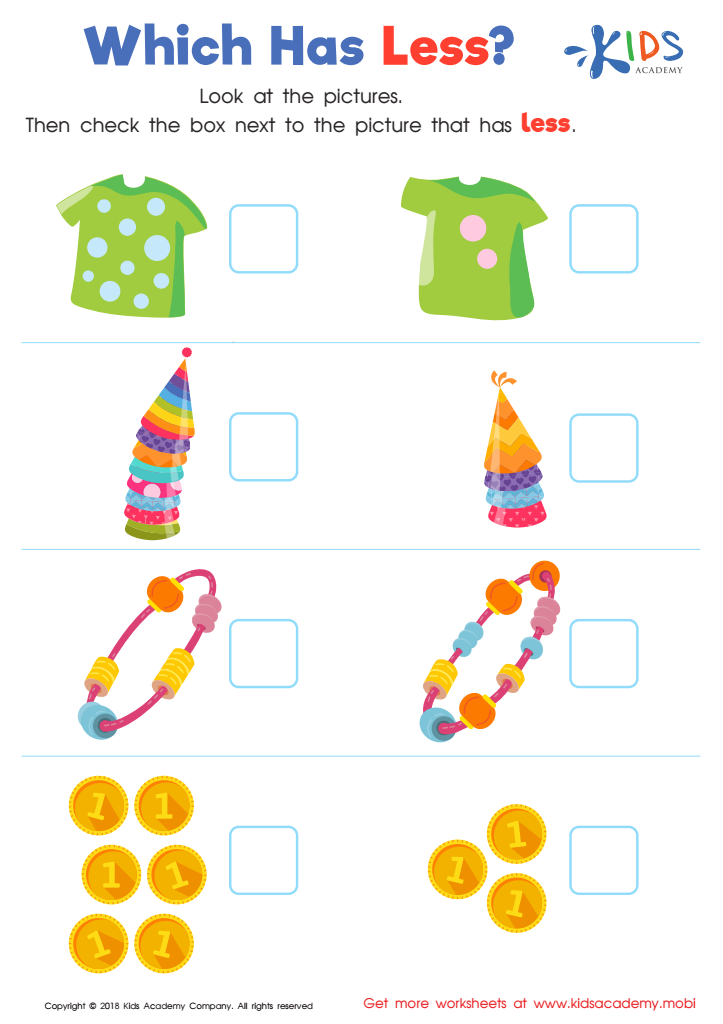
Which Has Less? Worksheet
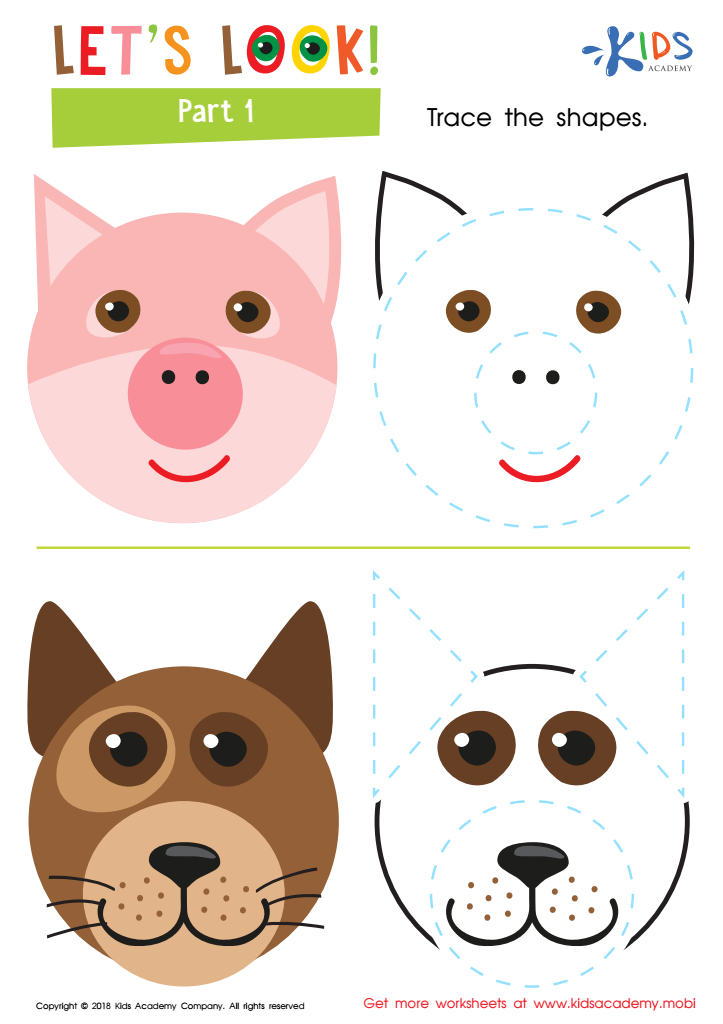
Let's Look! Part 1 Worksheet





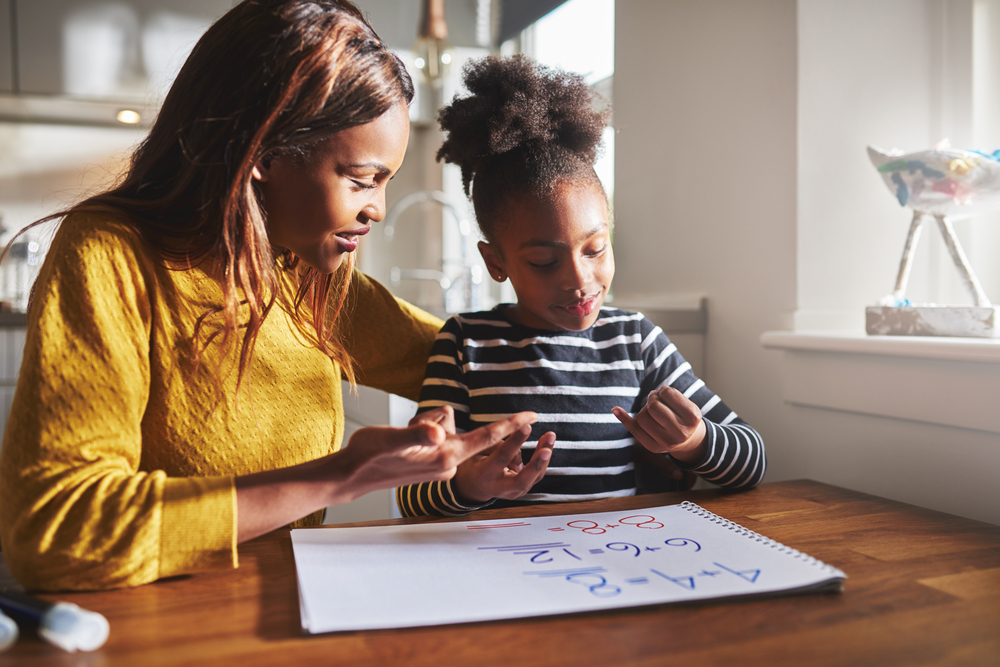
Improving observation skills in children aged 5-7 is essential for both parents and teachers because it lays the foundational blocks for their cognitive and social development. At this critical stage, children's brains are exceptionally receptive, and sharpening their observation skills can enhance their focus, attention to detail, and critical thinking abilities. When children learn to observe carefully, they develop better problem-solving skills by noticing patterns, differences, and relationships in their environment.
For parents, encouraging keen observation helps children become more self-aware and better communicators. It enables them to articulate their thoughts and feelings more clearly, fostering stronger family bonds. Parents can support this by engaging in activities that require attention to detail—like puzzles, nature walks, and storytelling, which enhance vocabulary and comprehension.
For teachers, improved observation skills translate to better academic performance. Children who are good observers tend to be more engaged and attentive in class, leading to higher retention rates and a better understanding of lessons. Teachers can integrate observation-based learning activities, such as science experiments, art projects, and group discussions, to nurture these skills.
Ultimately, honing observation skills for children not only augments academic success but also aids in developing empathy, as they become more aware of others' emotions and perspectives. This rounded developmental approach ensures children grow into perceptive, thoughtful, and constructive members of society.








