Improving spelling skills Worksheets for Ages 5-7
6 filtered results
-
From - To
Enhance your child's spelling abilities with our engaging "Improving Spelling Skills Worksheets" designed specifically for ages 5-7. These fun, interactive worksheets focus on foundational spelling concepts, helping young learners develop confidence in their ability to read and write. Our carefully crafted activities encourage phonetic awareness, word recognition, and correct spelling through games, tracing, and fill-in-the-blank exercises. Ideal for homeschooling or classroom settings, these resources cater to diverse learning styles while promoting essential literacy skills. Perfectly suited for early learners, our worksheets make spelling practice enjoyable, ensuring kids build a solid foundation for future language success. Explore our collection today!
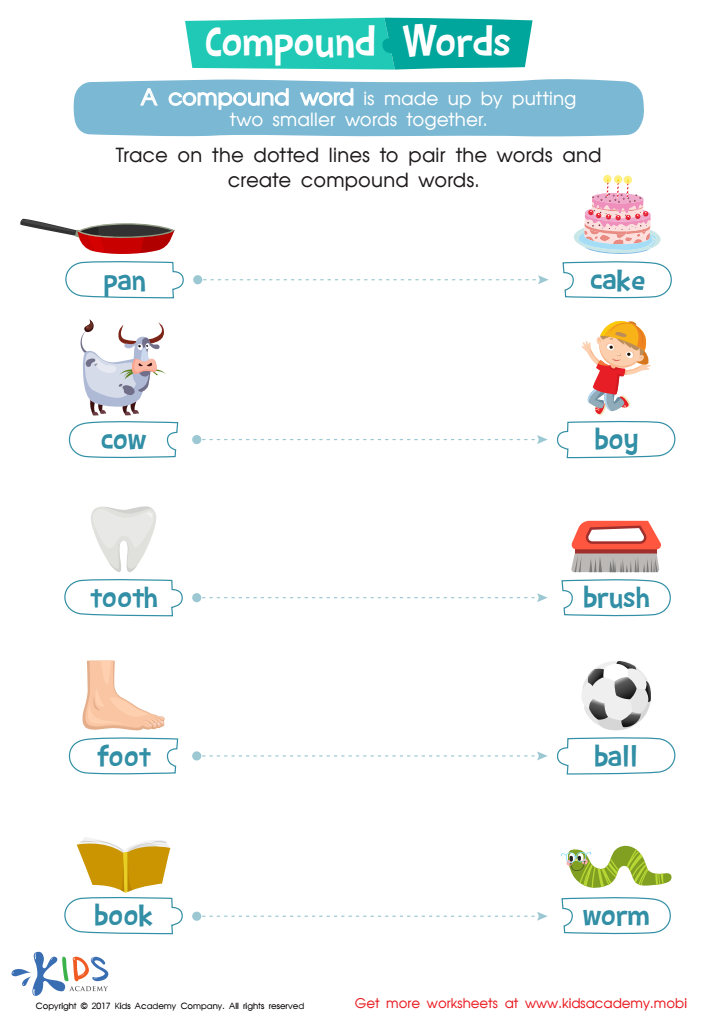
Compound Words Word Structure Worksheet
 Assign to My Students
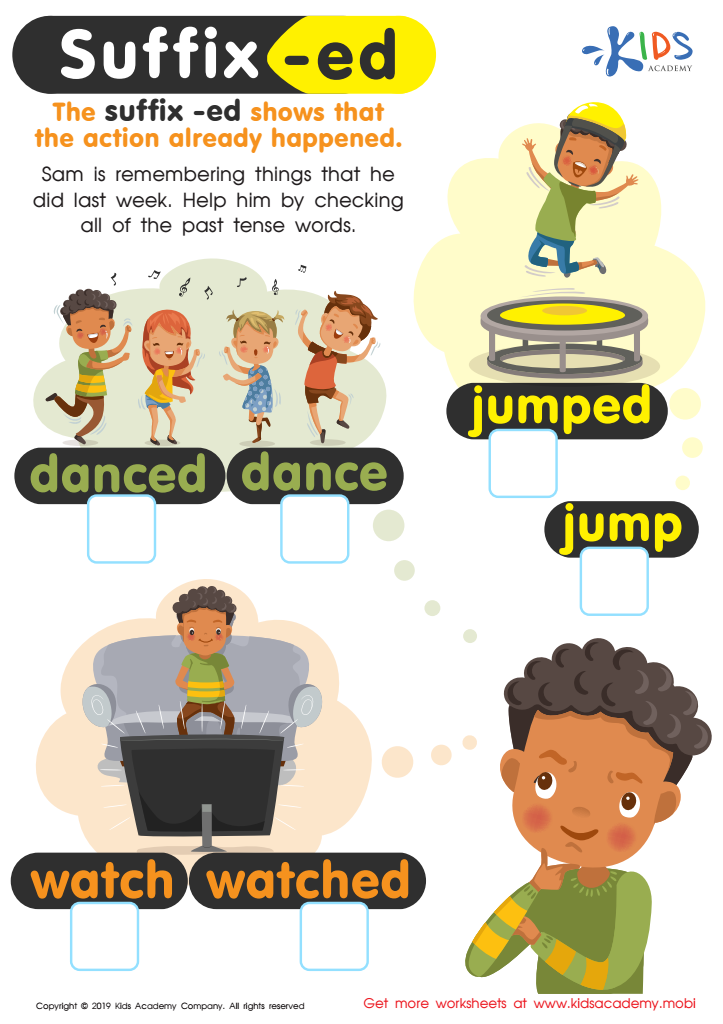
Suffix-ed Worksheet
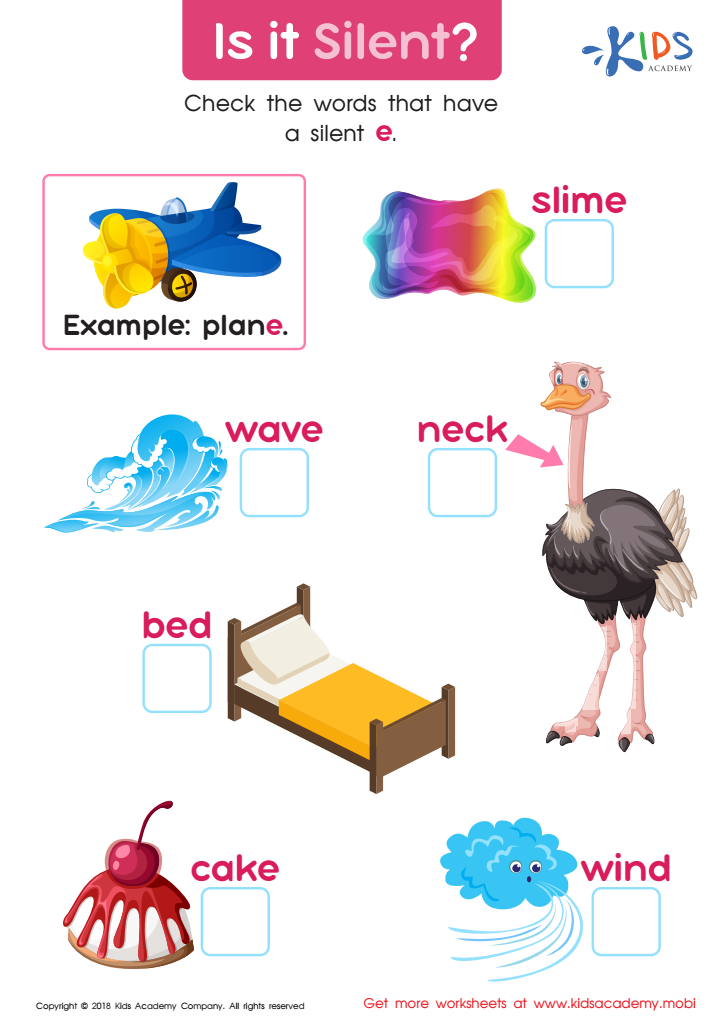
Is It Silent? Worksheet
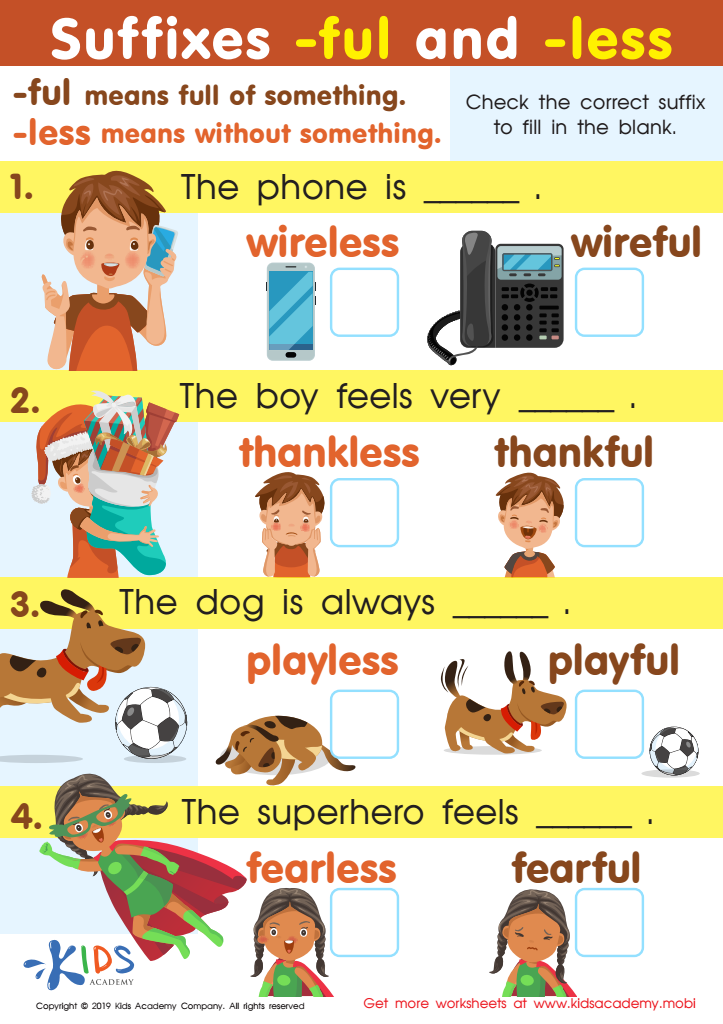
Suffixes –ful and –less Worksheet
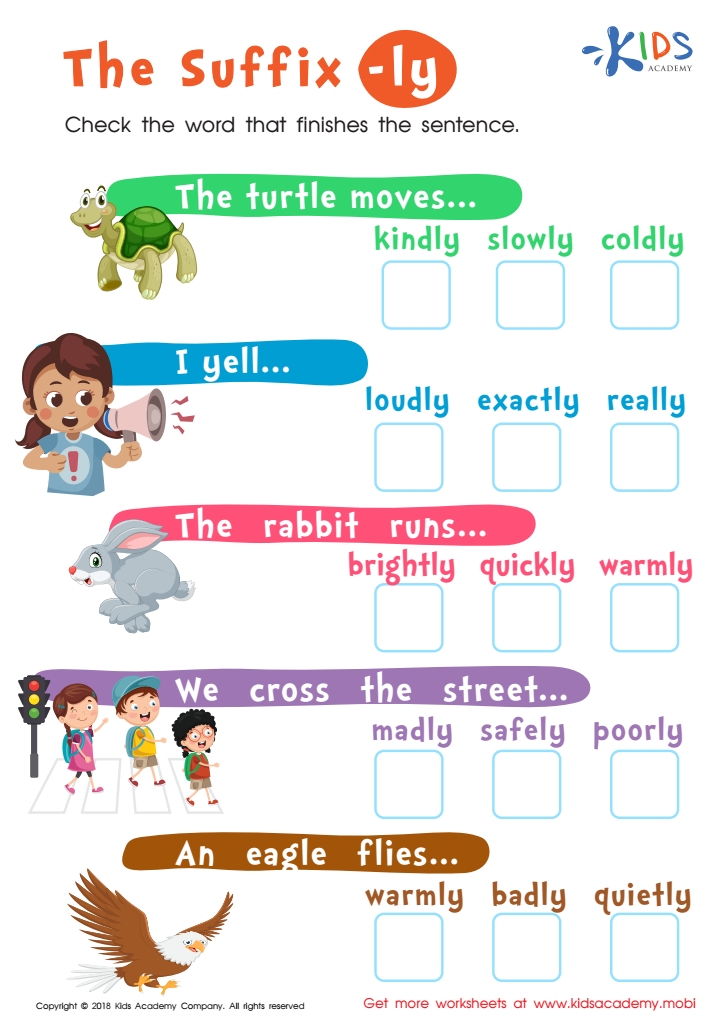
The Suffix -Ly Worksheet
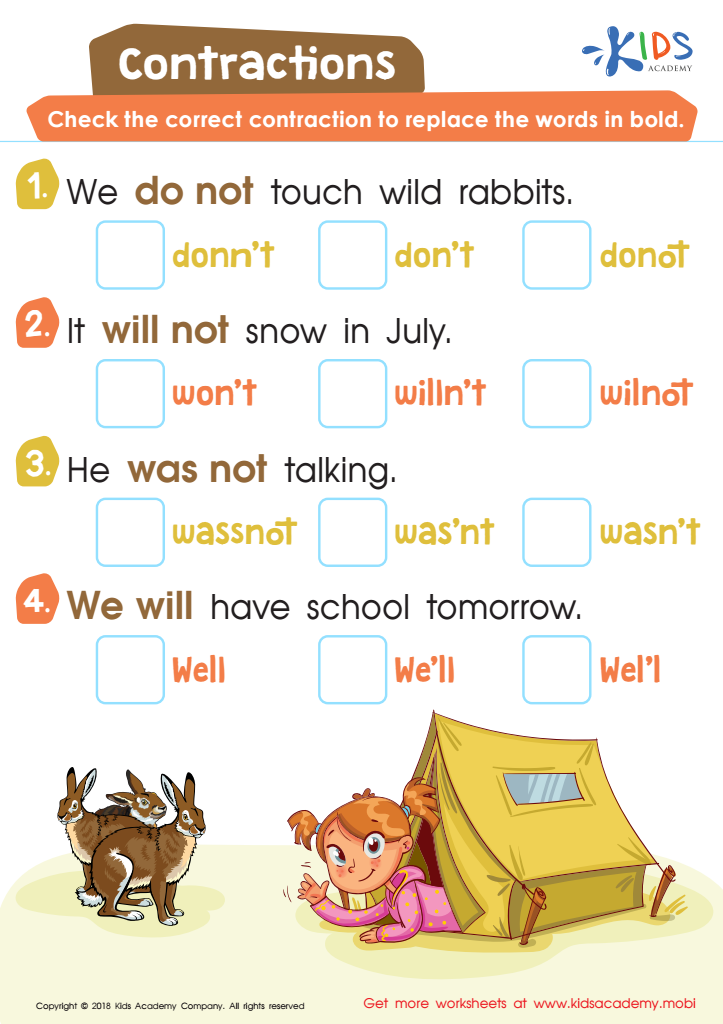
Contractions Worksheet







Improving spelling skills for children aged 5-7 is crucial for several reasons. First, early spelling proficiency supports overall literacy development, forming a foundation for reading and writing proficiency. At this age, children are beginning to recognize the connection between letters and sounds, and mastering spelling helps them decode words more efficiently, fostering a love for reading.
Moreover, spelling is linked to cognitive development. It enhances memory and aids in building critical thinking skills as children start to understand word structures and patterns. Improved spelling also boosts children’s self-esteem. When they successfully spell words, it reinforces their competence and encourages a positive attitude towards learning.
In addition, strong spelling skills contribute to effective communication. Children who can spell well are better equipped to express themselves in writing, whether through storytelling, journaling, or other written forms. This ability fosters creativity and encourages them to share their thoughts with confidence.
Finally, supporting spelling skills can create a stronger home-school connection. Parents and teachers can work together to develop targeted strategies that motivate and engage children in their spelling journey, cultivating an environment of encouragement and achievement. Overall, fostering spelling skills in early education is an investment in children’s long-term academic success and confidence.








