
Learning number patterns Worksheets for Ages 5-7
4 filtered results
Difficulty Level
Grade
Age
-
From - To
Subject
Activity
Standards
Discover our engaging "Learning Number Patterns" worksheets, expertly designed for children aged 5-7. These captivating exercises help young learners develop essential math skills by identifying and continuing exciting numerical sequences. From simple patterns to more challenging ones, each worksheet offers a fun, interactive way to build foundational number sense. Perfect for both classroom and at-home learning, our worksheets encourage critical thinking and problem-solving, laying the groundwork for future mathematical success. With vibrant illustrations and age-appropriate challenges, these activities make learning a delightful adventure. Give your child the head start they deserve with our number patterns worksheets today!
Favorites
With answer key
Interactive
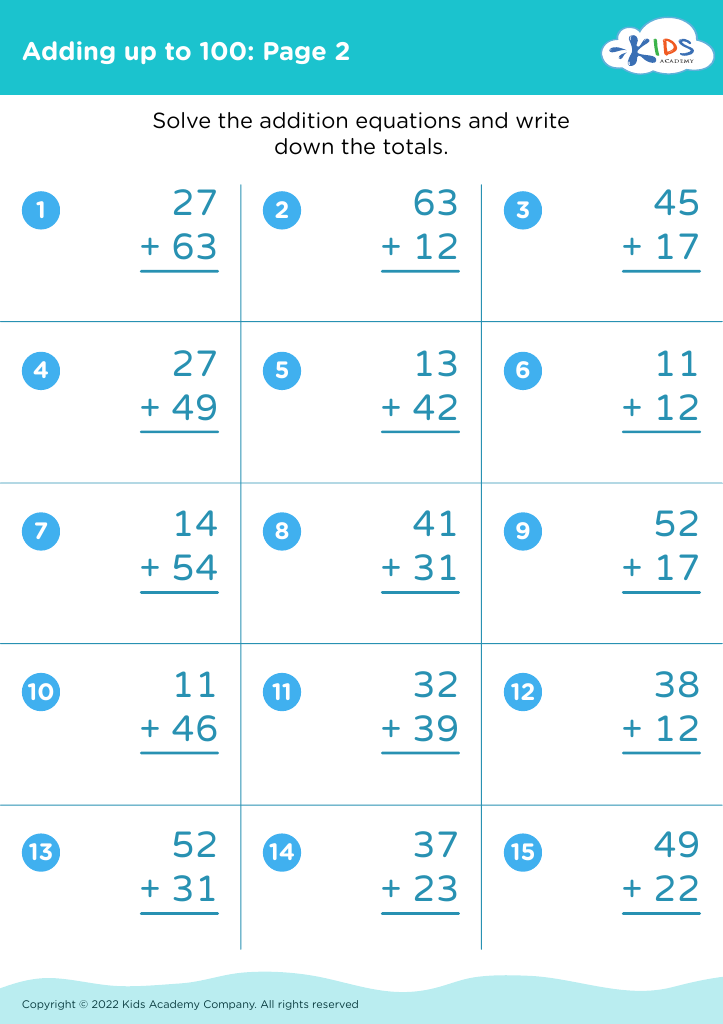
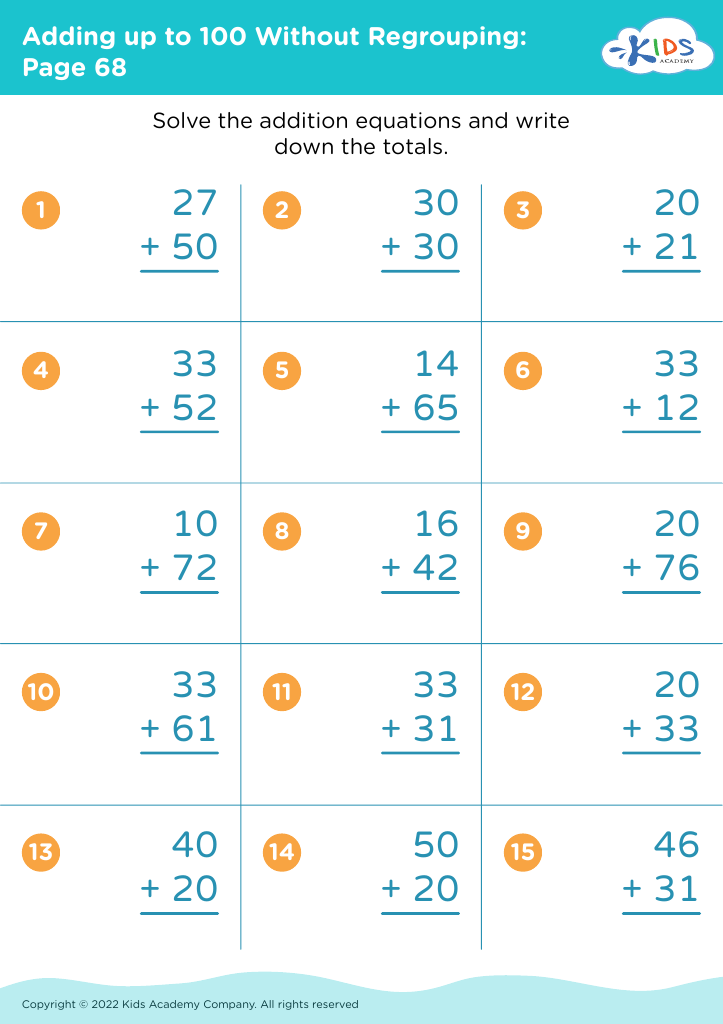
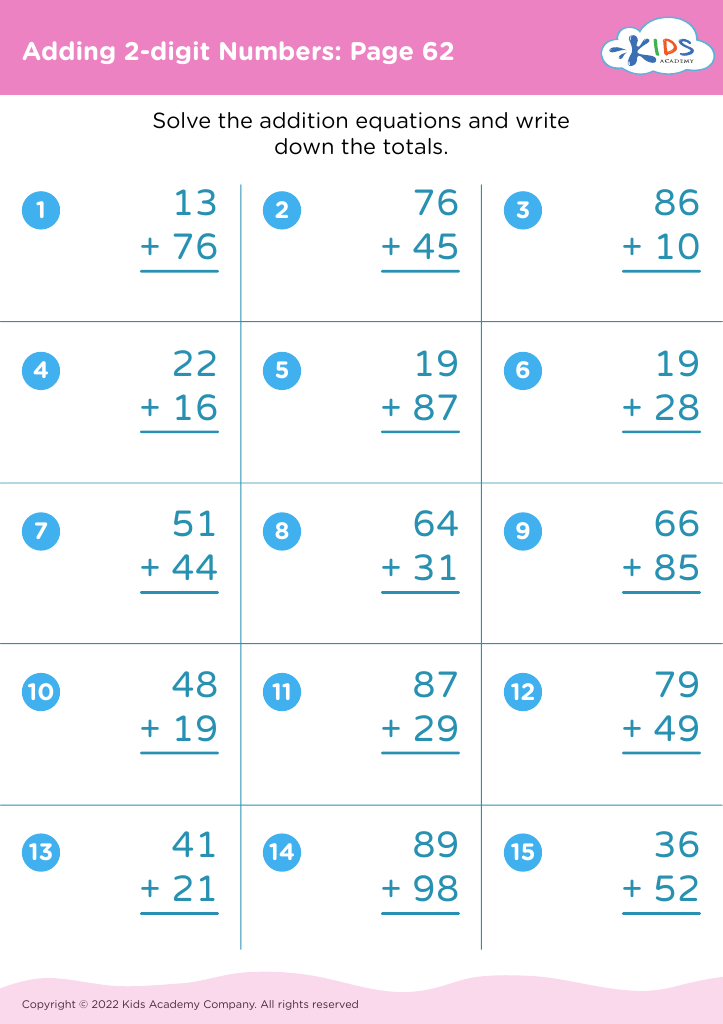
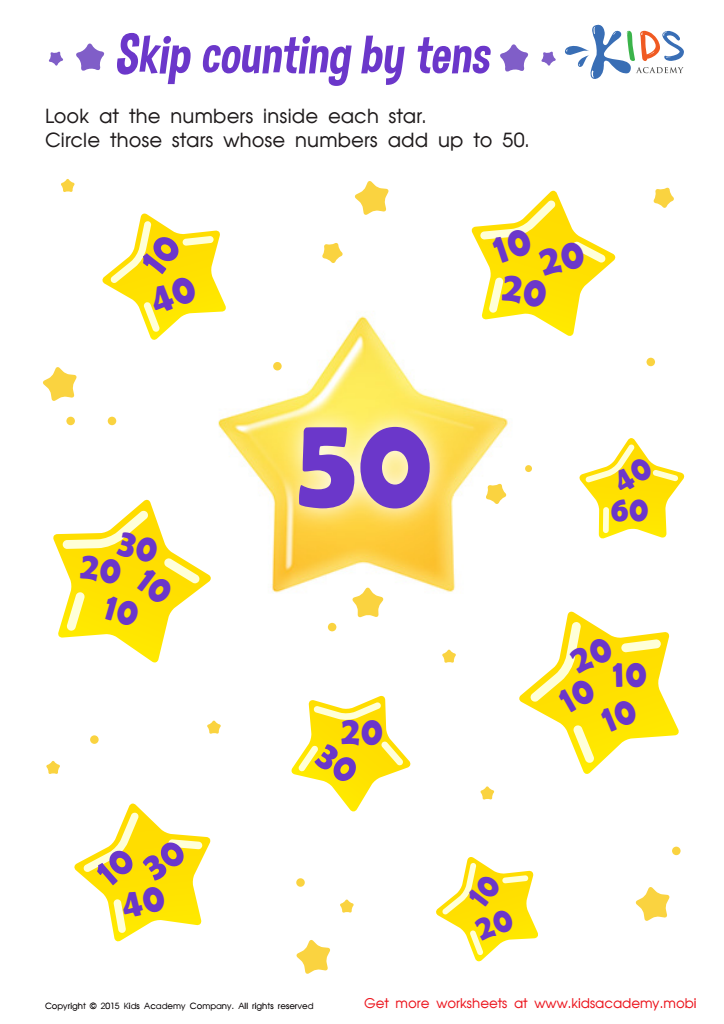
Learn Dozens: Skip Counting by Tens Printable
This skip counting by 10 worksheet helps kids strengthen fluency, practice addition & build number sense. They'll use problem-solving skills to find the correct answer, which is revealed by stars. This worksheet is a fun way to practice crucial foundational math skills.
 Assign to My Students
Learn Dozens: Skip Counting by Tens Printable
Worksheet
Join Kids Academy for Free
Who is primarily going to use this learning content?






Learning number patterns is essential for children aged 5-7 because it forms a cornerstone of early mathematical understanding. Patterns help young learners identify relationships and make sense of numbers, preparing them for more complex arithmetic and problem-solving tasks down the road. When students recognize repeating sequences, such as even numbers, odd numbers, or counting by twos, fives, or tens, they start to understand the logic behind how numbers work.
Moreover, being able to predict what comes next in a pattern boosts a child's confidence in handling numbers, which in turn fosters a positive attitude towards mathematics. Recognizing and understanding patterns also helps develop critical thinking and analytical skills. Young children who grasp basic patterns find it easier to learn more advanced mathematical concepts such as addition, subtraction, multiplication, and division.
From a broader developmental perspective, these early experiences with patterns support cognitive development, including memory, reasoning skills, and the ability to make connections in learning. In real-world contexts, the ability to see patterns assists in areas like sorting objects, time management, and cause-and-effect relationships.
Hence, by emphasizing the learning of number patterns, parents and teachers provide students with a strong mathematical foundation, equipping them with skills beneficial both in academics and daily life.








