
Letter-sound recognition Worksheets for Ages 5-7
4 filtered results
Difficulty Level
Grade
Age
-
From - To
Subject
Activity
Standards
Enhance your child's early literacy skills with our engaging letter-sound recognition worksheets designed for ages 5-7. These interactive resources help young learners connect letters with their corresponding sounds, fostering foundational reading skills essential for their educational journey. Our worksheets are tailored to be fun and age-appropriate, featuring vibrant illustrations and diverse activities that capture children's interest. With a variety of exercises, children will practice identifying letters, matching sounds, and improving their phonemic awareness. Perfect for at-home learning or classroom use, these worksheets provide a stimulating way to build confidence and proficiency in reading. Dive into the world of letters and sounds today!
Favorites
With answer key
Interactive
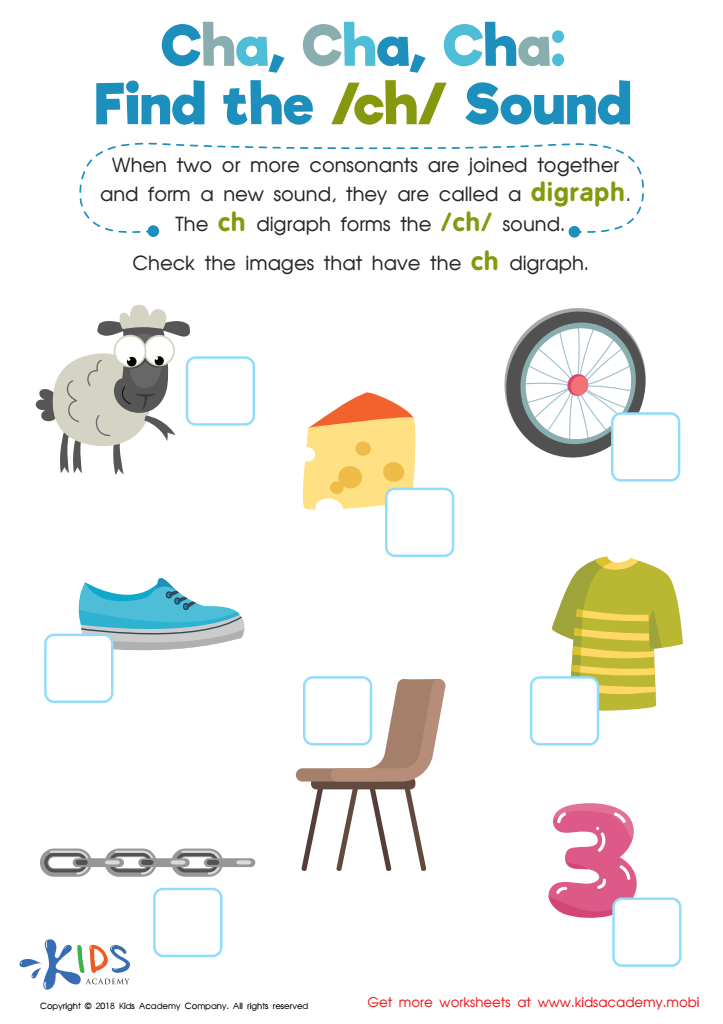
Cha, Cha, Cha: Find the /Ch/ Sound Worksheet
Have your students identify the objects in the images and if they struggle, help them check for the /ch/ digraph. This digraph forms a new sound when two or more consonants are combined, so it can be helpful to point it out to them in the colourful printout.
 Assign to My Students
Cha, Cha, Cha: Find the /Ch/ Sound Worksheet
Worksheet
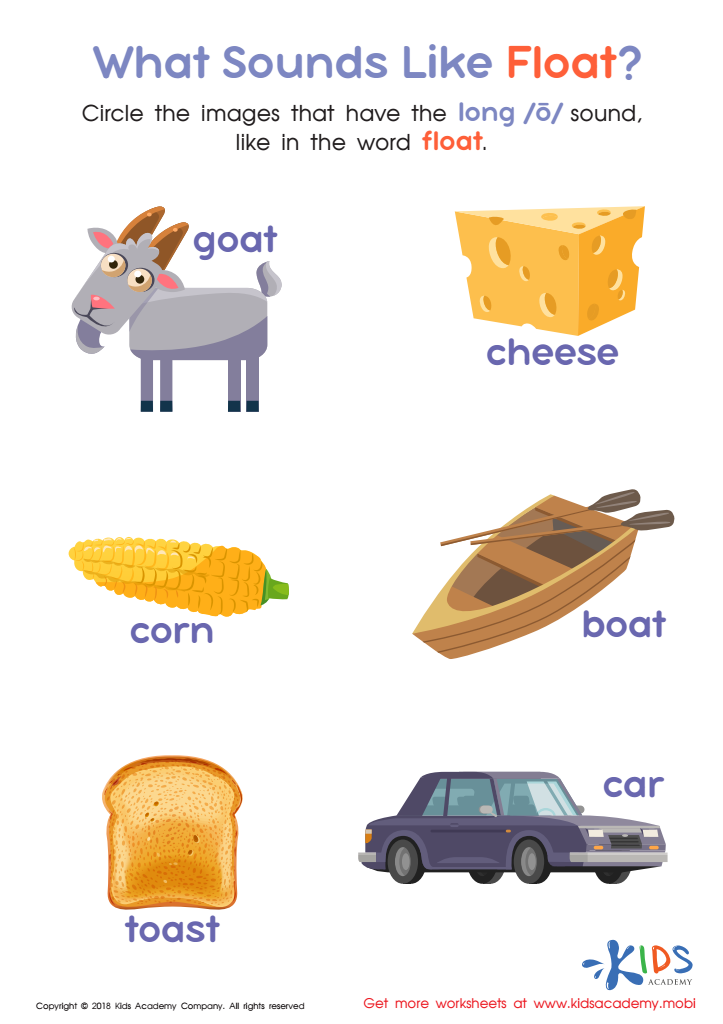
What Sounds Like Float? Worksheet
Help your kids practice the long /o/ sound with words such as 'boat', 'goat' and 'float'. Ask them to identify and circle the images in the worksheet that have the same sound. Award bonus points if they come up with more words with 'oa' spelling!
What Sounds Like Float? Worksheet
Worksheet
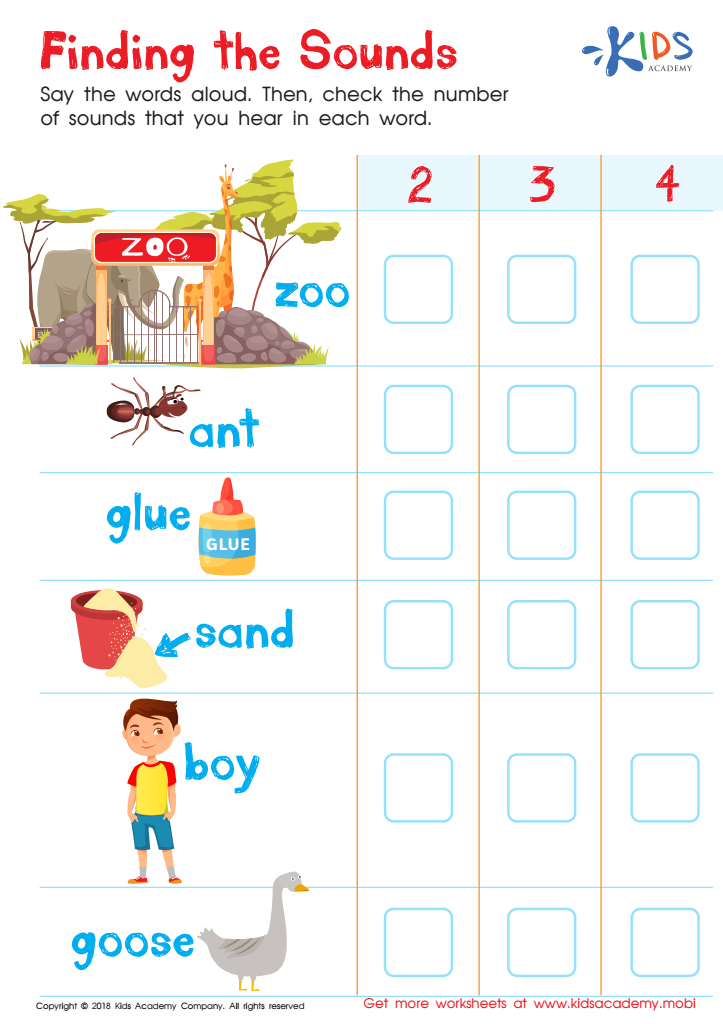
Finding the Sounds Worksheet
This free colorful worksheet assists children in learning words and breaking them down into sounds. It boosts auditory discrimination, phonological awareness and fine motor skills. Picture clues help them read confidently, and they can check the appropriate boxes to practice their reading skills.
Finding the Sounds Worksheet
Worksheet
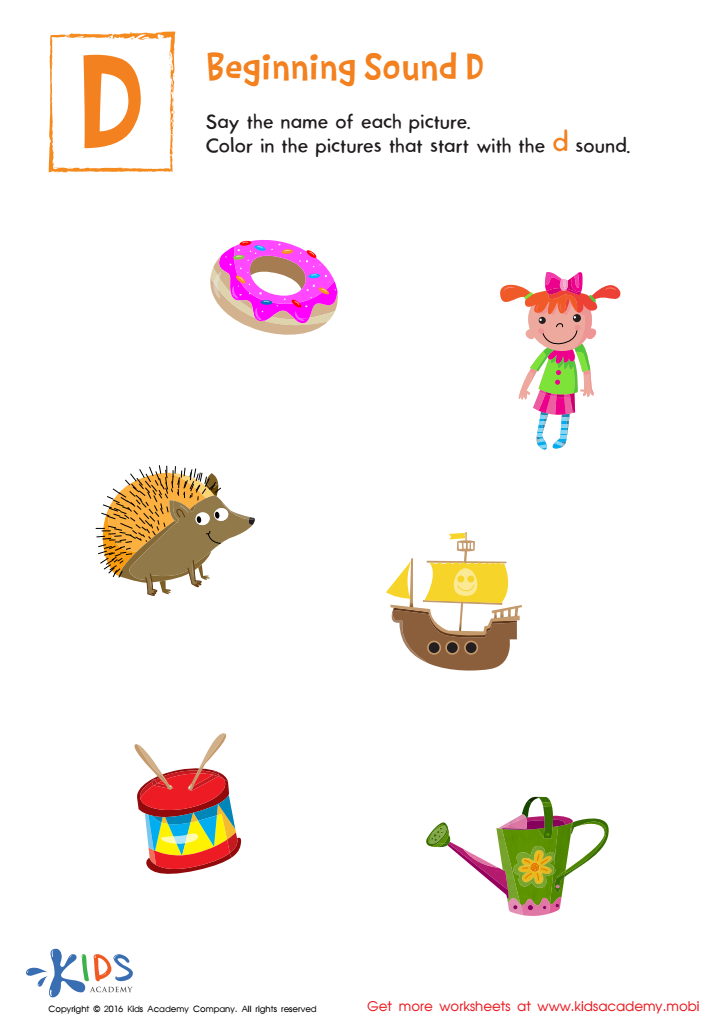
Beginning Sound D Worksheet
Reinforce phonics with this vibrant beginning sound d worksheet! Pictures help kids identify words beginning with 'd' and develop early reading skills. Sounding out each word increases literacy!
Beginning Sound D Worksheet
Worksheet
Join Kids Academy for Free
Who is primarily going to use this learning content?







Letter-sound recognition is a crucial skill for children aged 5-7 as it lays the foundation for reading and writing development. During these formative years, students begin to decode words, connecting letters with their corresponding sounds, which aids in their ability to read fluently. When children recognize that each letter represents a specific sound, they can begin to blend these sounds to form words, enhancing their vocabulary and understanding of language.
Parents and teachers should care about this skill because early reading proficiency is directly linked to academic success. By fostering letter-sound recognition, caregivers play a crucial role in instilling a love for reading and fostering critical thinking skills. Encouraging practices such as phonemic awareness games, reading together, and using educational resources can significantly benefit children’s literacy development.
Moreover, strong reading skills contribute to greater confidence in children, leading to better participation in class and improved collaboration with peers. In today’s text-rich world, mastering letter-sound recognition also empowers children to navigate various forms of communication successfully. Ultimately, prioritizing this skill during ages 5-7 yields lifelong benefits, shaping competent readers and effective communicators.








