Mathematics skills Worksheets for Ages 5-7
3 filtered results
-
From - To
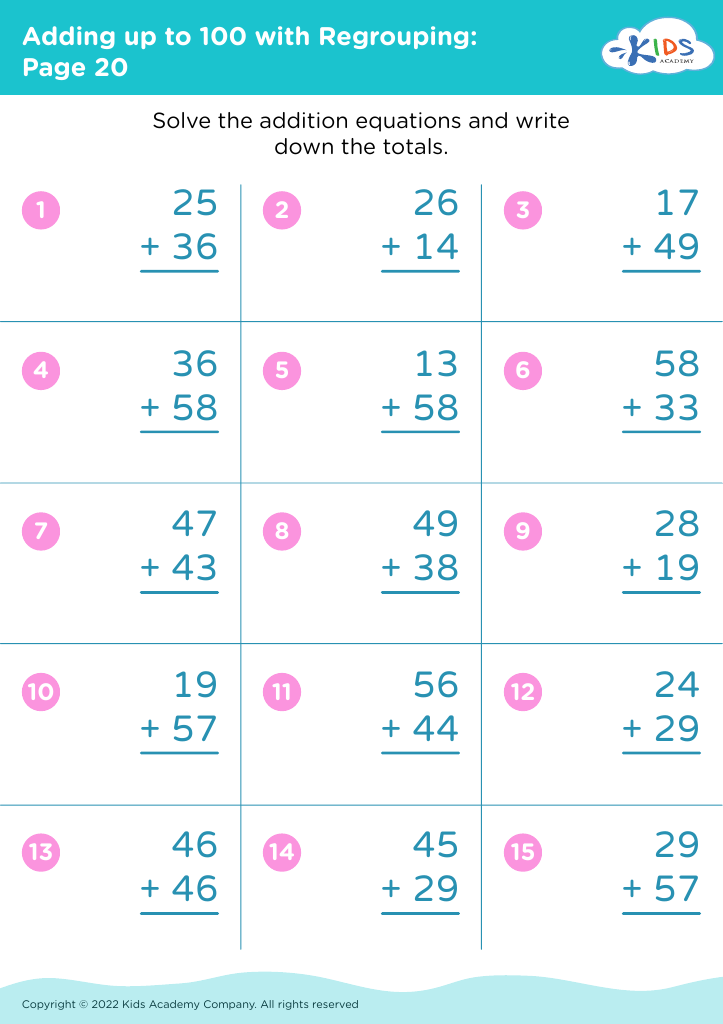
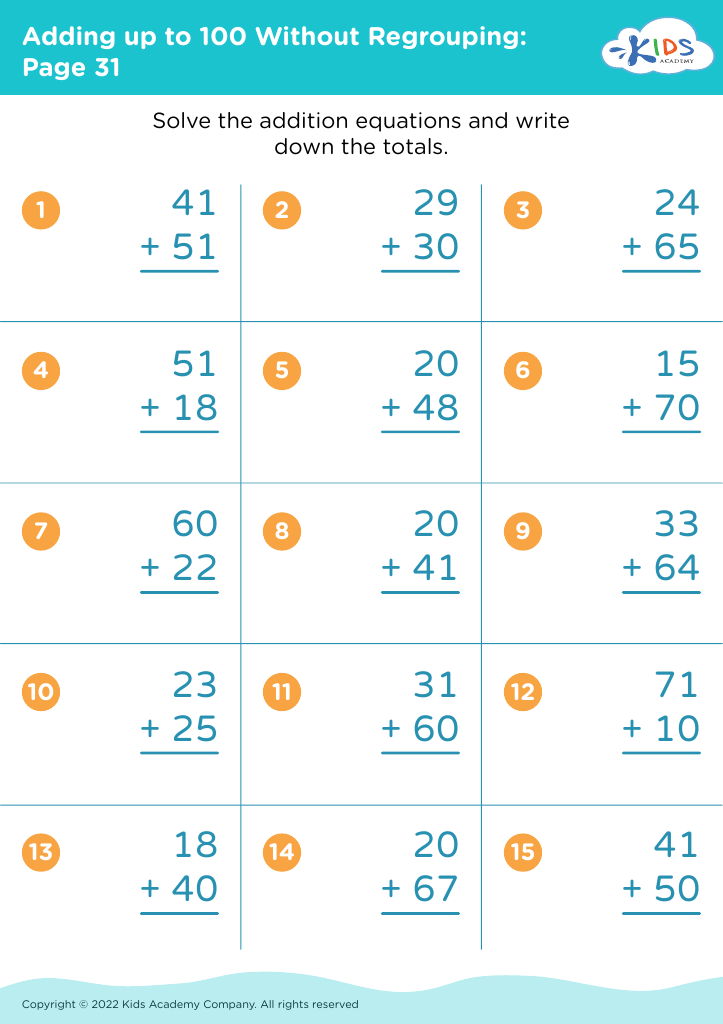
Unlock your child's potential with our Mathematics Skills Worksheets designed for ages 5-7. These expertly crafted resources are perfect for young learners, helping to build essential math competencies through engaging and educational activities. From basic number recognition and addition to simple shapes and patterns, our worksheets nurture mathematical thinking while making learning fun. Download and print a variety of colorful worksheets to keep your children excited and motivated as they develop foundational math skills. Ideal for both classroom use and at-home practice, these worksheets are a valuable addition to any growing mathematician's toolkit. Start your child's journey to math success today!
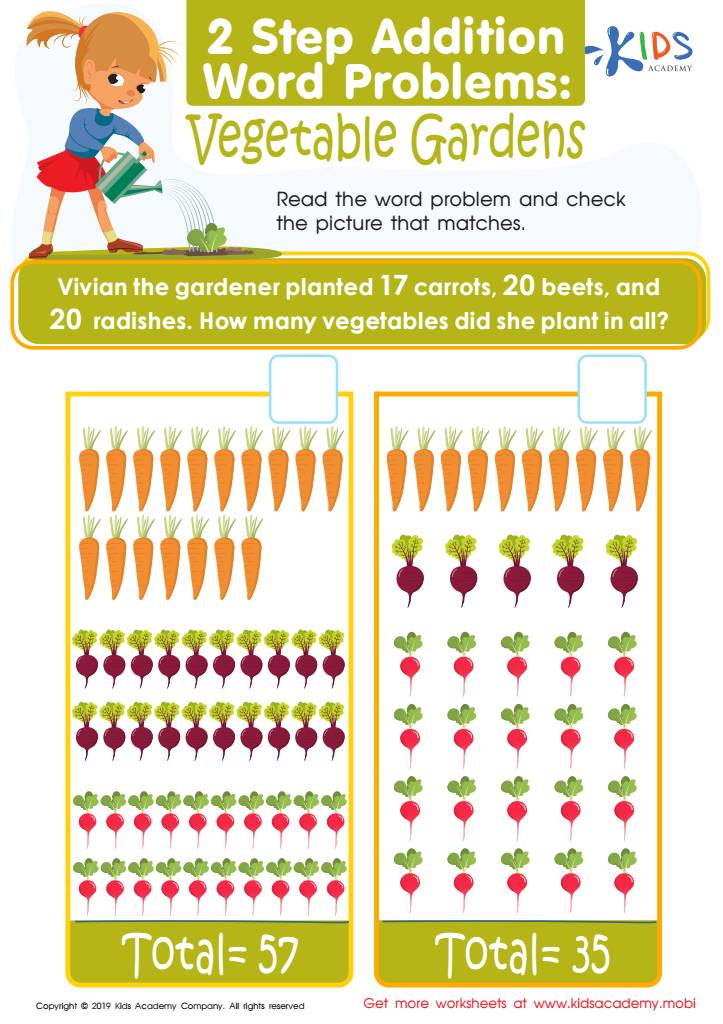
Vegetable Gardens Worksheet
 Assign to My Students








Mathematics skills for children aged 5-7 are foundational for their cognitive development and critical for future learning. At this stage, kids are highly receptive, and introducing them to basic mathematical concepts can boost their problem-solving skills, logical thinking, and reasoning. Early proficiency in counting, addition, subtraction, and understanding patterns sets a strong groundwork for more complex mathematical concepts they will encounter later in their academic journey.
Mathematics fosters not just numerical abilities but also supports literacy development. For example, recognizing patterns and sequences in numbers can help improve reading skills. Moreover, math activities encourage attention to detail and enhance concentration, skills that are transferable to all areas of learning.
In daily life, basic math skills enable children to understand and make sense of their world. Whether it’s sharing equally with friends, recognizing shapes, or understanding everyday activities like time and money, math is integral. Moreover, early success in math builds confidence, reducing anxiety and fostering a positive attitude towards learning other subjects.
Investment in early mathematical skills provides long-term educational and practical benefits. Hence, parents and teachers should ensure math is presented as engaging and fun, using games, hands-on activities, and everyday examples to help children build a love for and competence in mathematics.








