Mental math development Worksheets for Ages 5-7
3 filtered results
-
From - To
Enhance your child's mathematical abilities with our expertly designed Mental Math Development Worksheets for ages 5-7. These engaging and educational worksheets from Kids Academy focus on boosting your child’s mental calculation skills in a fun and interactive way. Perfectly tailored to young learners, each worksheet includes exercises that promote critical thinking, problem-solving, and quick numerical fluency. Whether your child is just beginning to explore numbers or looking to advance their math proficiency, our comprehensive worksheets provide challenging yet rewarding activities. Foster a strong mathematical foundation and build essential skills with our age-appropriate mental math resources.
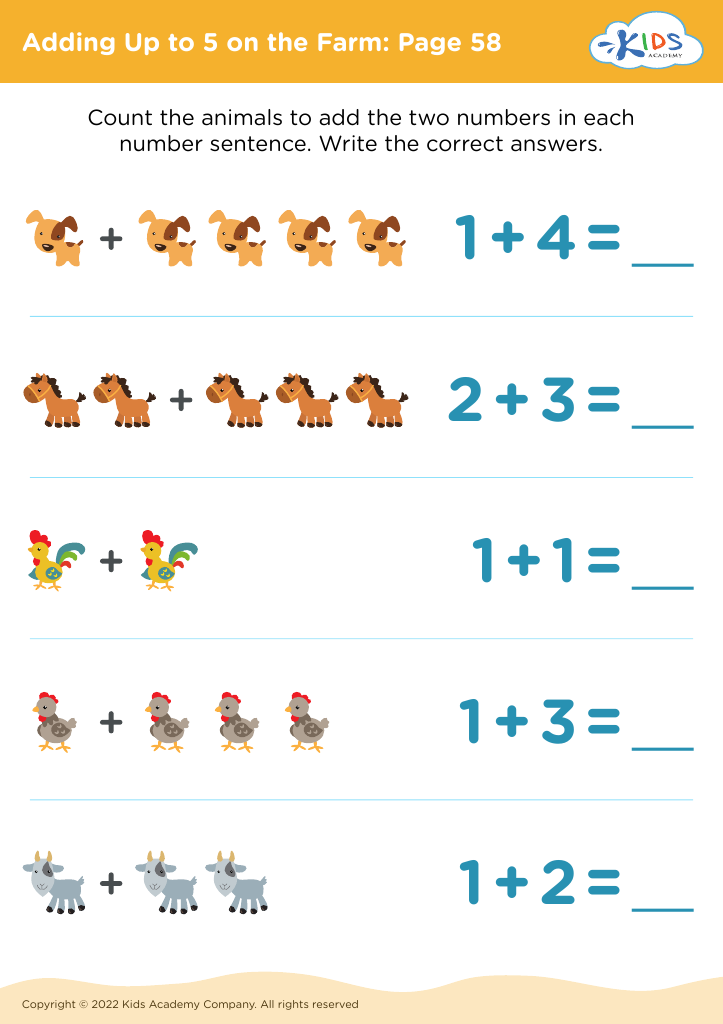
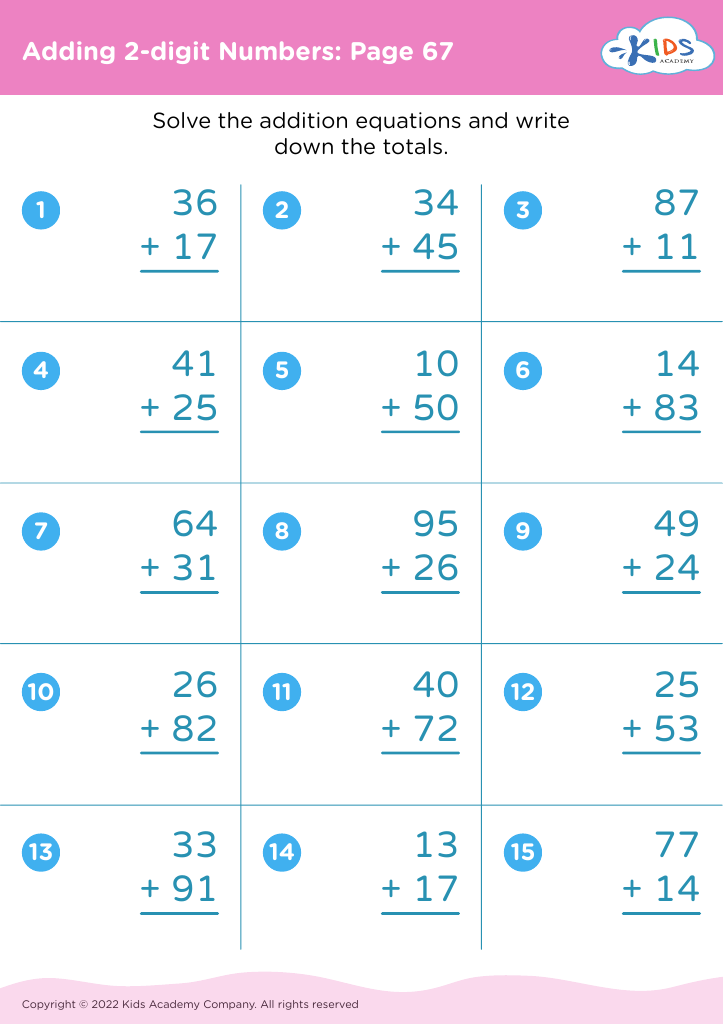
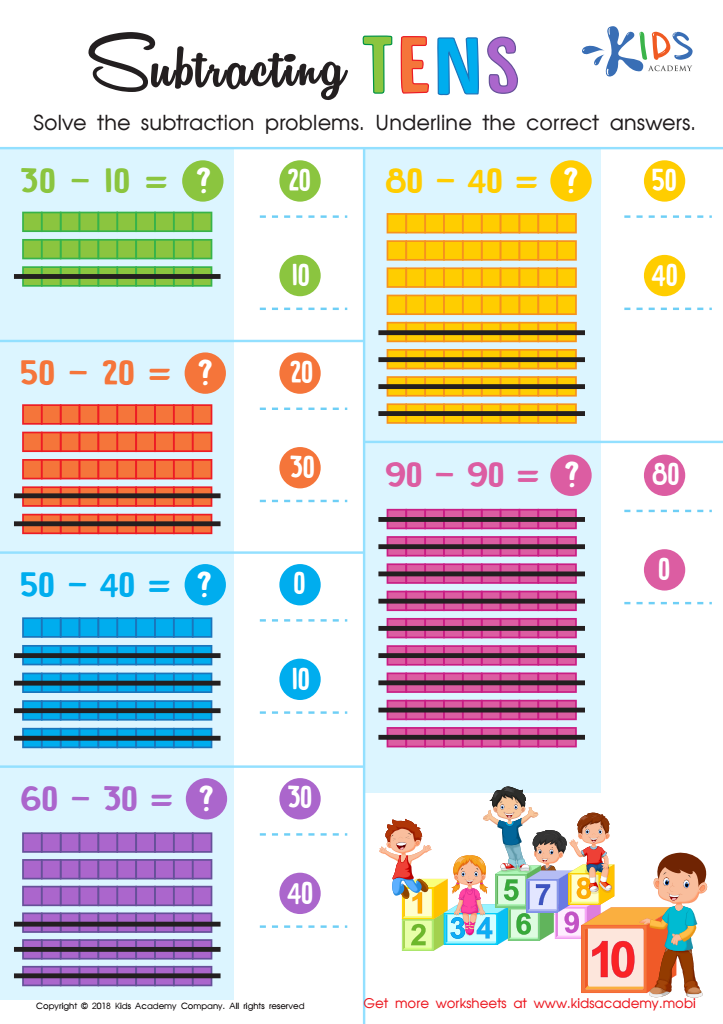
Subtracting Tens Worksheet
 Assign to My Students







Parents and teachers should prioritize mental math development for children aged 5-7 because it is foundational for their cognitive growth and academic success. At this young age, developing the ability to perform calculations mentally sharpens children's problem-solving skills, enhances memory, and boosts overall numeracy. Mental math helps children understand mathematical concepts more deeply, allowing them to see patterns and relationships between numbers.
Importantly, introducing mental math early encourages a positive attitude towards mathematics. When children can perform calculations quickly and accurately, they gain confidence in their abilities, making them more likely to engage with math throughout their education. Moreover, mental math skills are practical for everyday life, from counting change to measuring ingredients in a recipe, fostering a sense of independence.
The developmental benefits extend beyond just mathematics. Engaging in mental math activities improves children’s attention spans, cultivates logical thinking, and strengthens their ability to focus. These skills are critical for overall academic performance and can make learning in other subjects more efficient and enjoyable.
In essence, investing in mental math development during these formative years equips children with vital skills that are crucial for their academic journey and daily life, laying a solid foundation for future success.








