Number comparison skills Worksheets for Ages 5-7
3 filtered results
-
From - To
Enhance your child's mathematical abilities with our engaging Number Comparison Skills Worksheets designed for ages 5-7! These printable resources are perfect for young learners, helping them develop crucial skills in recognizing, comparing, and ordering numbers. Through colorful activities and interactive exercises, children will build confidence as they practice more than, less than, and equal to concepts. Our worksheets encourage critical thinking while making learning fun and accessible. Ideal for parents and educators, these resources support early math education, fostering a solid foundation for future learning. Download now and watch your child's number comparison skills flourish!
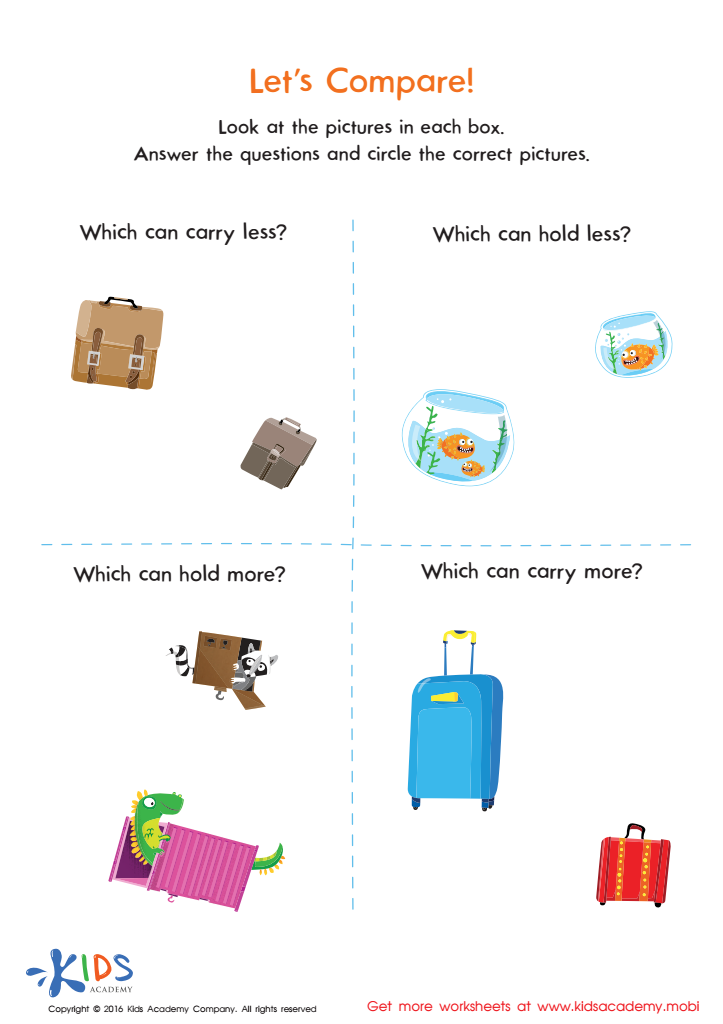
Let's Compare Worksheet: Big or Small
 Assign to My Students
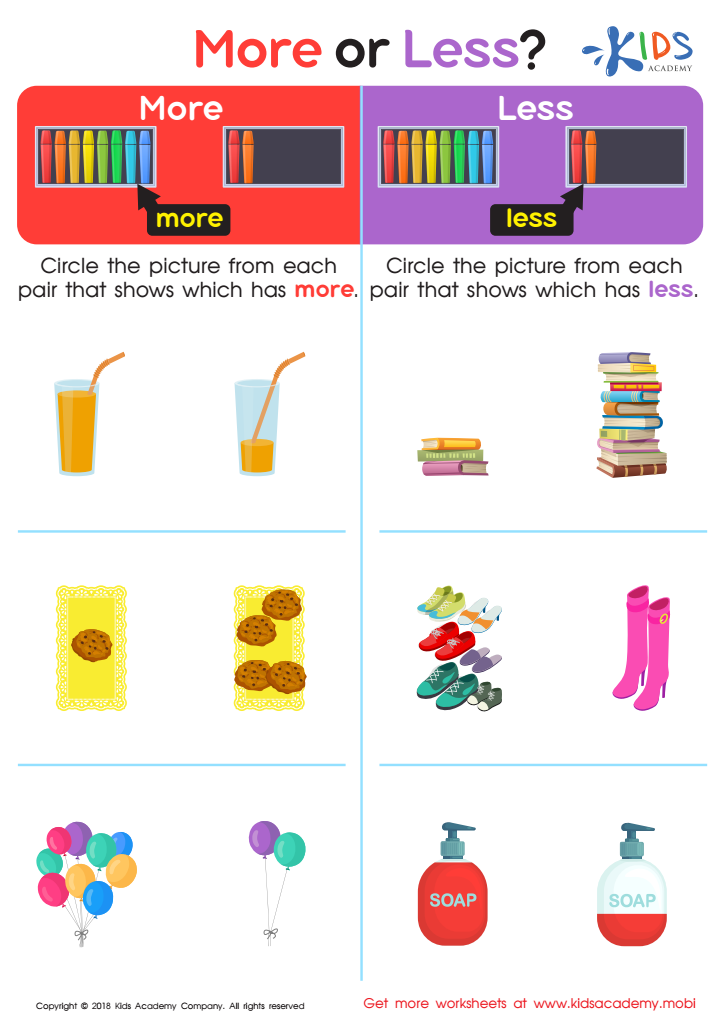
More or Less? Worksheet
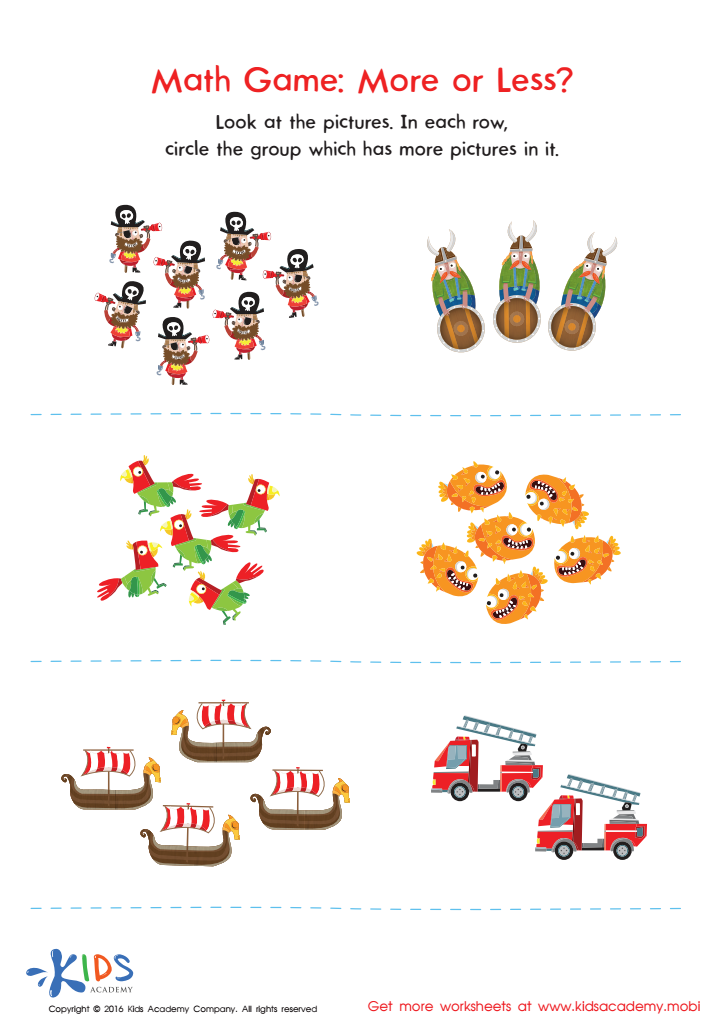
More or Less Worksheet








Number comparison skills are fundamental for children ages 5-7 as they lay the groundwork for essential mathematical concepts. During this developmental stage, children are beginning to grasp the concept of quantity, and their ability to compare numbers directly influences their understanding of larger mathematical principles.
Firstly, honing these skills helps children develop critical thinking and problem-solving abilities. When children learn to compare numbers, they engage in analytical reasoning, which is crucial not only in math but across all subjects. This practice fosters an understanding of greater than, less than, and equal to, helping them navigate numerical relationships confidently.
Furthermore, mastery of number comparison enhances a child's confidence in math, laying the foundation for future success as they advance to more complex topics like addition, subtraction, and even basic algebra. This confidence can positively impact their overall attitude towards learning, encouraging a love for math as they recognize their progress.
Lastly, attention to number comparison skills promotes mathematical literacy, crucial for their everyday life experiences. From managing money to understanding measurements, these skills shape their ability to interact with the world around them. Supporting number comparison not only benefits academic development but also contributes to their lifelong problem-solving and critical-thinking skills.








