Number counting Worksheets for Ages 5-7
4 filtered results
-
From - To
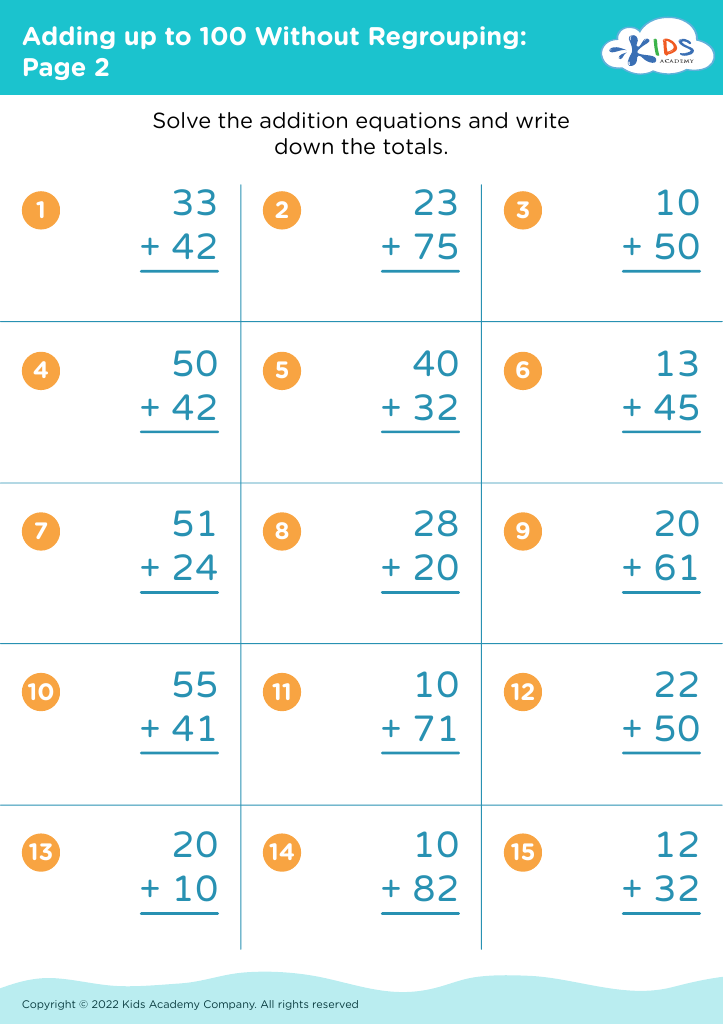
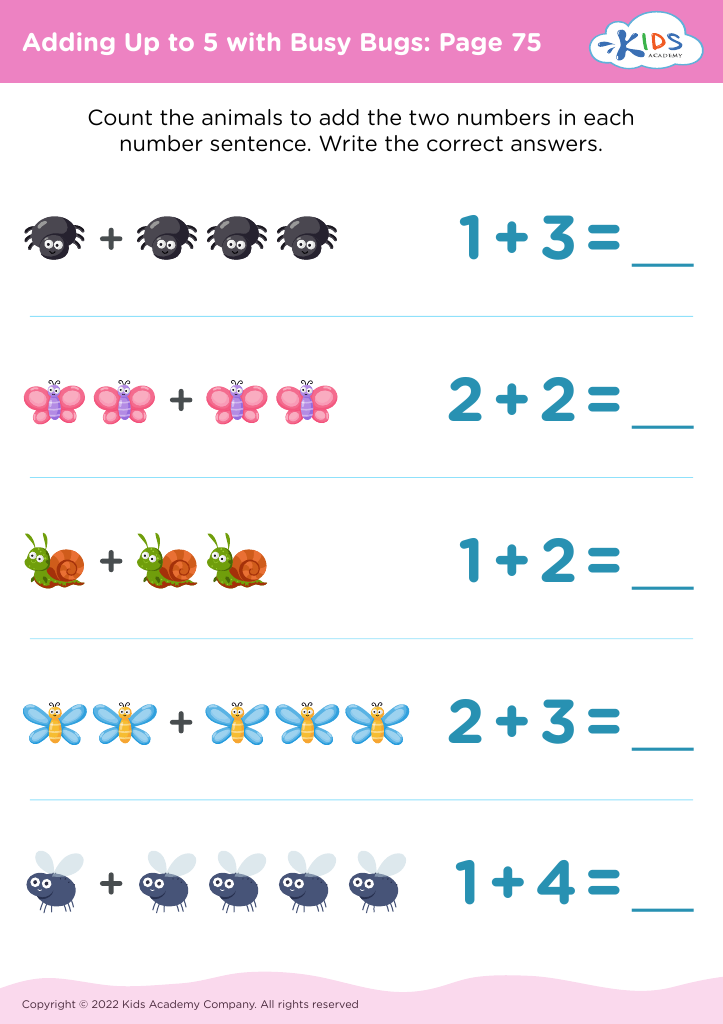
Nurture early numeracy skills with our engaging Number Counting Worksheets for ages 5-7. Carefully crafted to suit young learners, these worksheets feature vibrant illustrations and fun activities to make counting an enjoyable experience. From counting objects and animals to practicing number sequences, our resources provide a solid foundation for mathematical growth. Suitable for home and classroom use, each worksheet aims to build confidence, improve accuracy, and spark a love for numbers. Download now to help your child embark on a journey of academic success and skillful counting. Explore our extensive collection and turn learning into a delightful adventure!
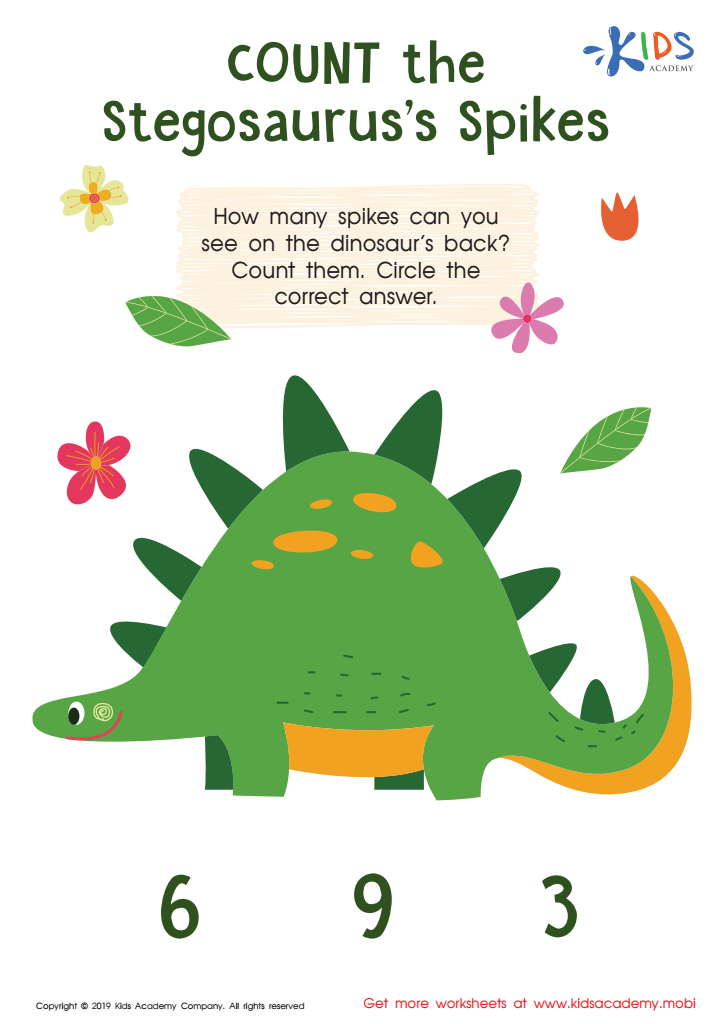
Count the Stegosaurus's Spikes Worksheet
 Assign to My Students
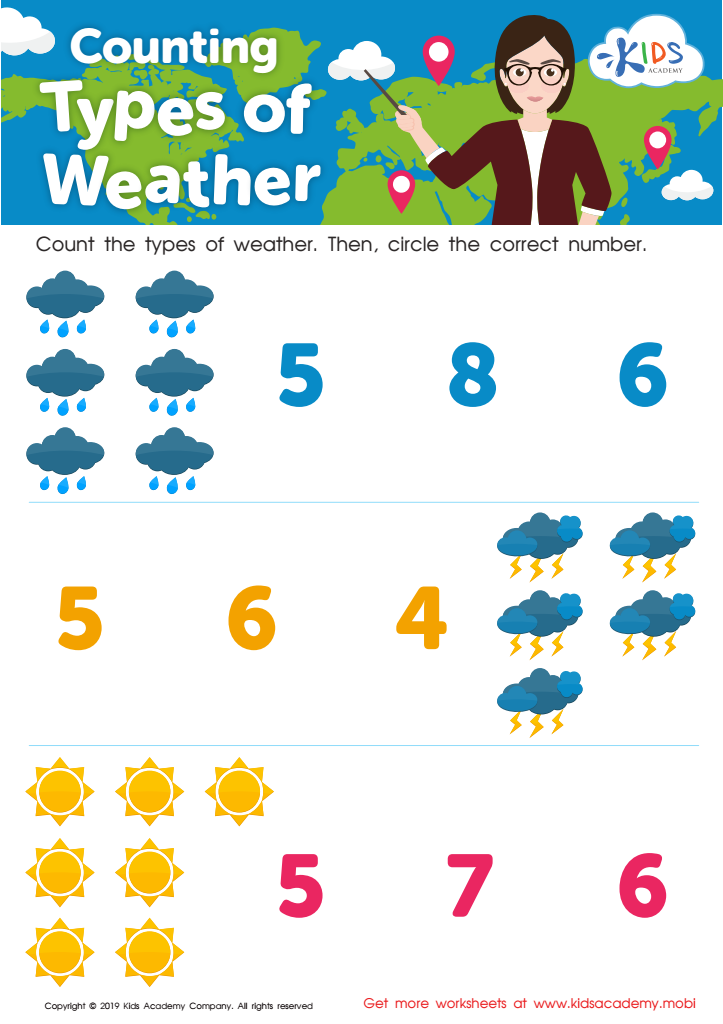
Counting Types of Weather Worksheet





.jpg)


Number counting for ages 5-7 is a foundational skill that sets the stage for all future mathematical learning, making it crucial for parents and teachers to prioritize it. At this age, children are in a critical period of cognitive development and are highly receptive to learning basic numerical concepts. Counting not only helps children understand number sequences and quantities but also enhances their ability to perform simple addition and subtraction. These skills are essential for everyday tasks, such as telling time and handling money, leading to greater independence and confidence.
Moreover, mastering number counting fosters problem-solving abilities and logical thinking. Children begin to recognize patterns, make predictions, and understand relationships between numbers, all of which are fundamental elements of more complex mathematical reasoning. Engaging in counting exercises promotes focus, memory retention, and fine motor skills, especially when using physical objects like beads or blocks.
Encouraging a child's interest and proficiency in counting also cultivates a positive attitude toward math, opening the door for a lifetime of academic success. Parents and teachers who emphasize the importance of counting provide children with the tools they need to excel in a wide range of disciplines, thereby ensuring their skills are well-rounded.








