Practicing mental arithmetic Worksheets for Ages 5-7
3 filtered results
-
From - To
Welcome to our engaging collection of mental arithmetic worksheets tailored for children aged 5 to 7! Designed to enhance your child's mathematical skills, these worksheets offer fun, interactive exercises that encourage quick thinking and problem-solving. With a blend of addition, subtraction, and simple word problems, each worksheet provides a targeted approach to building confidence in mental math. Our resources promote independent learning while making math enjoyable through colorful illustrations and relatable themes. Perfect for at-home practice or classroom use, these sheets help young learners develop essential arithmetic skills, laying a strong foundation for their education. Get started today and watch their confidence soar!
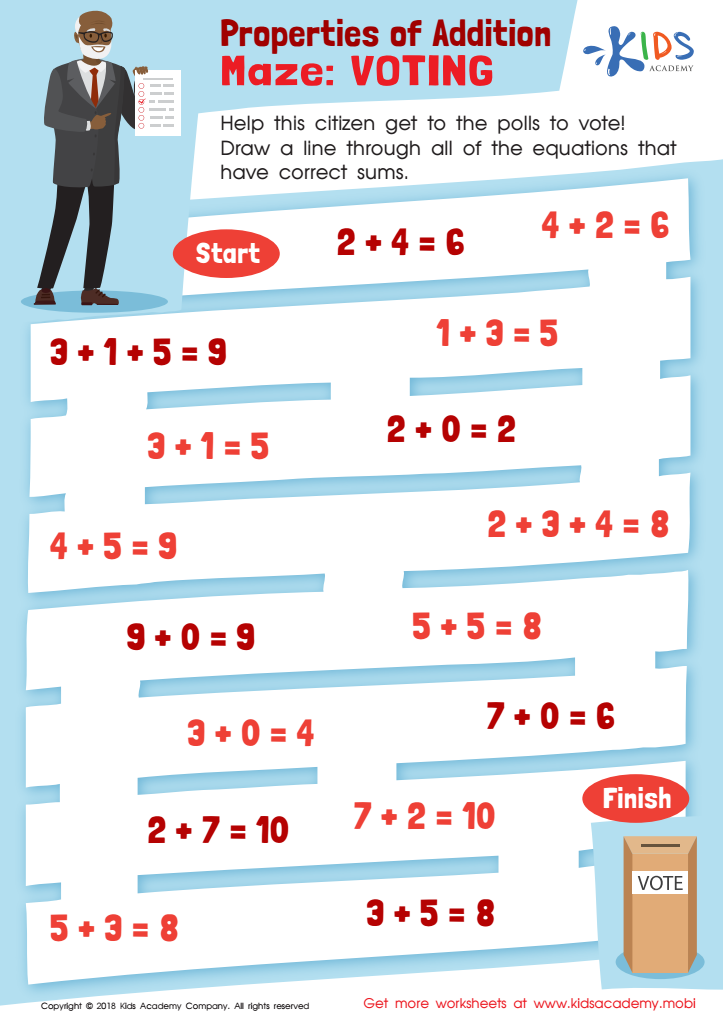
Properties of Addition Maze: Voting Worksheet
 Assign to My Students
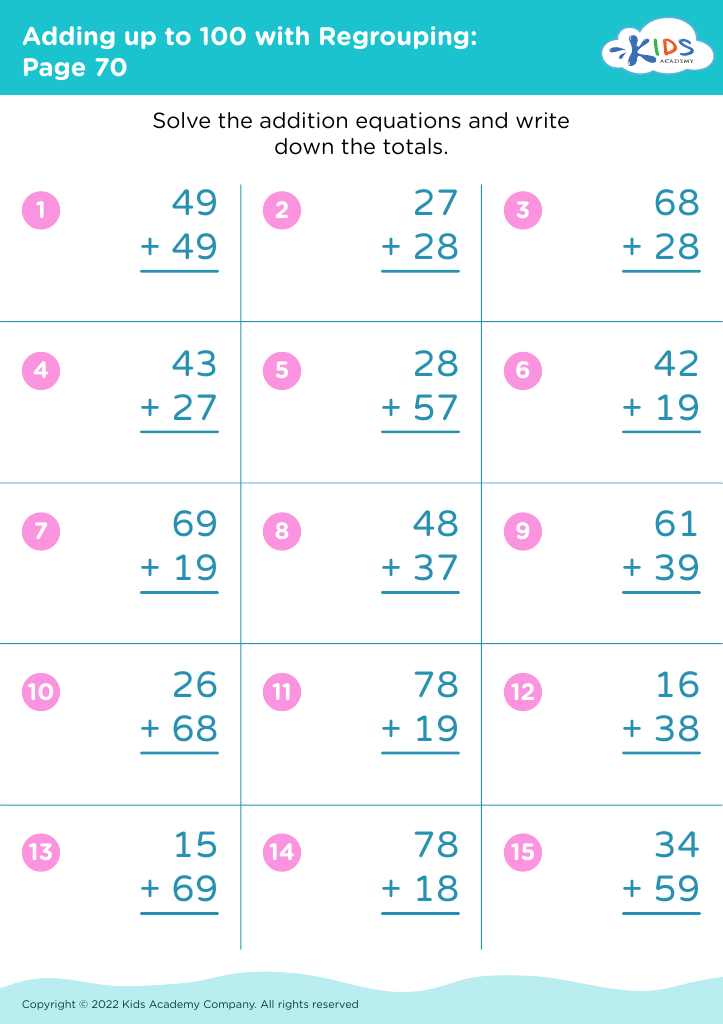
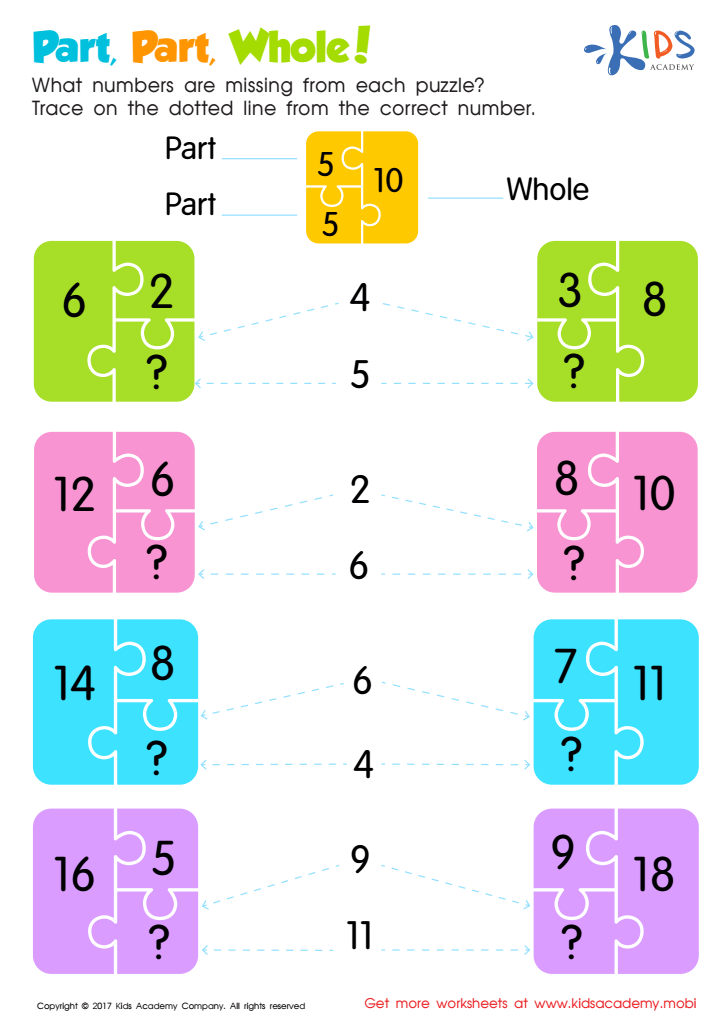
Part, Part, Whole Worksheet







Practicing mental arithmetic for children aged 5-7 is crucial for several reasons. At this developmental stage, children are building foundational math skills that have far-reaching implications for their future academic success. Mental arithmetic not only enhances numerical fluency but also fosters critical cognitive skills such as problem-solving and logical thinking.
Engaging in mental calculations helps young learners develop a strong number sense, making it easier for them to understand more complex mathematical concepts later. This skill also encourages confidence, as children become more comfortable handling numbers, which can positively impact their overall attitude toward math.
Furthermore, mental arithmetic promotes concentration and a good working memory, essential skills for learning across various subjects. Practicing these skills in a playful and exciting manner (like through games or interactive activities) can deepen children's interest in mathematics and promote a positive learning environment.
Importantly, these skills are not just math-specific; they promote mental agility applicable in daily scenarios, from shopping to problem-solving in life situations. Thus, it is important for parents and teachers to actively encourage mental arithmetic practice, making it a fun and integral part of early learning to set the stage for long-term academic and life success.








