Problem solving enhancement Worksheets for Ages 5-7
3 filtered results
-
From - To
Discover our Problem Solving Enhancement Worksheets tailored for ages 5-7, designed to boost critical thinking and decision-making skills. At Kids Academy, our carefully crafted worksheets promote cognitive development through fun activities, puzzles, and engaging scenarios. Each worksheet aims to stimulate young minds, fostering creativity and logical reasoning in an enjoyable, educational format. Perfect for parents and educators, our resources provide a comprehensive toolkit to support early learners in developing essential life skills. Watch your child's confidence soar as they navigate challenges and triumph in problem-solving tasks. Give them the head start they deserve with Kids Academy.
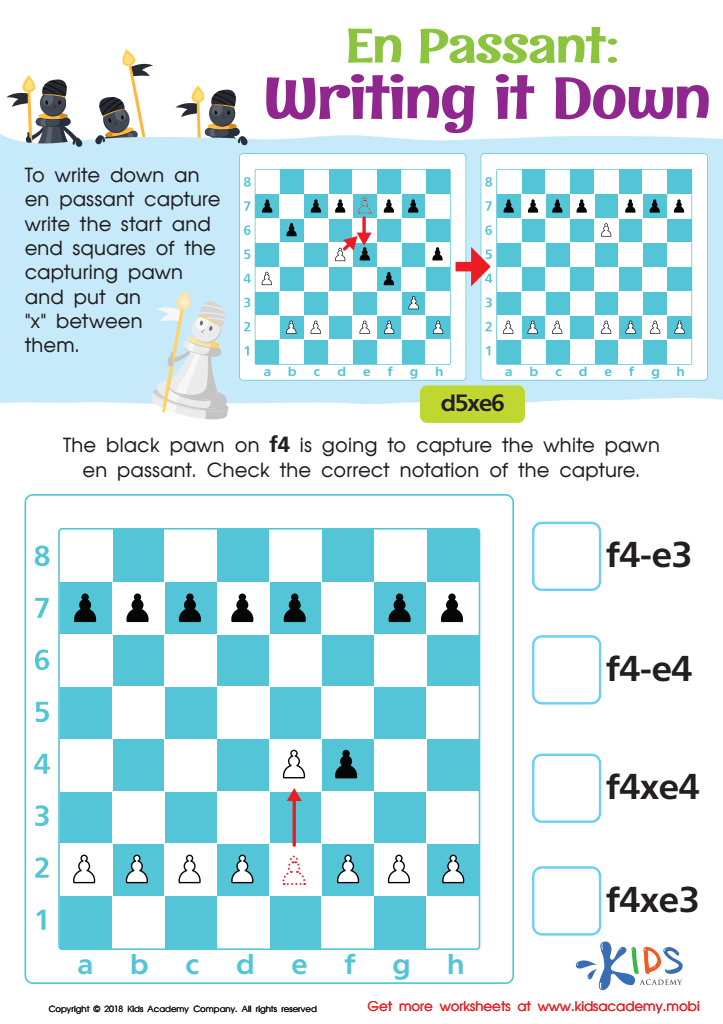
En Passant: Writing it Down Worksheet
 Assign to My Students
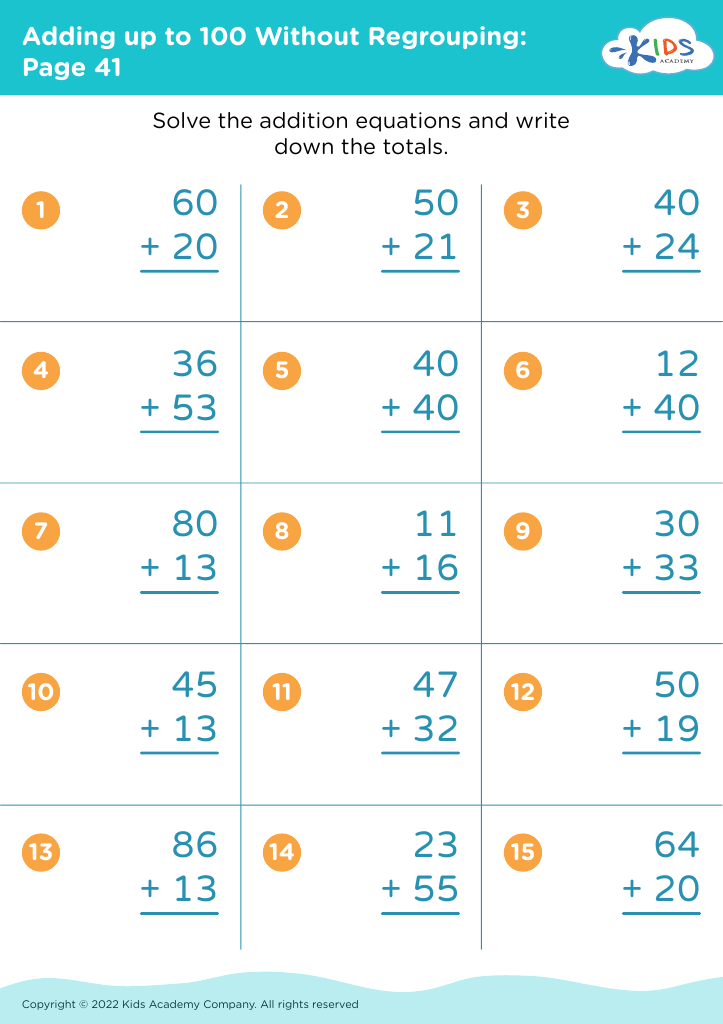

Notation of Checkmate Worksheet








Developing problem-solving skills for children aged 5-7 is crucial for their cognitive and social development. Early problem-solving practice equips children with the foundational tools they need to approach and overcome challenges both within and outside of the academic setting. At this young age, kids are naturally curious and eager to explore, making it the perfect time to nurture critical thinking.
Promoting problem-solving skills aids in fostering independence and confidence. Children learn to think creatively and logically, which helps them tackle unfamiliar tasks and make informed decisions. For instance, navigating social interactions, such as sharing toys or resolving conflicts, can greatly benefit from practiced problem-solving strategies.
In school, strong problem-solving abilities support academic success. Subjects such as math, science, and even reading comprehension benefit from a child's ability to analyze, interpret, and find solutions. These skills also translate into better overall classroom behavior, as students become more capable of following instructions and navigating challenges without constant guidance.
Moreover, building problem-solving aptitudes at this stage sets a solid groundwork for lifelong learning and adaptability. As the world evolves and becomes more complex, the ability to solve problems efficiently and creatively remains a critical asset. Thus, both parents and teachers should prioritize cultivating these skills early to ensure holistic growth and prepare children for future success.








