Problem-solving practice Worksheets for Ages 5-7 - Page 2
27 filtered results
-
From - To
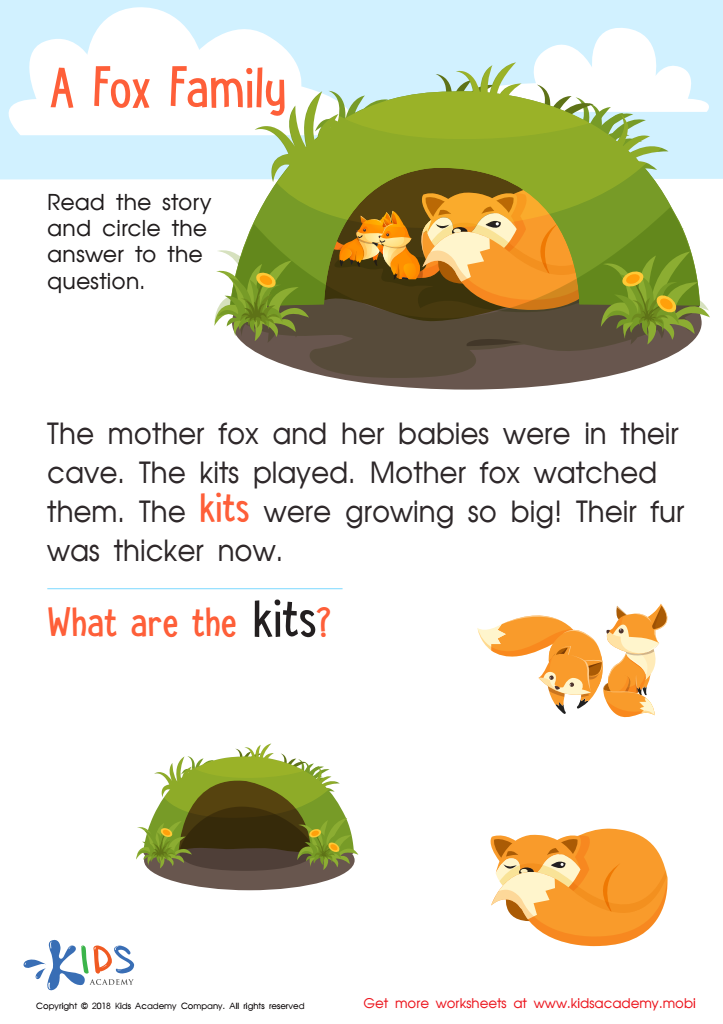
A Fox Family Worksheet
 Assign to My Students








Introducing problem-solving practice to children ages 5-7 is crucial for their cognitive and emotional development. At this early stage, young minds are particularly receptive and rapidly developing essential skills that lay the foundation for future learning.
Firstly, problem-solving promotes critical thinking. It encourages children to observe, question, and gather information before forming solutions. This skill not only enhances their ability to tackle academic challenges but also aids in everyday decision-making.
Secondly, engaging in problem-solving nurtures creativity and innovation. Kids learn to think outside the box and explore various possibilities, fostering a mindset geared toward inventions and discoveries. This also builds their confidence as they find success in figuring things out on their own.
Additionally, problem-solving develops persistence and resilience. Children learn that not every problem has an immediate or easy solution, teaching them patience and the value of effort and perseverance. These experiences help them handle frustrations better and bounce back from failures, crucial traits for lifelong well-being.
Socially, working together with peers on problem-solving tasks enhances communication and collaboration skills. Learning to share ideas, respect different viewpoints, and negotiate solutions prepares kids for teamwork in future academic and personal endeavors.
Therefore, fostering problem-solving skills in young children equips them with vital tools for intellectual, personal, and social growth, providing a strong foundation for future success.








