Punctuation usage Worksheets for Ages 5-7
3 filtered results
-
From - To
Our Punctuation Usage Worksheets for Ages 5-7 are designed to enhance young learners' writing skills through engaging and interactive activities. These worksheets help children understand and correctly use periods, commas, question marks, and exclamation points. By practicing with age-appropriate exercises, students will improve their sentence structure and clarity, fostering better communication skills. Whether at home or in the classroom, these printable sheets make learning fun and effective, laying a solid foundation for future language development. Download now and give your child the tools they need to excel in their writing journey!
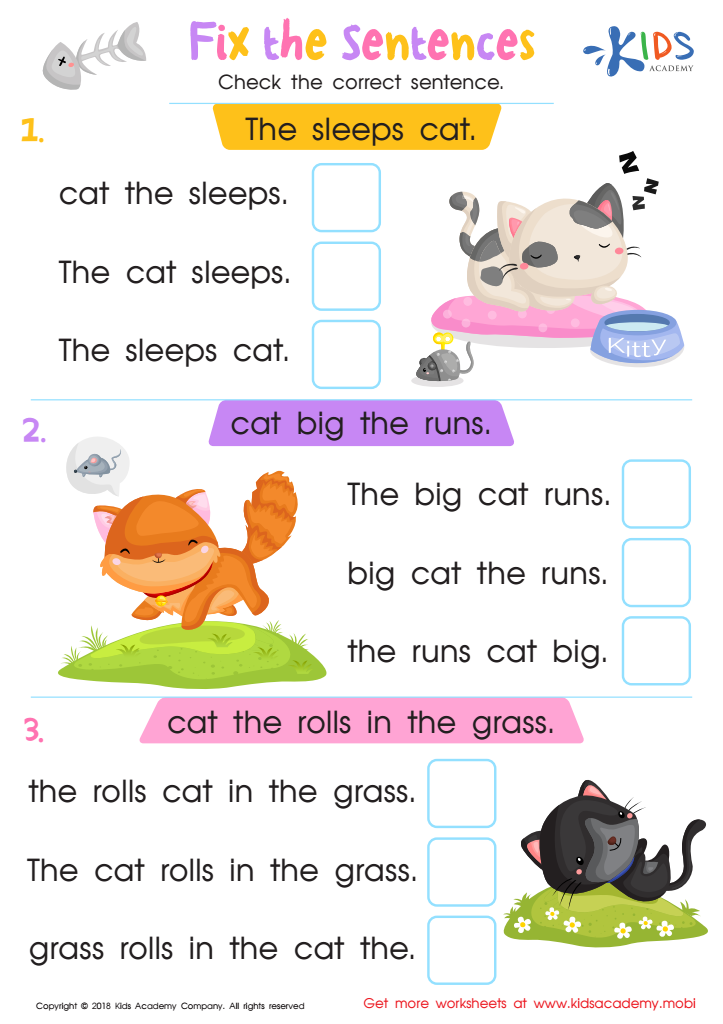
Fix the Sentences Worksheet
 Assign to My Students
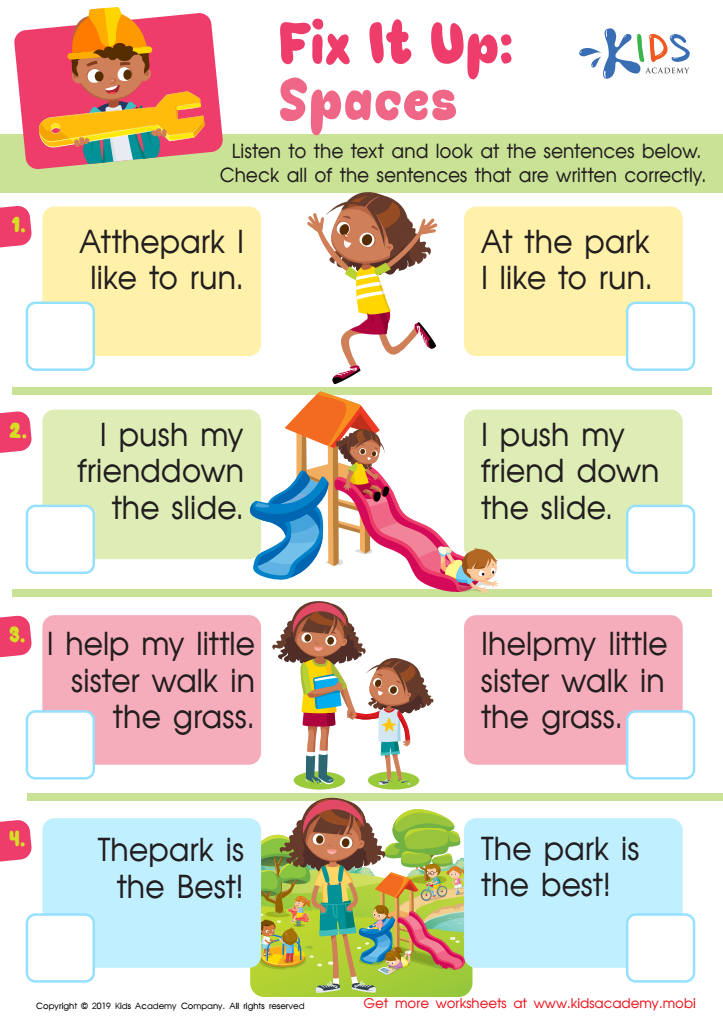
Fix Spaces Worksheet

How to Capitalize Worksheet








Good punctuation usage is essential even for young learners between the ages of 5-7, as it serves as the foundation for effective communication and literacy development. Proper punctuation helps children understand and convey meaning in their writing and reading. Without it, sentences can be confusing and misunderstandings can arise. For example, the sentence "Let's eat, Grandma!" conveys a much different meaning than "Let's eat Grandma!"
By learning punctuation early, children develop better reading comprehension skills. Punctuation marks like periods, commas, question marks, and exclamation points guide them on how to properly structure sentences, pause, and inflect their voices. This can enhance their storytelling abilities and give them the tools to be expressive writers.
Moreover, a strong grasp of punctuation sets the stage for future academic success. As children progress through school, they will be required to write essays, reports, and other structured texts where correct punctuation will be critical.
Parents and teachers play a crucial role in this learning process. They can provide children with consistent practice and positive reinforcement. Simple activities, like reading aloud and writing short sentences, can make learning punctuation enjoyable and meaningful. Ignoring this aspect of grammar could lead to long-lasting gaps in a child's writing and reading capabilities.








