Recognizing number patterns Worksheets for Ages 5-7
5 filtered results
-
From - To
Discover our “Recognizing Number Patterns Worksheets” designed specifically for ages 5-7! These engaging resources help young learners develop essential math skills by identifying and extending number sequences. With fun illustrations and interactive exercises, children will enjoy practicing patterns with numbers, enhancing their mathematical understanding through repetition and creativity. Our worksheets cater to various learning styles, making it ideal for both classroom settings and home education. Encourage your child’s love for math while building a strong foundation for future learning. Create a fun, educational experience that empowers your little ones to spot patterns, boosting their confidence in math! Explore the full collection today!
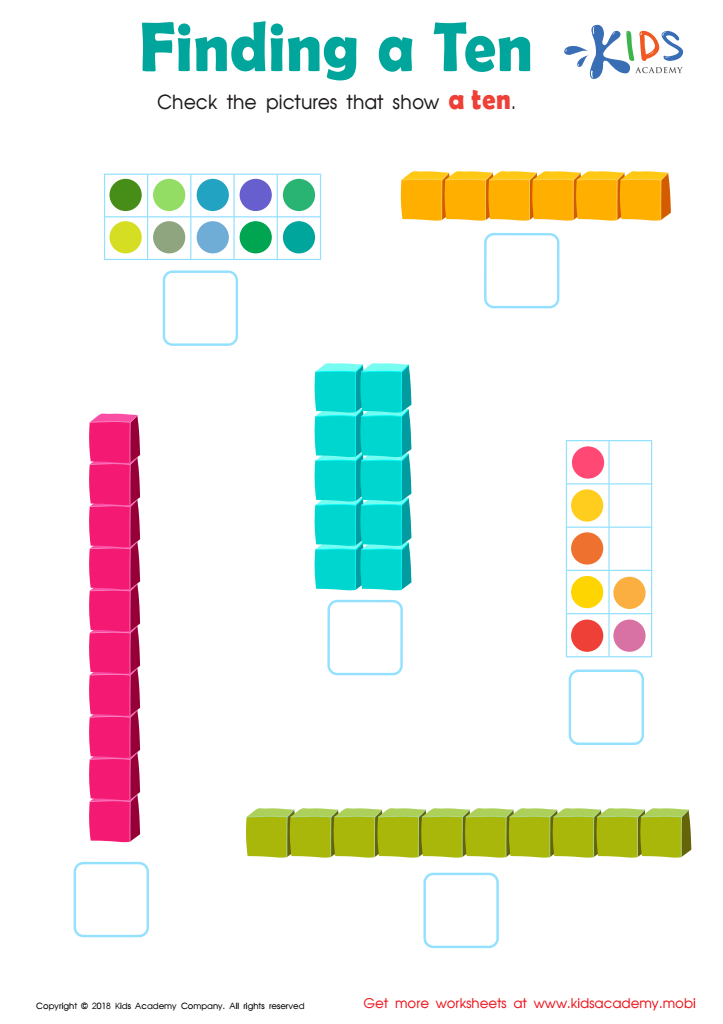
Finding a Ten Worksheet
 Assign to My Students
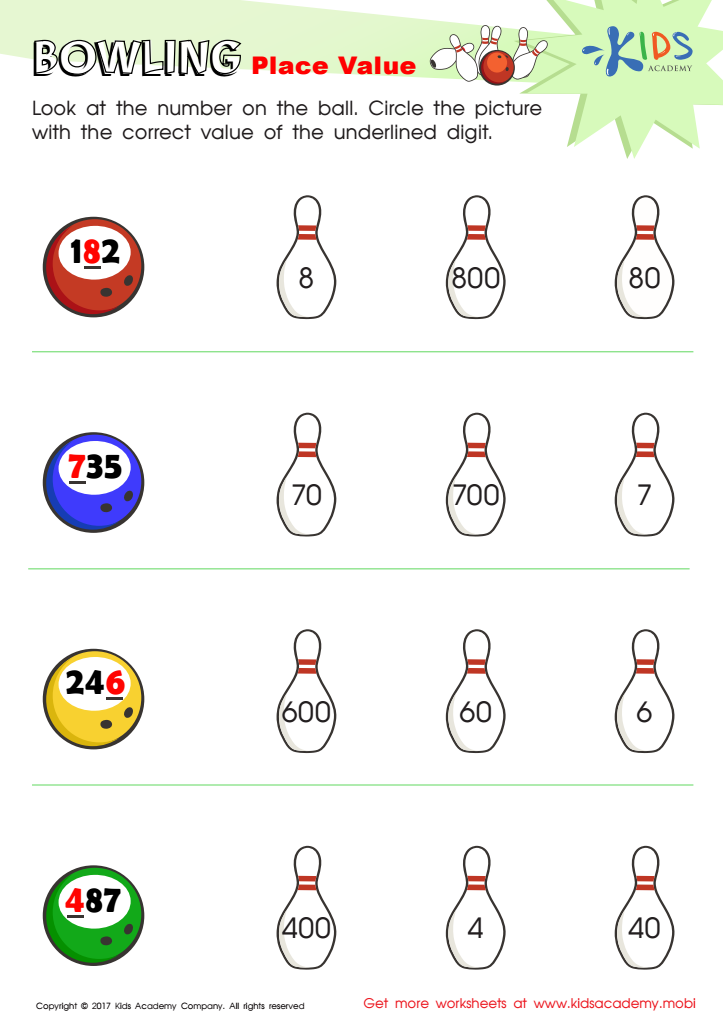
Place Value Worksheet
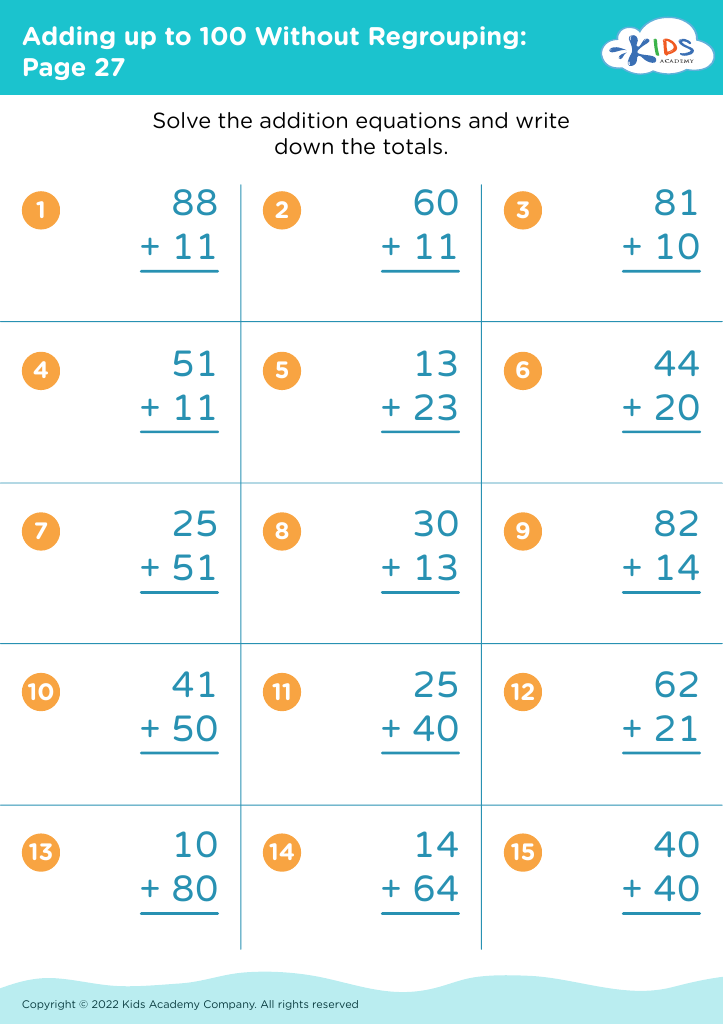
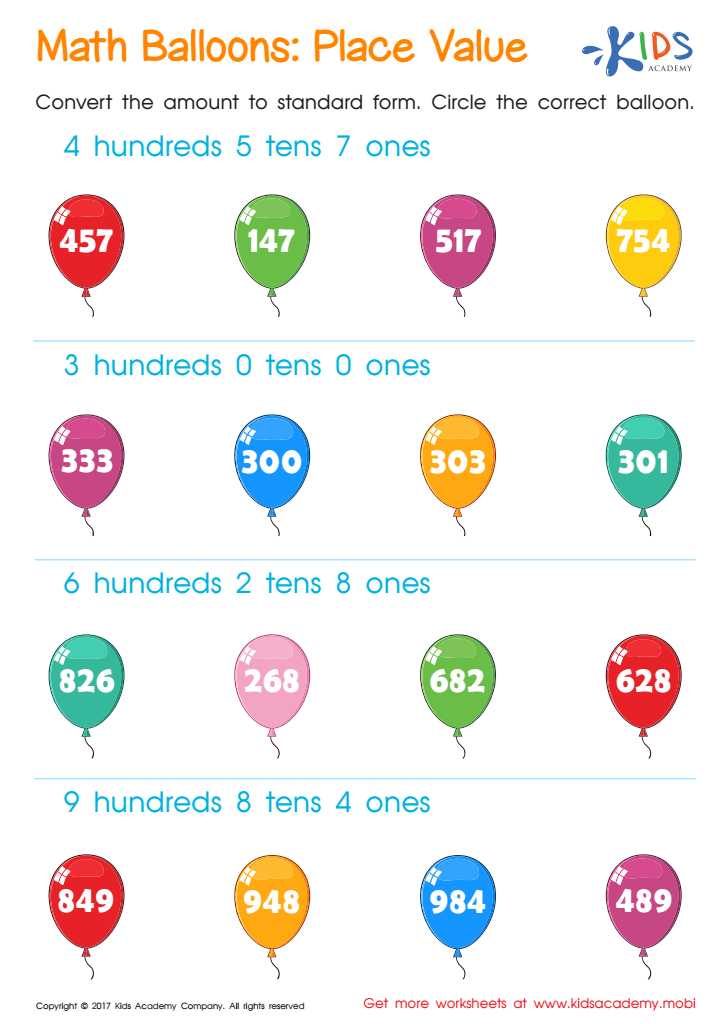
Place Value Printable Worksheet
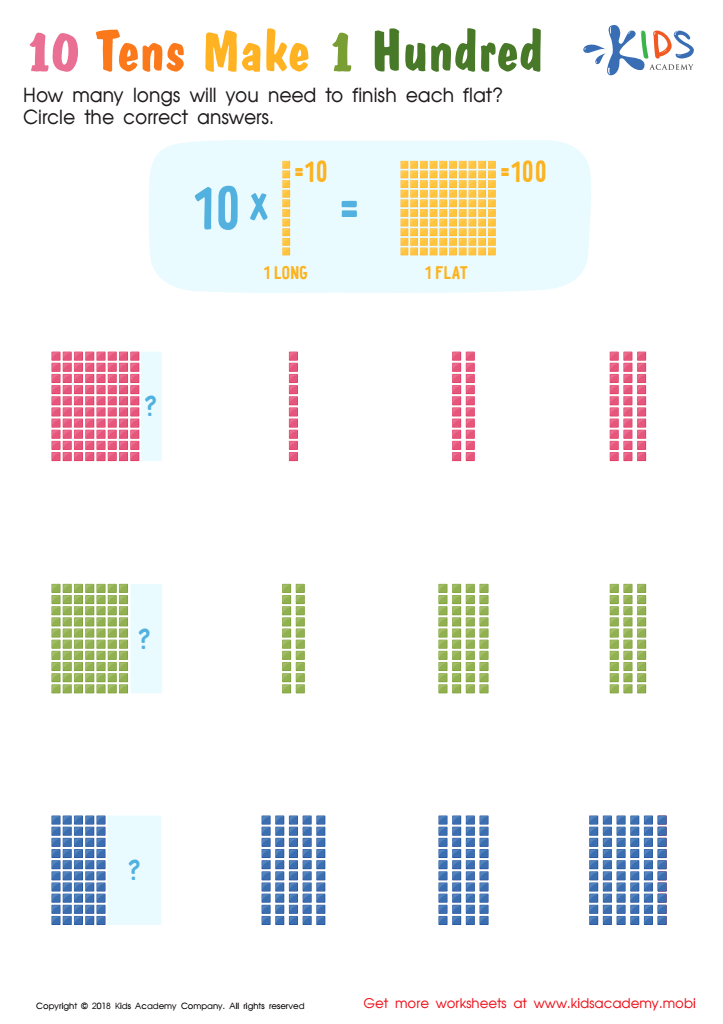
10 Tens Make 1 Hundred Worksheet








Recognizing number patterns is critical for children aged 5-7 as it lays a foundation for essential mathematical skills. During these formative years, students are developing their understanding of numbers, operations, and relationships between quantities. Recognizing patterns helps them identify sequences and predict outcomes, skills that are crucial for more advanced mathematical concepts.
By engaging with patterns, children enhance their problem-solving skills, boost their logical reasoning, and become more comfortable with mathematical concepts. Patterns can be presented through colorful visuals or through everyday objects, which makes learning enjoyable and relatable.
Moreover, understanding patterns equips children to tackle larger mathematical ideas such as addition, subtraction, and even multiplication, paving the way for more complex operations in later grades. It also helps foster critical thinking, as children learn to notice, describe, and analyze regularities in numbers.
Parents and teachers play a vital role in supporting this learning. By incorporating fun activities like games and puzzles that focus on patterns, they can encourage exploratory learning and maintain children’s interest in mathematics. Ultimately, promoting pattern recognition not only enhances numerical literacy but also builds confidence in young learners, helping them to see math as a coherent and accessible discipline.








