Understand number relationships Worksheets for Ages 5-7
4 filtered results
-
From - To
Discover engaging "Understand Number Relationships" worksheets for children ages 5-7 at Kids Academy! Our expertly designed printables help young learners grasp the foundations of number relationships through fun and interactive activities. These worksheets strengthen early math skills, promote critical thinking, and foster a deeper understanding of concepts such as counting, comparing, and identifying patterns. Perfect for both classroom use and at-home practice, our age-appropriate resources support your child's mathematical journey with colorful graphics and easy-to-follow instructions. Unlock their potential and make learning numbers an exciting adventure with Kids Academy today!
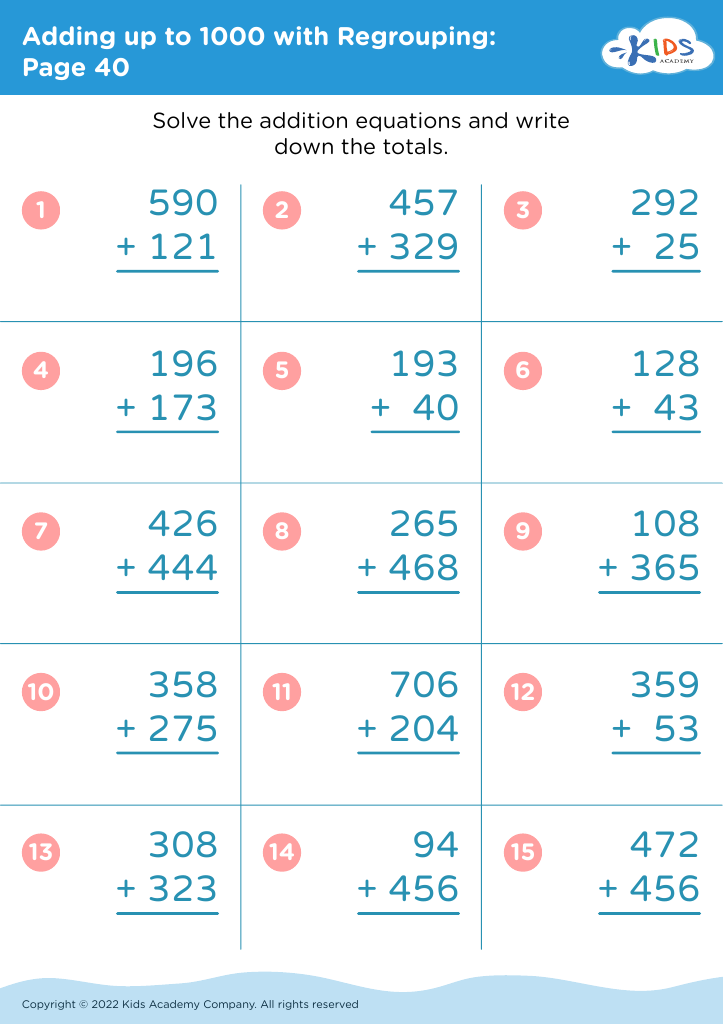
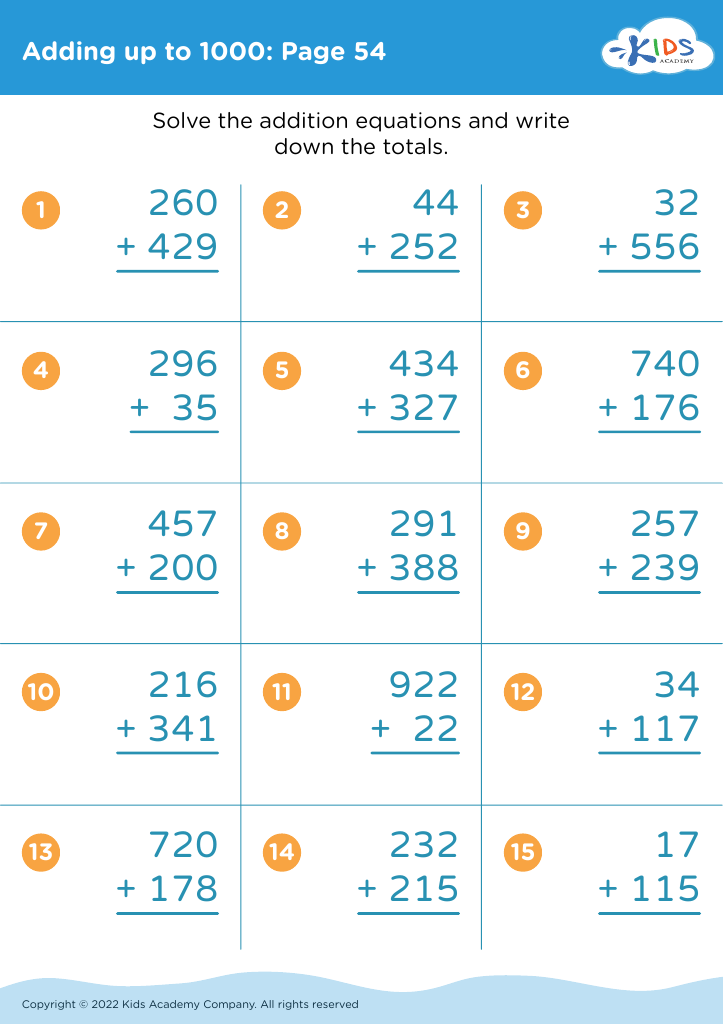
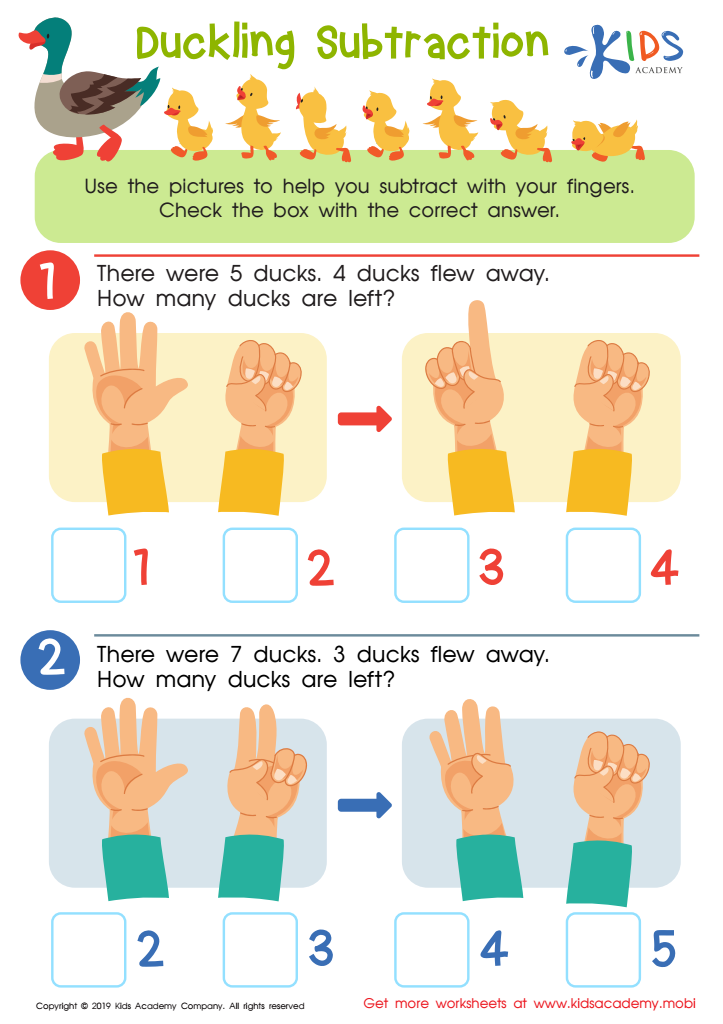
Duckling Subtraction Worksheet
 Assign to My Students


.jpg)




Understanding number relationships is crucial for children aged 5-7 because it lays the foundation for all future mathematical learning. During these formative years, children transition from recognizing numbers to comprehending how they relate to one another through concepts like addition, subtraction, and comparison. This early understanding fosters number sense—a vital skill that enables kids to make logical guesses, recognize patterns, and grasp more complex math concepts later on.
Parents and teachers should prioritize teaching number relationships because it develops critical thinking and problem-solving skills. For instance, when children learn that by combining two smaller groups, they can form a larger group (adding), or splitting a group into smaller ones (subtracting), they gain a flexible understanding of numbers. These foundational skills are not only applicable in math classrooms but also in everyday decision-making, like sharing toys or determining if they have enough money to buy something.
Furthermore, early mastery of number relationships can boost a child's confidence and positive attitude towards math, reducing math anxiety later in life. Active involvement from parents and teachers through engaging activities and real-world applications can make learning these concepts enjoyable, thereby encouraging a lasting interest and proficiency in mathematics.








