Understanding comparisons Worksheets for Ages 5-7
5 filtered results
-
From - To
Unlock the power of learning with our "Understanding Comparisons Worksheets" designed specifically for ages 5-7! These engaging worksheets help young learners grasp essential comparison concepts, such as greater than, less than, and equal to, through vibrant visuals and interactive activities. Our carefully crafted resources promote critical thinking and enhance early math skills, ensuring a fun and educational experience. Ideal for use in classrooms or at home, these worksheets offer a variety of exercises that cater to different learning styles. Empower your child’s understanding of comparisons today and watch them gain confidence in their math abilities! Explore our resources now!
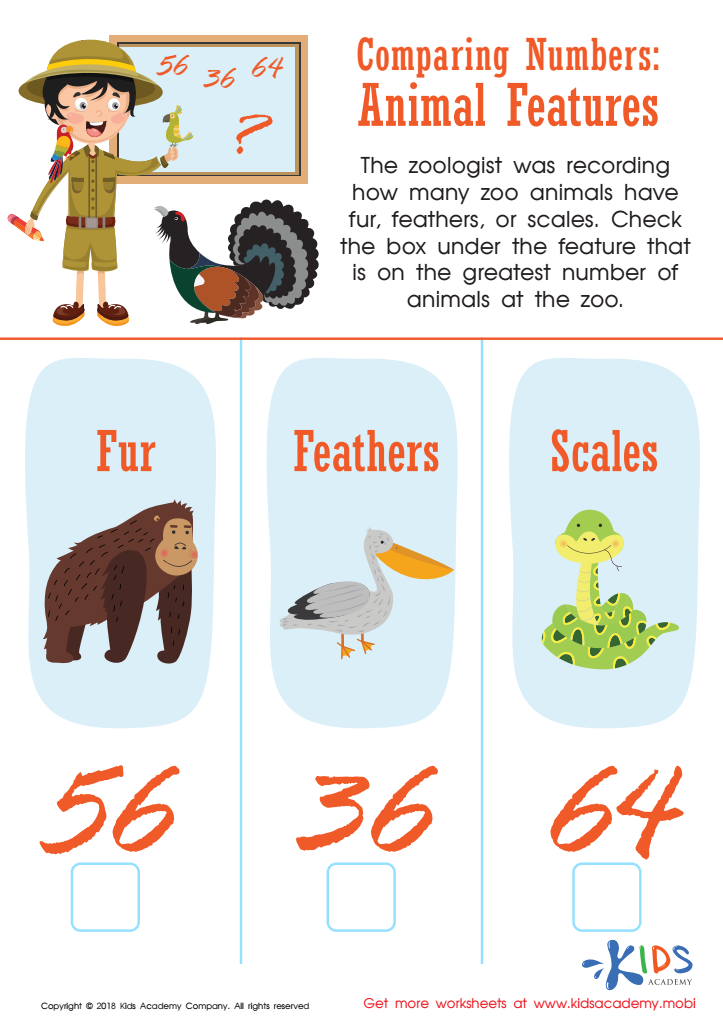
Animal Features Worksheet
 Assign to My Students
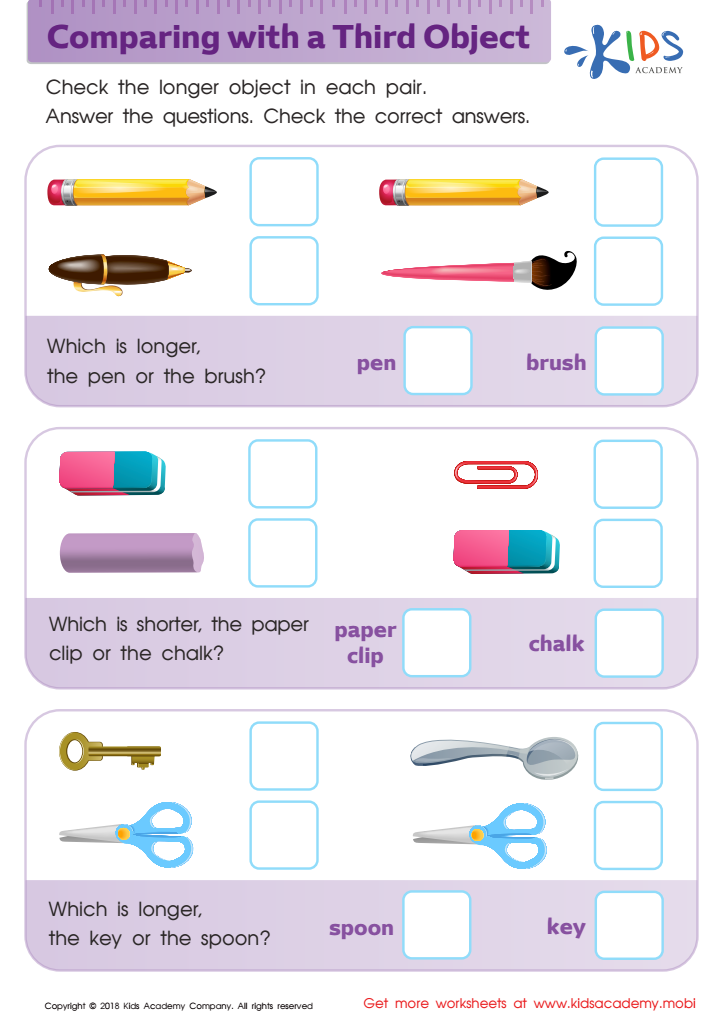
Comparing with a Third Object Worksheet
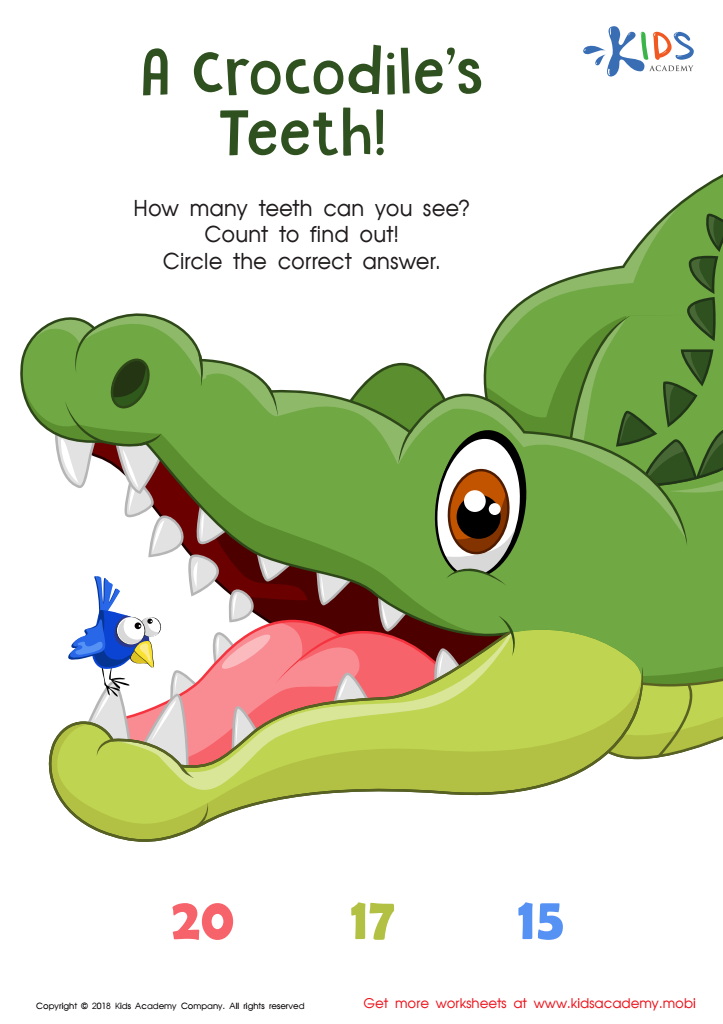
A Crocodile's Teeth Worksheet
Matching: Classifying Toys by Size Worksheet
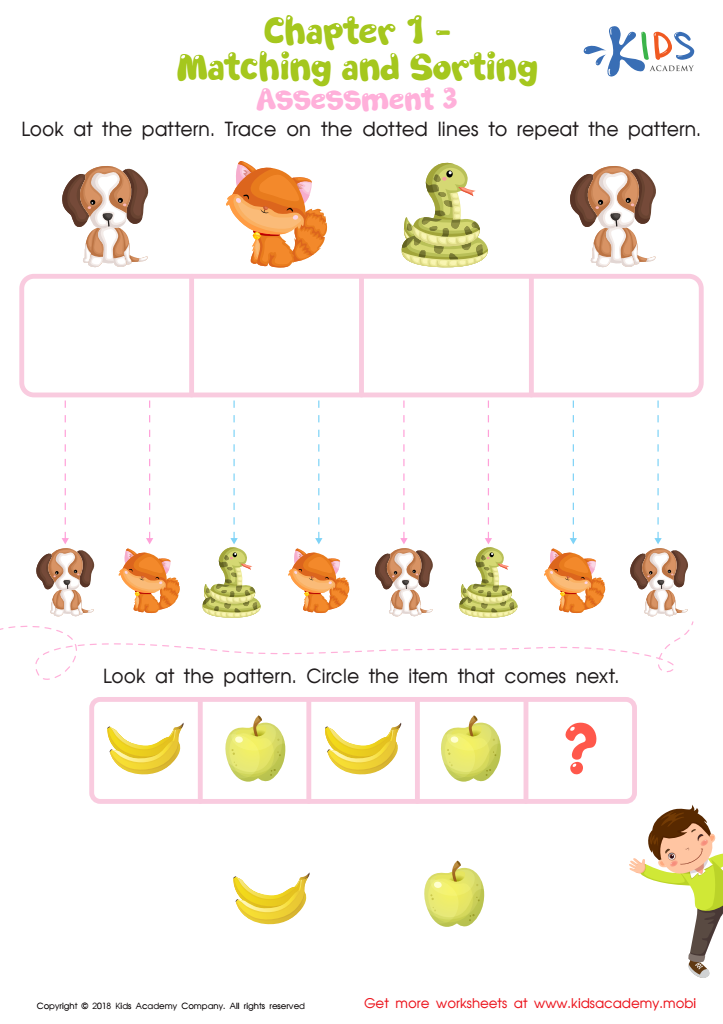
Matching and Sorting for Preschool: Assessment 3 Worksheet


.jpg)

Understanding comparisons is a vital skill for children aged 5-7, influencing their cognitive development and daily interactions. During this developmental stage, children are becoming more aware of their surroundings and relationships, making it essential for them to grasp concepts like "more than," "less than," and "equal to."
Parents and teachers should care about fostering this understanding because it lays the foundation for critical thinking and problem-solving skills. Comparisons help children make sense of their world, allowing them to categorize items, make better choices, and articulate their thoughts effectively. For instance, when children compare sizes or quantities, they enhance their mathematical skills, which are crucial in later academic pursuits.
Moreover, understanding comparisons promotes social skills. Children learn to identify differences and similarities among their peers, which aids in developing empathy and cooperation. By encouraging comparative thinking, caregivers can help children navigate social dynamics and enhance their communication abilities.
Taking an active role in teaching comparisons could involve measuring objects, discussing preferences, or sorting items. Ultimately, this foundational skill intertwines with numerous learning areas, empowering children to build confidence, enhance reasoning skills, and successfully engage with their environment. Supporting this early learning not only benefits academic performance but also nurtures well-rounded individuals.








