Welcome to our "Understanding Context Worksheets for Ages 5-7"! These engaging worksheets are designed to help young learners enhance their reading and comprehension skills by focusing on context clues. Kids will explore fun activities that train them to understand the meaning of words and phrases within different sentences and stories. Through colorful illustrations and interactive exercises, children will develop crucial literacy skills while enjoying the learning process. Perfect for home or classroom settings, our worksheets encourage critical thinking and vocabulary building in an inspiring way. Start fostering a love for reading and comprehension in your child today!
Check out this FREE "Understanding context" Trial Lesson for age 5-7!

Key Details

Favorites
With answer key
Interactive
  • 5-7
  • Understanding context
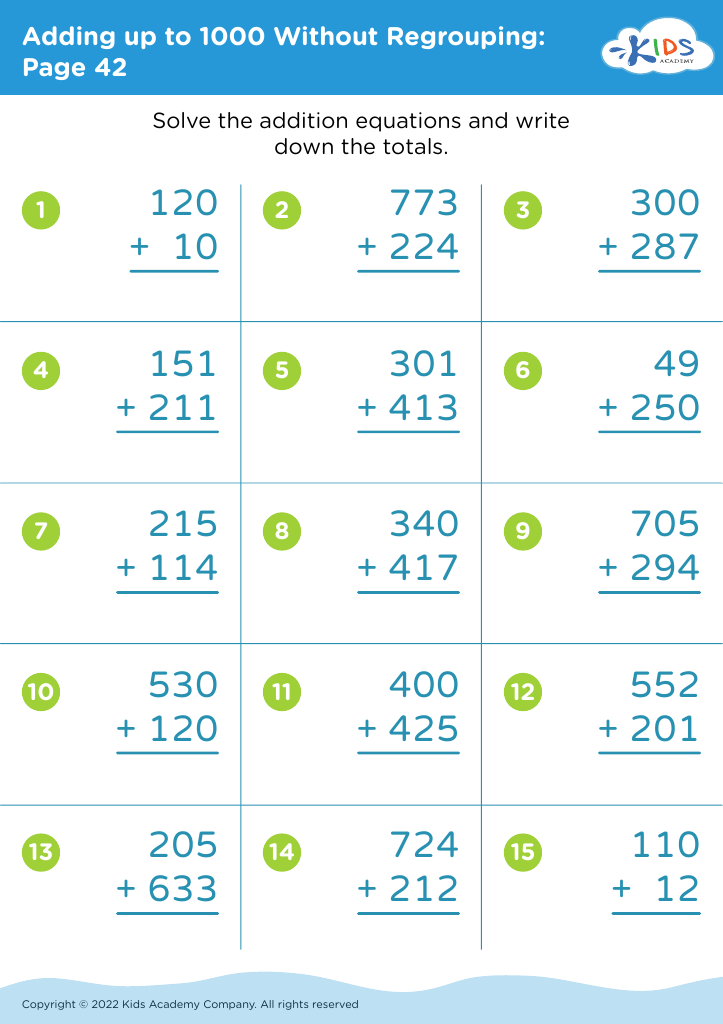
Adding up to 1000 Without Regrouping: Page 42
Worksheet
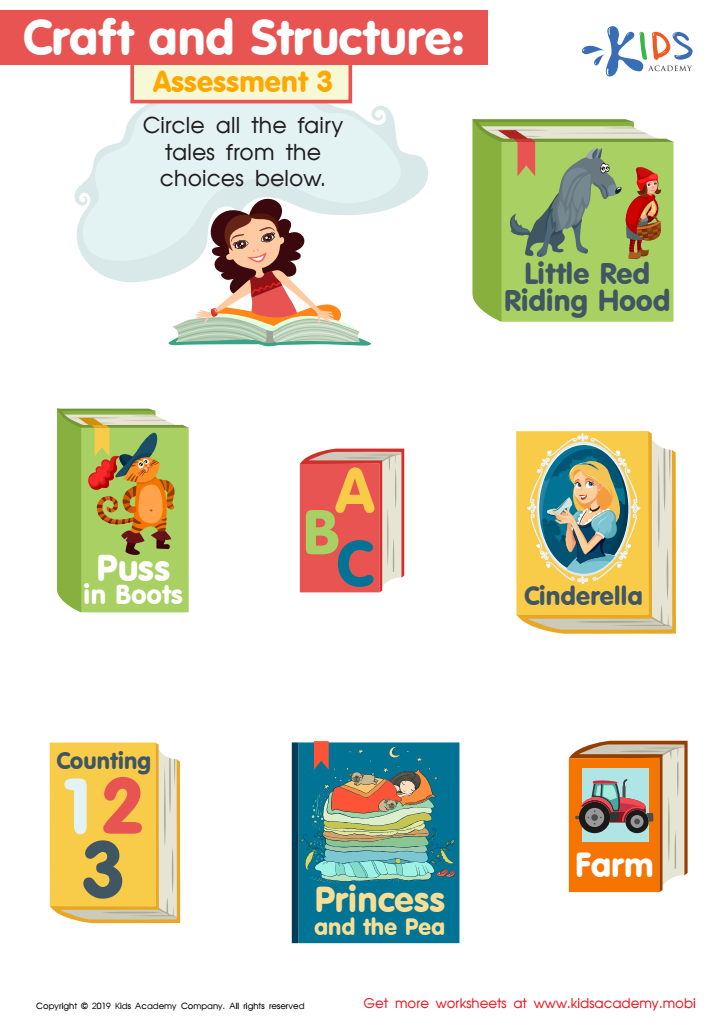
Craft and Structure: Assessment 3 Worksheet

Craft and Structure: Assessment 3 Worksheet

Before starting the worksheet, ask your kids to recall their favorite bedtime stories. What characters and events can they remember? Four popular children's stories are hidden among pictures of other objects - help them search and circle the fairy tales in this PDF.
Craft and Structure: Assessment 3 Worksheet
Worksheet
In the Busy City Word Problems Worksheet

In the Busy City Word Problems Worksheet

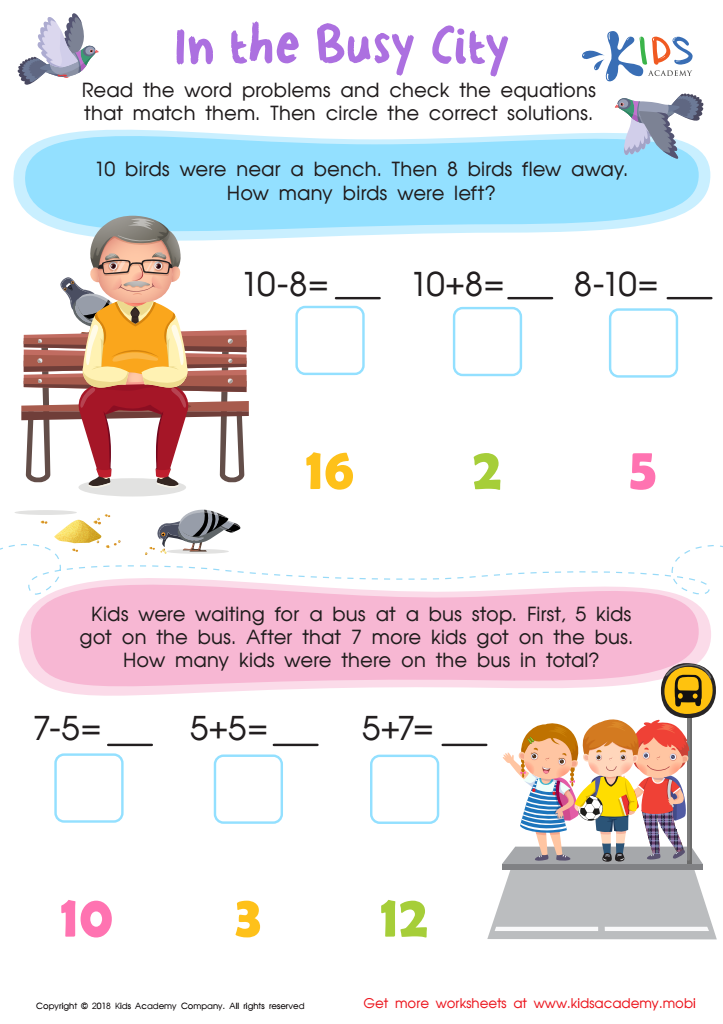
Take a stroll and help your child solve math word problems with this fun printable from Kids Academy! Colorful images make the scenarios more enjoyable. Have them read the problem carefully and solve the matching equation. Check the box next to the answer to mark it as correct!
In the Busy City Word Problems Worksheet
Worksheet
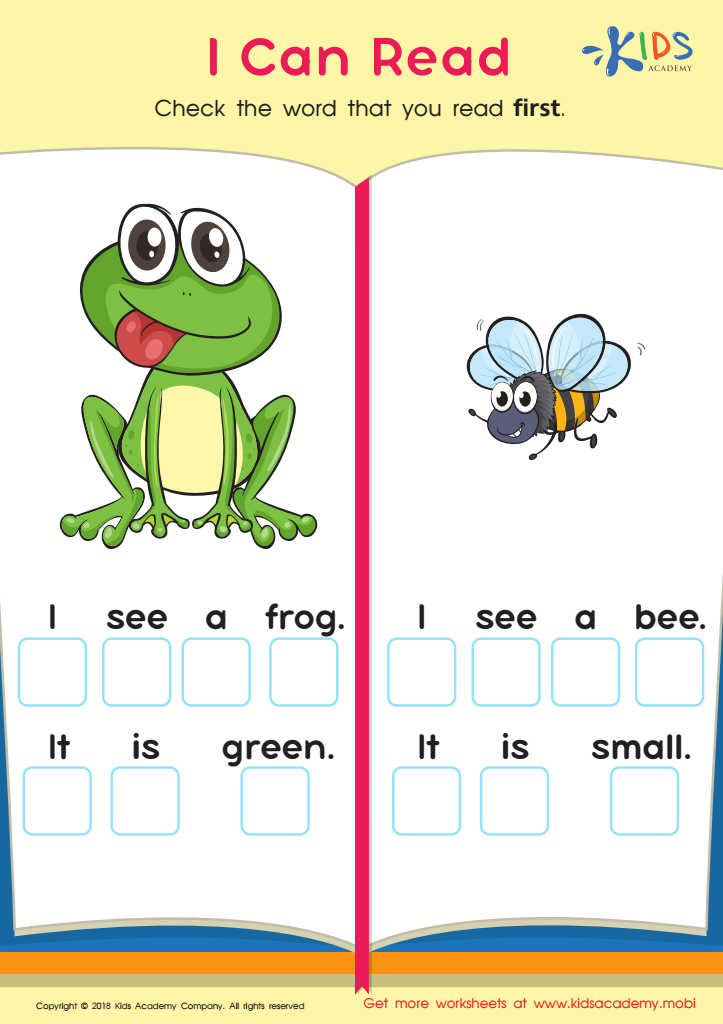
I Can Read Worksheet

I Can Read Worksheet

Test your child's reading skills with this fun worksheet. See how well they know one-letter, two-letter, and five-letter words. Ask your little one to read the sentences and tick the word they identify first. It's a great way to track their progress and help them become more confident readers.
I Can Read Worksheet
Worksheet
Key Details Neighborhoods Worksheet

Key Details Neighborhoods Worksheet

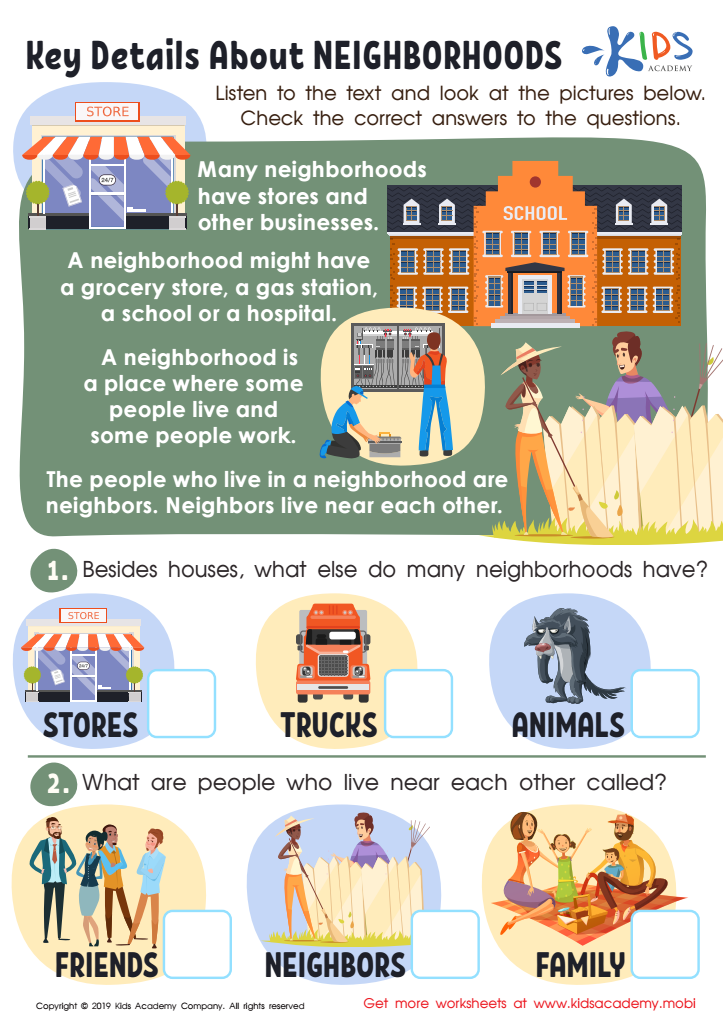
This worksheet helps your child strengthen reading comprehension by teaching them to pull out key details and store them in their memory. It includes words and pictures that demonstrate how the two can work together to create better understanding. As they learn about a neighborhood, they'll practice these skills by answering comprehension questions.
Key Details Neighborhoods Worksheet
Worksheet
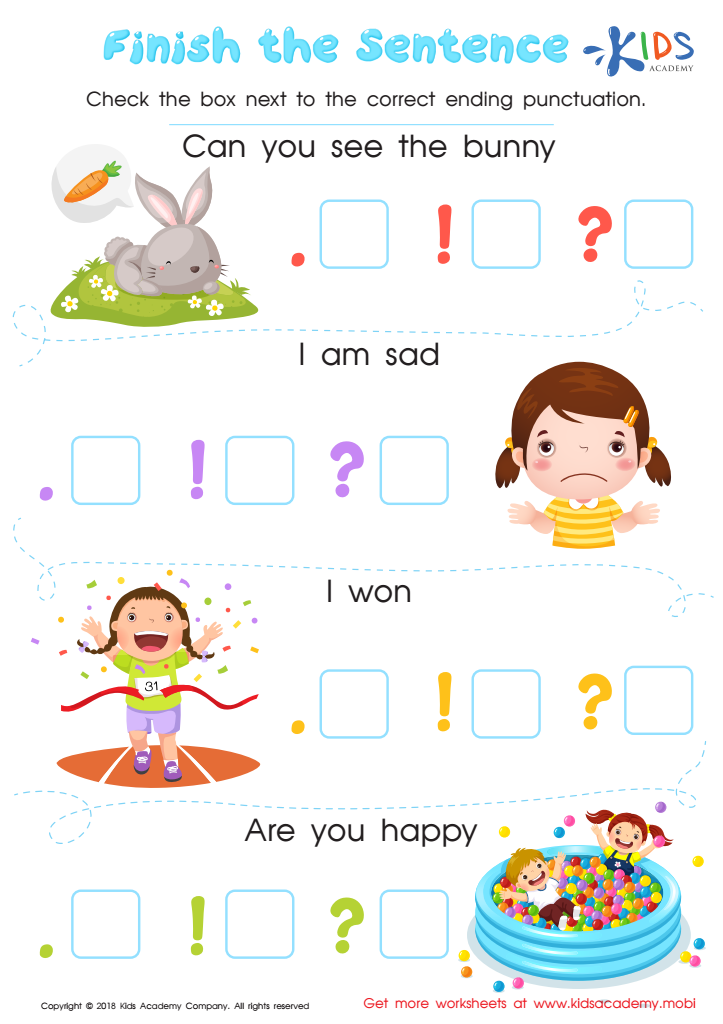
Finish the Sentence Worksheet

Finish the Sentence Worksheet

If your students have difficulty with punctuation, have them read sentences aloud and check the box next to the correct ending punctuation with this simple worksheet. Punctuation signals the tone and meaning of sentences. It helps students understand what is being communicated.
Finish the Sentence Worksheet
Worksheet
Double Meanings Worksheet

Double Meanings Worksheet

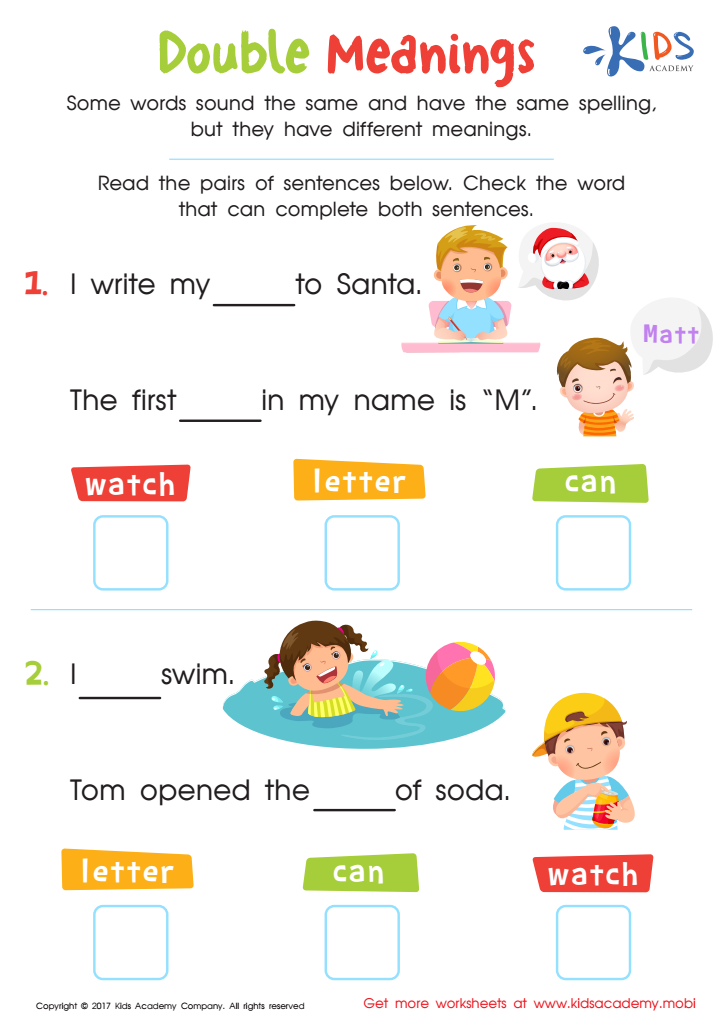
Homographs are words that look and sound the same, but have different meanings. This worksheet uses pictures to help young authors learn to use them correctly. Context and exposure to the words' meanings help them understand the difference. Total: 80 words
Double Meanings Worksheet
Worksheet
Puss in Boots Vocabulary Worksheet

Puss in Boots Vocabulary Worksheet

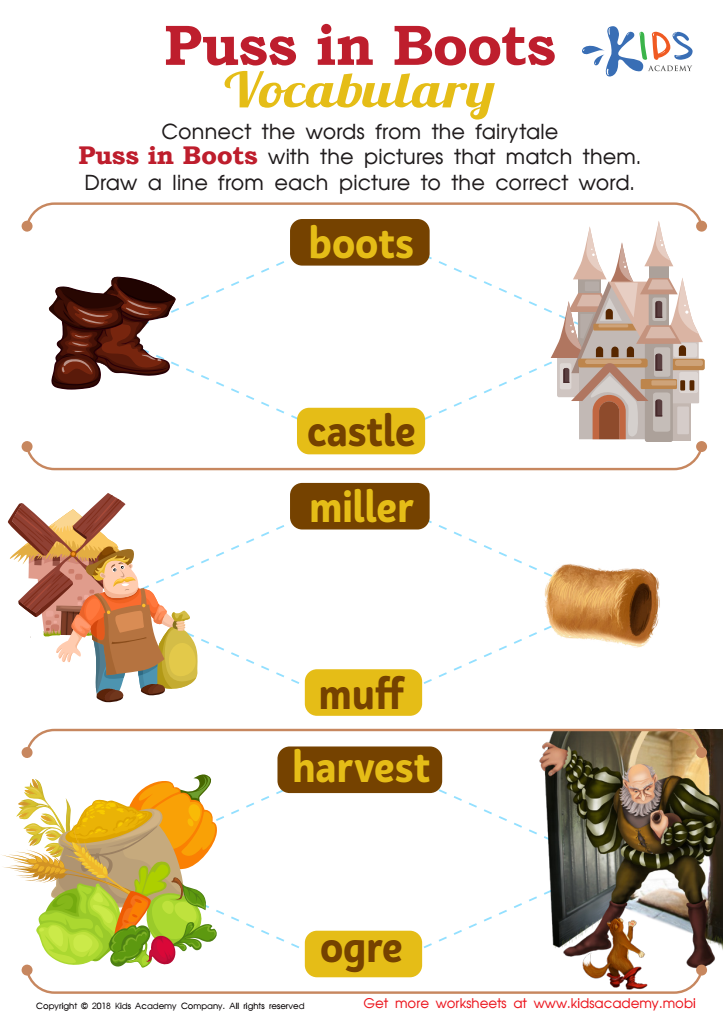
Let your kids enjoy story-telling while learning at the same time. Help them learn from the fairytale, Puss in Boots, by connecting words from the worksheet with the matching pictures. Ask them to draw a line between each picture and corresponding word to build their vocabulary.
Puss in Boots Vocabulary Worksheet
Worksheet
Who, What, Where? Worksheet

Who, What, Where? Worksheet

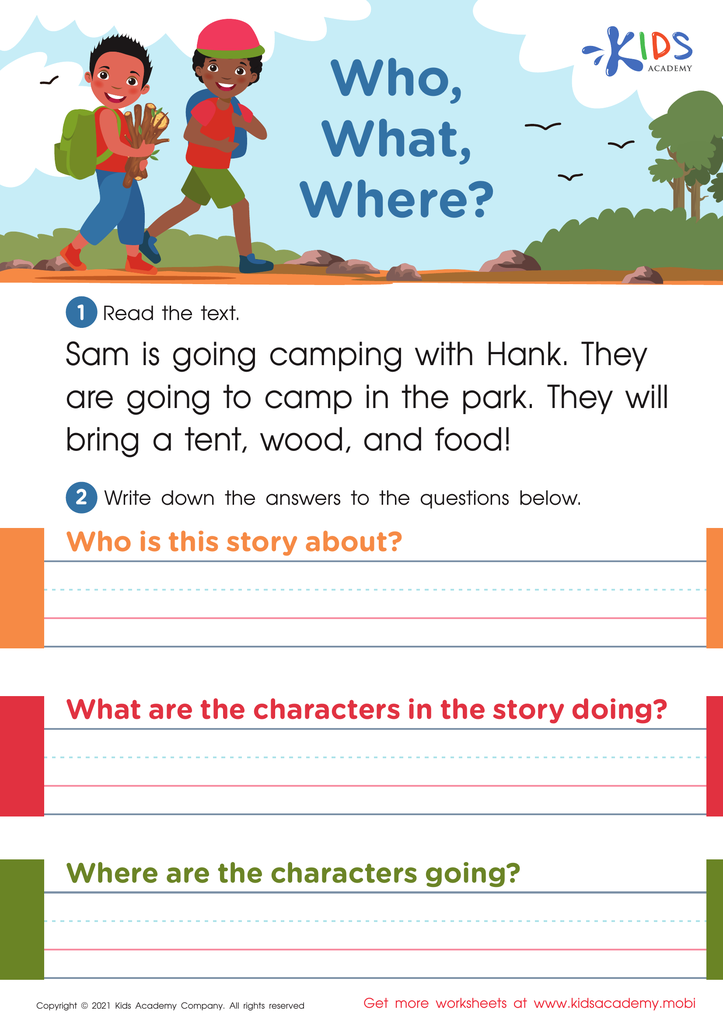
The availability of technology has changed the way students learn and interact with their environment in a very meaningful way. Technology has revolutionized learning and interaction for students. It offers an array of opportunities to engage with their surroundings, leading to a more meaningful educational experience.
Who, What, Where? Worksheet
Worksheet
Grade 2 Sight Words: Always

Grade 2 Sight Words: Always

Grade 2 Sight Words: Always
Worksheet


Understanding context is crucial for children aged 5-7 because it shapes their ability to comprehend the world around them. At this age, children are not only learning basic literacy and numeracy skills but also beginning to connect ideas and experiences. When parents and teachers emphasize context, they help children make sense of information by relating it to their own lives.

For example, when reading a story, discussing the characters' feelings or the setting allows children to engage more deeply with the narrative. This skill enhances their reading comprehension and critical thinking, as they learn to ask questions and predict outcomes based on context clues. Moreover, in social interactions, understanding context helps children navigate friendships and resolve conflicts effectively, essential skills during these formative years.

Parents and teachers who focus on context also promote empathy, enabling children to recognize and appreciate different perspectives. This foundational understanding aids not only academic success but also emotional and social development. Ultimately, prioritizing context in learning encourages children to become thoughtful, curious individuals who can effectively communicate and connect with others throughout their lives. Engaging with context nurtures a well-rounded understanding beneficial for lifelong learning.