Understanding equations Worksheets for Ages 5-7
8 filtered results
-
From - To
Unlock your child's potential with our "Understanding Equations Worksheets for Ages 5-7." Perfectly tailored for young learners, these engaging worksheets simplify the fundamental concepts of equations, fostering early math skills. Designed by educational experts, each worksheet blends fun exercises with effective learning strategies, ensuring children grasp addition and subtraction effortlessly. Bright, colorful, and interactive content keeps kids motivated and enthusiastic about learning. Ideal for both classroom and at-home use. Explore our collection now to give your child a solid foundation in math, paving the way for academic success. Start discovering the magic of numbers today!
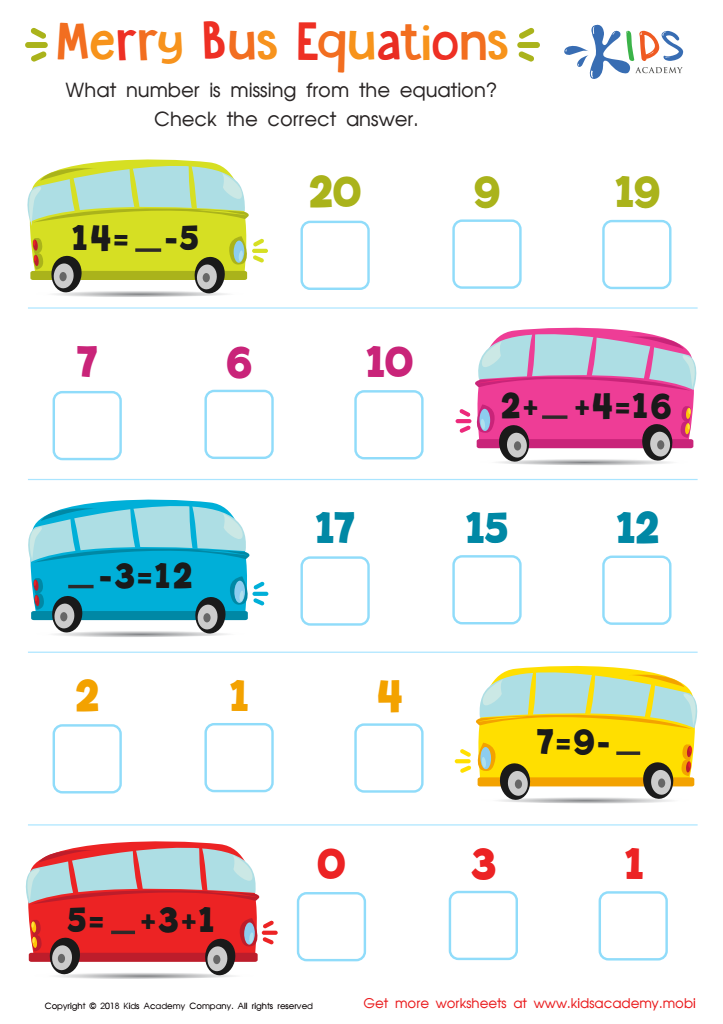
Merry Bus Equations Worksheet
 Assign to My Students
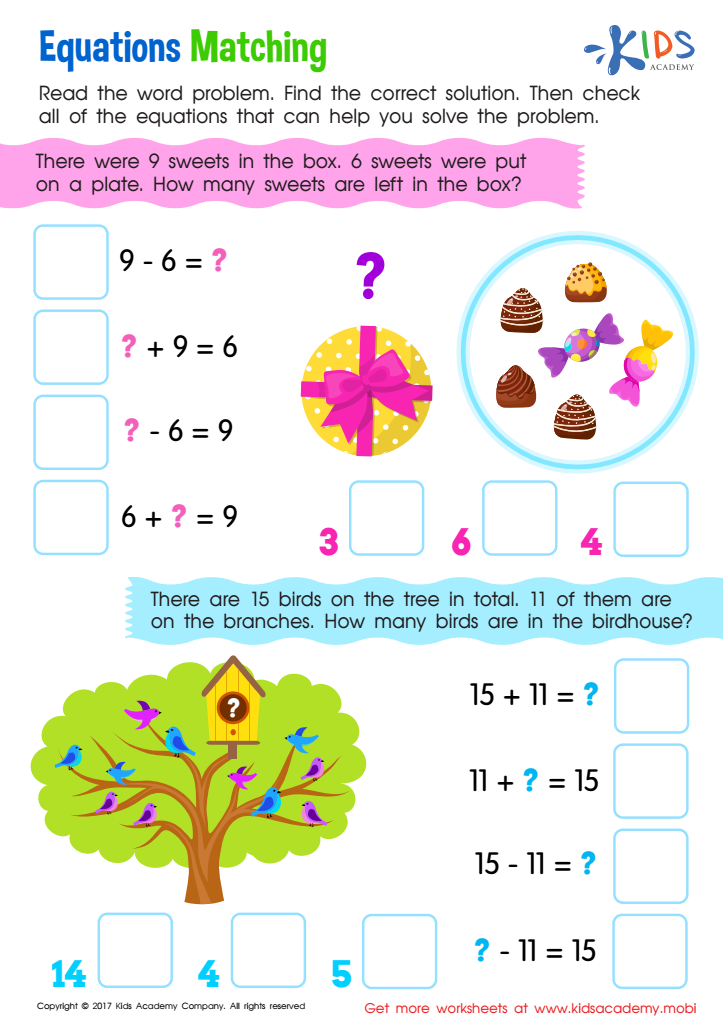
Equations Matching Word Problems Worksheet
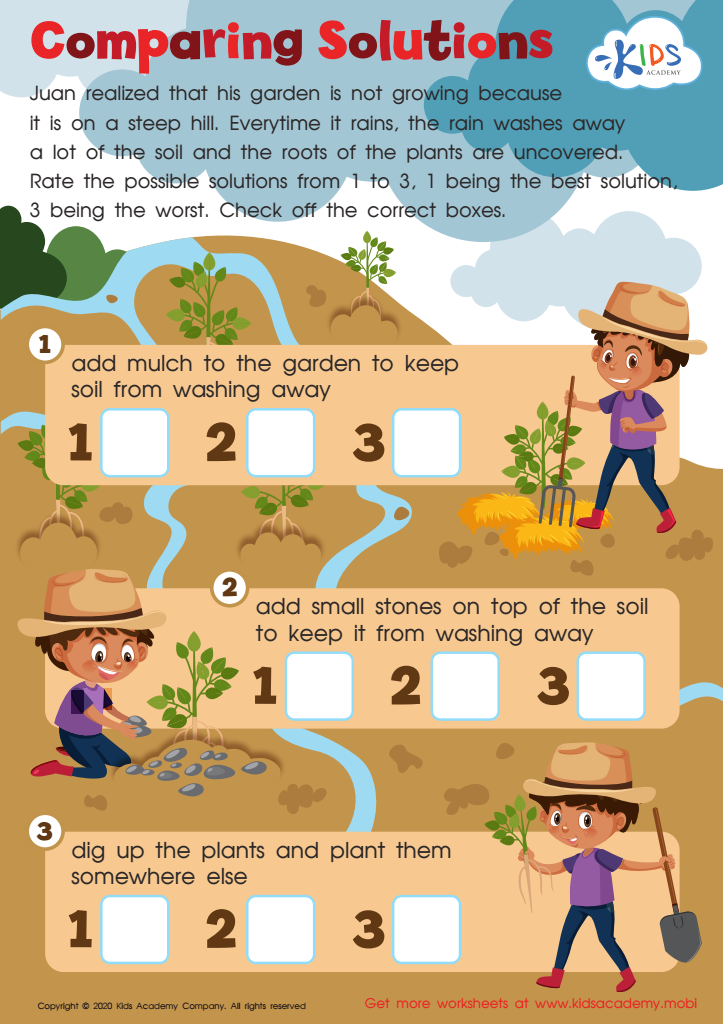
Comparing Solutions Worksheet
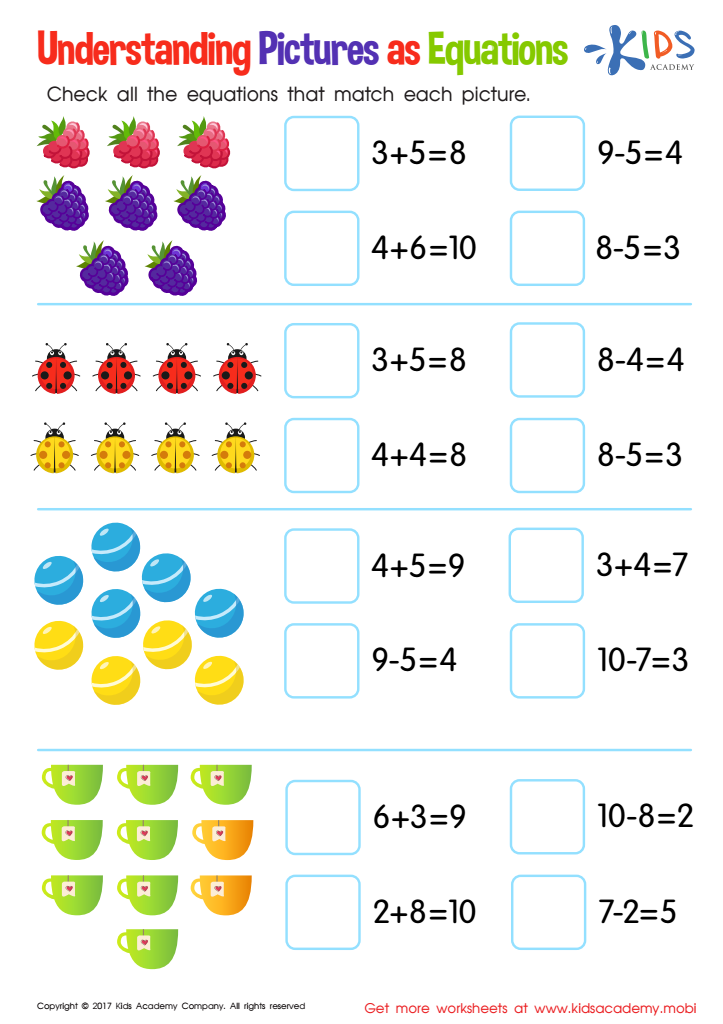
Understanding Pictures as Equations Worksheet
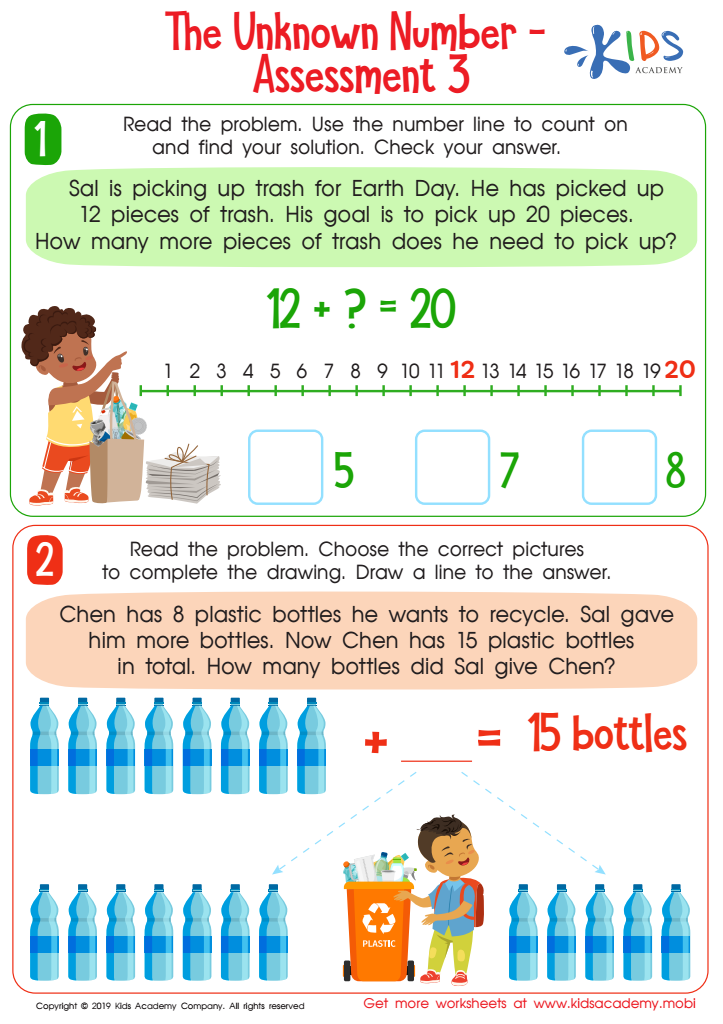
The Unknown Number - Assessment 3 Worksheet
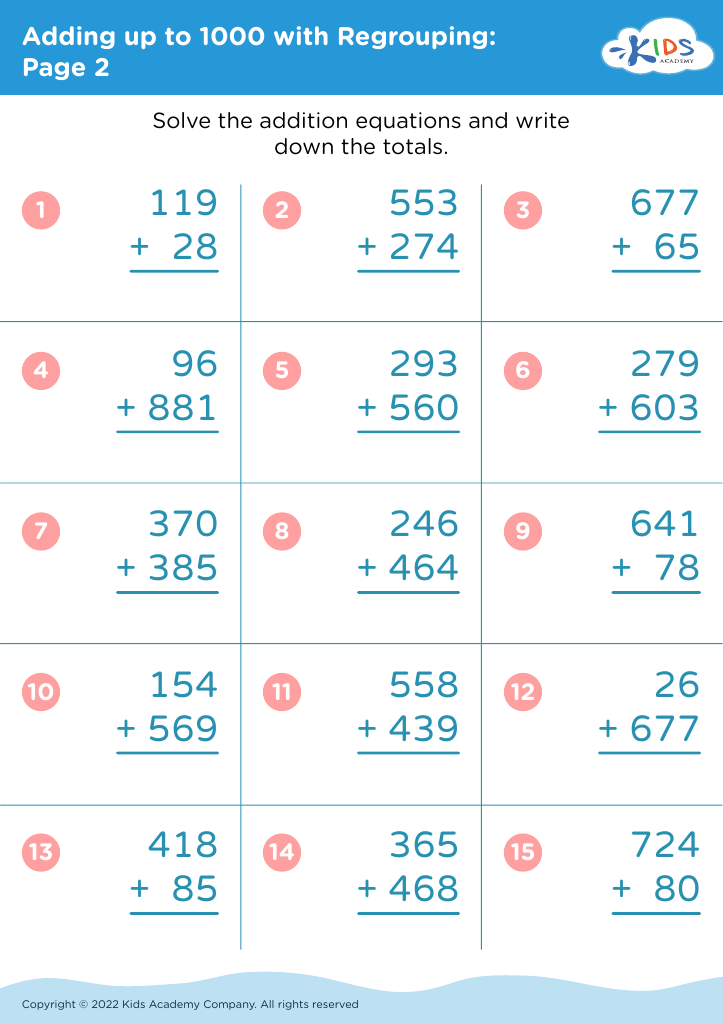
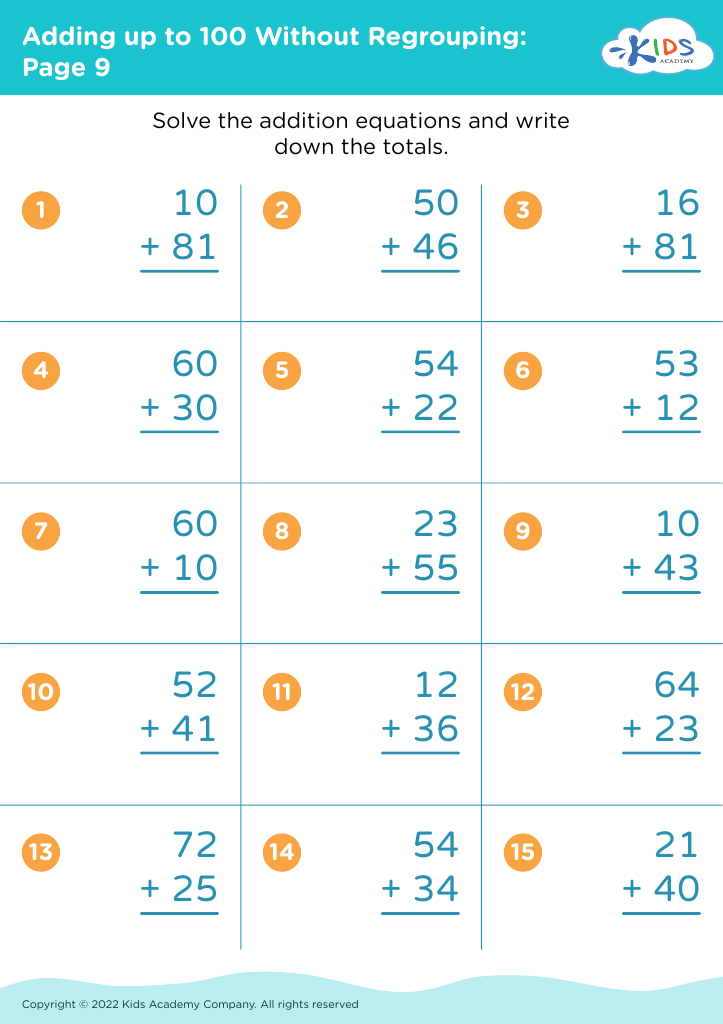








Understanding equations at ages 5-7 is foundational for a child’s cognitive and mathematical development. Equations are basic mathematical expressions that involve equality between two quantities. Introducing this concept early fosters numeracy skills, which are crucial for everyday calculations and problem-solving tasks throughout life.
Encouraging young children to comprehend equations helps them develop logical thinking and reasoning abilities. When kids understand that balancing both sides of an equation is essential, they begin to grasp the principles of fairness and equality, which relate to broader life concepts. Early exposure to equations also boosts their confidence in handling numbers, making them less intimidated by more advanced math topics in the future.
Additionally, learning equations can enhance a child's patience and perseverance. Solving for an unknown in an equation often requires trial and error, fostering persistence and adaptability. These skills are valuable not only in academics but also in real-life situations where solutions are not immediately apparent.
For teachers and parents, incorporating simple math games and activities that include basic equations can make learning challenging yet fun for young children. Understanding even the simplest equations lays a robust foundation for future academic success, and it ensures that children are better prepared for the progressively complex mathematical concepts they will encounter as they advance in their education.








