Understanding grouping Worksheets for Ages 5-7
3 filtered results
-
From - To
Discover the importance of grouping concepts for ages 5-7 with our engaging worksheets tailored for young learners. Grouping helps children develop essential skills such as classification, categorization, and critical thinking. Our comprehensive worksheets provide fun and interactive activities that encourage kids to identify similarities and differences among objects, enhancing their understanding of patterns and relationships. Each worksheet is designed to challenge and inspire kids, making learning enjoyable. Perfect for parents and teachers alike, these resources promote cognitive development while nurturing creativity. Explore our collection and support your child's learning journey in mastering grouping fundamentals today!
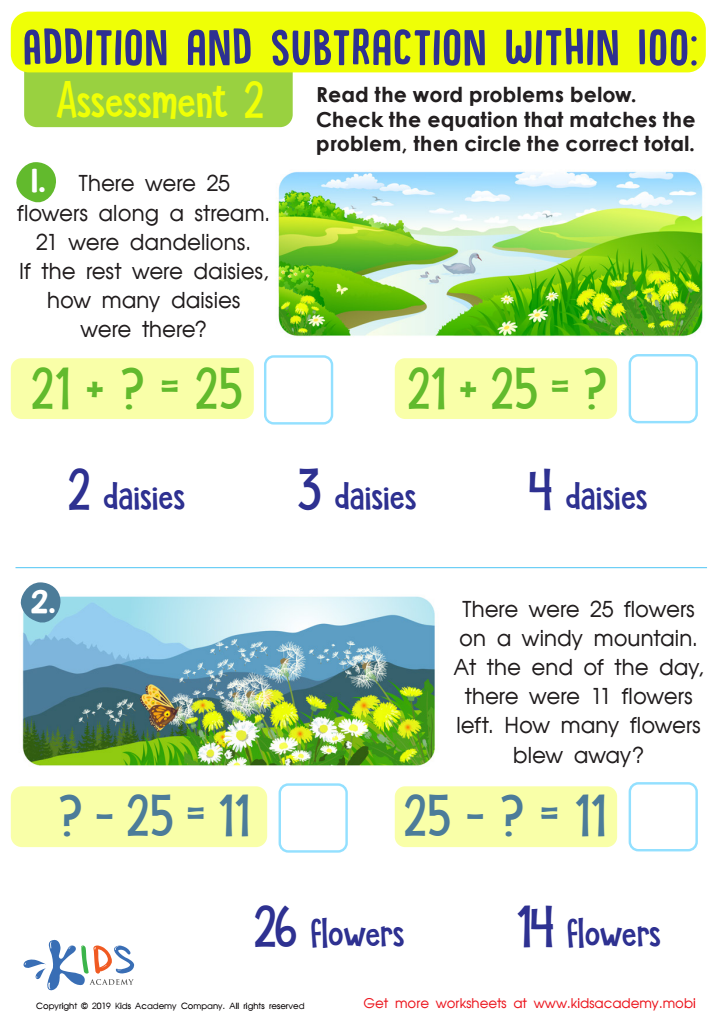
Assessment 2 Math Worksheet
 Assign to My Students
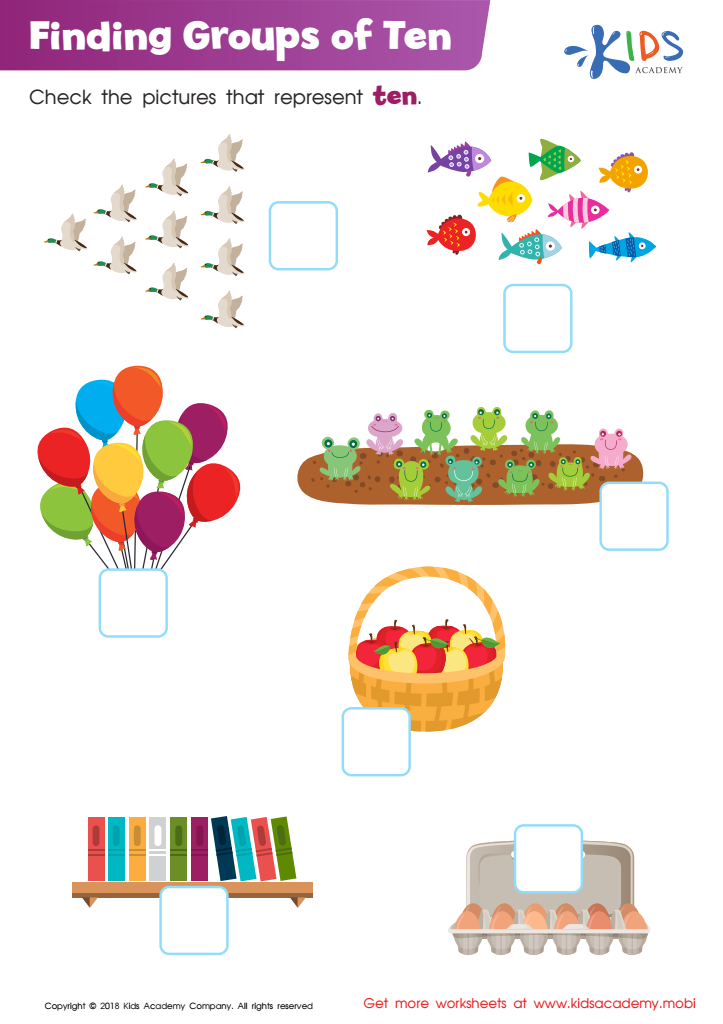
Finding Groups of Ten Worksheet
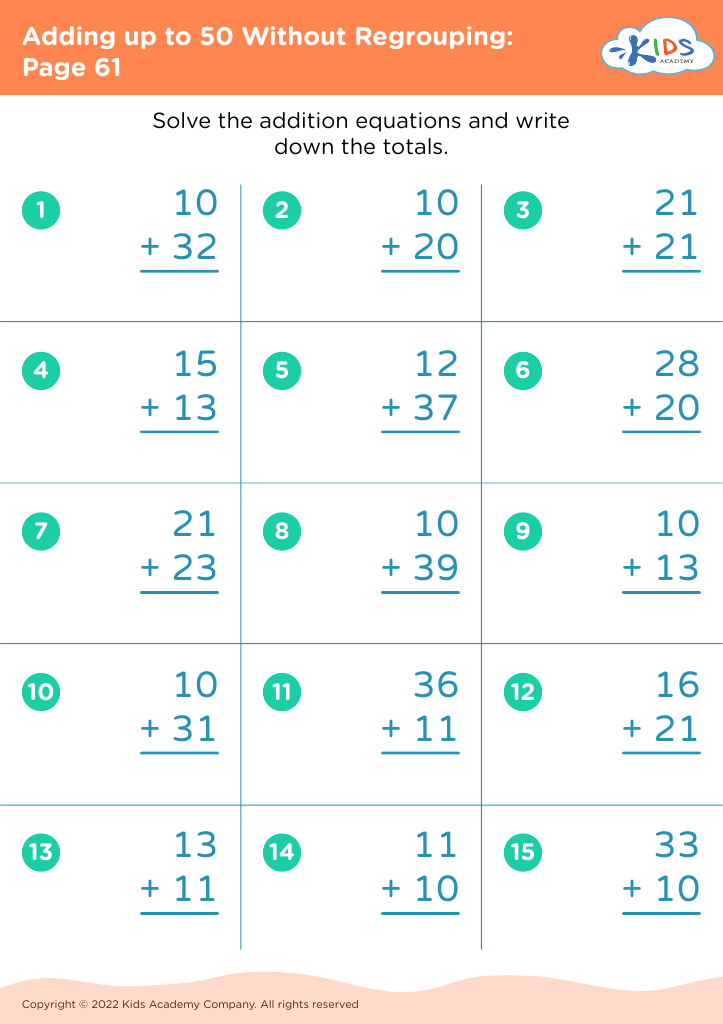








Understanding grouping is fundamental for children aged 5-7 as it lays the groundwork for their cognitive and social development. During these formative years, children begin to grasp the concepts of classification, categorization, and problem-solving. Learning to group objects based on shared attributes promotes critical thinking skills, enabling them to recognize patterns and relationships in their environment.
Parents and teachers play a pivotal role in facilitating this learning. When children engage in grouping activities, they enhance their reasoning abilities and boost their confidence in handling more complex mathematical concepts later on, such as addition and subtraction. Moreover, grouping fosters social skills by encouraging collaboration and communication among peers, as children often work together to categorize objects or solve problems.
Additionally, understanding grouping ties into various subjects, including math, science, and literacy. It supports children in organizing their thoughts and enhances memory retention, which is crucial as they navigate more intricate learning tasks. By prioritizing grouping activities, adults can stimulate curiosity, promote inclusivity, and establish a solid foundation for lifelong learning, ultimately empowering children to thrive as independent thinkers and problem solvers.








