Understanding ordinal numbers Worksheets for Ages 5-7
3 filtered results
-
From - To
Unlock the world of ordinal numbers with our engaging and educational worksheets designed for children ages 5-7. Our resources focus on helping young learners grasp the concept of ordering and position, from first to tenth. These worksheets include vibrant visuals and interactive activities that capture kids' attention, making learning fun! Through games, illustrations, and practice exercises, children will develop a solid understanding of ordinal numbers in no time. Perfect for at-home learning or classroom use, these materials will aid in reinforcing math skills, enhancing number recognition, and building a strong foundation for future mathematics. Start your child's learning journey today!
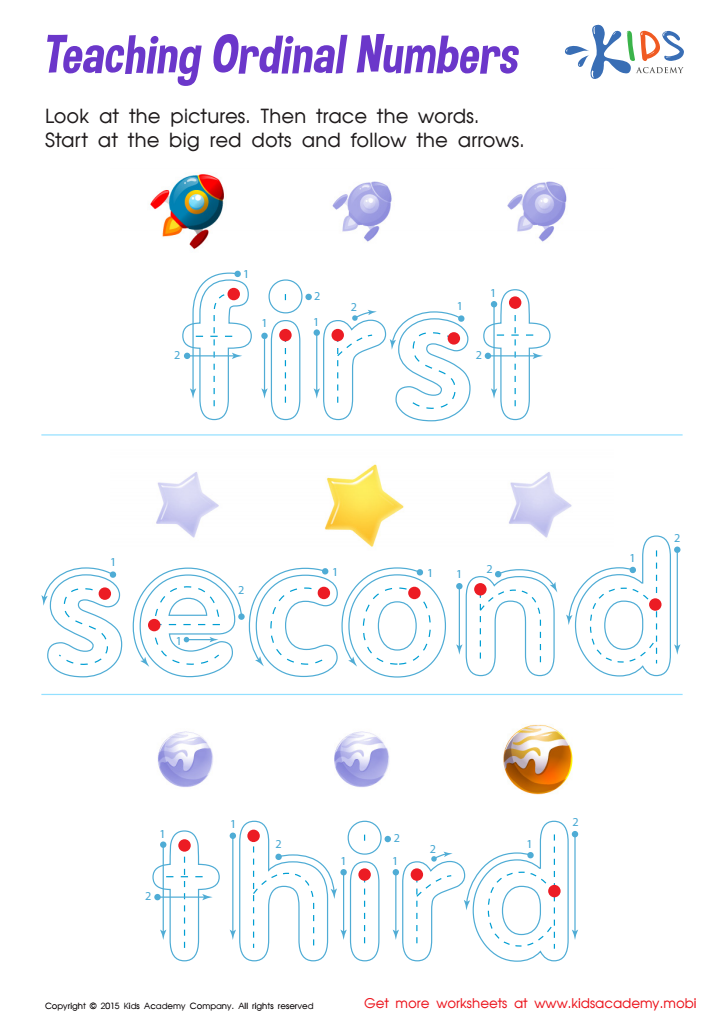
Ordinal Numbers: Teaching Ordinal Numbers Printable
 Assign to My Students
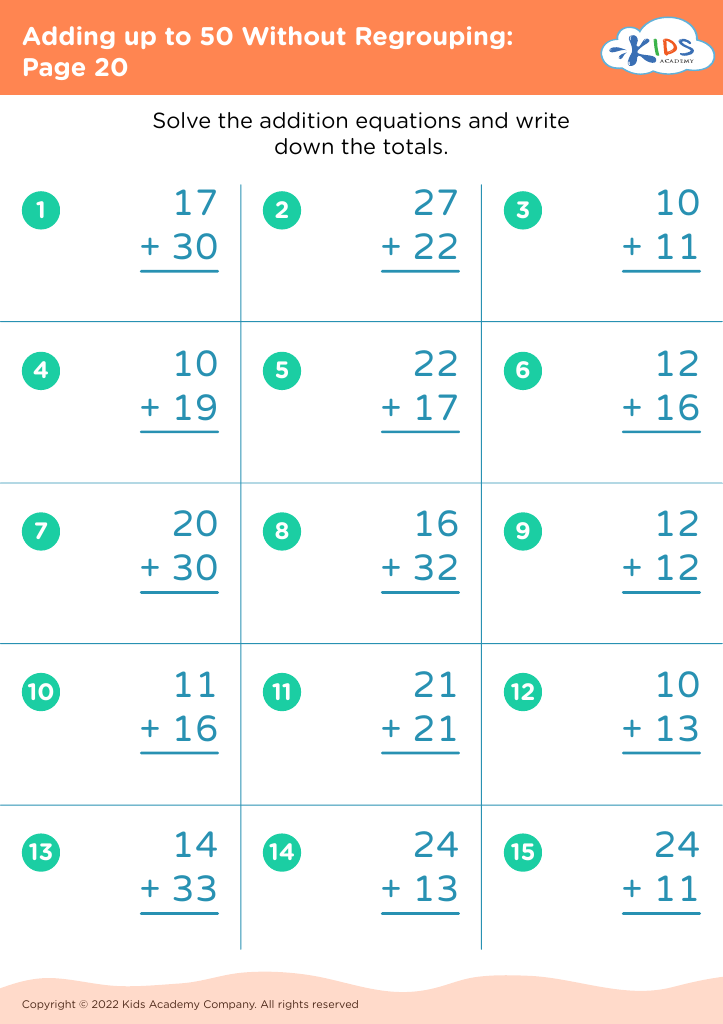
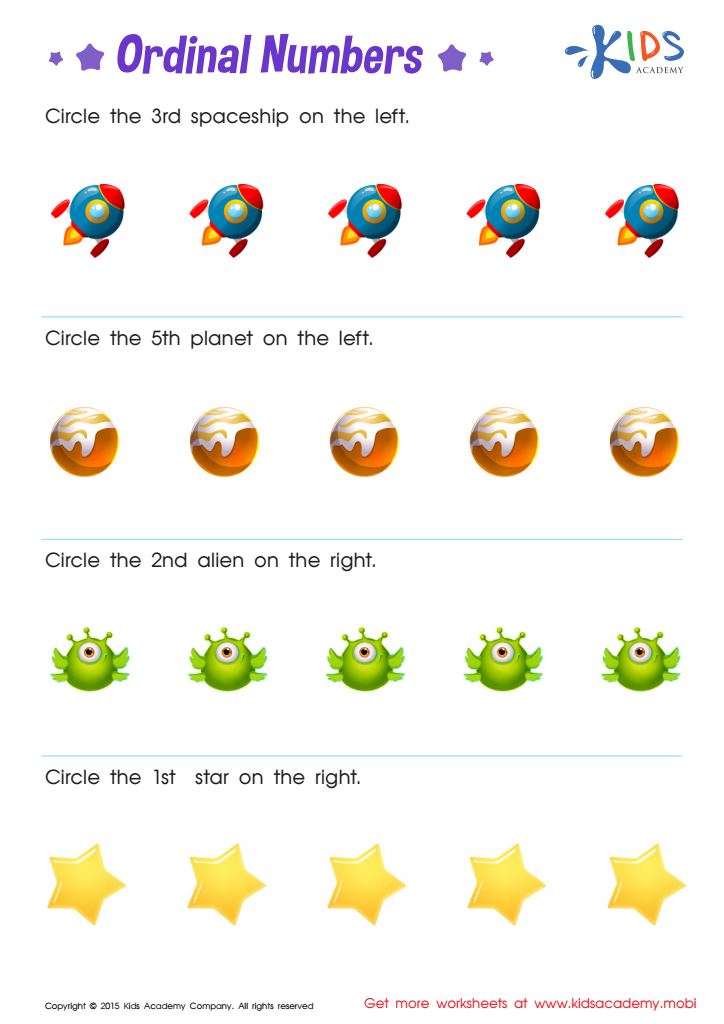
Ordinal Numbers: Space Ordinals Worksheet








Understanding ordinal numbers is essential for children aged 5-7 as it lays the groundwork for critical mathematical skills and everyday problem-solving. Ordinal numbers indicate position or order, such as first, second, or third, and help children comprehend sequences in both academic and daily life contexts. For instance, these numbers are crucial when discussing race placements, class activities, or daily routines, enhancing a child's ability to follow directions and organize experiences.
By grasping ordinal concepts, children develop logical thinking skills, improve their spatial awareness, and boost their cognitive development. This understanding aids in reading comprehension, as many stories involve sequences of events that require recognition of order. Furthermore, ordinal numbers support social interactions; children often engage in games or competitive activities where understanding who comes in "first" or "last" is vital.
For teachers and parents, fostering an early grasp of ordinal numbers supports a child’s holistic growth, bridging the gap between abstract concepts and real-world applications. Incorporating fun, engaging activities—such as ranking toys or using fun games—can spark interest and ensure that each student builds a strong numerical foundation, vital for their educational journey ahead. Emphasizing importance early ensures these foundational skills translate into lifelong abilities.








