Understanding pollination Worksheets for Ages 5-7
4 filtered results
-
From - To
Explore our engaging "Understanding Pollination Worksheets" designed specifically for young learners aged 5-7! These fun, interactive worksheets introduce the critical concepts of pollination through colorful illustrations and simple activities. Children will discover how plants reproduce, the role of bees and other pollinators, and the importance of biodiversity in nature. Our worksheets encourage creativity and critical thinking, making learning about this essential ecological process enjoyable. Perfect for teachers and parents alike, these resources foster curiosity in young minds, helping them appreciate the wonders of nature. Download now and cultivate a love of learning about the environment in your child!
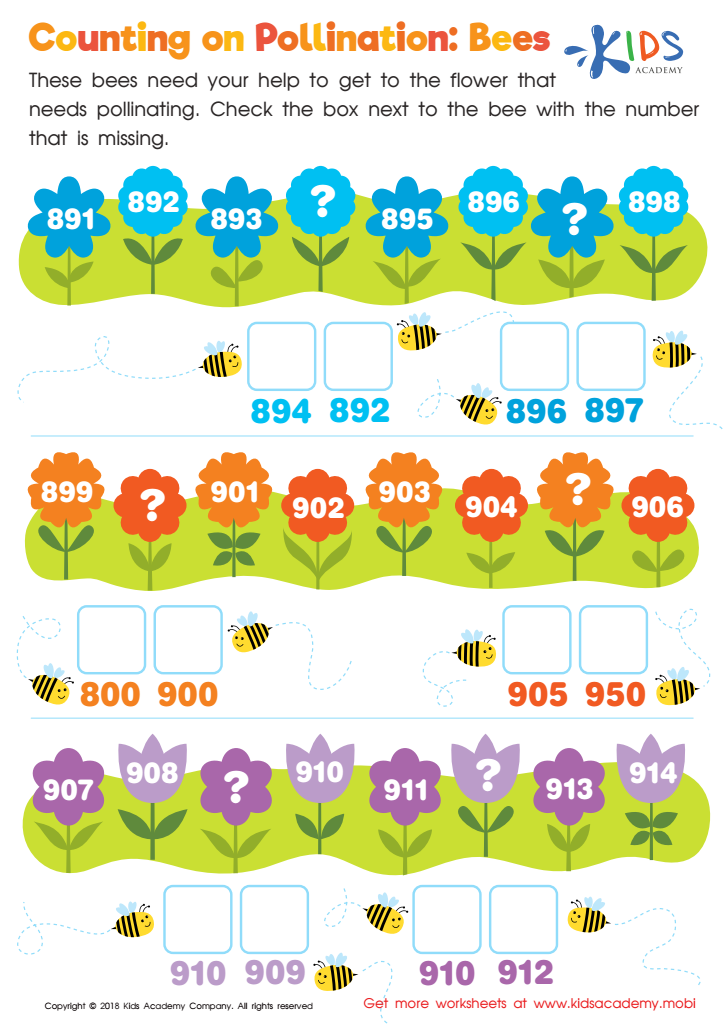
Counting on Pollination: Bees Worksheet
 Assign to My Students
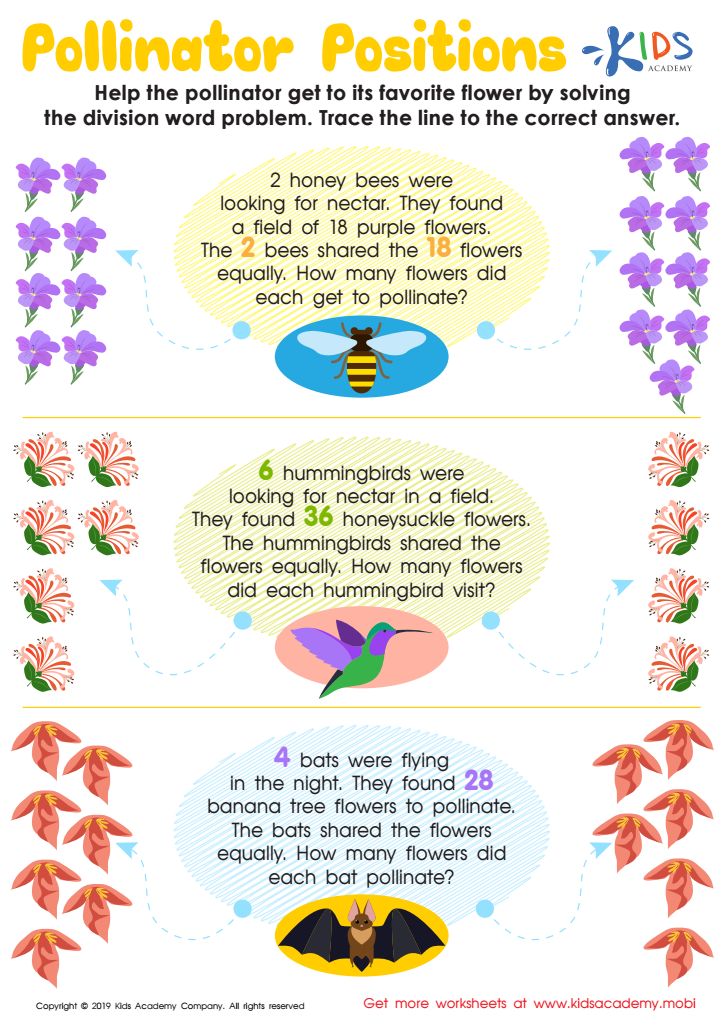
Pollinator Positions Worksheet
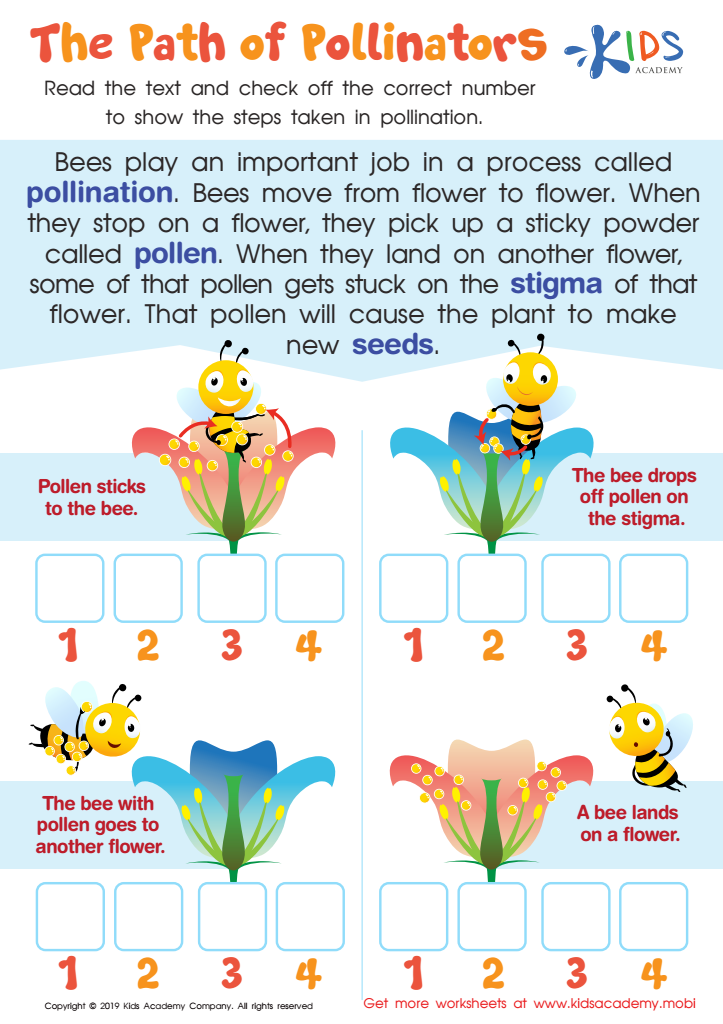
The Path of Pollinators Worksheet
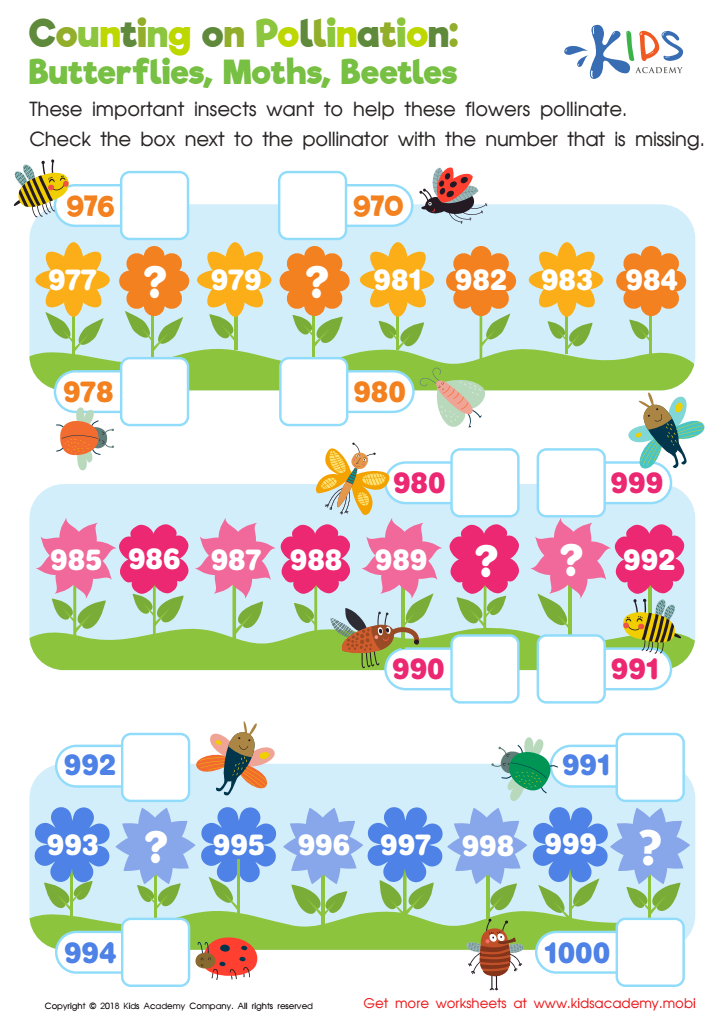
Counting on Pollination: Butterflies, Moths, Beetles Worksheet






Understanding pollination is crucial for children aged 5-7 as it lays the foundation for their appreciation of nature and the environment. Pollination is a vital process that helps plants reproduce, and many of the foods they eat, like fruits and vegetables, depend on it. By grasping how pollination works, children gain insights into the interconnectedness of ecosystems, teaching them that all living creatures play a role in sustaining life.
Moreover, introducing concepts related to bees, butterflies, and other pollinators can spark children's curiosity and encourage them to explore the world around them. This knowledge fosters a sense of responsibility and awareness about protecting these essential creatures, fostering environmental stewardship from a young age.
In a classroom setting, hands-on activities such as planting flowers or observing pollinator-friendly plants offer exciting learning experiences. These activities enhance creativity, observation skills, and teamwork. Furthermore, understanding concepts like diversity, cycles, and interactions in nature complements science curricula and enriches literacy narratives, making learning more engaging.
Ultimately, by caring about pollination education for young learners, parents and teachers can cultivate environmentally-conscious future generations capable of appreciating and protecting the natural world.








