Understanding Rhymes Worksheets for Ages 5-7
4 filtered results
-
From - To
Unlock the joy of language with our "Understanding Rhymes Worksheets" designed for children ages 5-7. These engaging, printable resources help young learners develop essential literacy skills through the exploration of rhyming words. By identifying and matching rhymes, kids not only enhance their vocabulary but also improve listening and reading comprehension. Each worksheet features vibrant illustrations and fun activities that make learning enjoyable and interactive. Ideal for classroom use or at-home practice, our worksheets support early childhood educators and parents in fostering a love of language. Encourage creativity and critical thinking as children discover the playful world of rhymes today!
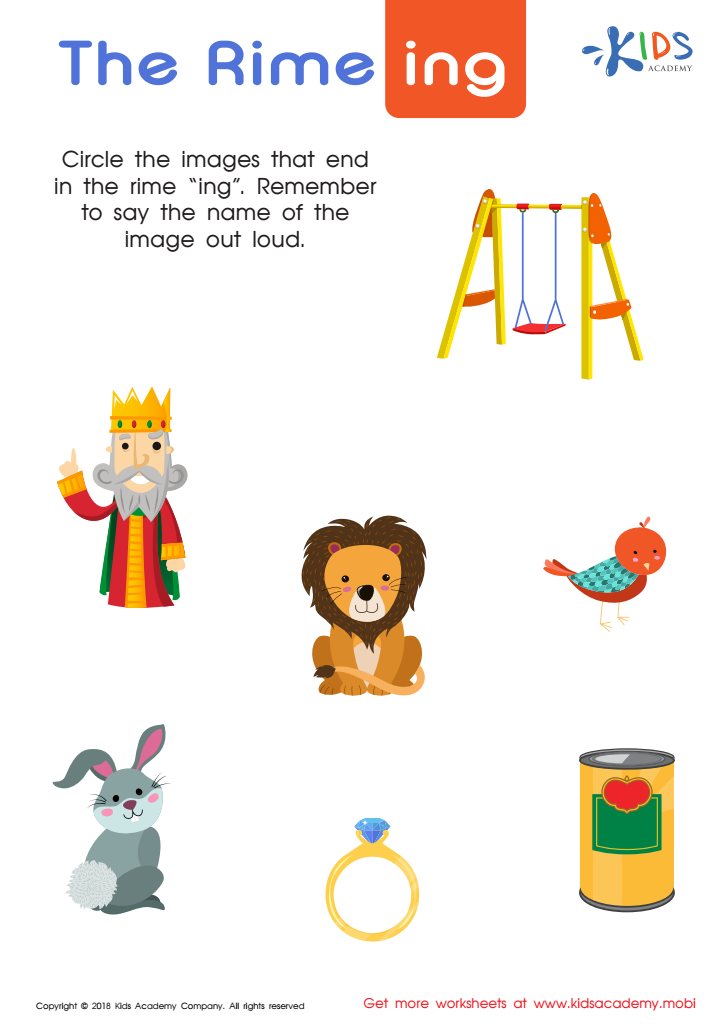
The Rime "ing" Worksheet
 Assign to My Students
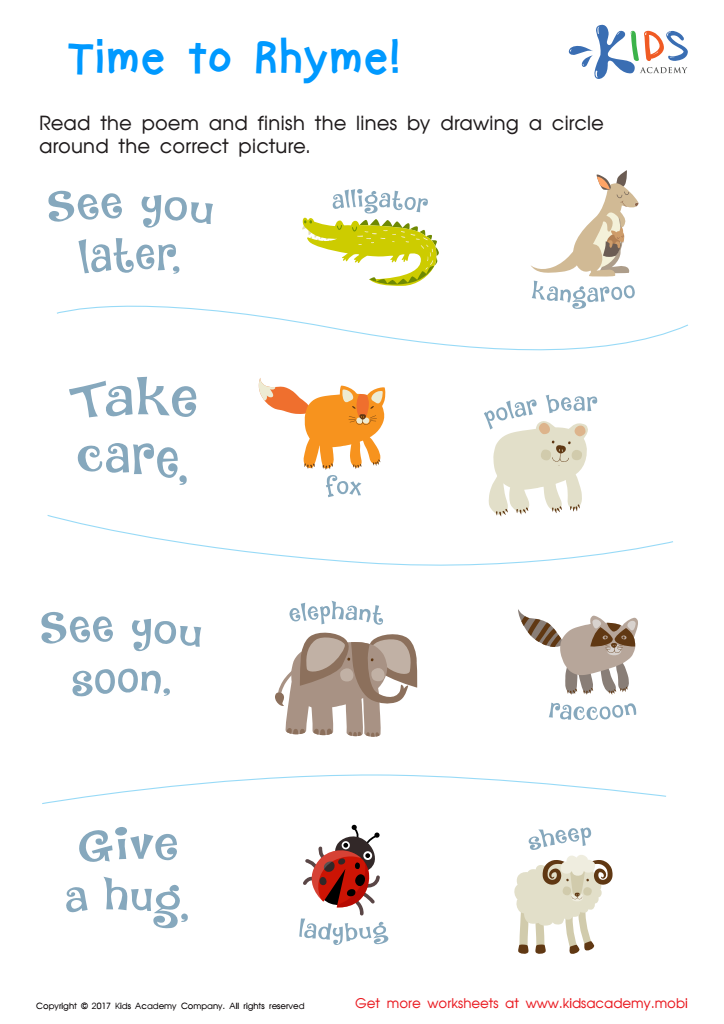
Time to Rhyme Rhyming Worksheet
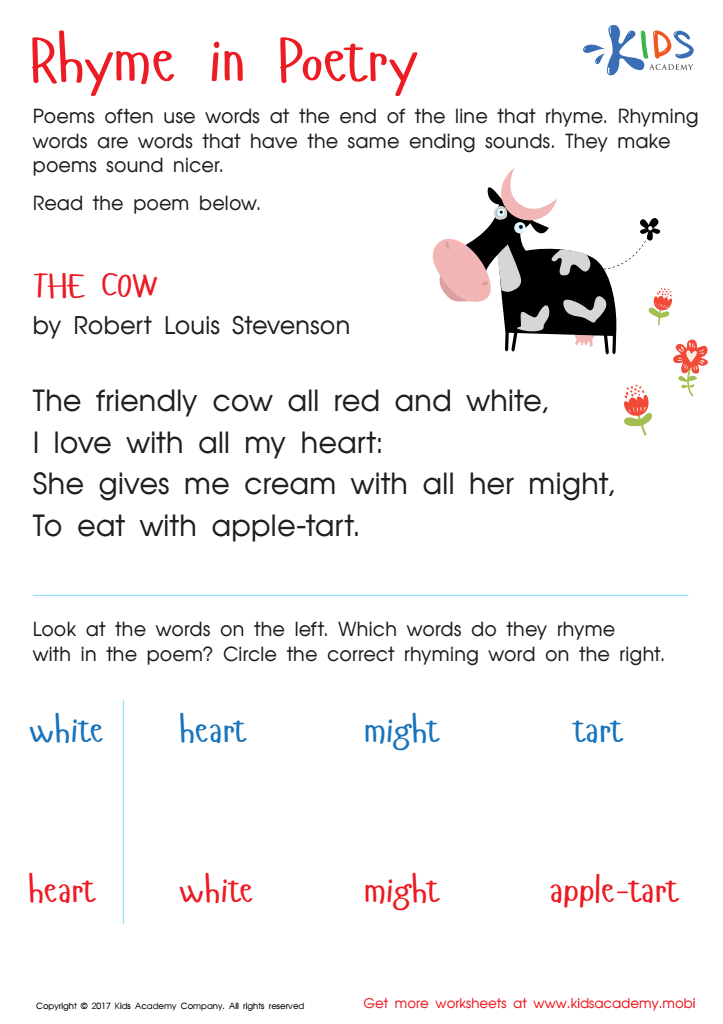
Rhyme In Poetry Worksheet








Understanding rhymes is crucial for children aged 5-7 because it lays the foundation for literacy development. When children recognize and produce rhymes, they enhance their phonological awareness, a critical skill for reading. This helps them decode words more effectively and improves their spelling abilities.
Rhymes also make language playful and enjoyable, fostering a love for reading and creating a positive attitude toward learning. Engaging with rhyming text can improve vocabulary, as children encounter a variety of new words in a memorable context. This exposure not only enriches their language but also helps them grasp narrative structures and patterns in storytelling.
Furthermore, the social aspect of rhyming can aid emotional and cognitive development. Take, for instance, nursery rhymes and songs shared during playtime; these activities promote bonding between parents, peers, and educators, contributing to a child's social skills.
By prioritizing rhymes, parents and teachers are not merely promoting literacy; they are nurturing creativity, critical thinking, and confidence in young learners. Hence, understanding rhymes should be regular practice in both home and classroom environments, establishing a strong reading foundation that supports future academic success.








