Understanding timelines Worksheets for Ages 5-7
3 filtered results
-
From - To
Explore our engaging "Understanding Timelines" worksheets designed specifically for children ages 5-7! These resources introduce young learners to the concept of time, helping them visualize and sequence events through fun activities. Perfect for both classroom and home use, these worksheets incorporate colorful illustrations and interactive exercises that make learning about the past, present, and future enjoyable. Kids will develop critical thinking and organizational skills as they practice ordering events and creating their own timelines. Foster your child's understanding of temporal concepts with our carefully crafted materials that support early literacy and cognitive development. Start your timeline journey today!
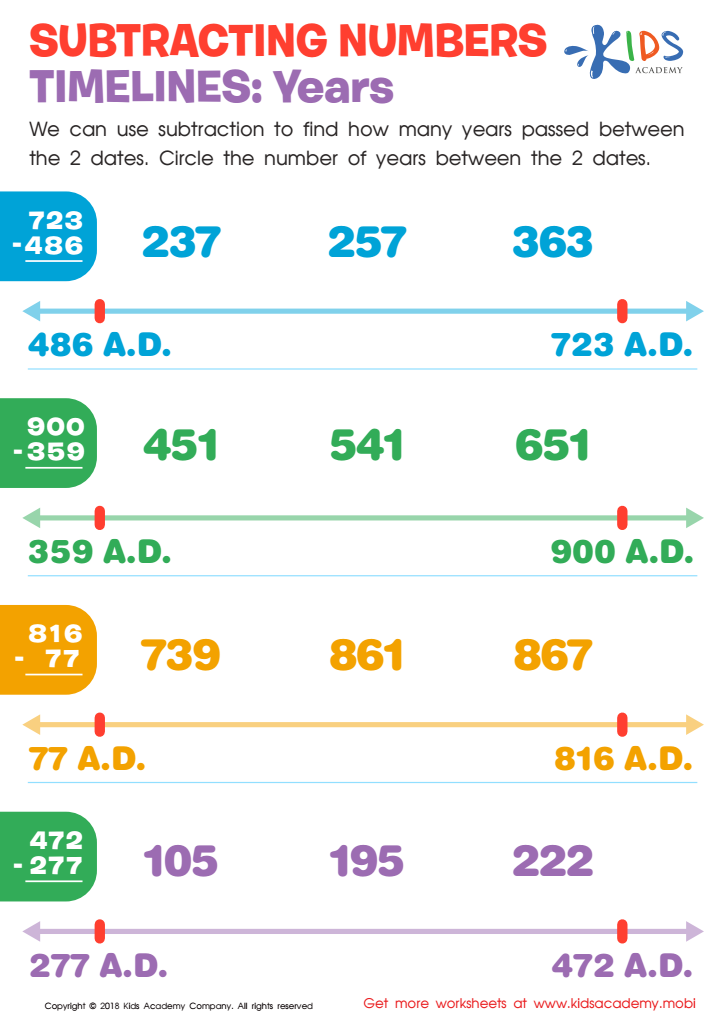
Subtracting Numbers Timelines: Years Worksheet
 Assign to My Students
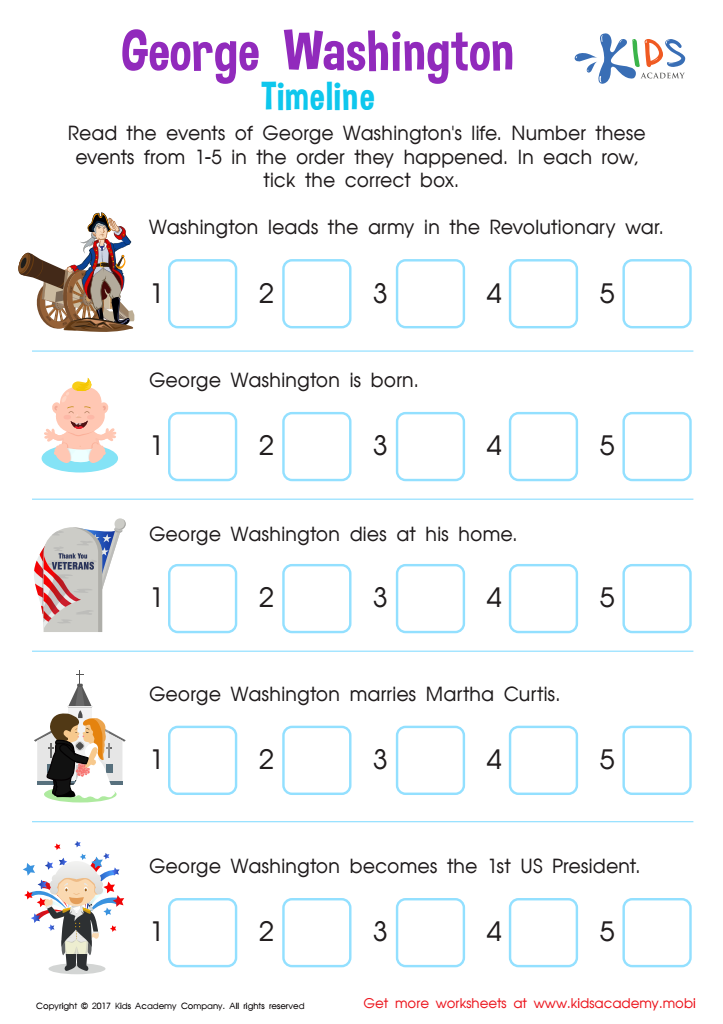
George Washington Timeline Worksheet






Understanding timelines is crucial for children aged 5-7 as it lays the foundation for their comprehension of relationships between events, concepts of time, and history. At this age, kids begin to grasp the sequence of past, present, and future, skills that are integral to cognitive development. Teachers and parents should recognize that being able to create and interpret timelines helps enhance critical thinking and organization skills.
By understanding timelines, children learn to associate cause and effect, enabling them to see how actions lead to consequences over time. This understanding fosters a sense of narratives—critical for storytelling, literacy, and their ability to engage with the world around them. It also encourages them to foster social skills as they learn about personal and historical events, allowing for discussions and sharing of experiences.
Moreover, engaging children with timelines fosters curiosity about history and their own familial backgrounds. It can turn learning into a more interactive experience, prompting them to ask questions and explore family traditions or significant historical events. By caring about teaching this concept, parents and teachers can effectively contribute to a child’s well-rounded education, instilling skills that will aid their academic journey and overall understanding of life’s progression.








