Understanding vowel sounds Worksheets for Ages 5-7
4 filtered results
-
From - To
Unlock your child's reading potential with our "Understanding Vowel Sounds Worksheets for Ages 5-7." These engaging, printable activities help young learners master the basics of vowel sounds through fun and interactive exercises. Perfect for early readers, our worksheets focus on identifying, understanding, and practicing both short and long vowel sounds. Designed by educational experts, each worksheet supports your child’s language development, phonemic awareness, and pronunciation skills. Build a strong reading foundation today with worksheets that make learning vowels enjoyable and effective. Ideal for at-home practice or classroom reinforcement.
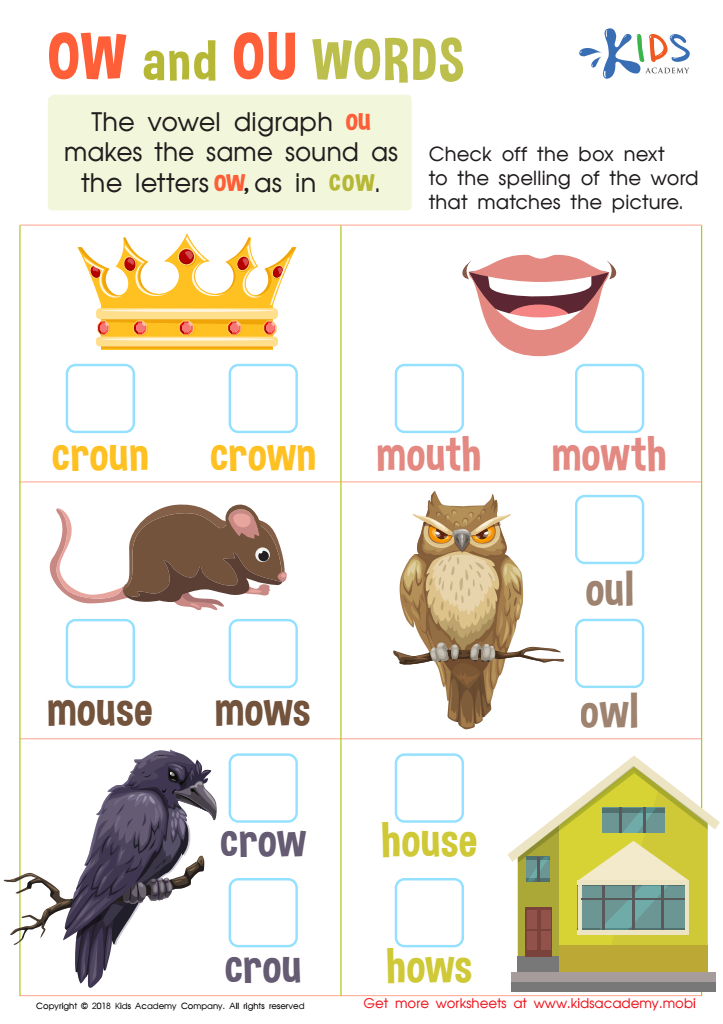
Reading: OW and OU Words Worksheet
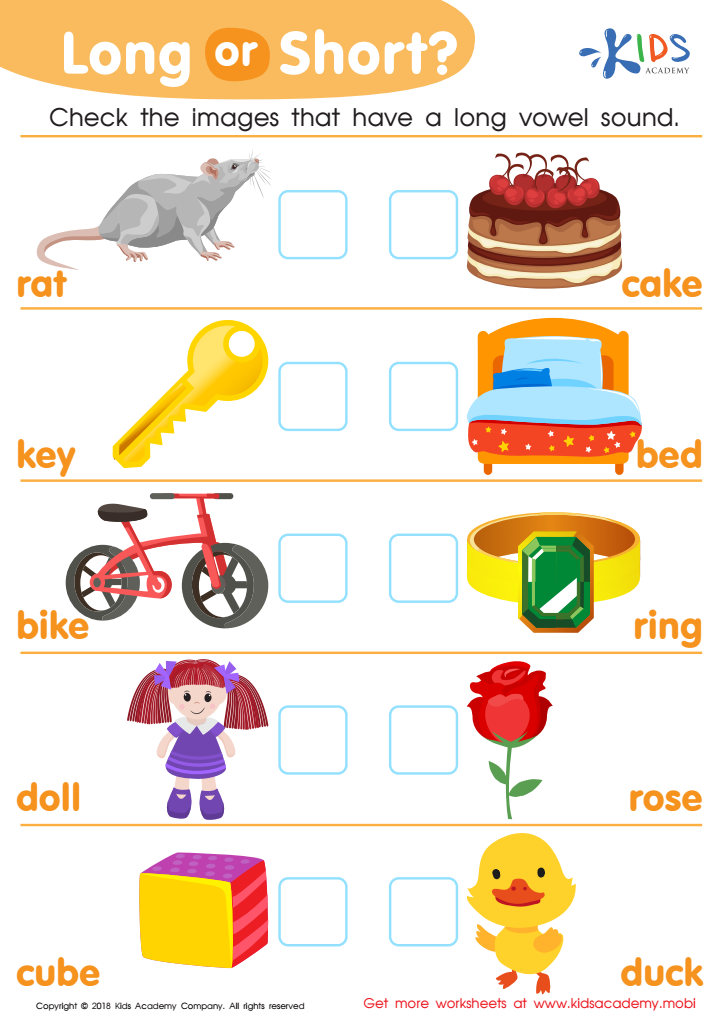
Long or Short Reading Worksheet
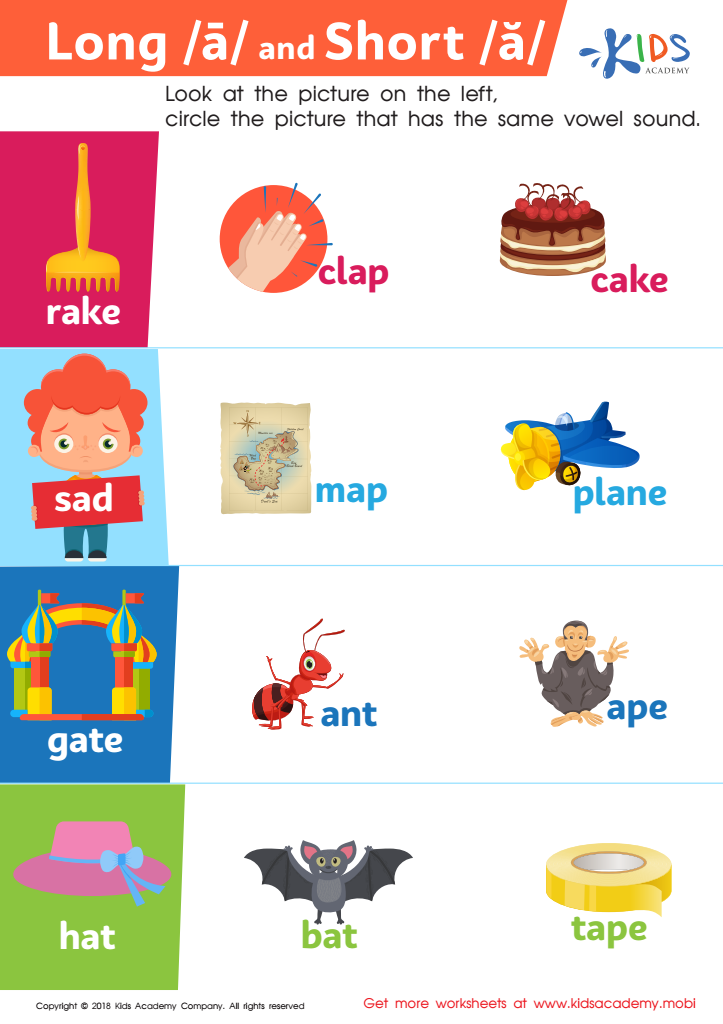
Reading: Long a and Short a Worksheet
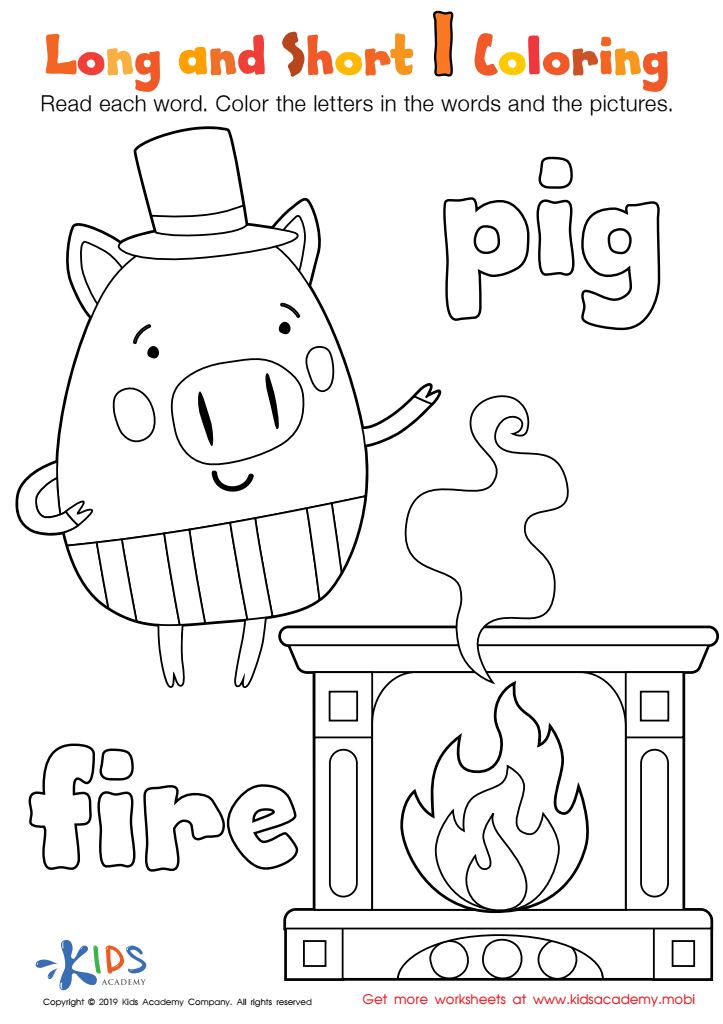
Long and Short I Worksheet
 Assign to My Students








Understanding vowel sounds is crucial for children aged 5-7 as it forms the foundation for reading and writing, essential skills in education. At this developmental stage, kids are typically learning to decode words, and vowel sounds are a core component of this process. Mastery of short and long vowel sounds aids in phonemic awareness — the ability to hear, identify, and manipulate individual sounds in spoken words.
By knowing vowel sounds well, children can more easily spell words correctly and decode unfamiliar words, boosting their reading fluency and confidence. Early competence in these areas can significantly impact a child's willingness and ability to engage with written material, fostering a love for reading that has educational benefits that last a lifetime.
Teachers and parents play a pivotal role in this learning phase. When they focus on Vowel sounds, they provide the tools for children to distinguish between similar-sounding words like "bit" and "beat." This knowledge helps prevent confusion and builds a strong literacy foundation. Early intervention in understanding vowel sounds can lead to better academic performance, higher self-esteem in learning environments, and a positive attitude towards education in general. Therefore, emphasis on vowel sounds is not just about language, it's about nurturing confident, competent learners ready to tackle future educational challenges.








