Visual discrimination Worksheets for Ages 5-7 - Page 2
28 filtered results
-
From - To
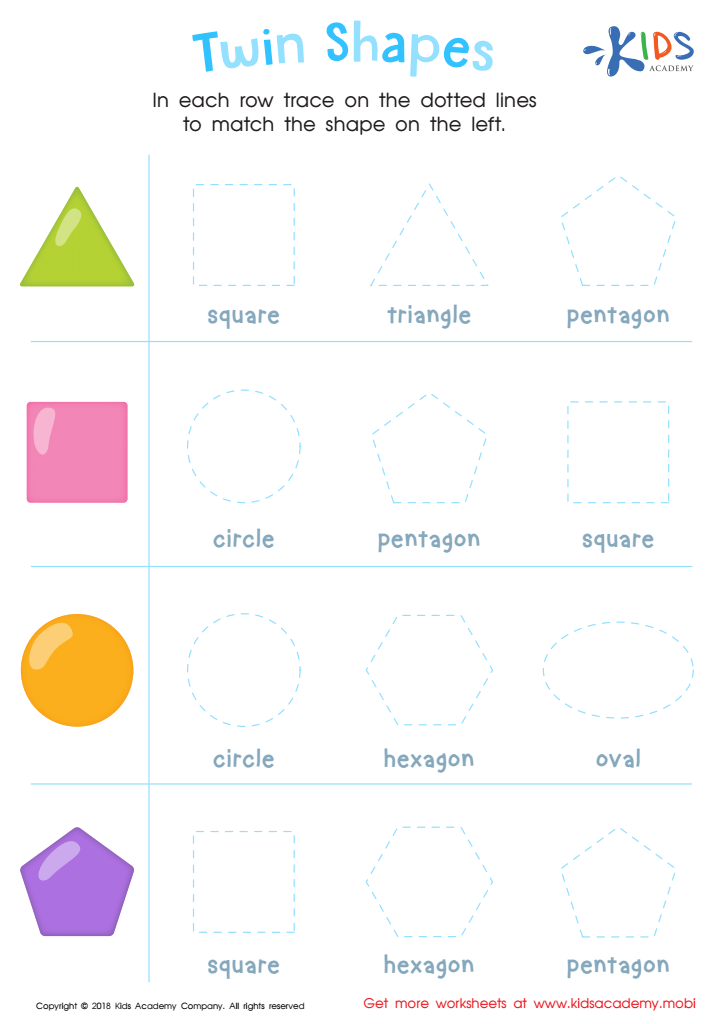
Twin Shapes Dot-to-Dot Worksheet
 Assign to My Students
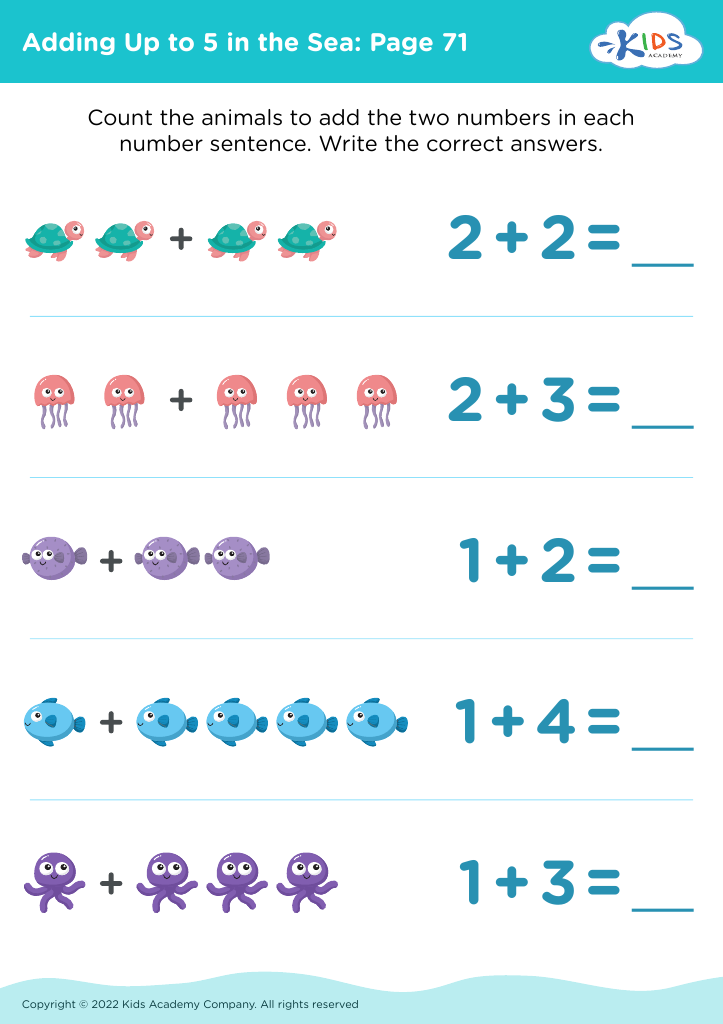
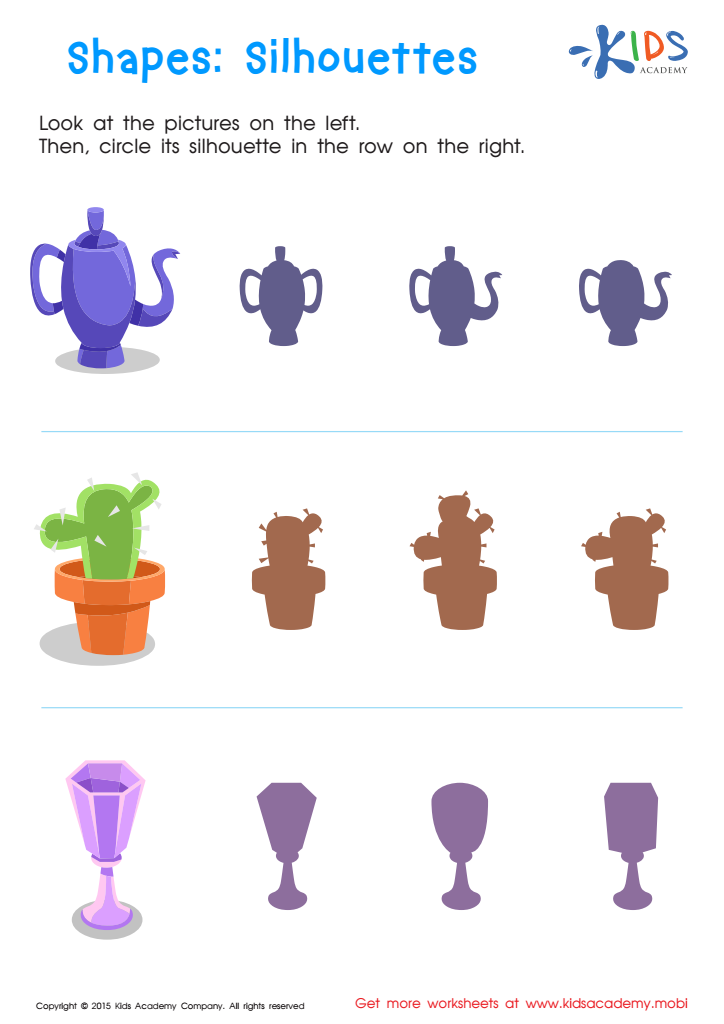
Silhouettes – Shapes Worksheet
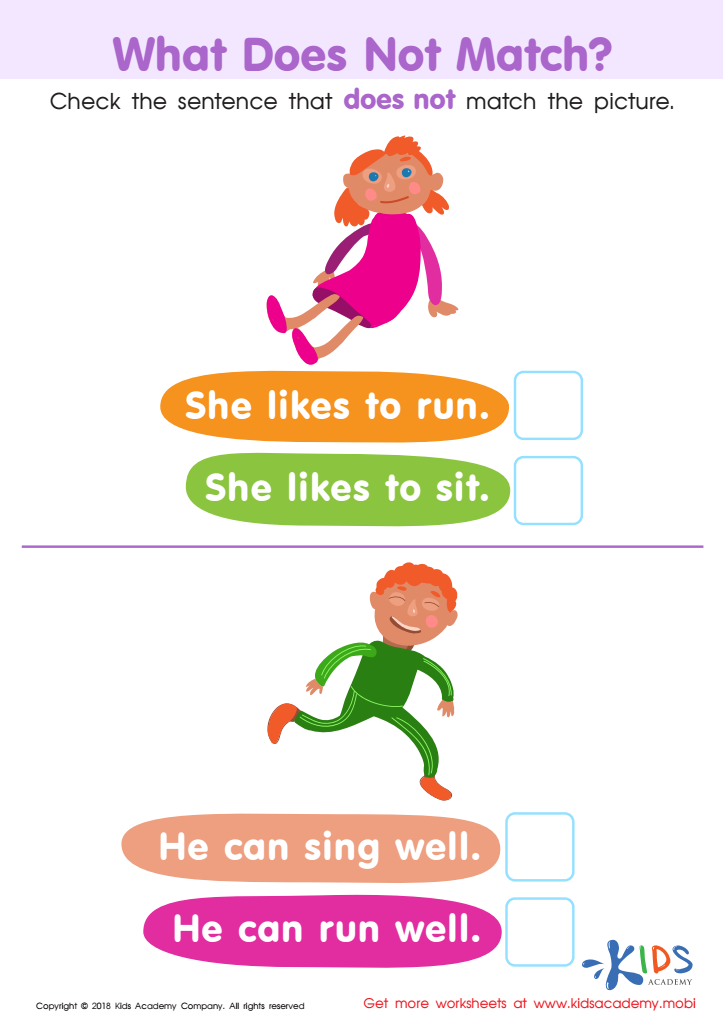
What Does Not Match? Worksheet







Visual discrimination is crucial for children aged 5 to 7 years as it lays the foundation for essential skills in reading, writing, and overall cognitive development. At this age, children begin to encounter various forms of written communication that require distinguishing between similar letters, numbers, colors, shapes, and patterns. For instance, mastering the difference between “b” and “d” or recognizing the variant shapes of letters and numbers can significantly influence a child’s reading and math skills.
Additionally, visual discrimination aids in improving attention and focus. Children learn to identify critical details, which enhances their ability to follow instructions, engage in problem-solving tasks, and complete puzzles or games that foster their mental agility. Enhanced visual skills also encourage creativity and artistic expression, enabling children to analyze and differentiate visual elements in their artwork.
Parents and teachers should, therefore, prioritize activities that enhance visual discrimination, such as sorting games, matching activities, and visual puzzles. By cultivating these skills, they help children build stronger academic abilities, boost confidence, and create a positive learning environment that equips them for future educational challenges. Investing in visual discrimination now will yield long-term benefits for children’s overall development.








