Visual-motor skills Worksheets for Ages 5-7
6 filtered results
-
From - To
Boost your child’s development with our Visual-Motor Skills Worksheets for ages 5-7. These engaging activities are designed to enhance hand-eye coordination, fine motor skills, and visual perception. Perfect for young learners, our worksheets offer a blend of fun and educational exercises such as tracing, drawing, cutting, and matching. Each worksheet encourages precision and concentration, fostering your child's learning and growth. Created by educational experts, these tasks are the ideal resource for parents and teachers seeking effective, enjoyable ways to support visual-motor integration. Help children thrive with structured, skill-building activities tailored to their developmental needs!
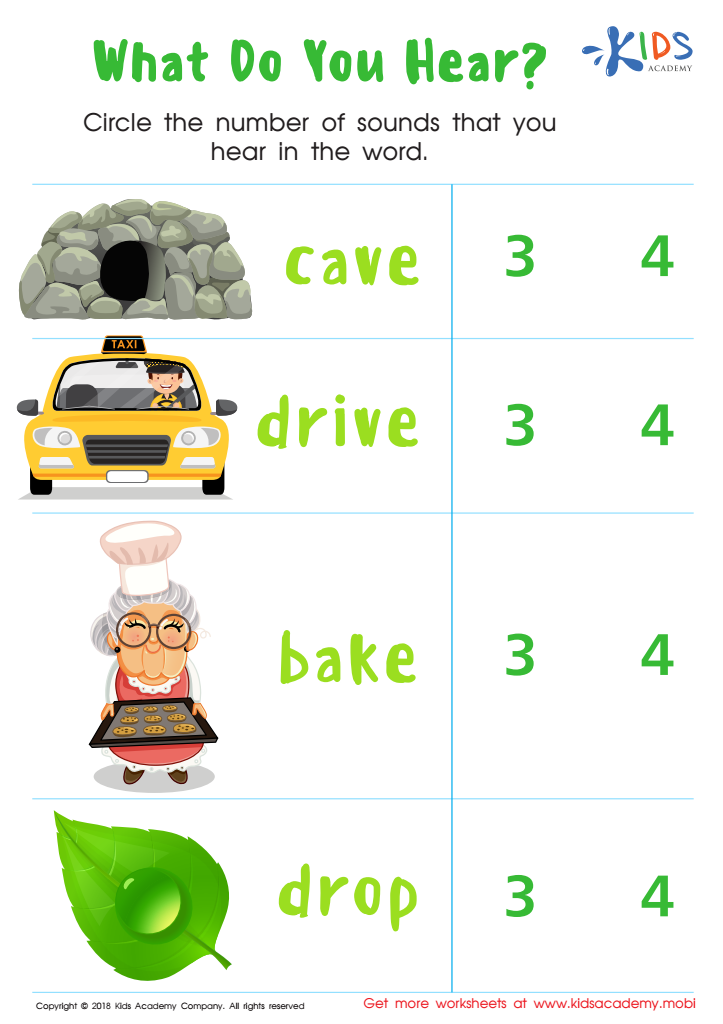
What Do You Hear? Worksheet
 Assign to My Students
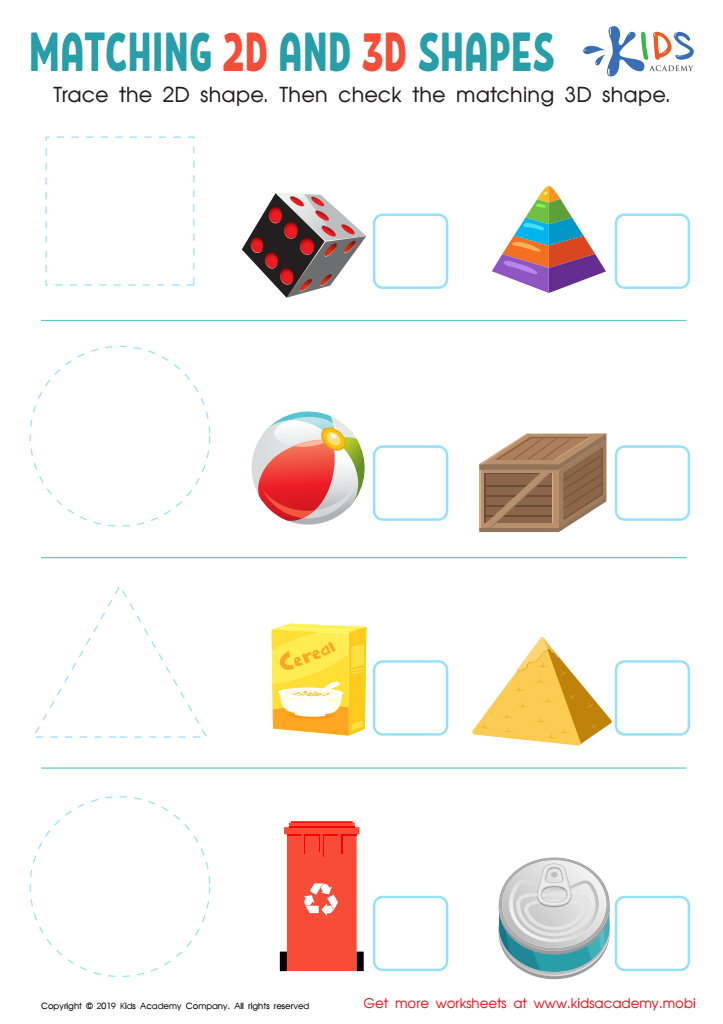
Matching 2D and 3D Shapes Worksheet






Visual-motor skills, which integrate visual information with fine motor actions, are crucial for children aged 5-7 because they form the foundation for a wide array of academic and life skills. At this age, kids are learning to read, write, and participate in more complex physical activities — all of which require a blend of visual perception and motor coordination.
For instance, learning to write involves not just knowing how letters look, but also being able to control a pencil to reproduce them accurately. This requires fine motor skills for precise hand movements and visual skills to monitor and correct the shapes and sizes of letters. Weak visual-motor skills can lead to difficulties in handwriting, affecting a child's ability to keep up in class and express their ideas effectively.
Beyond academics, visual-motor skills are also essential for everyday tasks like tying shoelaces, cutting with scissors, or even playing sports, which involve eye-hand coordination. Deficiencies in these skills can result in frustration, lower self-esteem, and a reluctance to participate in classroom and recreational activities. Early detection and intervention can help address these issues before they exacerbate, ensuring that the child develops a strong, coordinated skill set to support their overall growth and success. Thus, emphasizing visual-motor development at this critical age is vital for academic achievement and overall well-being.








