
Visual representation Worksheets for Ages 5-7
3 filtered results
Difficulty Level
Grade
Age
-
From - To
Subject
Activity
Standards
Enhance your child’s learning journey with our Visual Representation Worksheets for Ages 5-7, designed to boost critical thinking and comprehension skills. These engaging worksheets transform complex concepts into fun, visual activities, perfect for young minds. Children will develop skills in interpreting graphs, charts, and images, helping them grasp information in multiple forms. Ideal for both classroom and home use, these resources support foundational learning in math, science, and literacy. Empower your kids with tools that make learning intuitive and enjoyable. Start your child’s path to success today with our expertly crafted visual representation activities!
Favorites
With answer key
Interactive
Name Parts of the Pies Worksheet
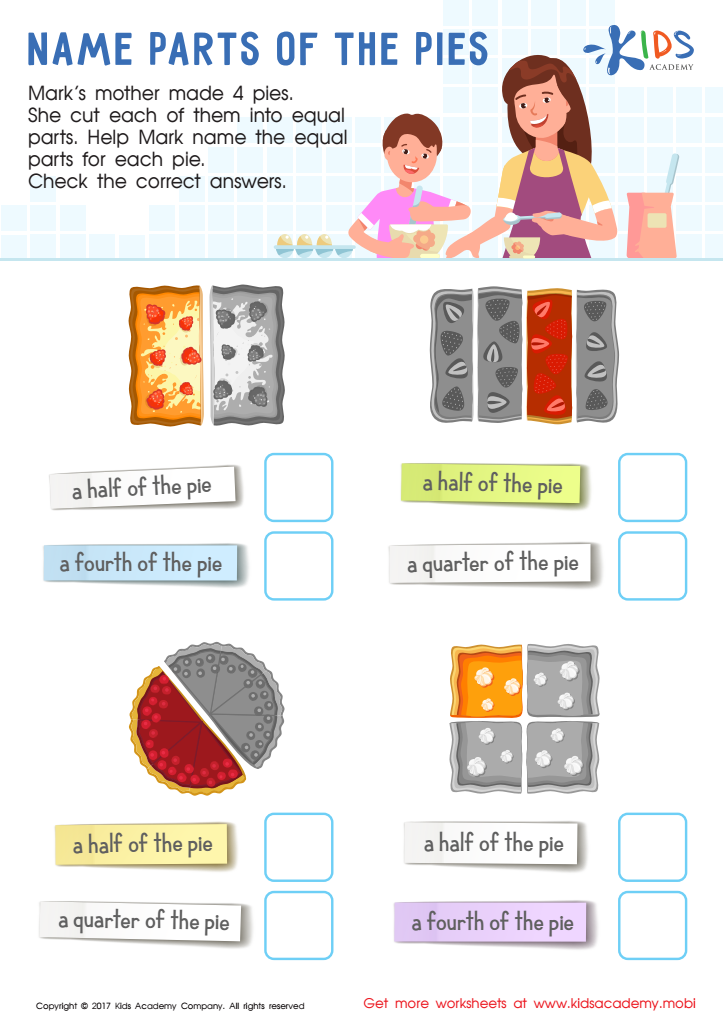
Mark and his mom are making pies. He's dividing them into equal parts and needs help to name them. Let your students aid him by checking the correct answer for each picture. Have them think of their own roles in the kitchen when they're done. How do they help their moms?
 Assign to My Students
Name Parts of the Pies Worksheet
Worksheet
What's an Array? Worksheet
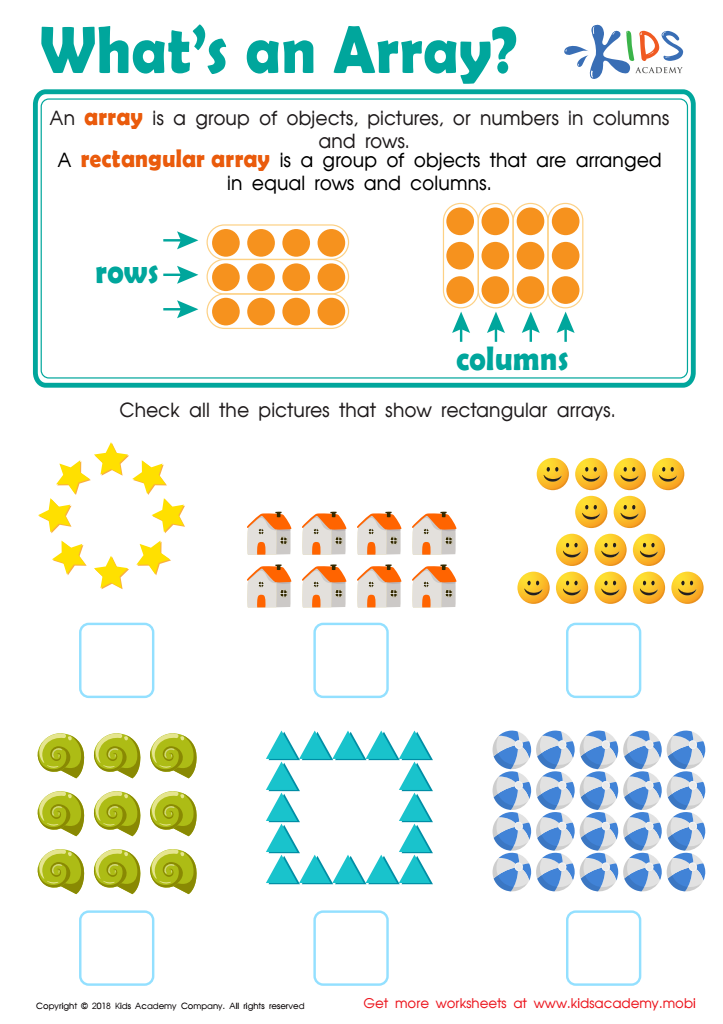
Explain to your child that an array is a group of objects, pictures, or numbers in columns and rows. Show them a rectangular array is a group of objects in equal rows and columns. Guide them to check the pictures in the worksheet to spot any rectangular arrays. Help them remember this concept.
What's an Array? Worksheet
Worksheet
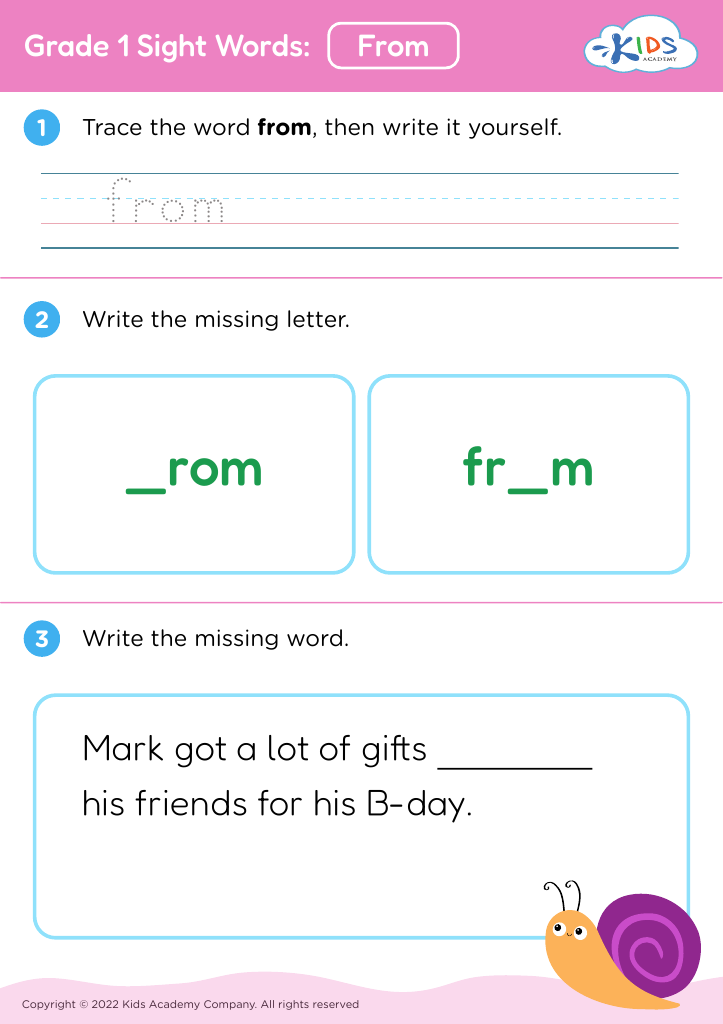
Join Kids Academy for Free
Who is primarily going to use this learning content?








Visual representation is crucial for children ages 5-7 because it enhances their learning and cognitive development. At this age, children are primarily visual learners. Pictures, charts, and diagrams can make abstract concepts more concrete and comprehensible. When a child sees a picture of an apple while learning the letter "A," they can better connect the symbol to the actual object. Visuals aid in memory retention; children are more likely to remember information that is presented in a colorful, engaging manner.
Additionally, visual aids can help bridge language barriers, supporting children who are still developing their vocabulary or those for whom English is a second language. By incorporating visuals, parents and teachers can create an inclusive learning environment where all children grasp the material more effectively.
Visual representation also aids in developing critical thinking and problem-solving skills. For example, working with puzzles or illustrated storybooks encourages children to observe, compare, and reason. Drawing and coloring activities enhance fine motor skills and creativity, essential components of overall development.
In sum, focusing on visual representation supports a well-rounded educational experience, catering to the diverse learning styles of young children. Parents and teachers who use visual aids effectively contribute to a child's cognitive growth, literacy, and overall confidence in learning.








