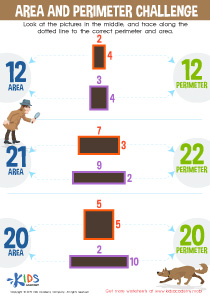
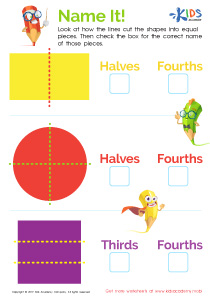
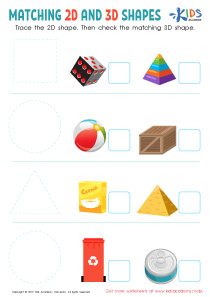
Pattern recognition 2D Shapes Worksheets for Ages 5-7
3 filtered results
-
From - To
Explore our engaging Pattern Recognition 2D Shapes Worksheets designed for children ages 5-7! These fun, interactive activities help young learners enhance their identification and understanding of basic 2D shapes while developing crucial pattern recognition skills. Through colorful illustrations and exciting exercises, kids will practice distinguishing shapes, spotting similarities, and predicting patterns. Tailored to align with early learning standards, our worksheets support cognitive development and foster a love for mathematics. Perfect for classroom use or home learning, these resources encourage hands-on learning, making it easy for children to master shapes and patterns while having fun. Get started today and watch their skills grow!
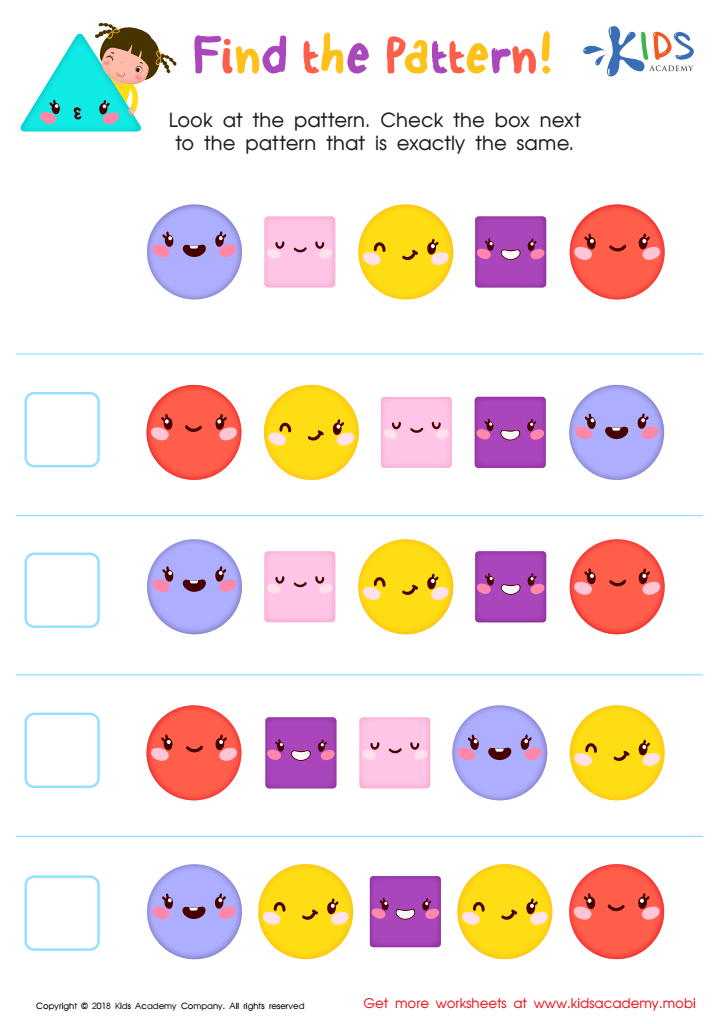
Find the Pattern Worksheet
 Assign to My Students










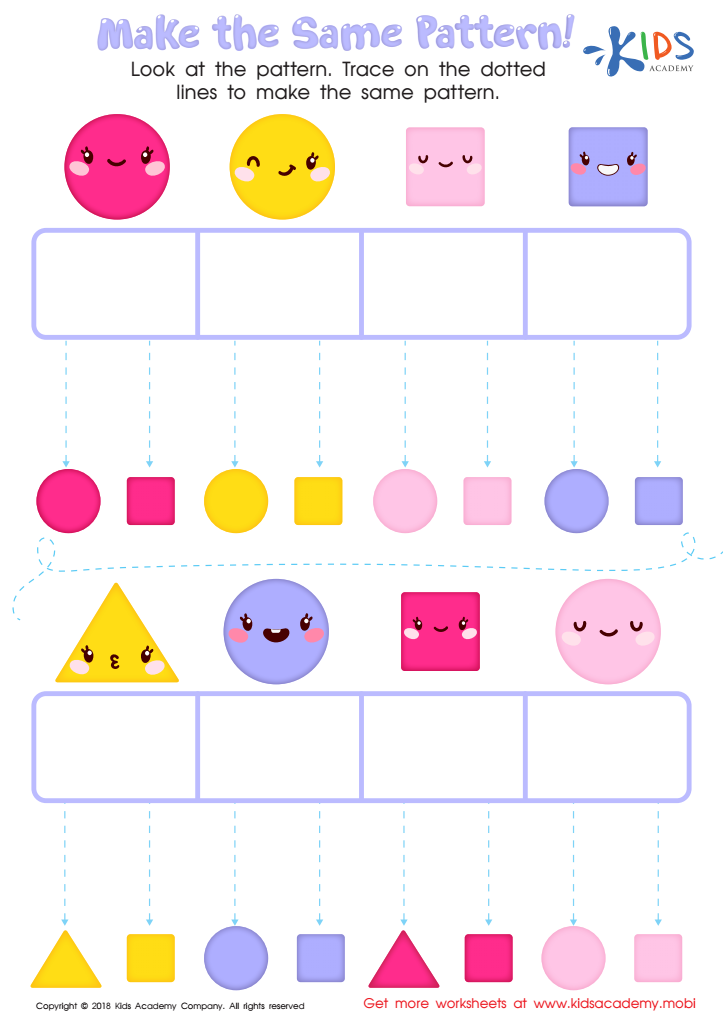
Make the Same Pattern Worksheet
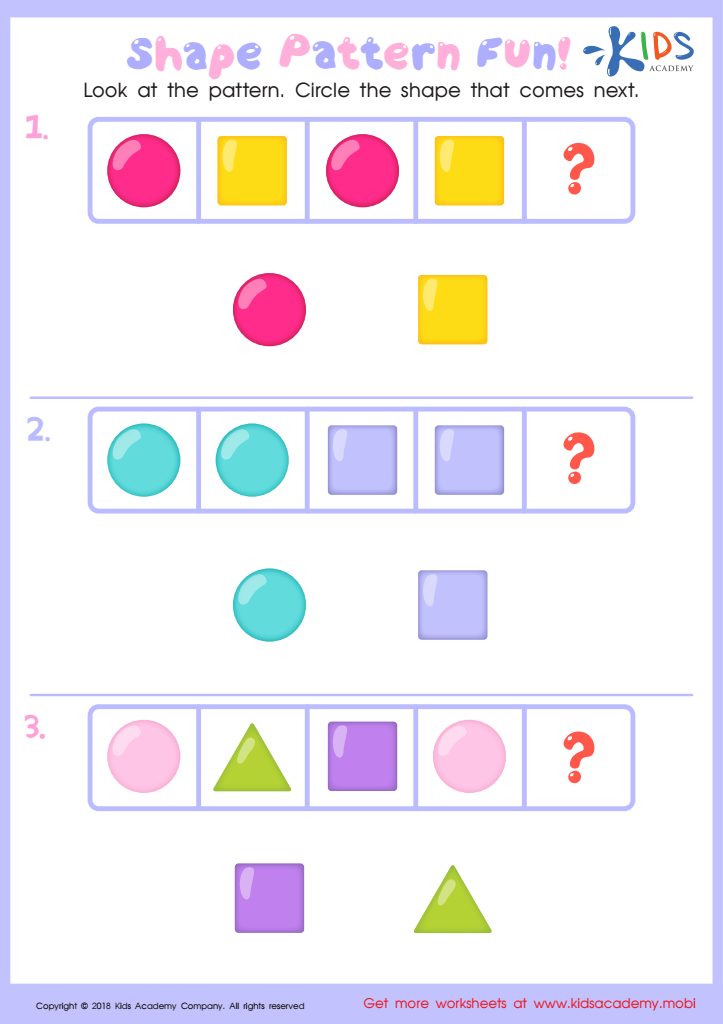
Shape Pattern Fun Worksheet








Pattern recognition in 2D shapes is fundamental for children aged 5-7, as it nurtures essential cognitive skills and lays the groundwork for future mathematical understanding. At this age, children are naturally curious and eager to explore their environment. Recognizing shapes and patterns helps develop their observation and reasoning skills, allowing them to identify similarities, differences, and sequences in the world around them.
Engagement with 2D shapes and patterns enhances children’s spatial awareness, a crucial ability that supports their understanding of more complex concepts like geometry, measurement, and even problem-solving strategies in later grades. It encourages critical thinking as kids learn to predict what comes next in a sequence, bolstering their analytical skills.
Furthermore, recognizing patterns fosters creativity and imagination. Children can create their designs, artworks, or even basic mathematics involving shapes and patterns, strengthening their motor skills and confidence.
Parents and teachers play a pivotal role in guiding these explorative experiences. Encouraging playful activities—like sorting blocks, drawing patterns, or playing shape-based games—can transform learning into an enjoyable adventure. Ultimately, investing time in pattern recognition sets children on a path toward academic success and lifelong learning.