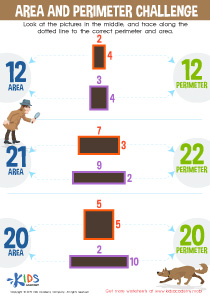
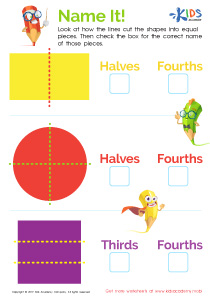
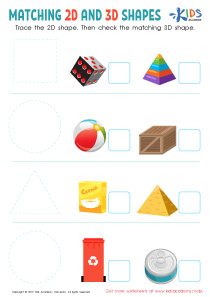
Recognizing shapes 2D Shapes Worksheets for Ages 5-7
3 filtered results
-
From - To
Unlock your child's creativity and understanding of geometry with our engaging "Recognizing 2D Shapes" worksheets designed for ages 5-7! These worksheets provide a fun and interactive way for young learners to identify, name, and learn about basic shapes such as circles, squares, triangles, and rectangles. Through colorful illustrations and hands-on activities, kids will develop their shape recognition skills while enhancing their fine motor abilities. Perfect for home or classroom use, our printables make learning shapes enjoyable and effective. Encourage your little ones to explore the world of geometry and boost their confidence in math with these educational resources!
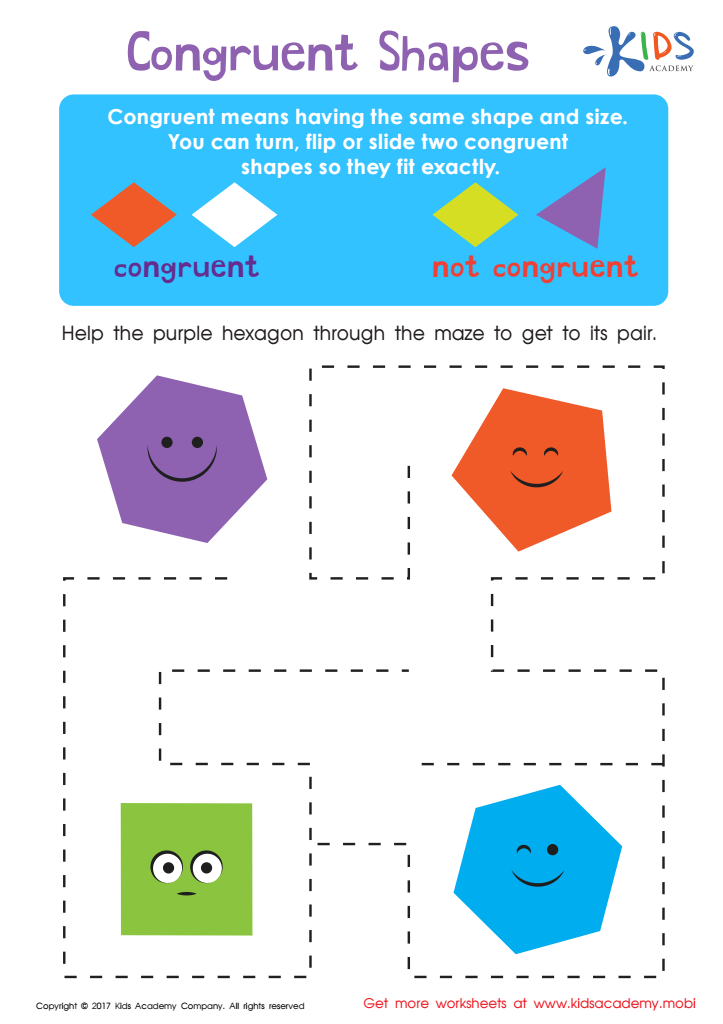
Congruent Shapes Worksheet
 Assign to My Students





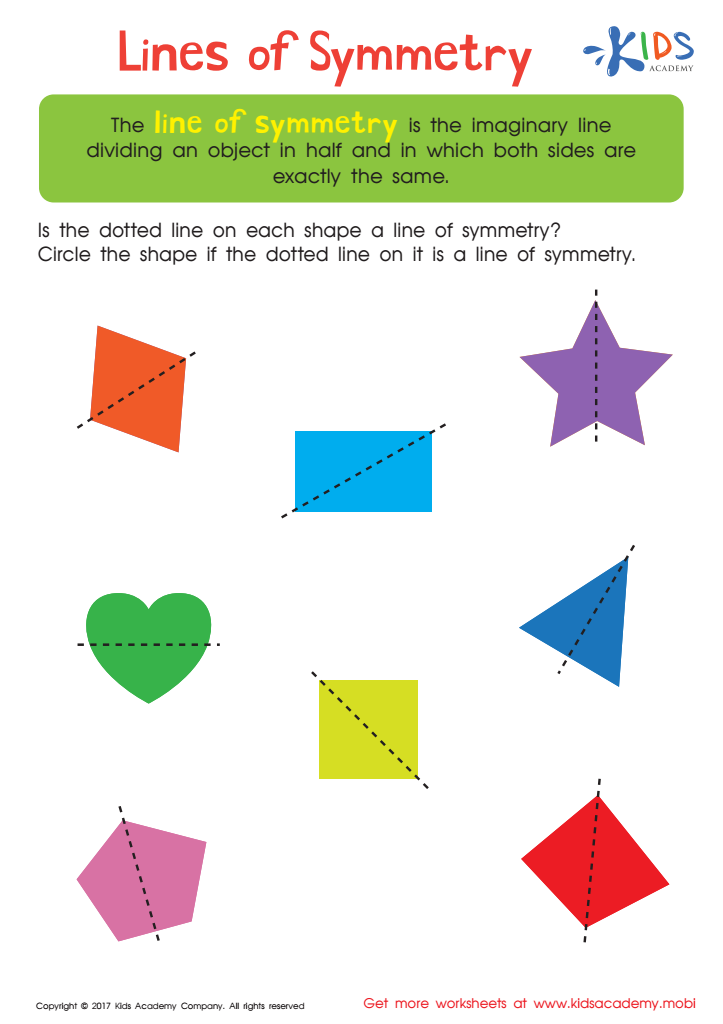
Lines of Symmetry Printable
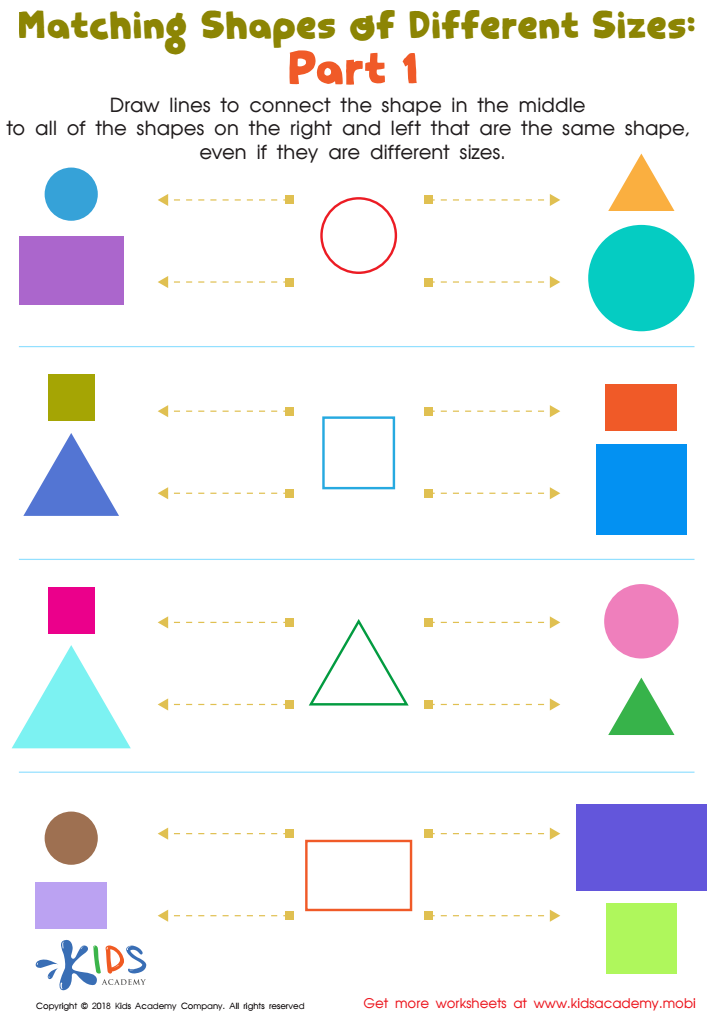
Geometry: part 1 Worksheet








Recognizing 2D shapes is fundamental to a child's early mathematical education and cognitive development. For children aged 5-7, identifying shapes such as circles, squares, triangles, and rectangles helps build a foundation for more complex mathematical concepts. Understanding shapes enhances spatial awareness, which is crucial for everyday tasks and problem-solving.
Moreover, shape recognition supports literacy development as many letters and numbers are based on geometric shapes. By associating characteristics of shapes with their names, children strengthen their vocabulary and comprehension skills.
Teachers and parents play a pivotal role in promoting shape recognition in a fun and engaging manner. Utilizing everyday objects, arts and crafts, and interactive games can transform learning into an enjoyable experience. When children can see and interact with shapes in their environment, they are more likely to understand and remember them.
Furthermore, recognizing shapes aids in developing critical thinking skills. Encouraging children to classify, compare, and explore shapes fosters a sense of curiosity and logical reasoning. These early experiences instill confidence that will benefit them throughout their academic journey and everyday life. Thus, prioritizing 2D shape recognition is essential for holistic child development.