Basic addition practice Adding in the Sea Worksheets for Ages 5-7
3 filtered results
-
From - To
Dive into a world of learning with our "Basic Addition Practice: Adding in the Sea" worksheets, specially designed for ages 5-7. These engaging and educational printables feature charming sea-themed illustrations to captivate young minds. Perfect for beginners, each worksheet helps children practice essential addition skills in a fun and interactive way. Parents and teachers will love how these worksheets reinforce basic math concepts while sparking a love for learning. Ideal for both classroom and at-home use, enhance your child's math journey with our delightful sea-inspired addition practice sheets today!
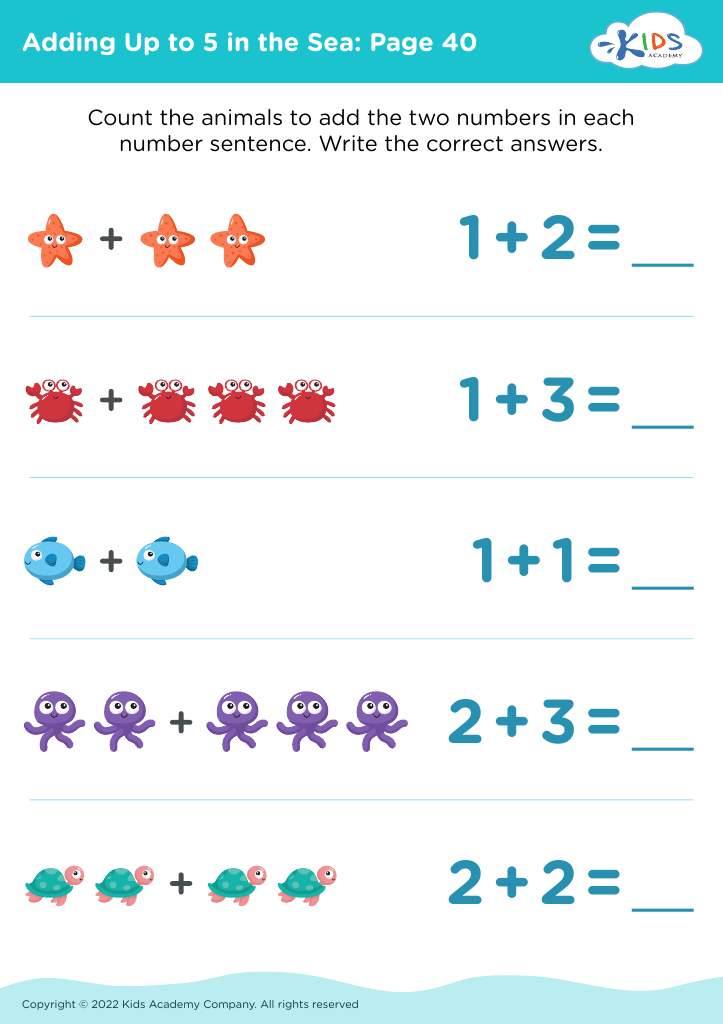
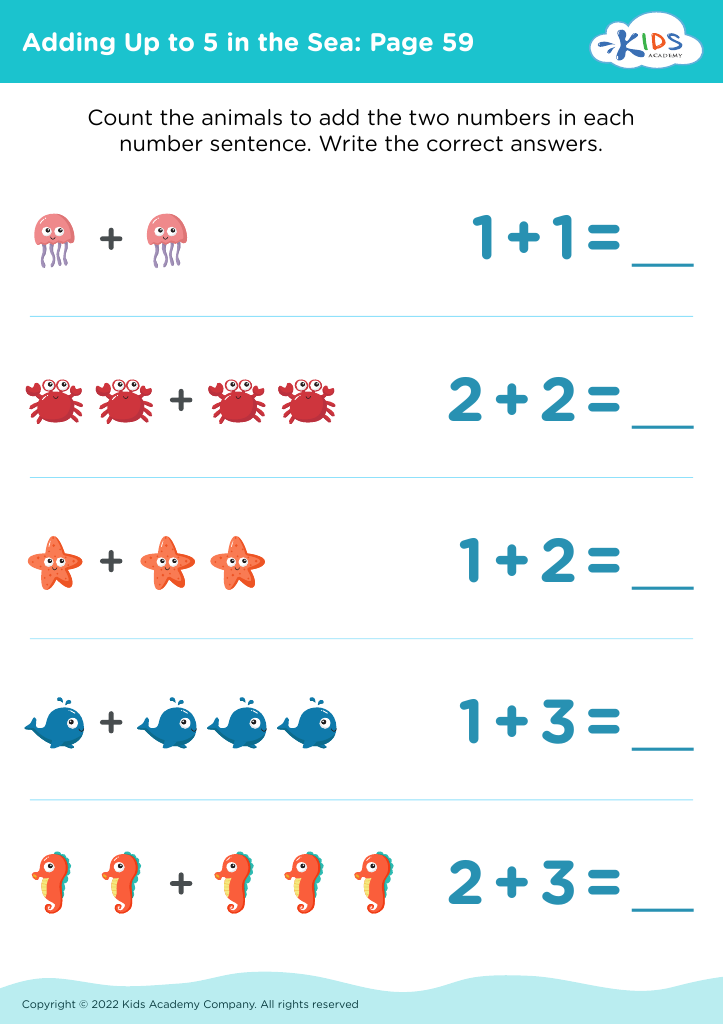
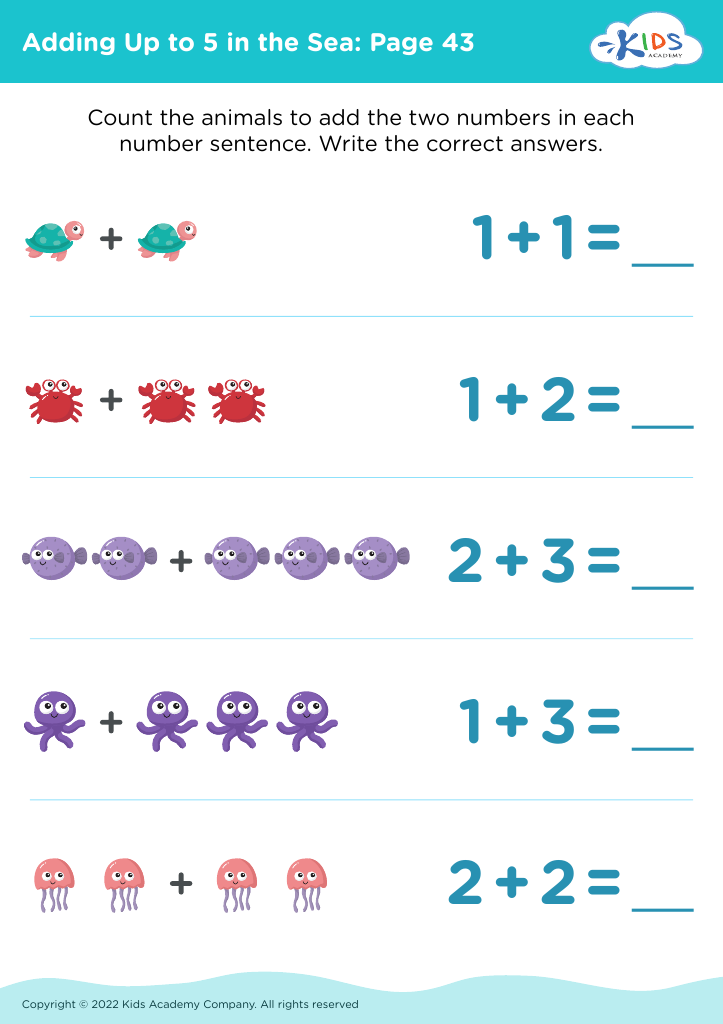



Basic addition practice, such as activities in "Adding in the Sea" for ages 5-7, is crucial for several reasons. Engaging children in early math concepts helps build a strong foundation for more advanced mathematics. At these young ages, the brain is exceptionally receptive to learning new skills, and developing proficiency in basic addition sets the stage for future academic success.
"Adding in the Sea" employs a captivating, ocean-themed approach, making learning enjoyable and relatable. This ensures that young students remain engaged and motivated to practice, which is essential for reinforcing educational concepts. By making addition fun, children are more likely to develop a positive attitude towards math, reducing anxiety and fostering a natural curiosity.
Incorporating educational activities like "Adding in the Sea" at home or in the classroom also helps identify students who may need extra support early on, allowing for timely intervention. Moreover, addition practice helps improve cognitive skills such as memory, concentration, and problem-solving, which are applicable beyond math.
Parents and teachers should embrace such resources to nurture a love of learning and provide children with the tools they need for academic confidence and capability. Ultimately, establishing a firm understanding of basic math concepts prepares children for continued educational development in a multitude of disciplines.