Basic Addition Skills Adding on the Farm Worksheets for Ages 5-7 - Page 2
63 filtered results
-
From - To
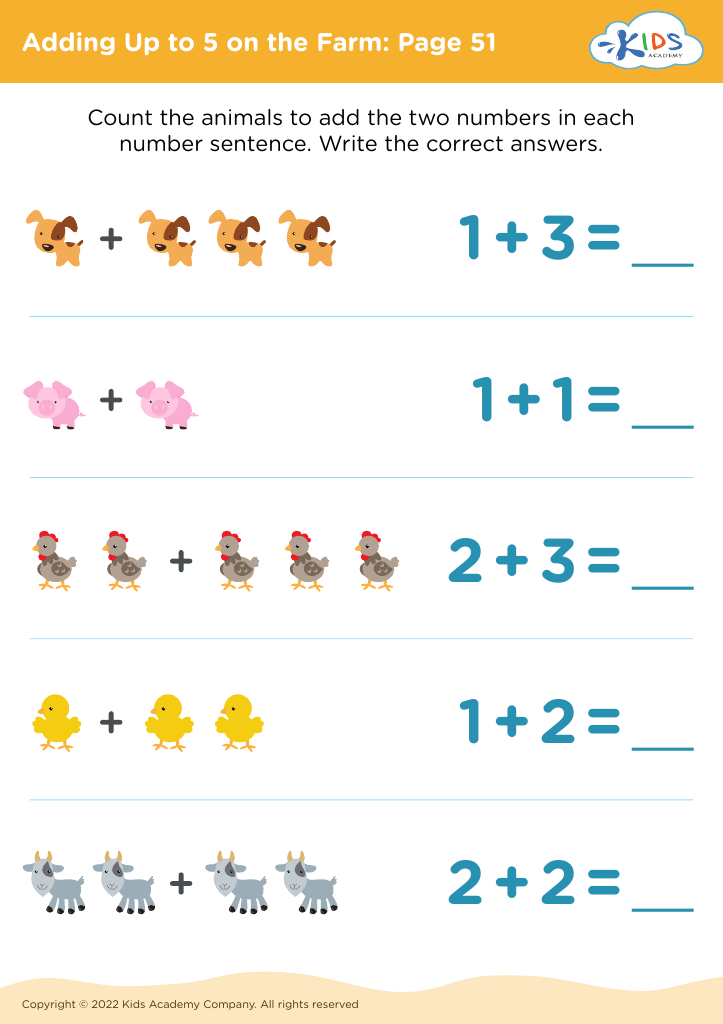
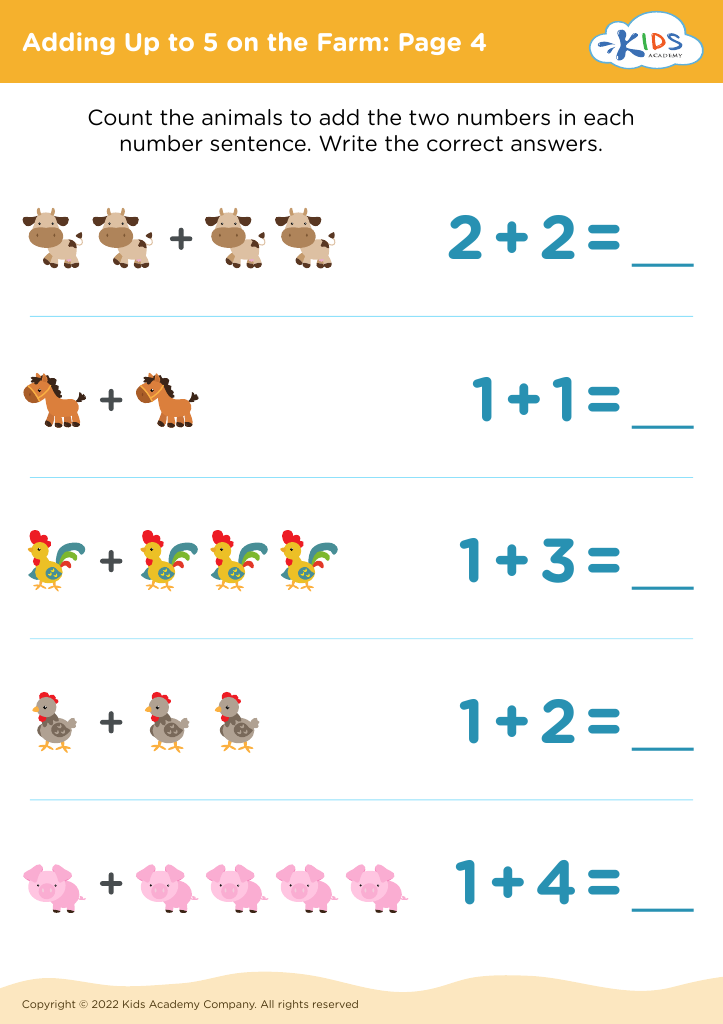
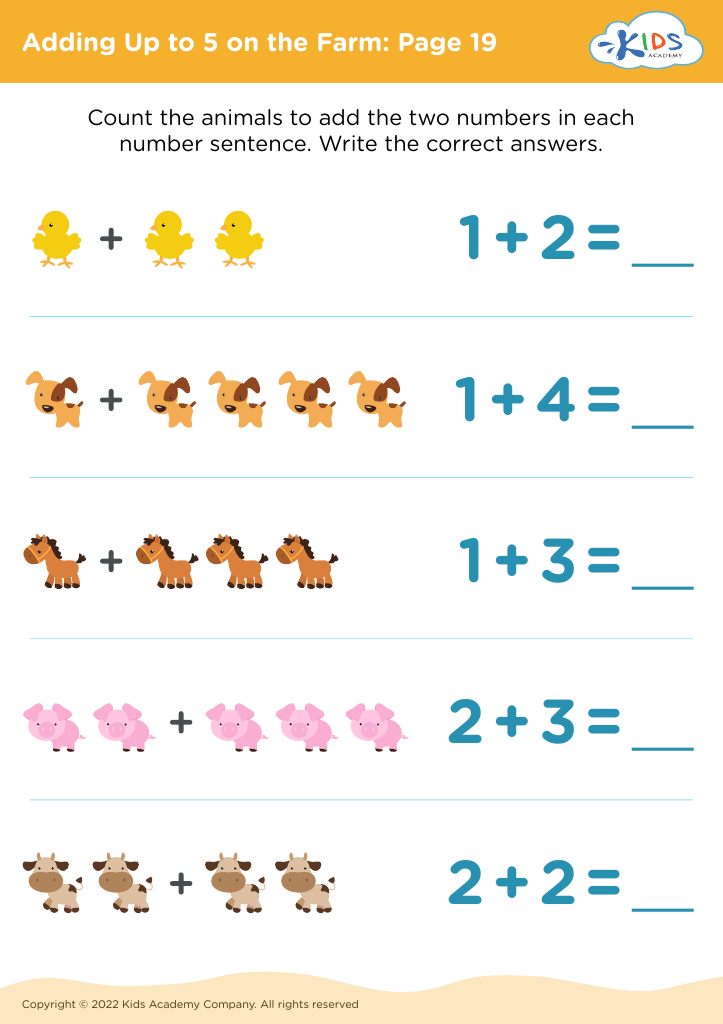
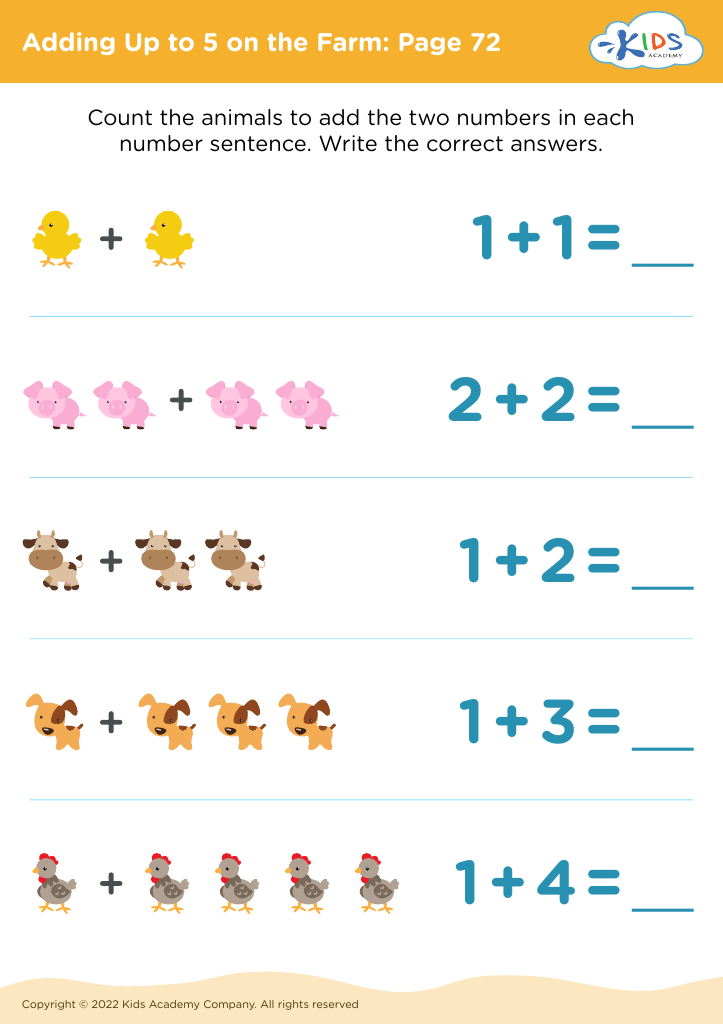
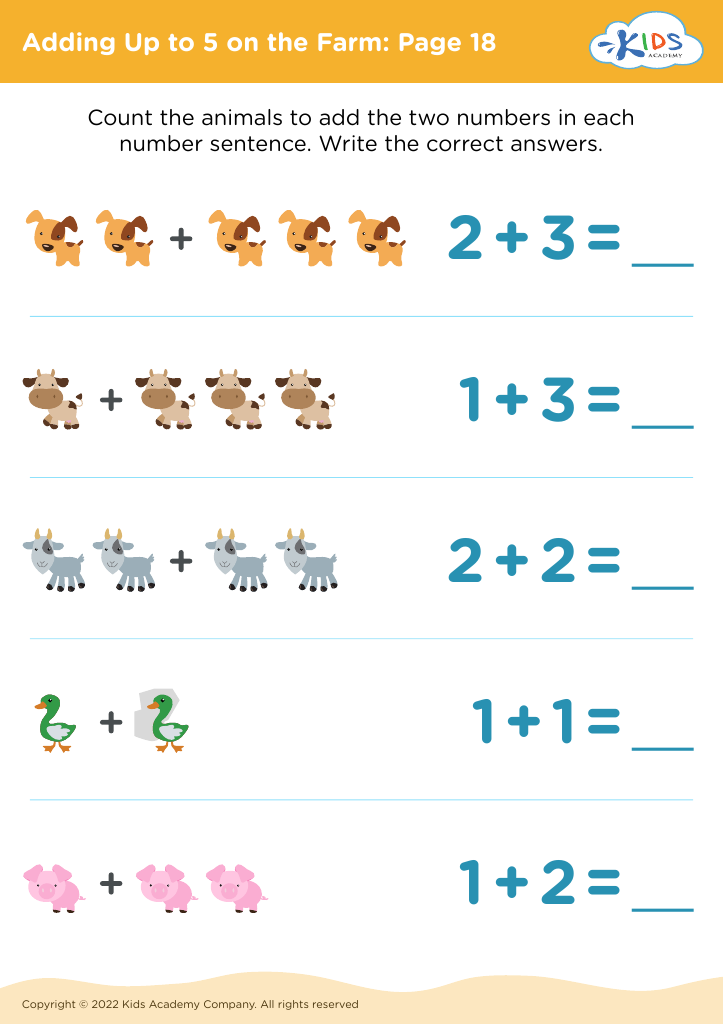
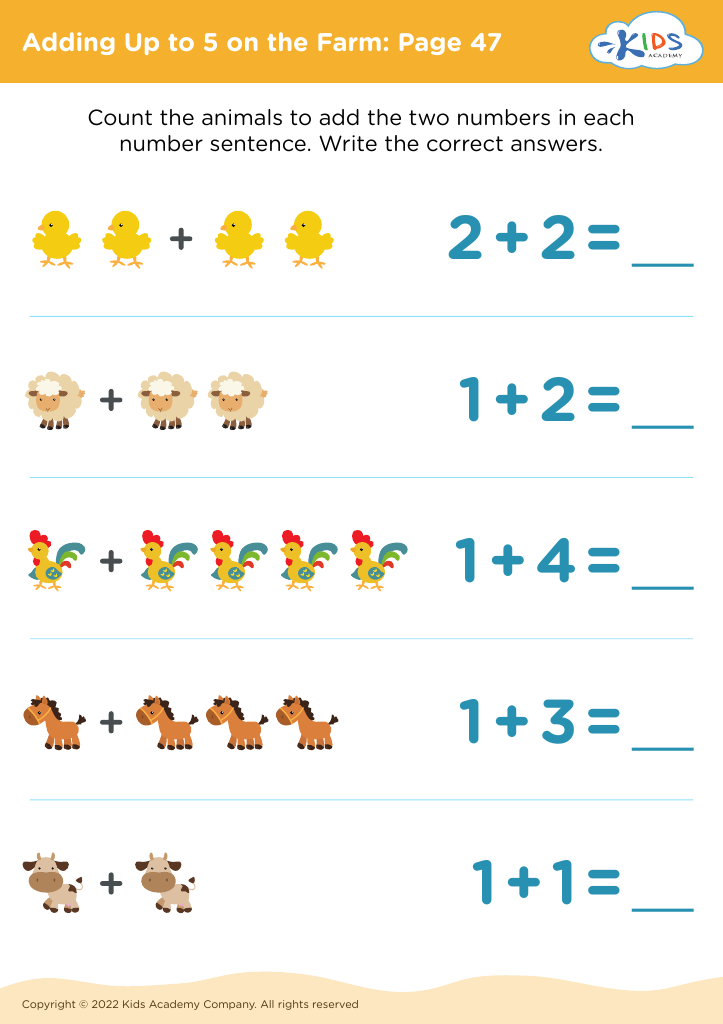
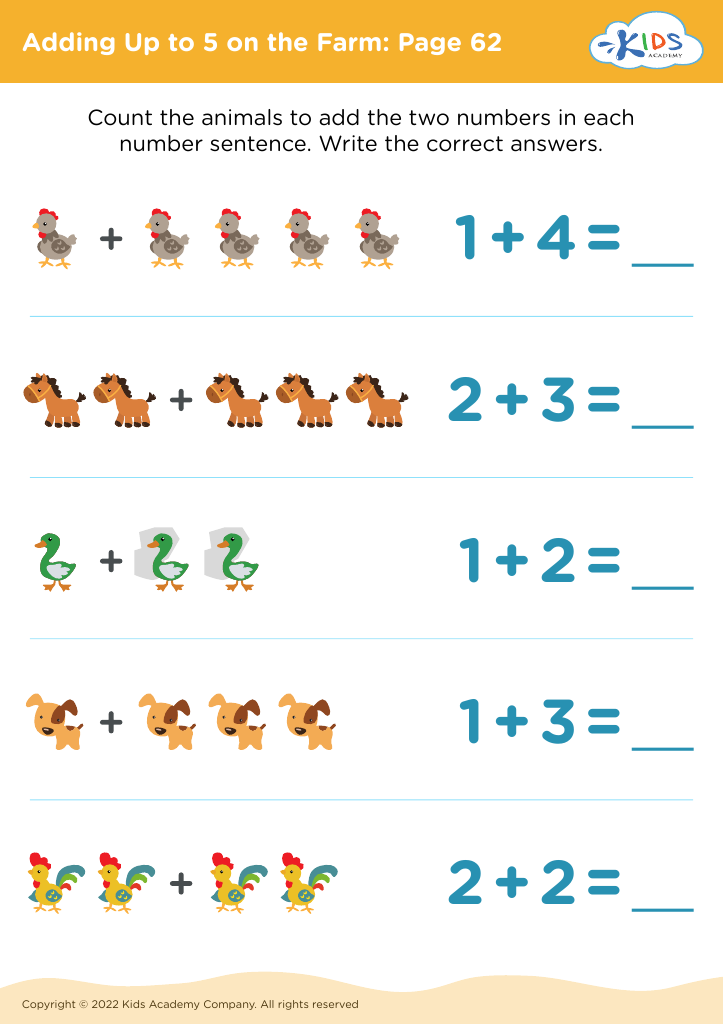
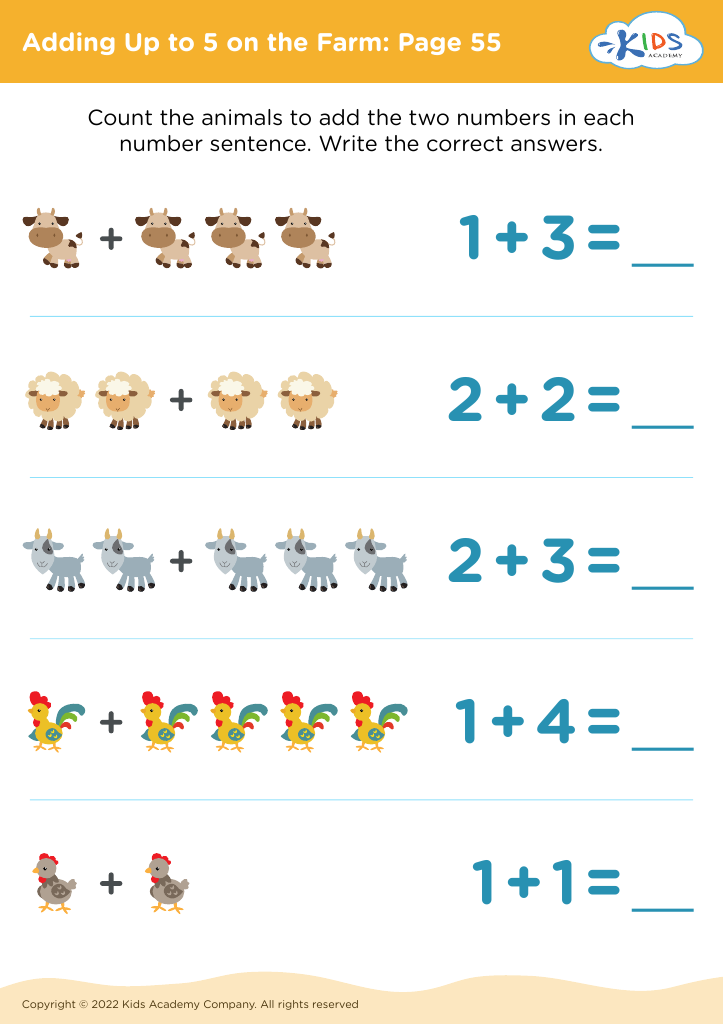
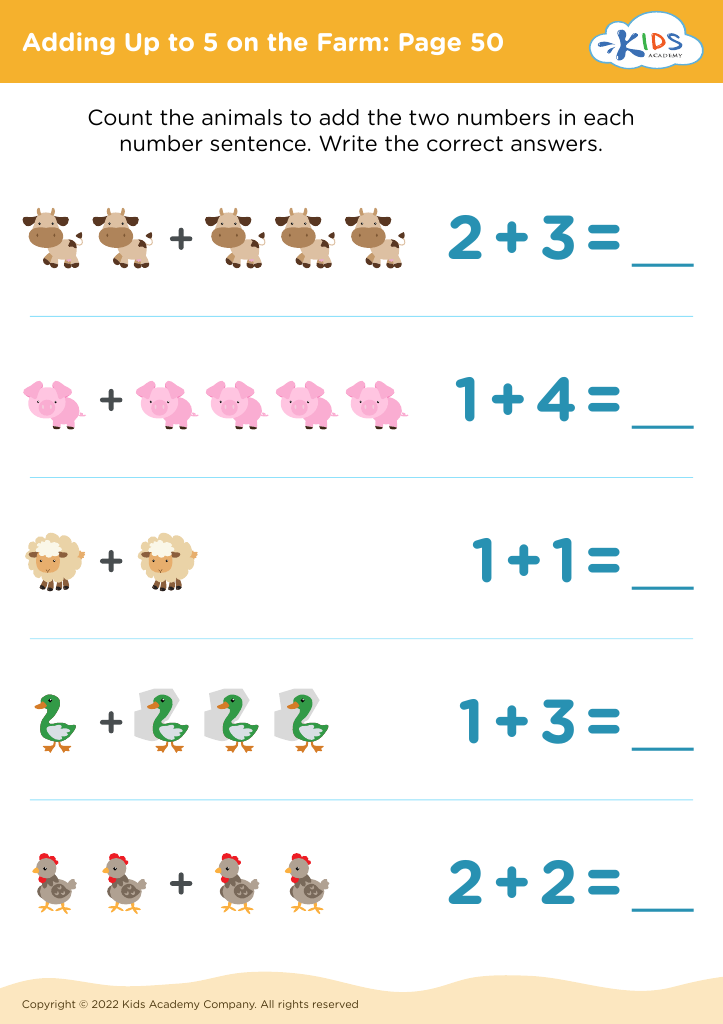
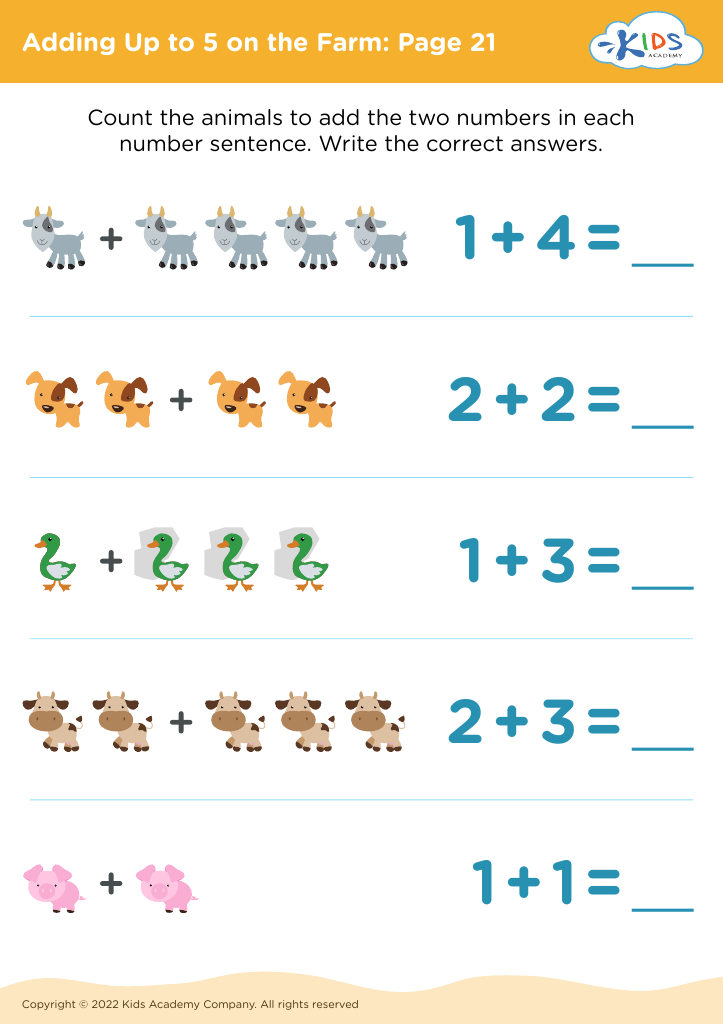
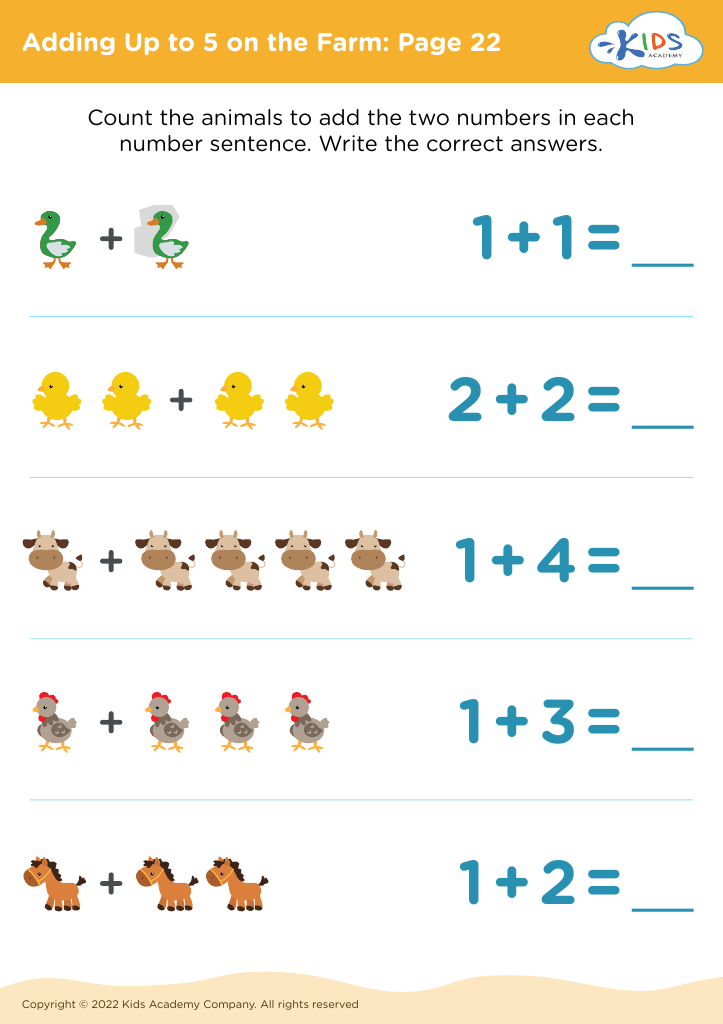
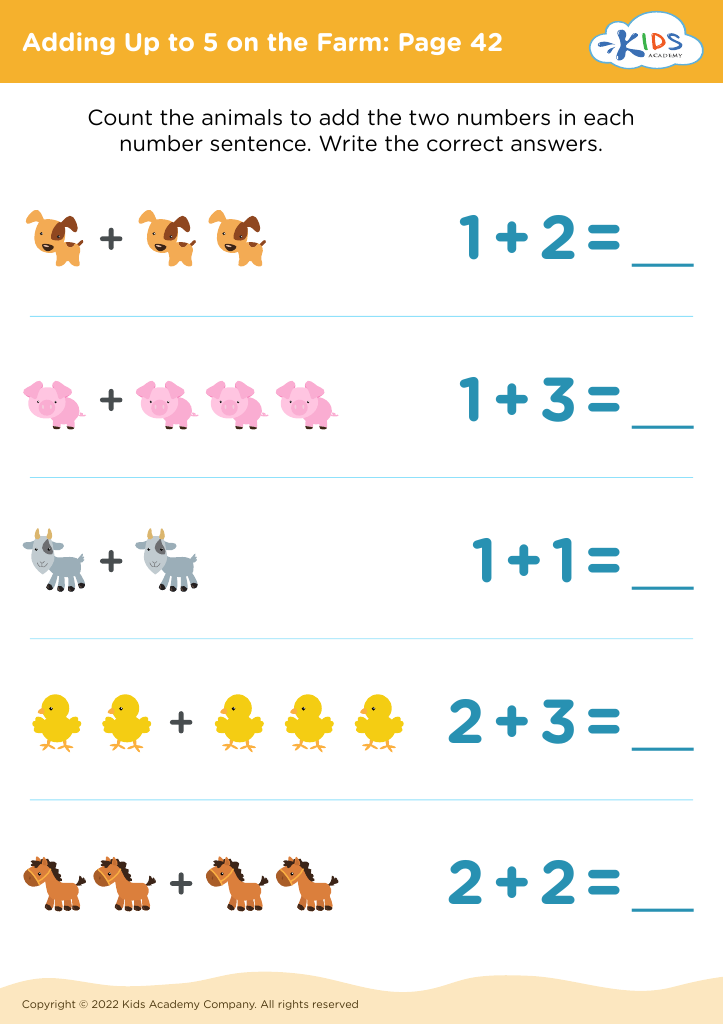
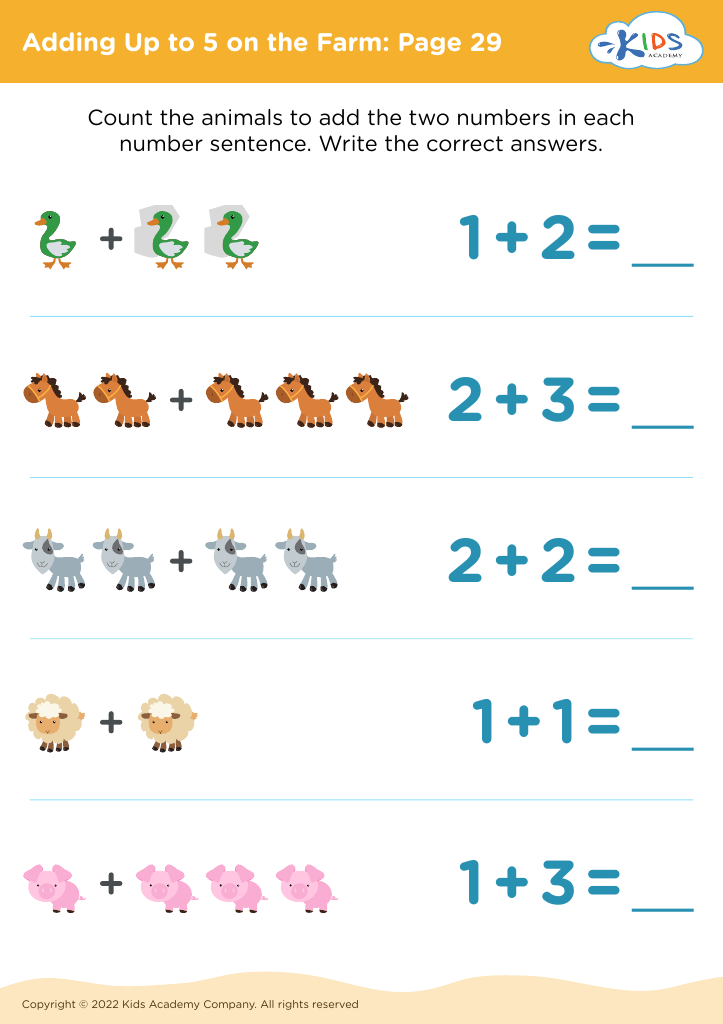
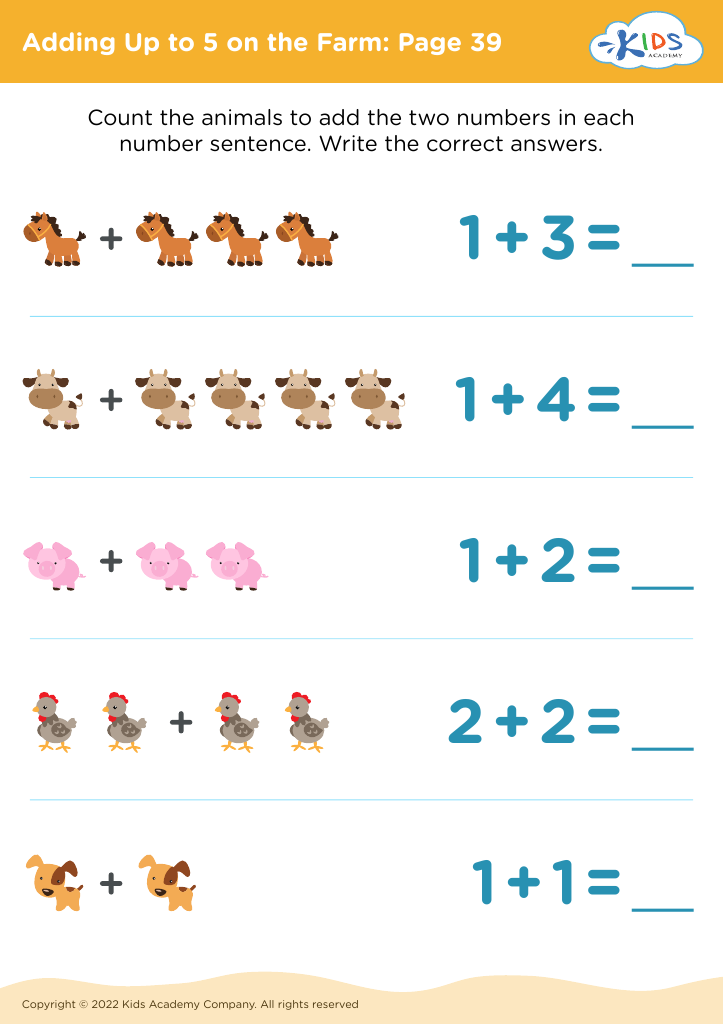
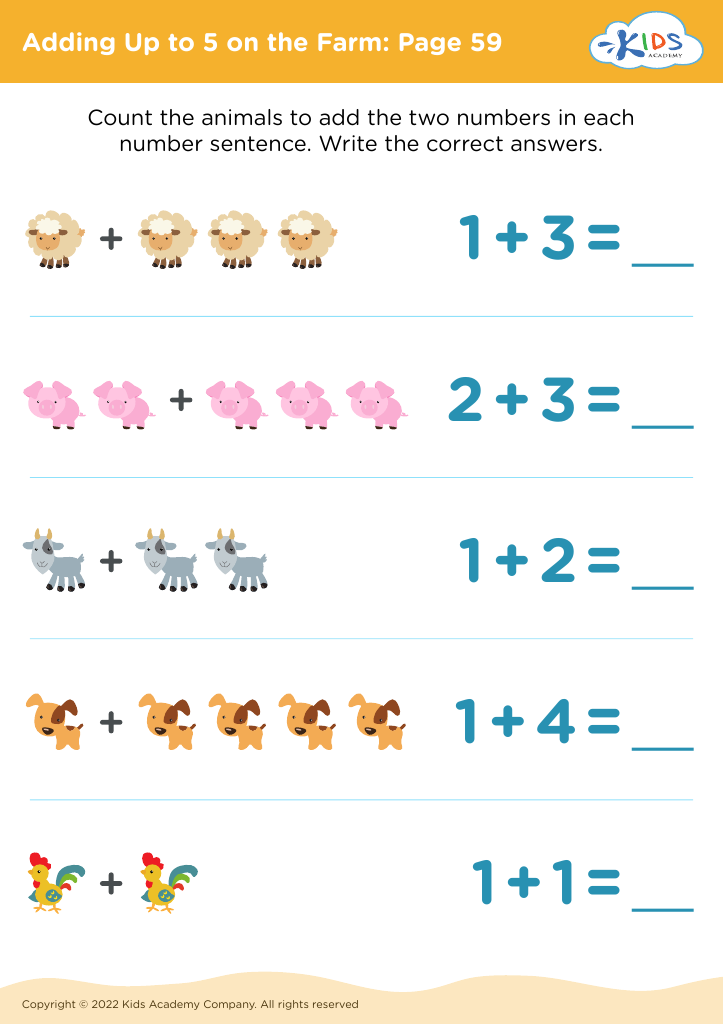
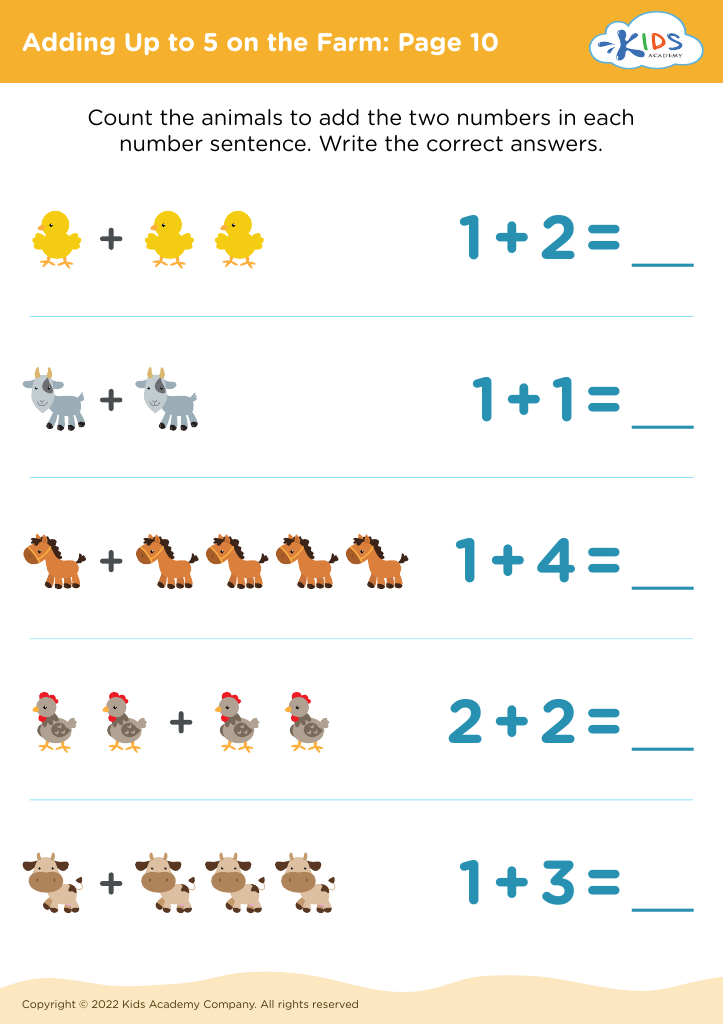
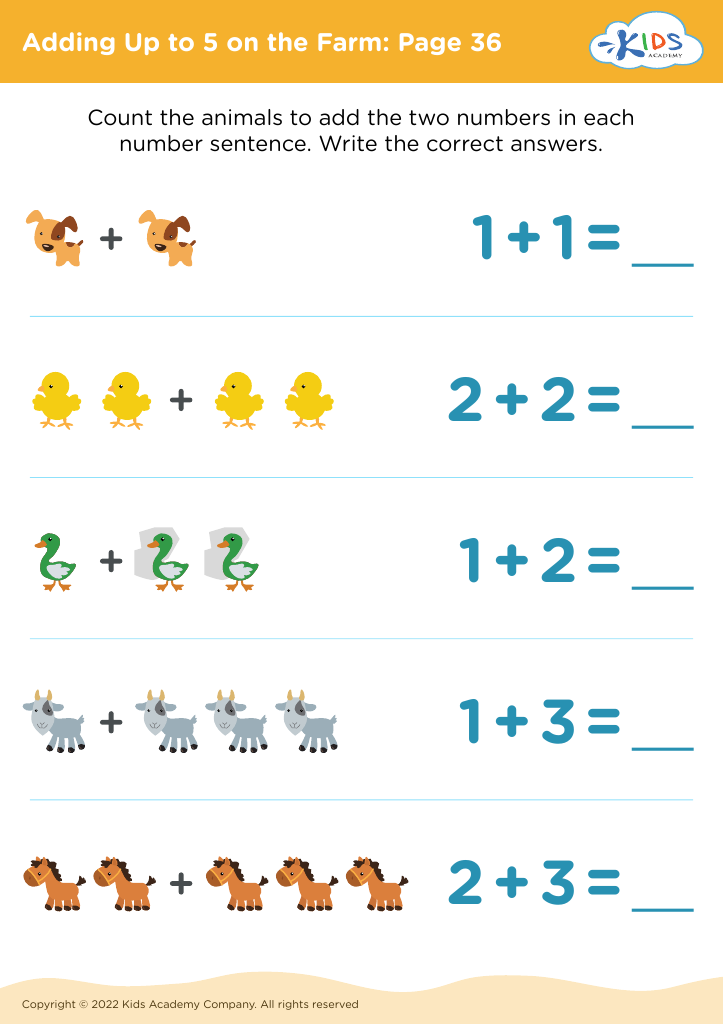
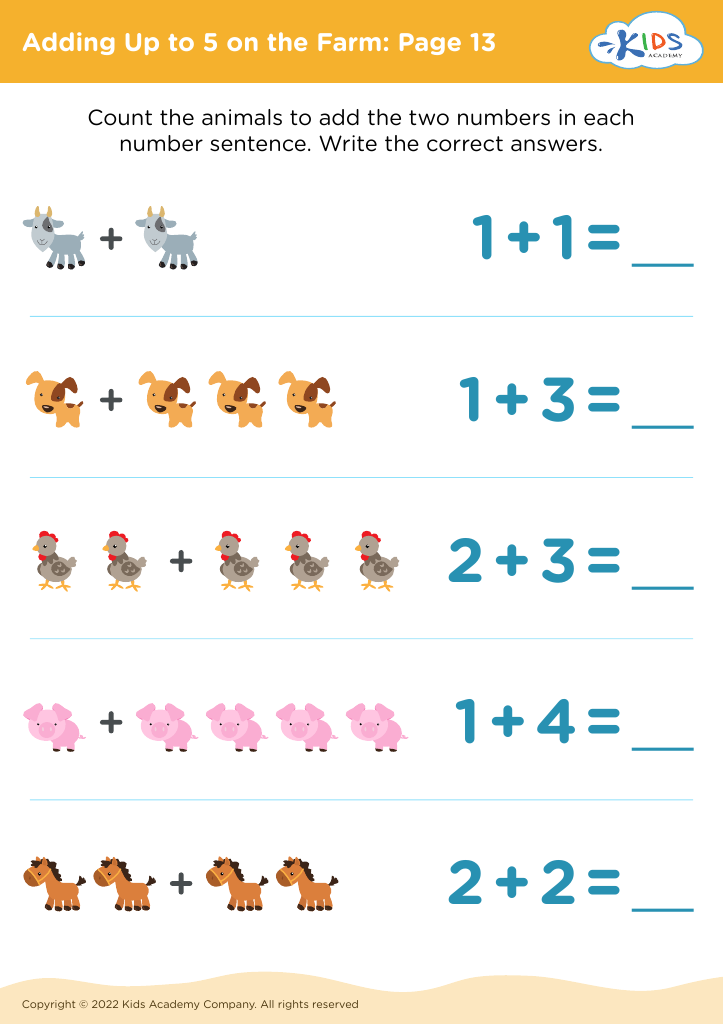
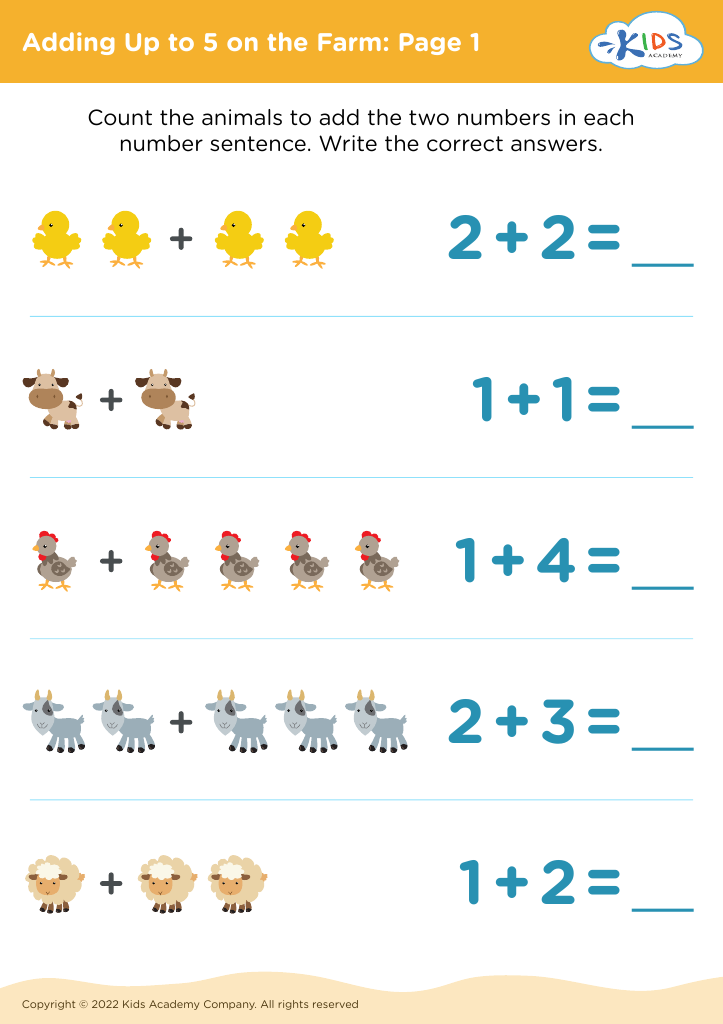
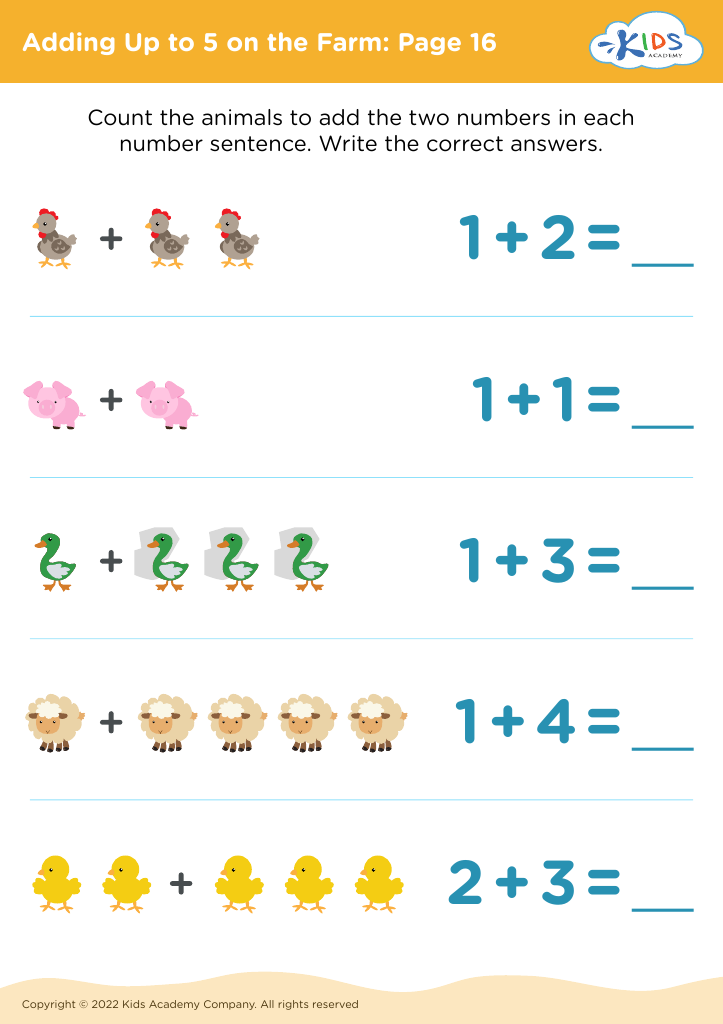
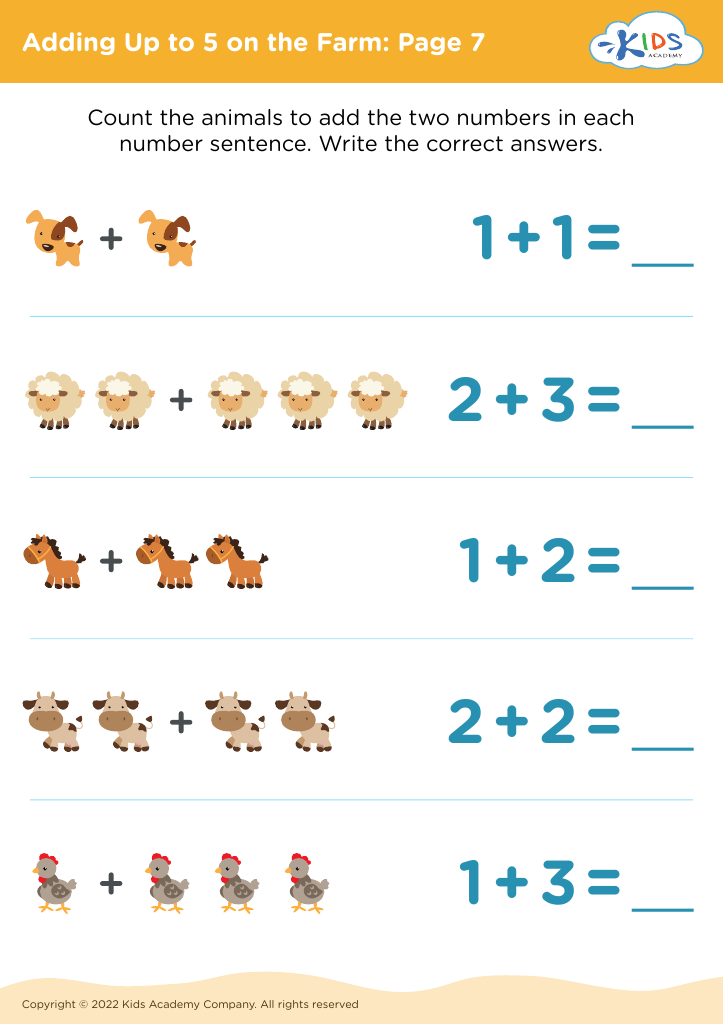
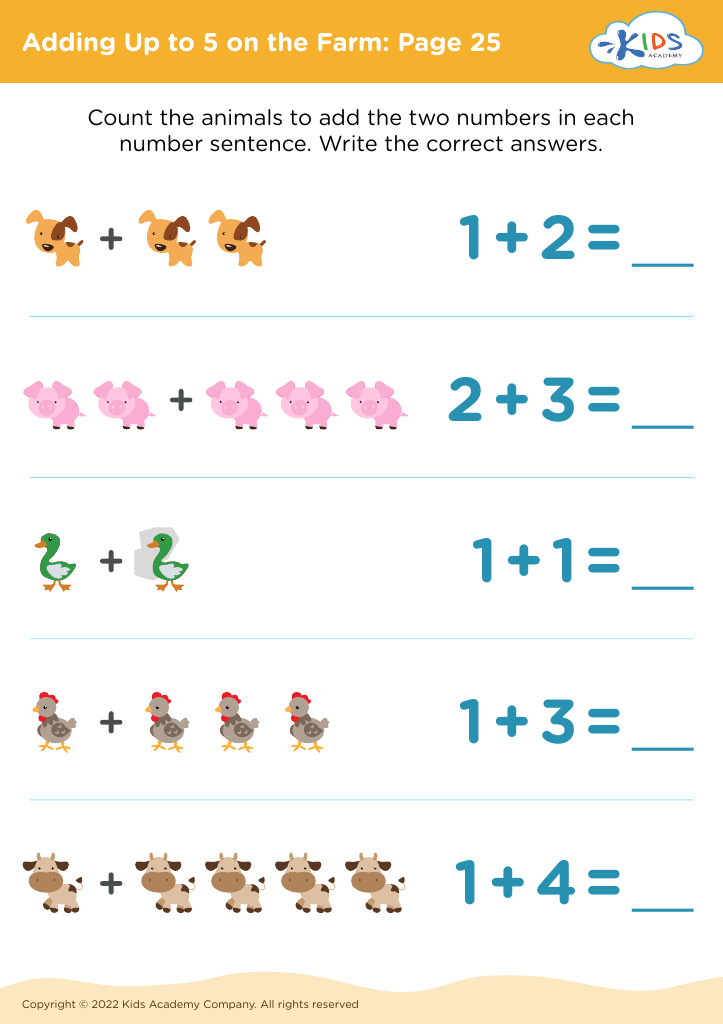
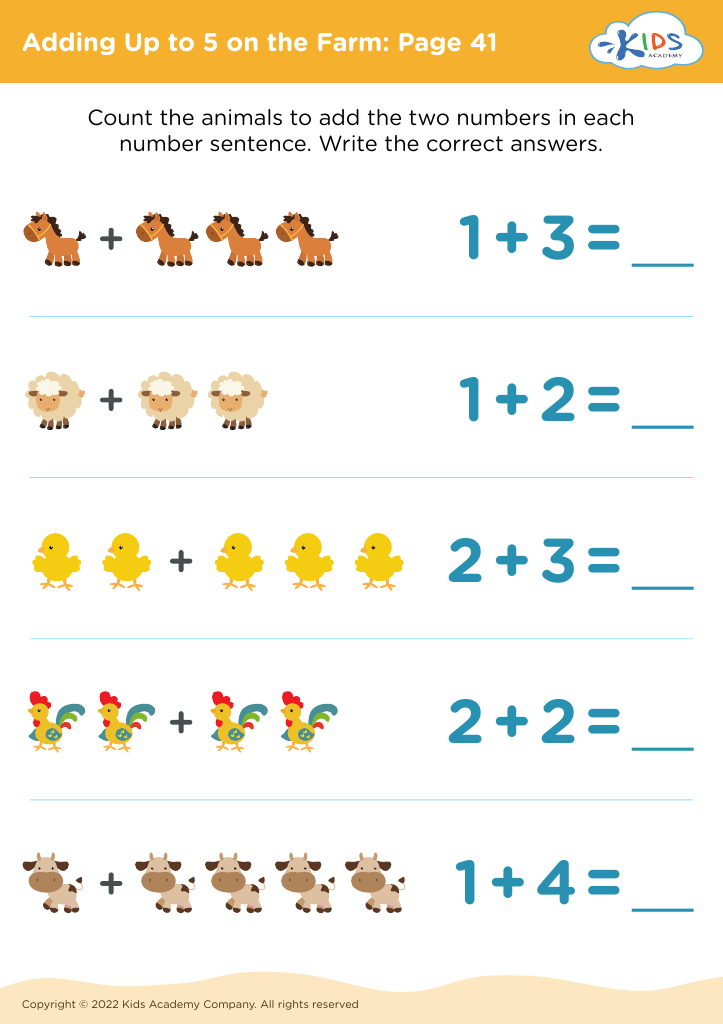
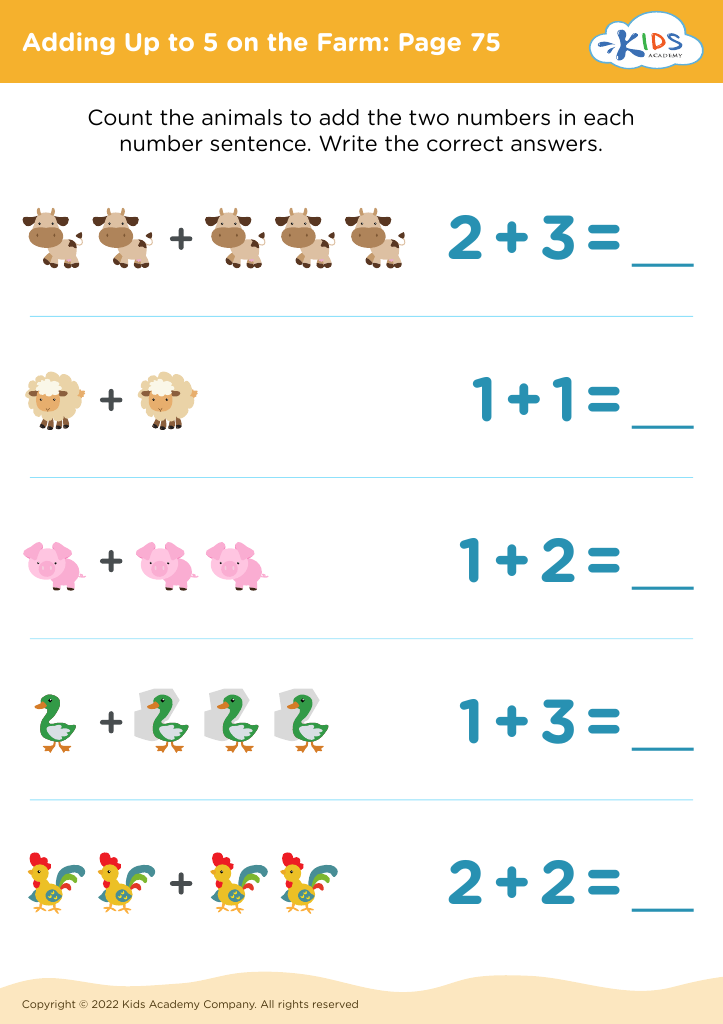



Basic addition skills are fundamental for children aged 5-7 as they lay the groundwork for future mathematical understanding and problem-solving abilities. Incorporating real-world contexts, such as "Adding on the Farm,” makes learning more relatable and engaging. When children interact with familiar settings—like counting apples, chickens, or farm equipment—they can visualize and grasp the concept of addition through tangible experiences.
Parents and teachers should prioritize these skills because they enhance cognitive development and encourage logical thinking. Mastering addition boosts confidence, laying a positive foundation for more complex math concepts. Furthermore, learning in a thematic context helps children develop critical thinking, as they can apply their skills in various situations rather than just abstract scenarios.
Additionally, this thematic approach supports social and emotional learning. Children often learn cooperatively, sharing ideas and celebrating achievements, fostering teamwork and communication skills. By creating fun and interactive learning environments, parents and teachers can inspire a lasting interest in mathematics. Ultimately, building basic addition skills is not just about numbers; it's about developing a well-rounded, confident learner ready for future educational challenges.