Cognitive Development Adding on the Farm Worksheets for Ages 5-7
8 filtered results
-
From - To
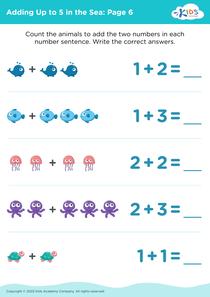
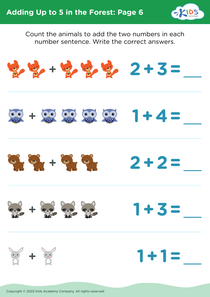
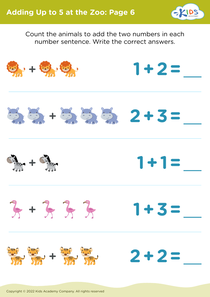
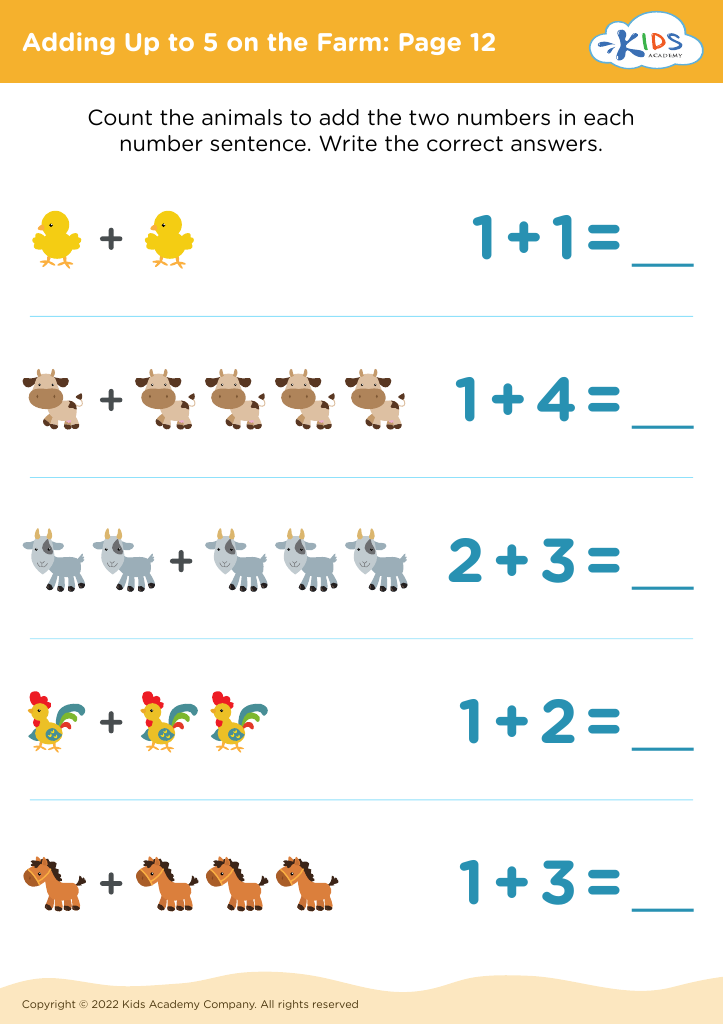
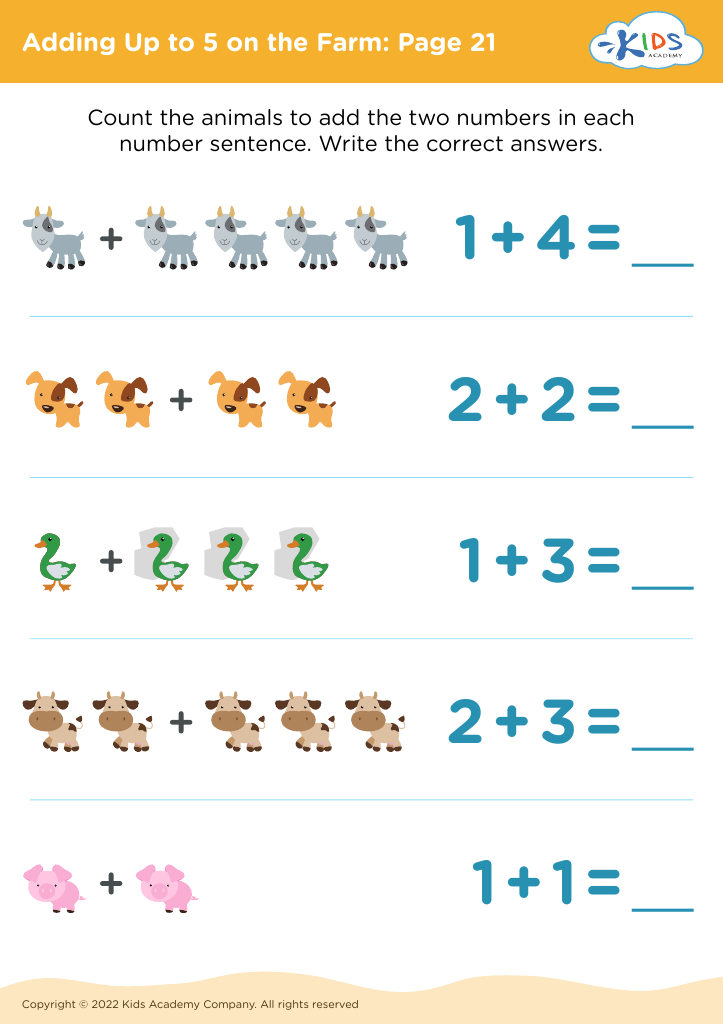
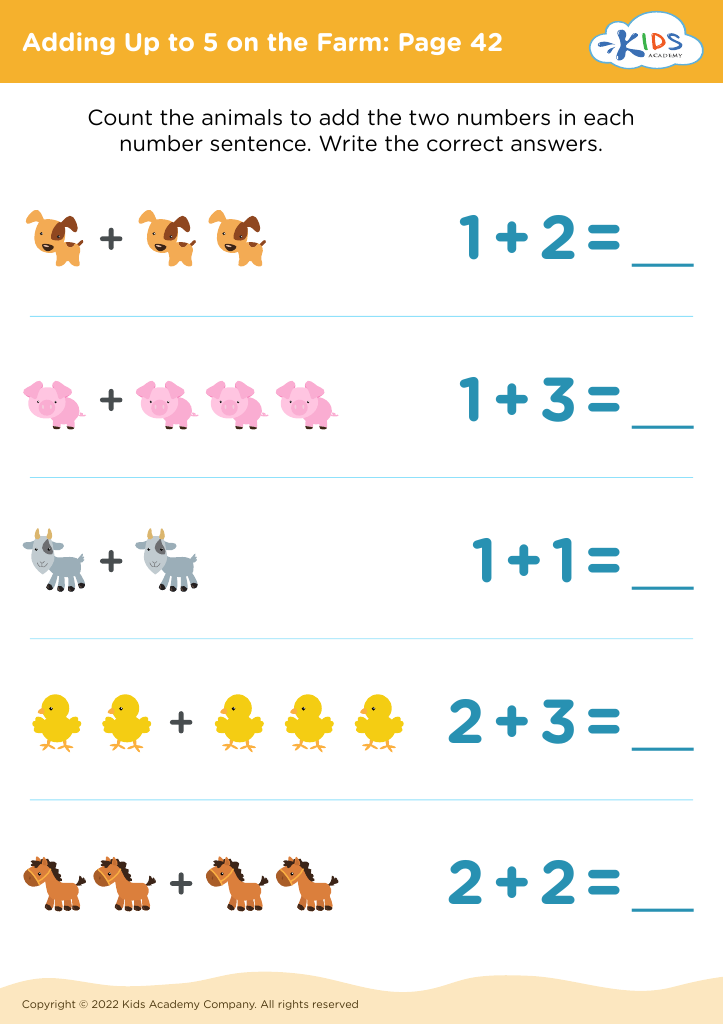
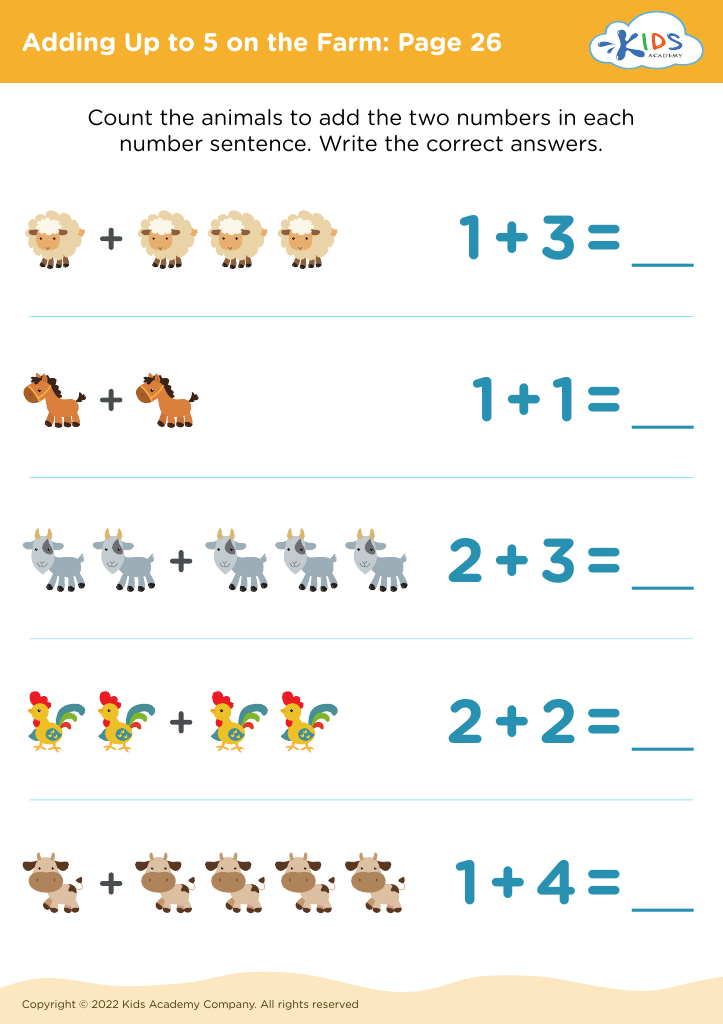
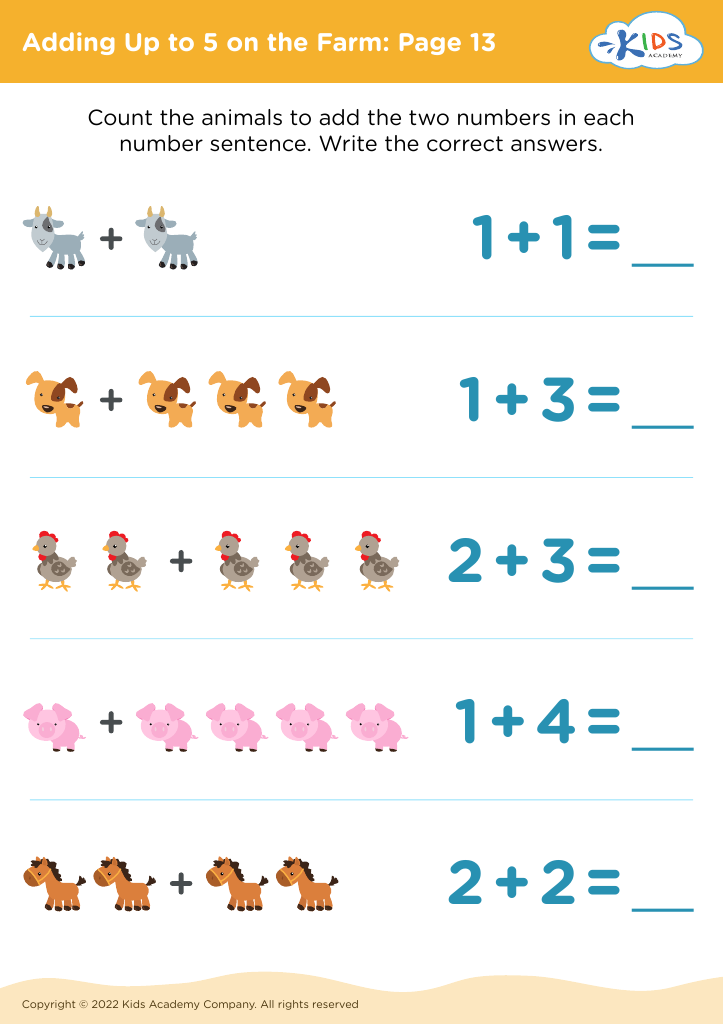
Explore our engaging "Cognitive Development Adding on the Farm Worksheets" designed specifically for children ages 5-7! These worksheets integrate fun farm-themed visuals with essential math concepts, helping young learners develop their addition skills in an enjoyable way. As kids solve attractive problems, they will enhance their cognitive abilities, improve their focus, and foster a love for learning. Our worksheets promote critical thinking and problem-solving in a creative context, making math a delightful experience. Perfect for home or classroom use, these resources are suitable for reinforcing math concepts while sparking curiosity about the fascinating world of farming! Start your learning adventure today!
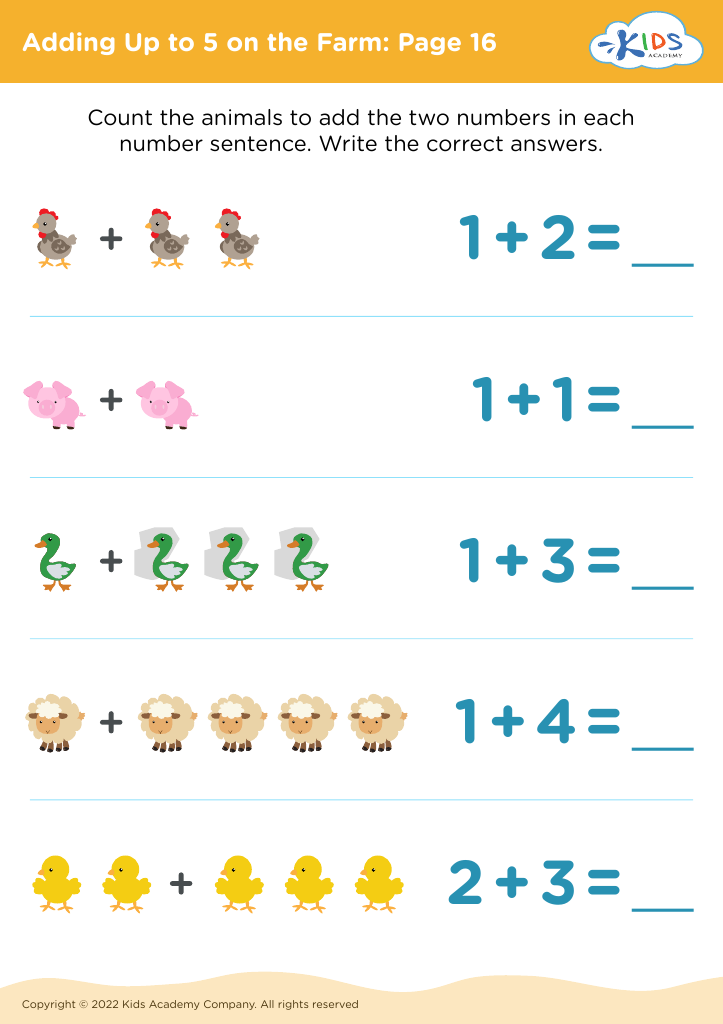
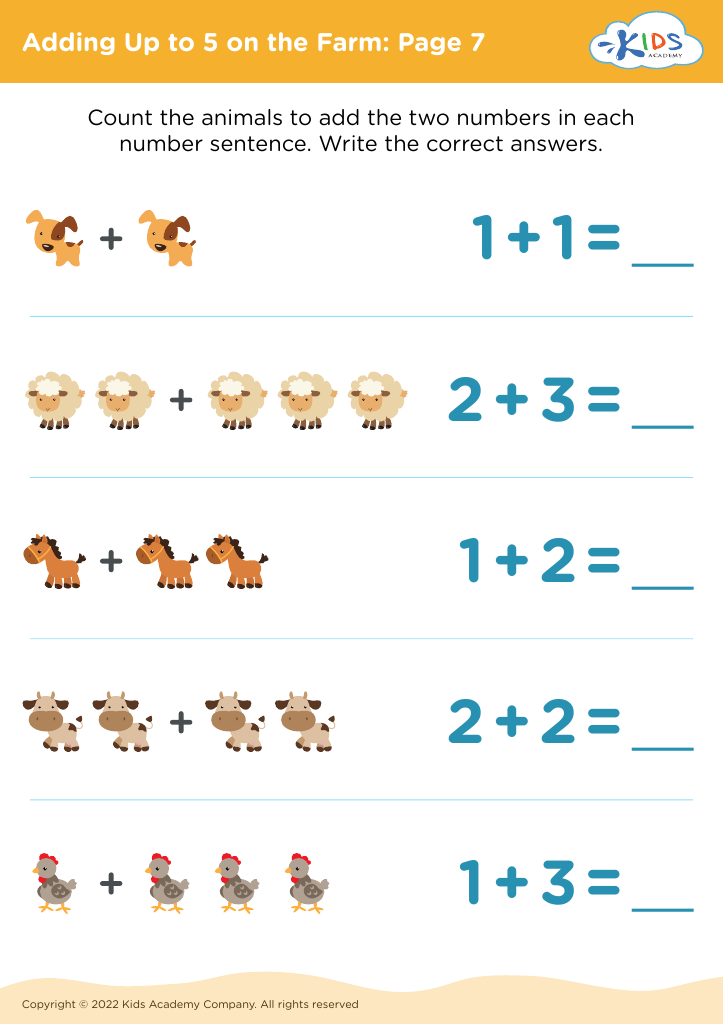
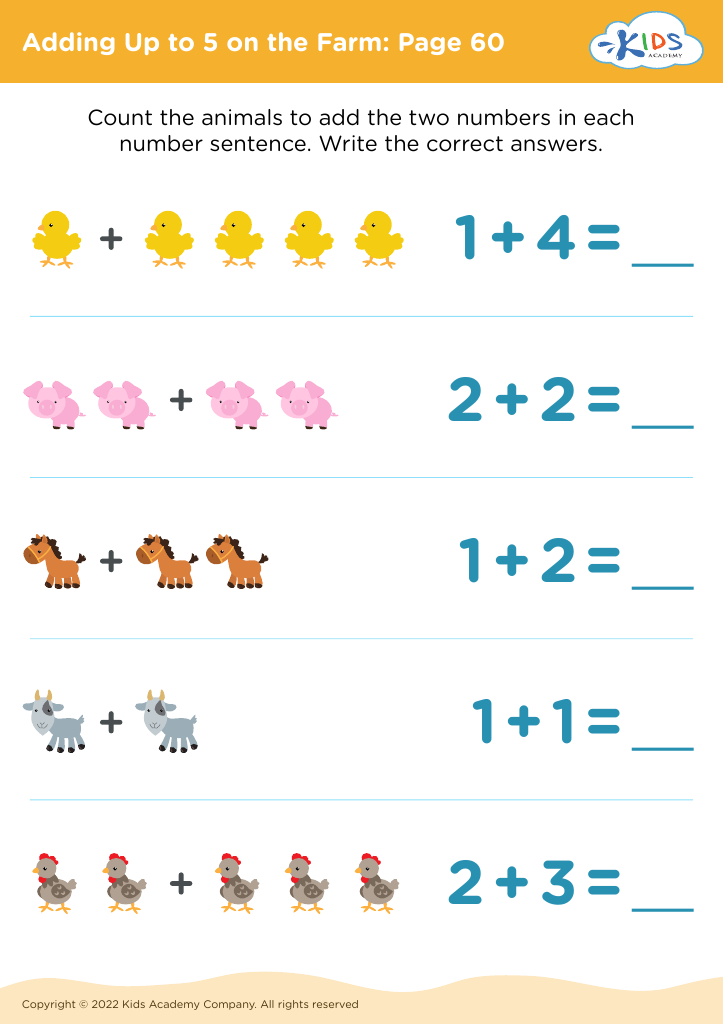



Cognitive development in early childhood is crucial as it lays the foundation for a child's future learning and problem-solving skills. Engaging children aged 5-7 in farm-related activities enhances this development in multiple ways. Firstly, it encourages hands-on learning through observation and interaction with animals and crops, fostering curiosity and inquiry skills. Children learn to ask questions, make predictions, and draw conclusions as they explore farm environments.
Additionally, farm activities can strengthen critical thinking and decision-making skills. For instance, children can participate in planning a garden, which involves understanding plant growth, measuring space, and managing resources. These tasks promote logical reasoning and planning abilities.
Furthermore, farm settings introduce opportunities for social interaction and cooperative play, crucial for developing communication skills and teamwork. As children engage with peers and adults, they learn to share ideas, negotiate, and resolve conflicts, essential skills for emotional and social growth.
In sum, integrating elements of farm life into educational programs supports cognitive development by promoting curiosity, critical thinking, social skills, and real-world problem-solving. Parents and teachers should prioritize these experiences for well-rounded early education.