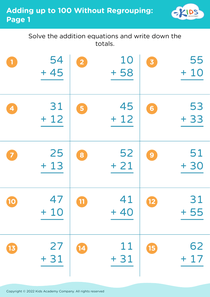
Identify shapes Adding up to 100 with Regrouping Worksheets for Ages 5-7
3 filtered results
-
From - To
Discover our engaging "Identify Shapes Adding Up to 100 with Regrouping Worksheets" designed for children aged 5-7! These worksheets combine essential math skills with fun shape recognition activities, helping young learners build a strong foundation in both geometry and addition. As kids explore how to add numbers up to 100 through regrouping, they'll also identify and categorize various shapes along the way. Perfect for enhancing classroom learning or home study, our colorful, interactive worksheets make math enjoyable while fostering critical thinking. Equip your child with the skills they need to succeed and watch their confidence in math grow!
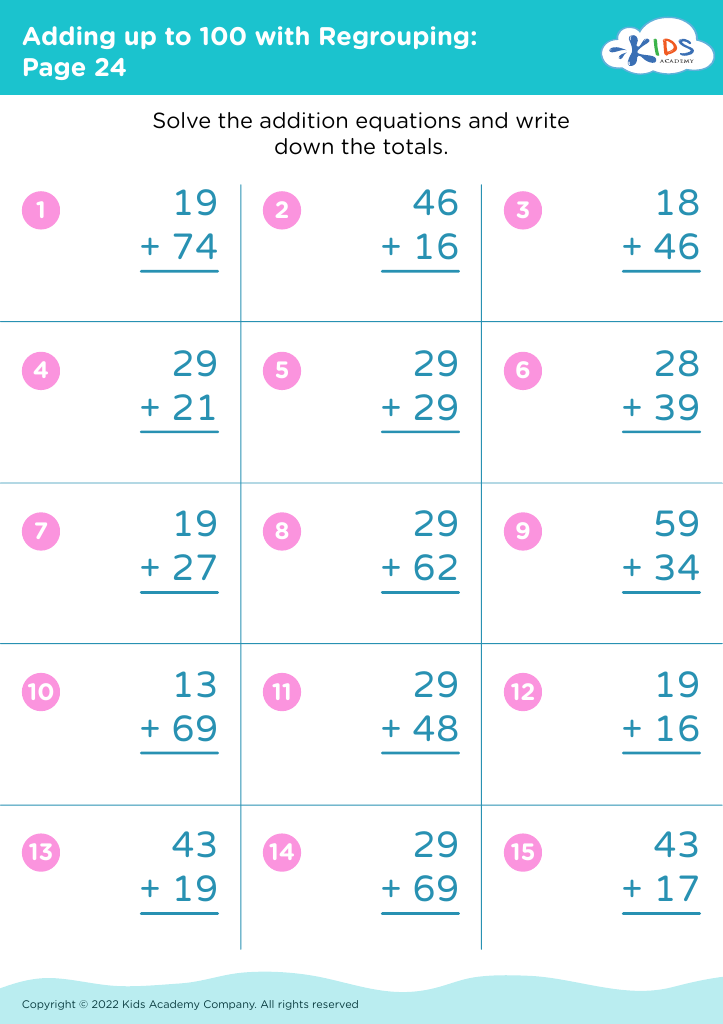
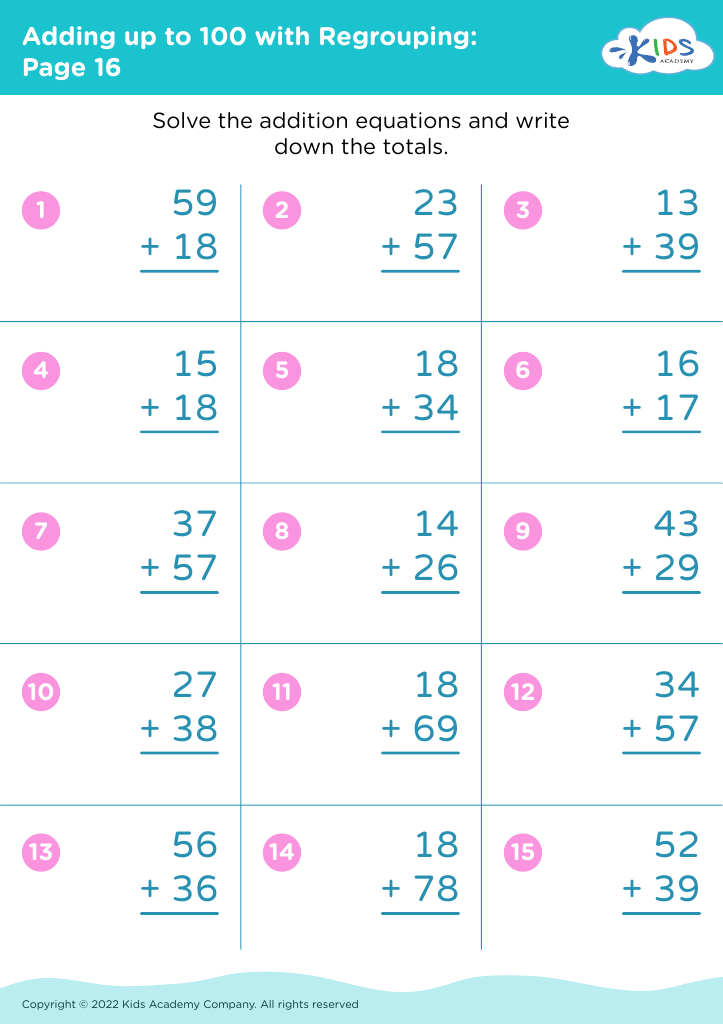
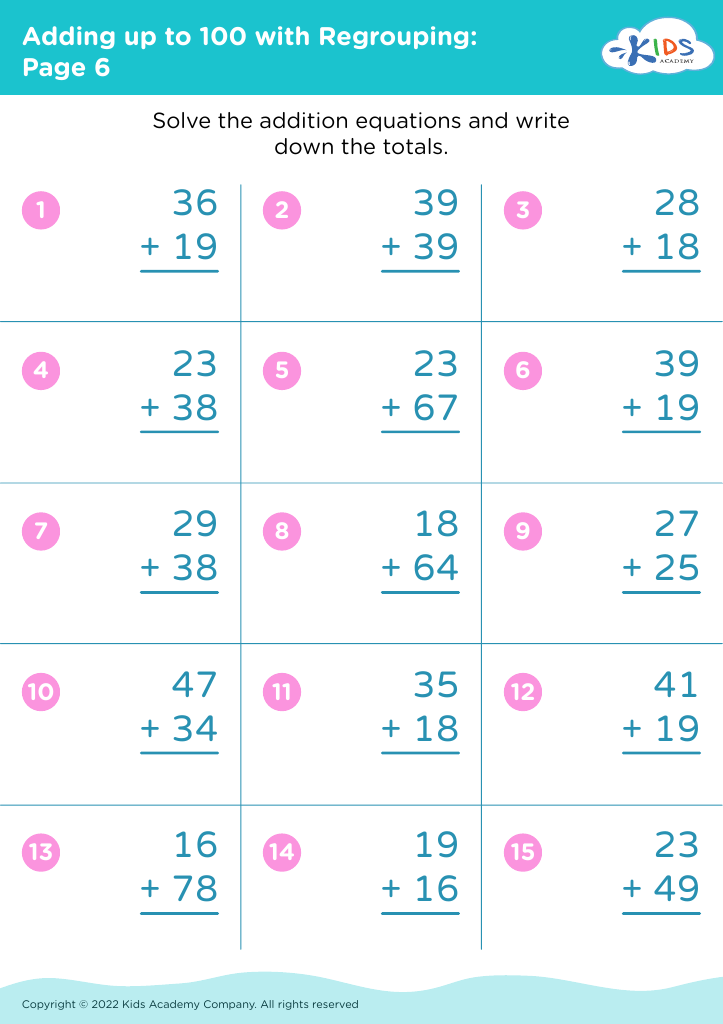




Identifying shapes and mastering addition with regrouping are foundational skills for children aged 5-7 that significantly contribute to their overall mathematical understanding and cognitive development. Learning to identify shapes—such as circles, squares, and triangles—helps young learners develop spatial awareness and critical thinking skills. Recognizing shapes lays the groundwork for geometry, which is essential in advanced mathematics and many real-life applications.
Furthermore, adding up to 100 with regrouping encourages children to grasp concepts of place value, making mathematics more accessible and reinforcing their ability to work with larger numbers. Regrouping, or carrying over, deepens their understanding of numerical relationships. This skill enhances problem-solving abilities and is crucial for arithmetic proficiency, as these children move toward more complex math tasks in future grades.
For parents and teachers, fostering these skills through engaging activities makes learning enjoyable and sets the stage for greater academic success. When children become confident in identifying shapes and understanding regrouping in addition, they gain a sense of achievement that motivates them to explore math further. Ultimately, nurturing these skills prepares children for a lifetime of learning and the ability to tackle more complex challenges in both mathematics and everyday life.