Fine Motor Skills Adding up to 100 Without Regrouping Worksheets for Ages 5-7
4 filtered results
-
From - To
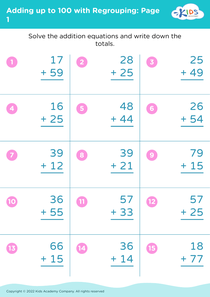
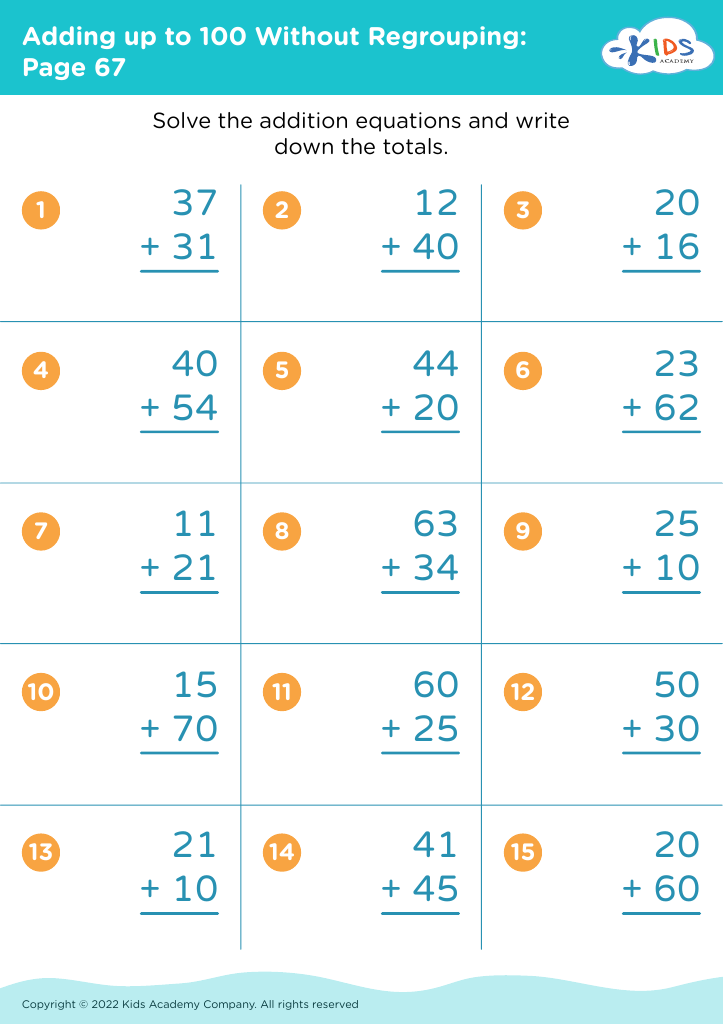
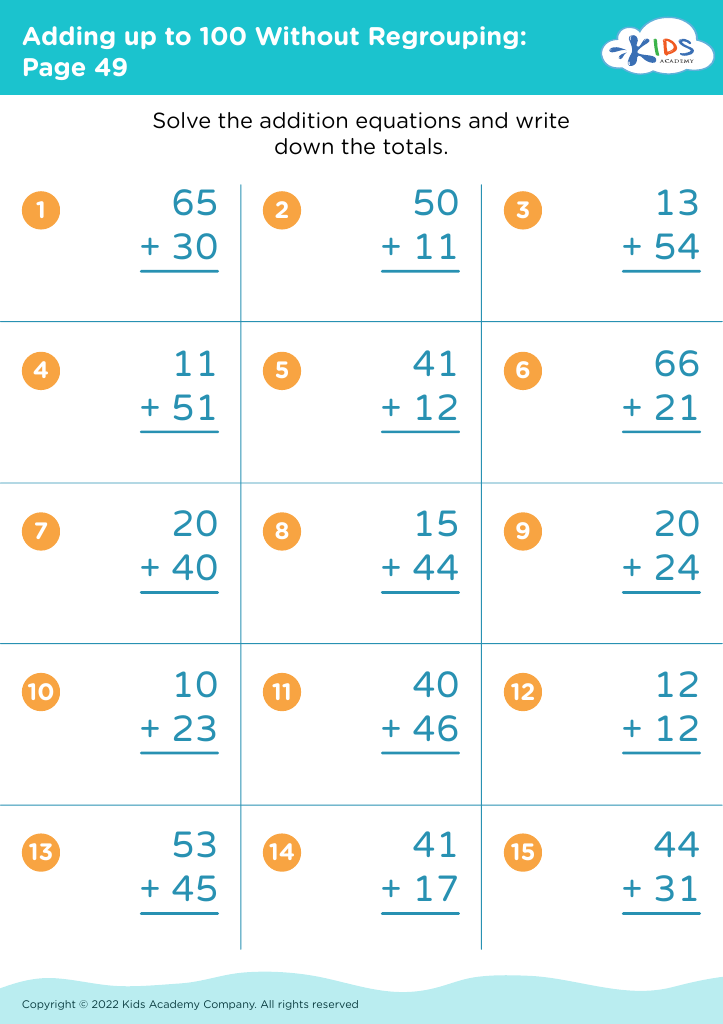
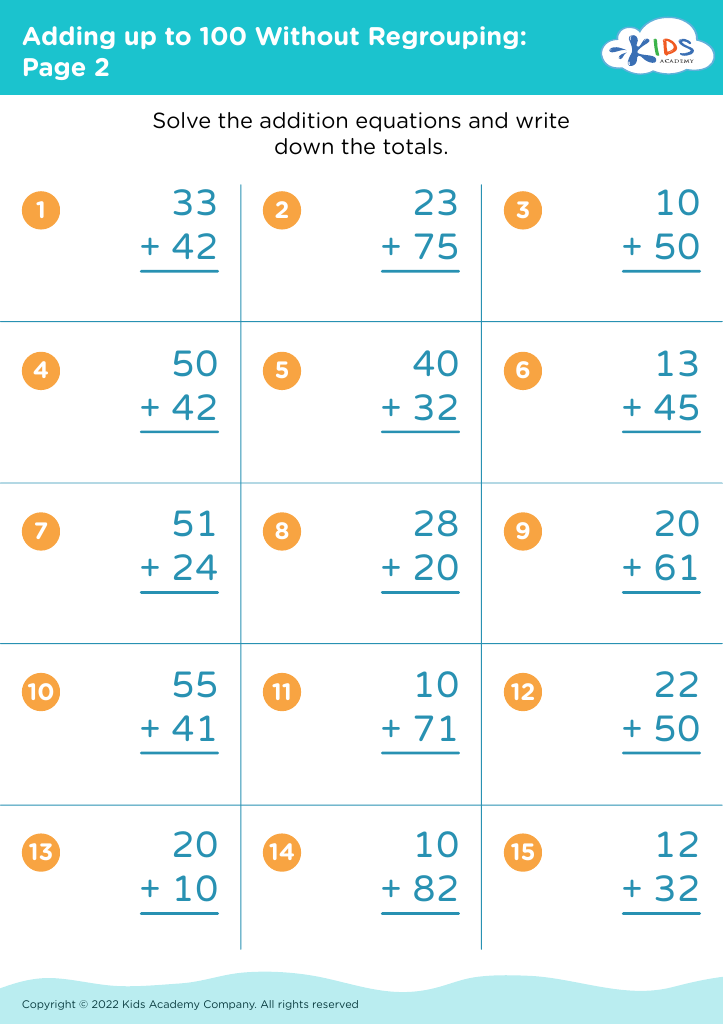
Discover our engaging "Fine Motor Skills Adding Up to 100 Without Regrouping Worksheets" designed for children aged 5-7. These worksheets not only enhance essential math skills by helping young learners practice simple addition, but also promote fine motor development through fun and interactive activities. Each worksheet encourages students to confidently add numbers without needing to regroup, reinforcing their understanding of addition in a manageable way. Bright illustrations and various exercises keep children motivated while they hone their hand-eye coordination, pencil grip, and overall motor skills. Perfect for educational settings or at-home learning, these worksheets are a valuable resource for early mathematicians!
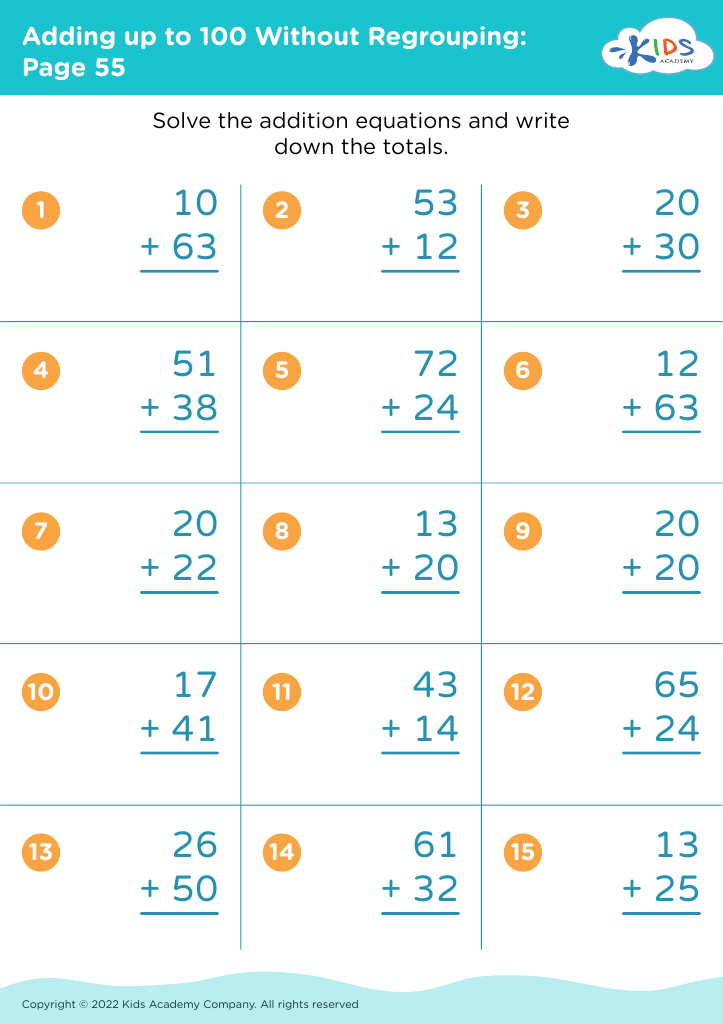




Parents and teachers should be invested in developing fine motor skills and the ability to add numbers up to 100 without regrouping for children ages 5-7, as these skills lay the foundation for future academic success. Fine motor skills, involving the small muscles in the hands and fingers, are essential for everyday tasks such as writing, cutting, and manipulating small objects. Strengthening these skills enhances a child’s ability to interact with their environment, builds confidence, and enhances their concentration and focus.
Simultaneously, the ability to add numbers up to 100 without regrouping is a critical mathematics skill. Mastering this concept helps children develop a strong number sense, essential for more complex math in later grades. It fosters mathematical fluency, empowering children to solve problems quickly and efficiently.
Moreover, both fine motor skills and basic math competencies are vital for fostering cognitive development, promoting practices such as critical thinking and logical reasoning. By emphasizing these areas, parents and teachers not only support children’s academic growth but also encourage a positive attitude toward learning, setting the groundwork for even broader educational pursuits. Ultimately, nurturing these skills equips young learners with tools for lifelong success.