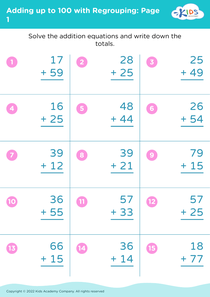
Improve counting skills Adding up to 100 Without Regrouping Worksheets for Ages 5-7
3 filtered results
-
From - To
Boost early math skills with our "Improve Counting Skills: Adding up to 100 Without Regrouping Worksheets for Ages 5-7." Perfect for young learners, these engaging activities provide ample practice for mastering addition up to 100 without the complexity of regrouping. Designed to reinforce counting, addition, and number sense, each worksheet features kid-friendly illustrations and fun exercises. Tailored to support classroom learning or extra practice at home, our worksheets help children build confidence and fluency in arithmetic, setting a strong foundation for future math success. Explore our carefully crafted resources to make learning both effective and enjoyable!
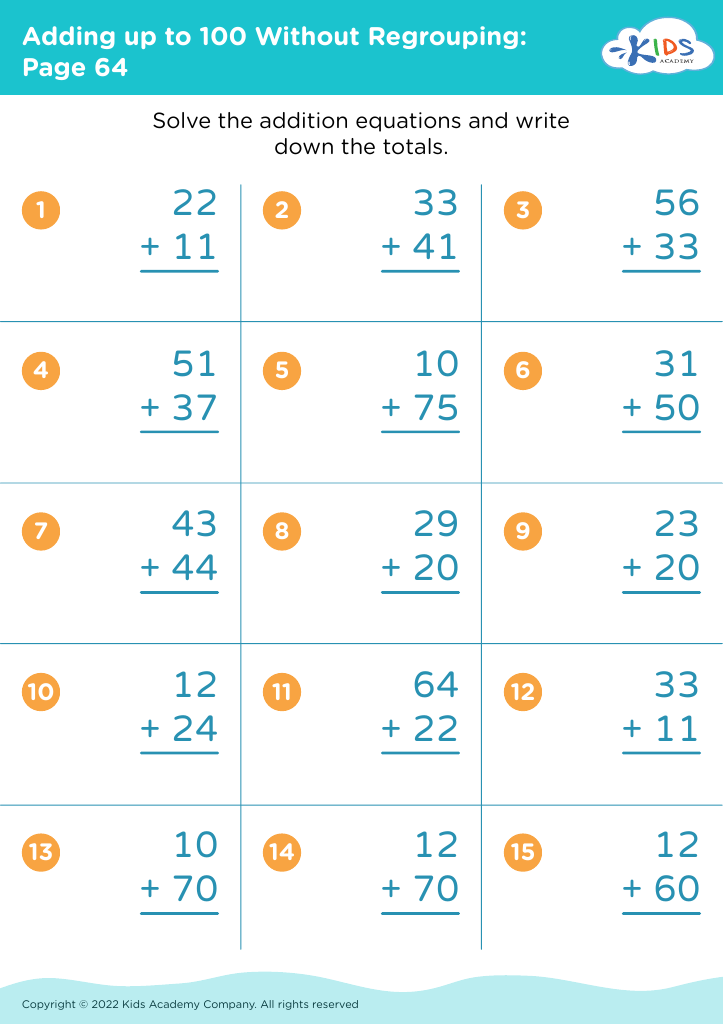
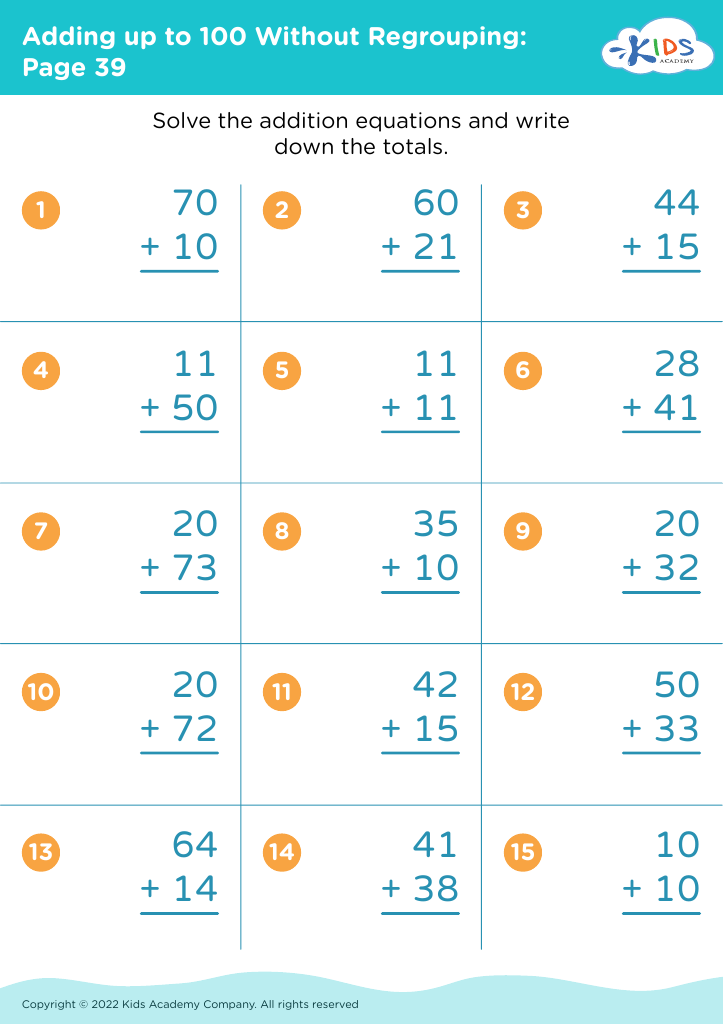
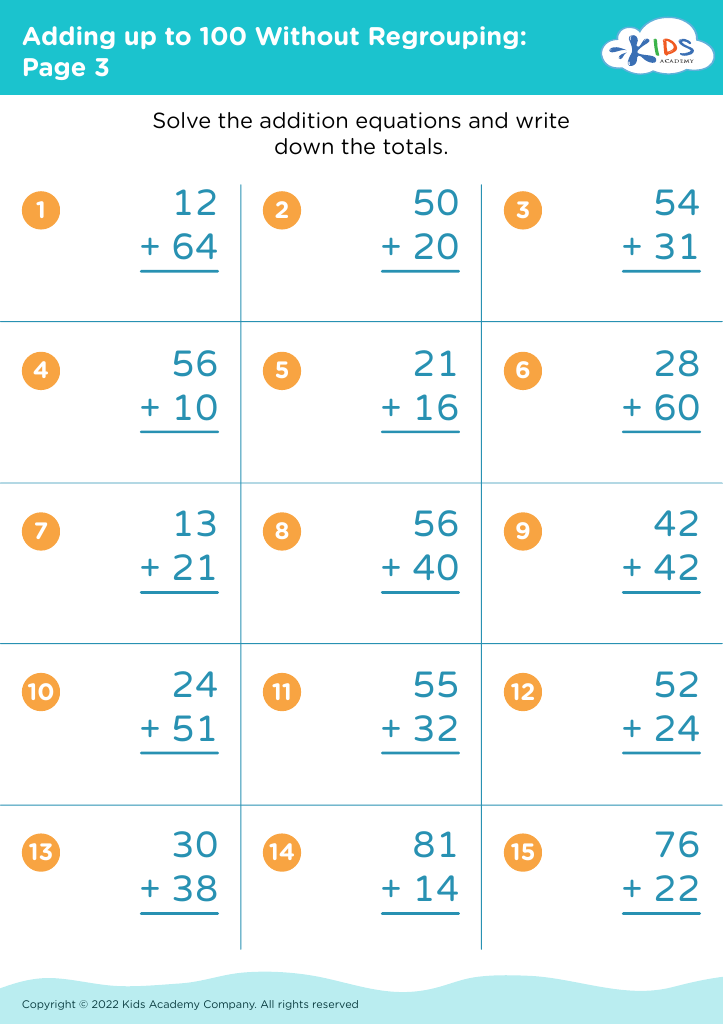




Caring about improving counting skills and learning to add up to 100 without regrouping for ages 5-7 is crucial for both parents and teachers for several reasons. During these formative years, children's brains are highly receptive to new information, and grasping basic math concepts lays the foundation for their future academic success. Mastering addition up to 100 without regrouping helps children understand number sense, recognize numerical patterns, and build a strong mental math ability. These skills are vital for everyday activities such as telling time, handling money, or sequencing events.
Encouraging proficiency in addition without regrouping also boosts problem-solving skills and fosters logical thinking. It increases a child's confidence and perseverance in approaching more complex mathematical problems later on, thus overcoming their fear or anxiety related to math-related tasks. In a classroom environment, children who are confident in their fundamental math skills are more likely to participate, collaborate with peers, and engage in active learning. From a parental perspective, supporting children at this stage of mathematical learning prepares them for future academic opportunities and helps nurture a positive relationship with education.
Ultimately, focusing on these early arithmetic skills offers children the critical tools they need in their educational journey and everyday life, supporting cognitive development, enhancing confidence, and fostering lifelong learning.