Problem-Solving Skills Adding up to 100 Without Regrouping Worksheets for Ages 5-7
10 filtered results
-
From - To
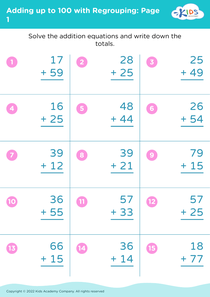
Enhance your child's problem-solving skills with our "Adding Up to 100 Without Regrouping" worksheets, designed specifically for ages 5-7. These engaging resources provide young learners with the opportunity to practice addition through fun and interactive exercises, ensuring they strengthen their numbers sense while avoiding the complexities of regrouping. Our user-friendly format encourages independent learning, allowing children to build confidence as they solve problems and develop critical thinking skills. Perfect for both classroom settings and home practice, these worksheets pave the way for a solid mathematical foundation. Foster your child's love for math today and watch them thrive as a young mathematician!
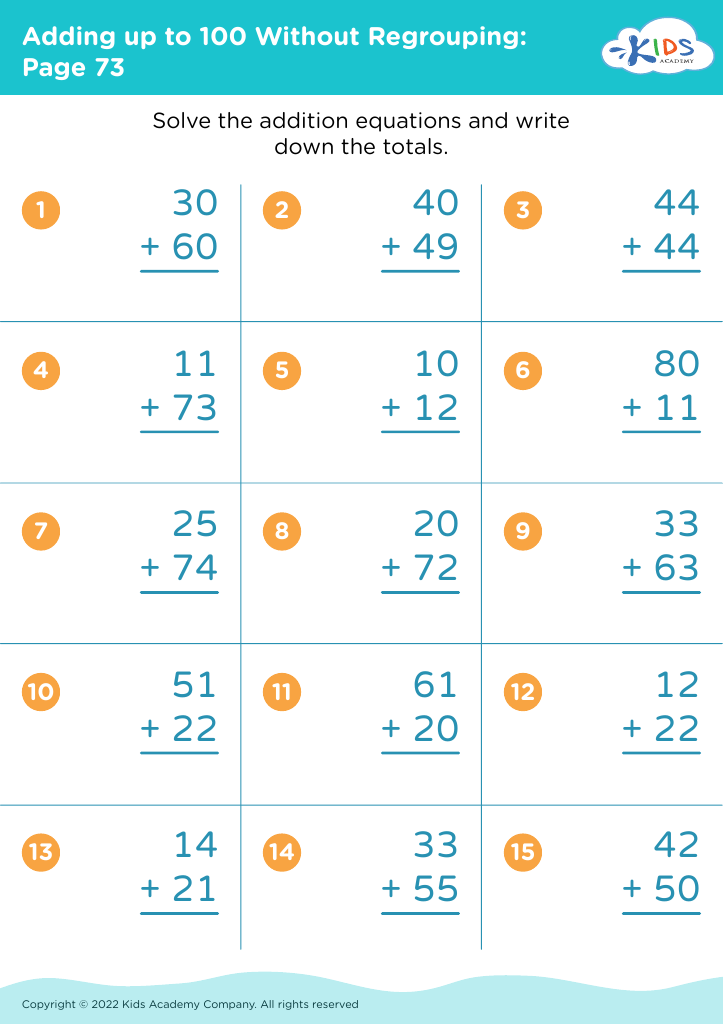
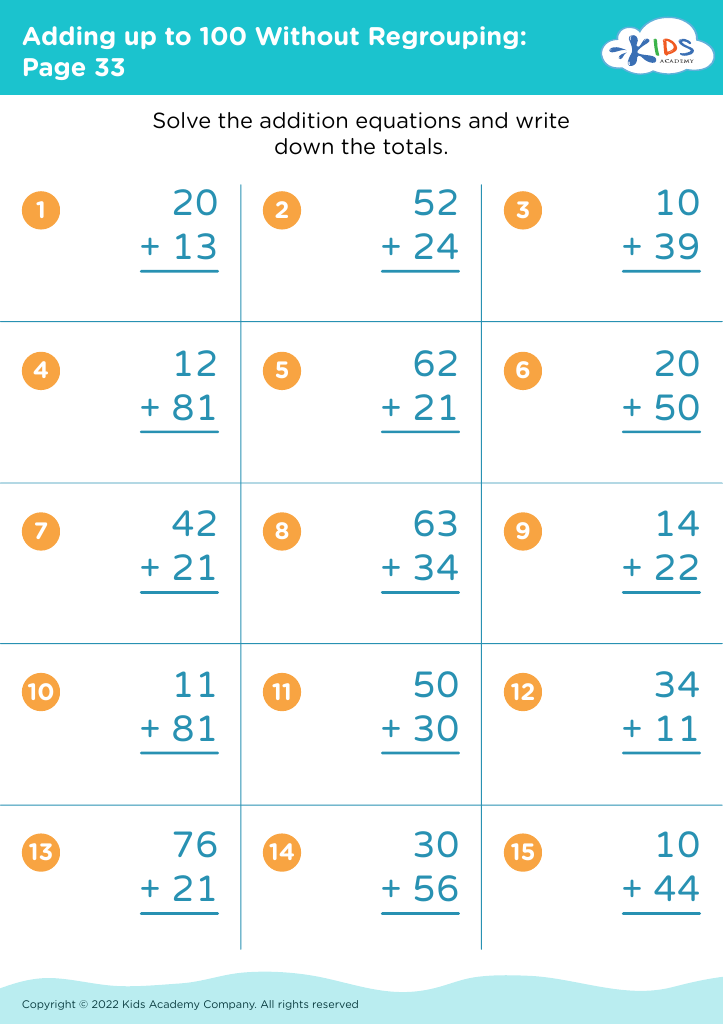
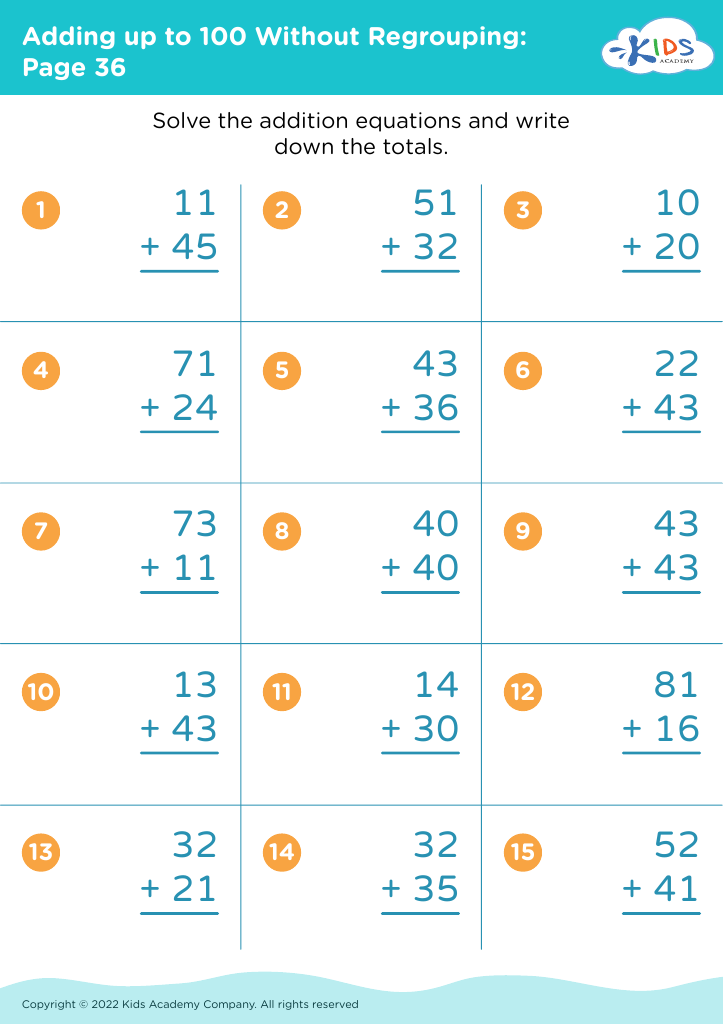
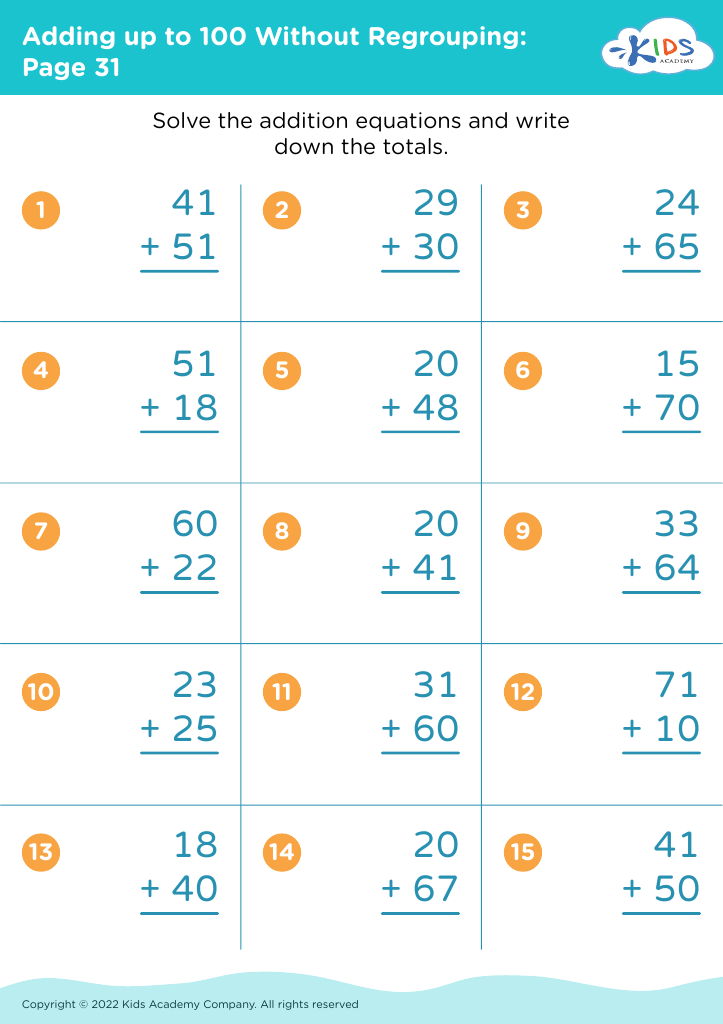
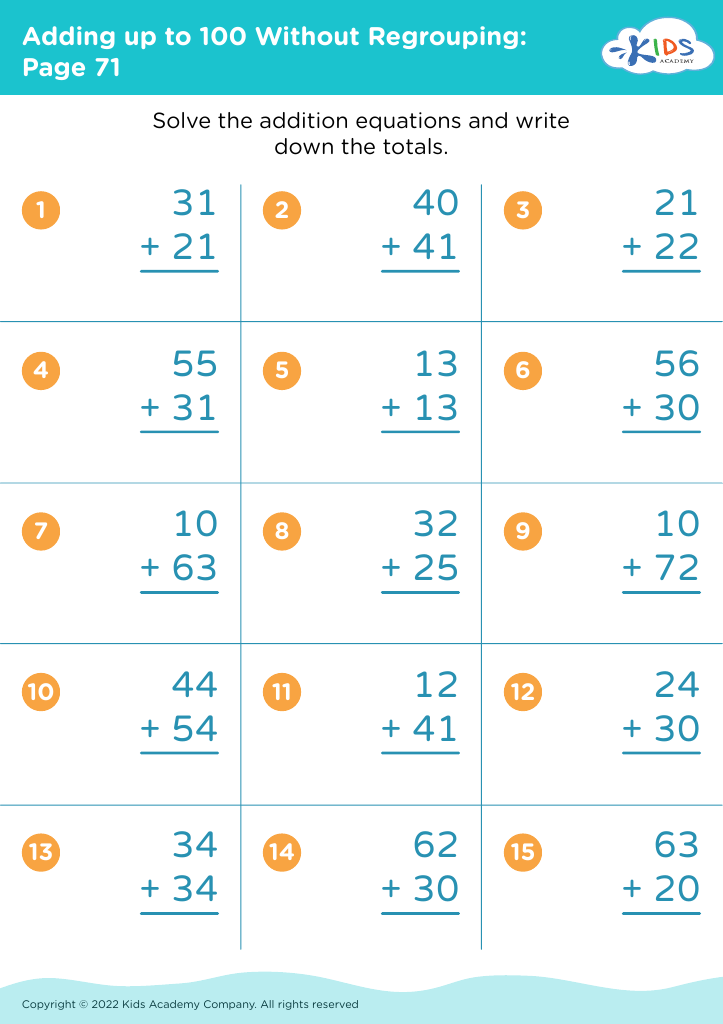
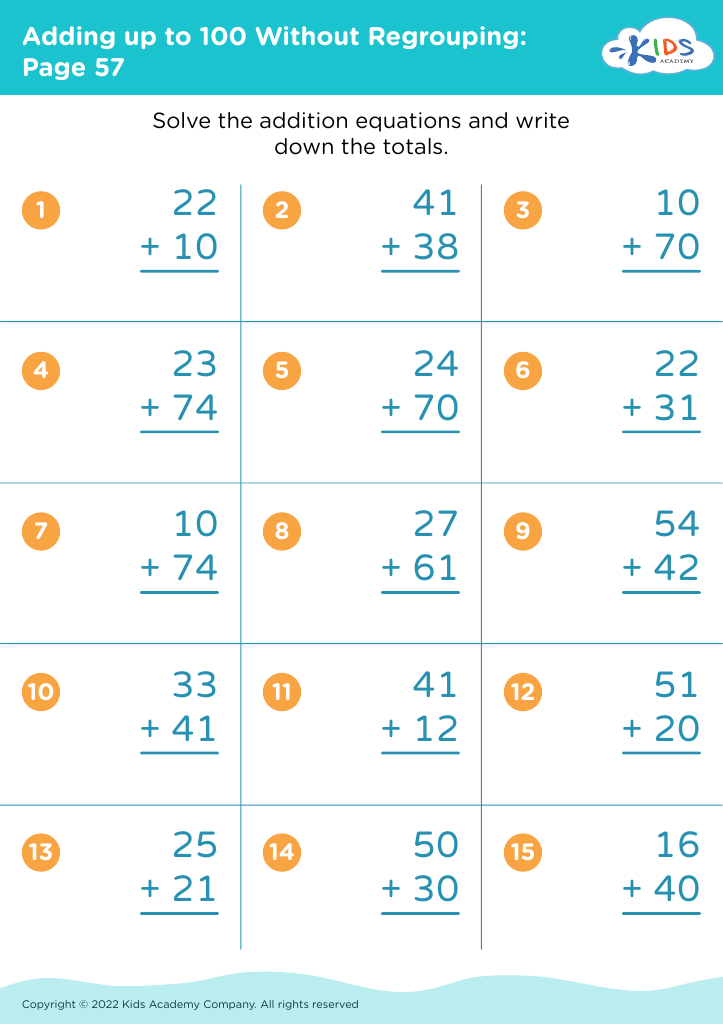
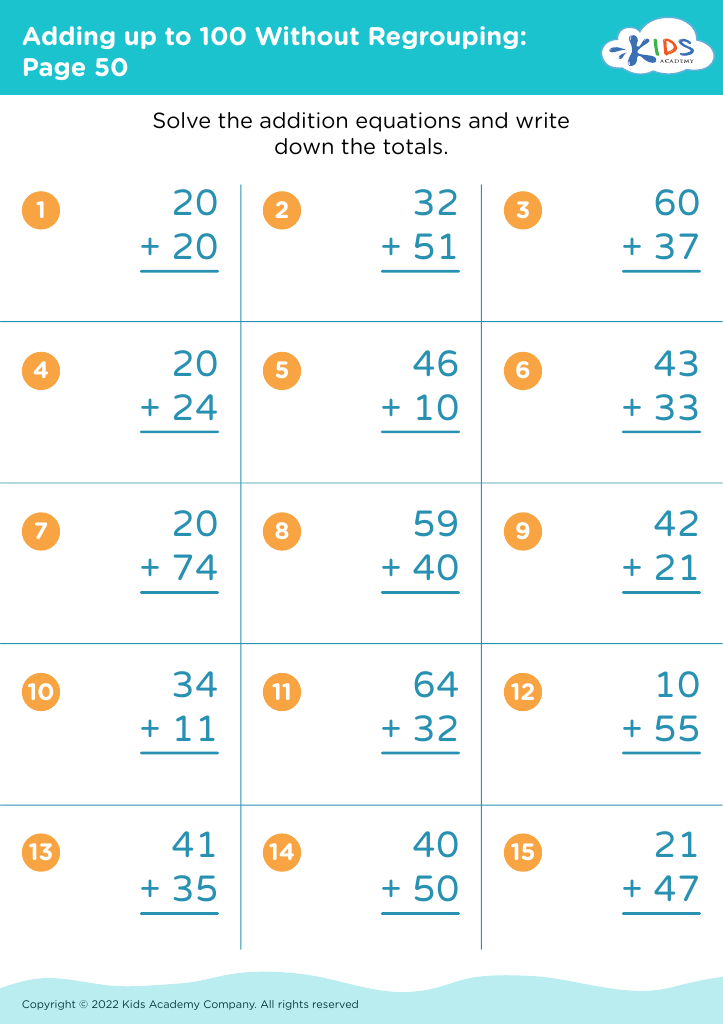
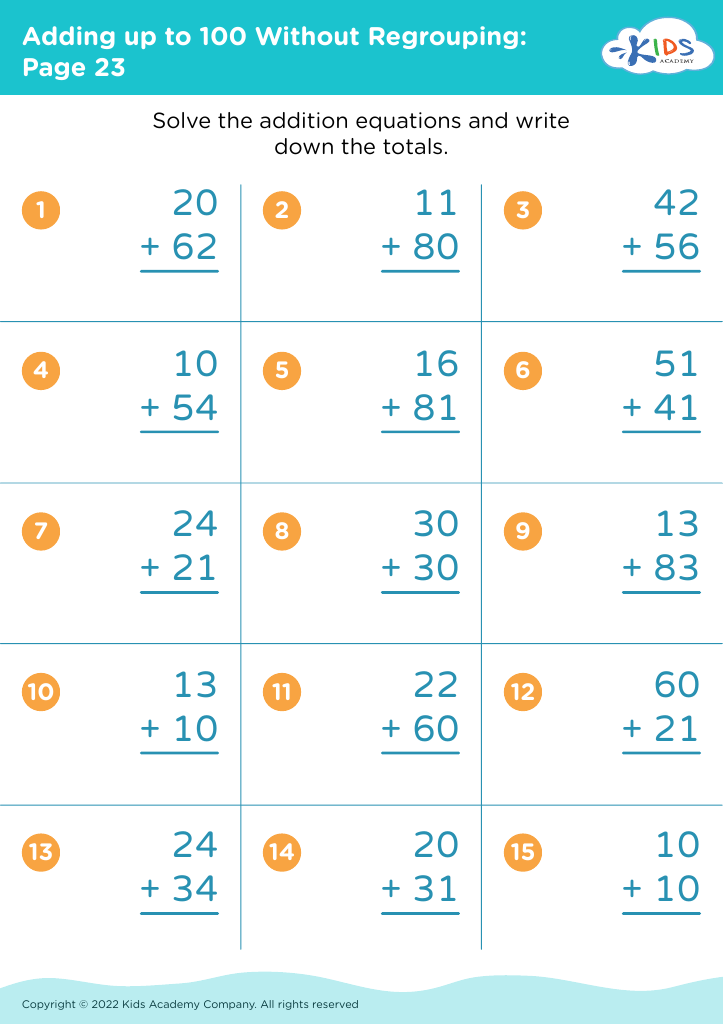
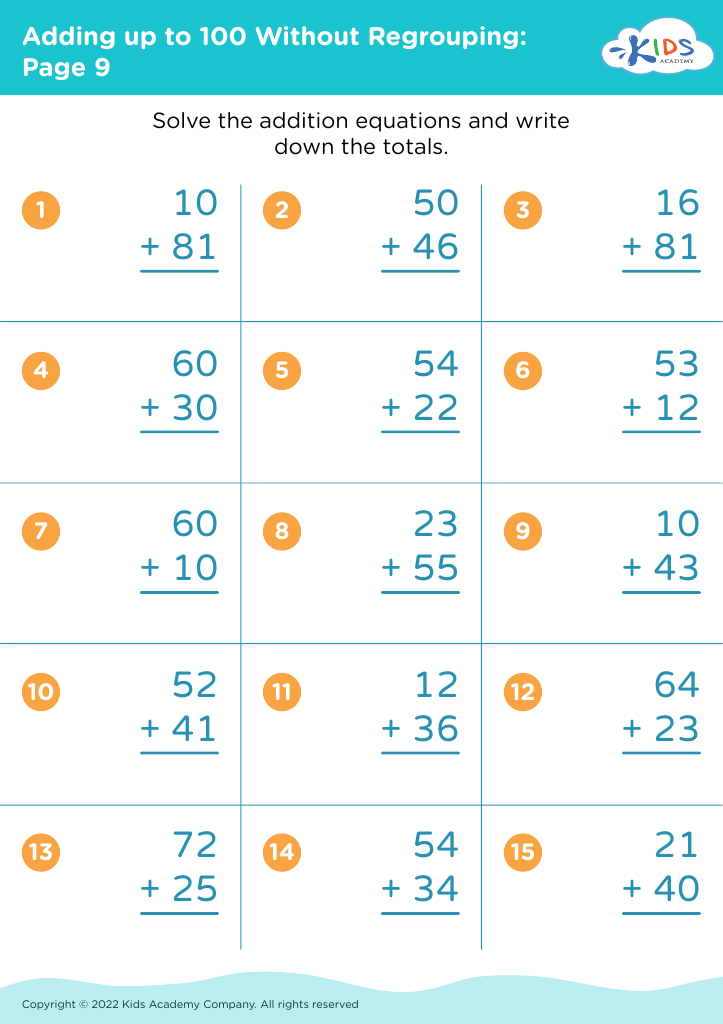
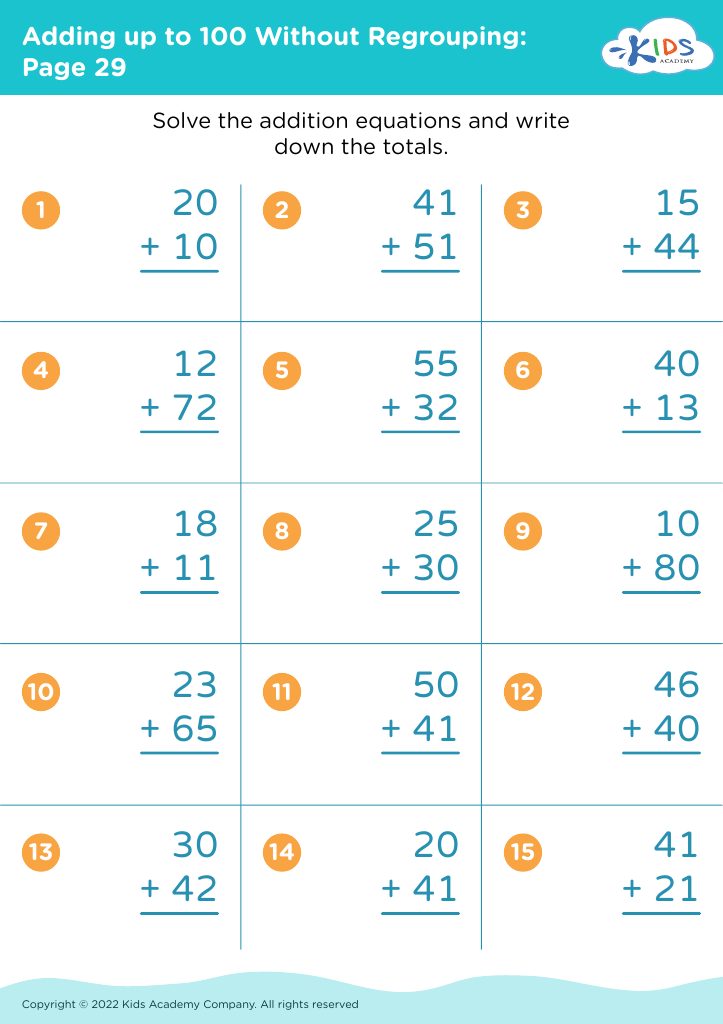




Problem-solving skills, particularly the ability to add up to 100 without regrouping, are foundational for children aged 5-7. At this age, children are developing critical cognitive abilities that set the groundwork for future learning. Mastering this skill helps enhance their mathematical understanding and promotes logical reasoning.
When children learn to manipulate numbers and think about solving problems without regrouping, they build confidence in their mathematical abilities, fostering a positive attitude towards math. This confidence can translate into a greater willingness to engage with more complex concepts as they progress in their education.
Additionally, problem-solving nurtures persistence and resilience. Children learn that facing challenges is part of the learning process and that they can develop effective strategies to overcome obstacles. This skill extends beyond math, equipping children to tackle various situations in everyday life by breaking down problems into manageable parts.
Teachers and parents play a crucial role in guiding children through engaging and interactive activities that enhance these skills. By prioritizing the development of problem-solving abilities, they ensure children not only succeed in math but also grow into critical thinkers capable of navigating complex situations throughout their lives.