Reading comprehension Adding up to 100 Without Regrouping Worksheets for Ages 5-7
3 filtered results
-
From - To
Discover our "Reading Comprehension Adding Up to 100 Without Regrouping Worksheets" designed specifically for children ages 5-7. These engaging worksheets combine math skills with reading comprehension, helping young learners understand addition concepts while enhancing their literacy abilities. Each worksheet presents relatable stories, fun characters, and real-world scenarios that motivate kids to solve addition problems up to 100 without regrouping. Ideal for classroom use or at-home learning, these activities promote critical thinking and understanding in an enjoyable way. Support your child’s foundational skills with this practical resource that encourages both mathematical confidence and literacy growth. Give your child the tools they need for success!
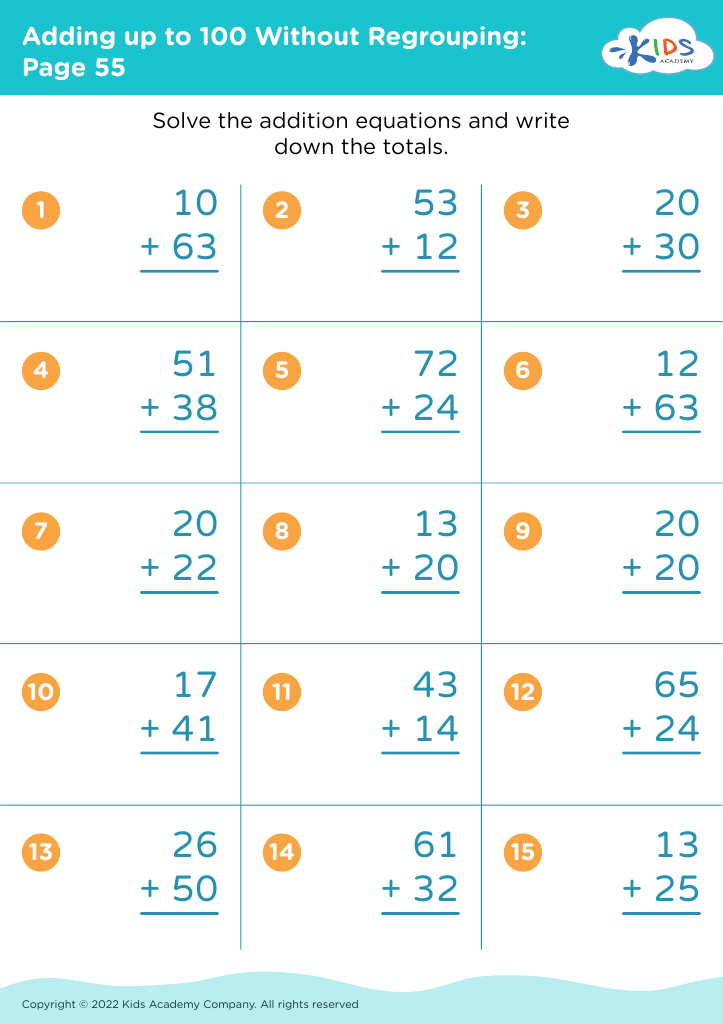
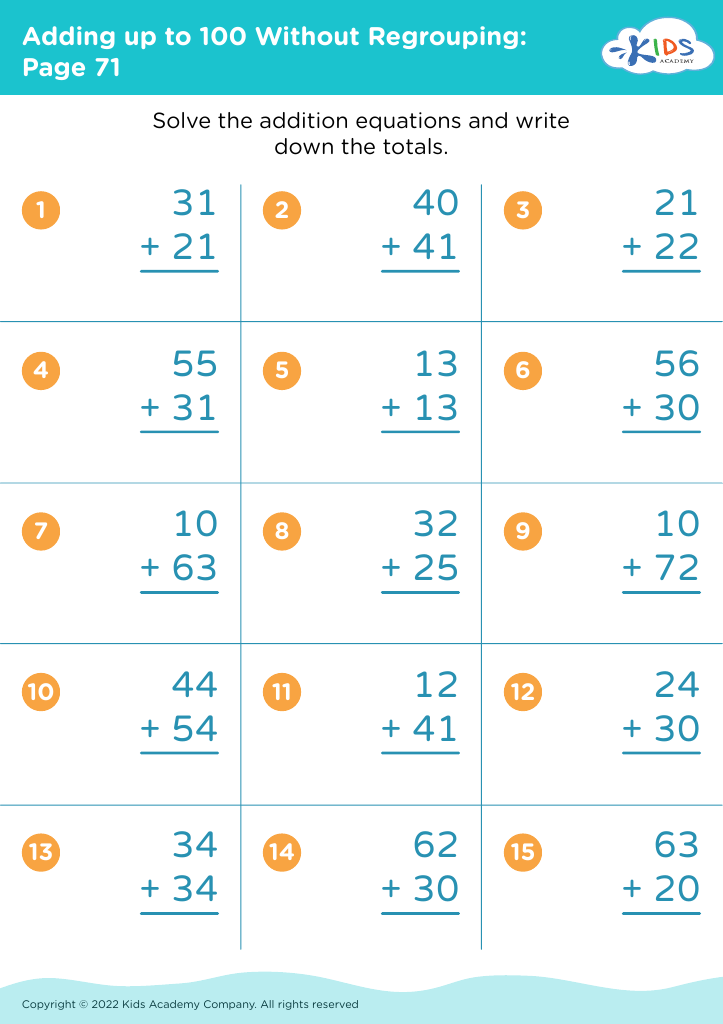
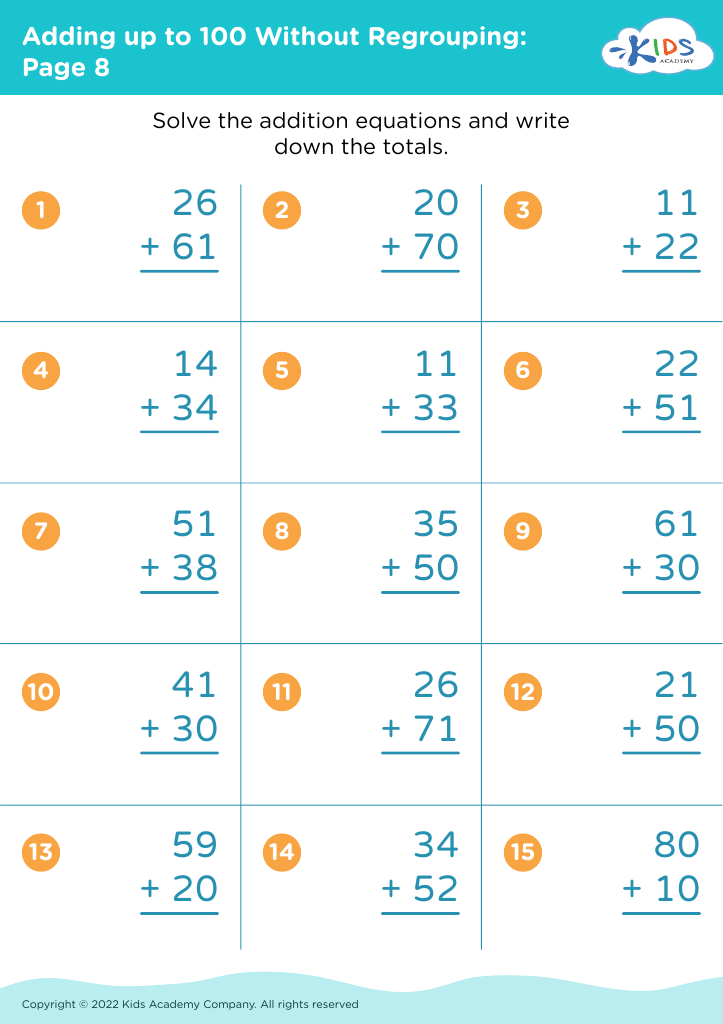




Reading comprehension and mathematical skills, such as adding up to 100 without regrouping, are crucial for the development of children aged 5-7. Both skills are foundational for academic success and everyday life.
Firstly, reading comprehension enables children to understand and interact with the world around them. It helps them grasp ideas, follow instructions, and engage with various texts, from stories to informational materials. Developing strong reading skills at an early age sets the stage for effective communication, critical thinking, and a lifelong love of learning.
Similarly, mastering addition up to 100 without regrouping builds essential math skills. It cultivates number sense and strengthens mental math abilities. These early arithmetic skills are vital, as they serve as precursors to more complex concepts in mathematics, laying the groundwork for future success in various subjects.
Moreover, both reading and mathematics skills foster confidence in children. A solid understanding makes learning enjoyable and helps them participate actively in class. Parents and teachers play an integral role in supporting these developmental areas; engaging and encouraging children through interactive reading and problem-solving activities fosters a growth mindset. Therefore, investing time in both reading comprehension and math skills equips children for future academic pursuits and everyday problem-solving.