Understanding fractions Adding up to 100 Without Regrouping Worksheets for Ages 5-7

Filters

19 filtered results

Clear all filters
Favorites
With answer key
Interactive

19 filtered results

Difficulty Level

Grade


Discover our engaging "Understanding Fractions Adding up to 100 Without Regrouping" worksheets, specially designed for children aged 5-7. These interactive resources provide a fun and educational way to introduce young learners to fractions and numbers. Our worksheets encourage kids to explore adding fractions that total up to 100, helping develop their mathematical skills without the complexity of regrouping. Ideal for both classroom and at-home learning, these materials promote problem-solving abilities and numerical comprehension in a playful context. Lay a solid foundation for your child's mathematical journey today with our easy-to-use and colorful worksheets!
Check out this FREE Trial Lesson on Adding up to 100 Without Regrouping for age 5-7!

X

Favorites
With answer key
Interactive
  • 5-7
  • Understanding fractions
  • Adding up to 100 Without Regrouping
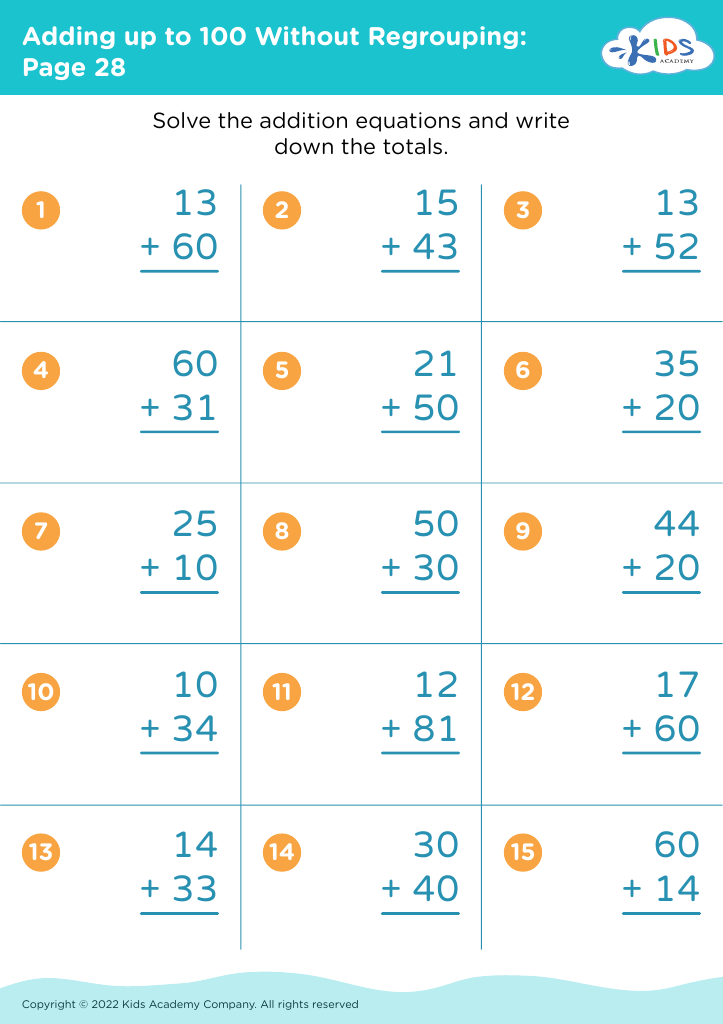
Adding up to 100 Without Regrouping: Page 28
Worksheet
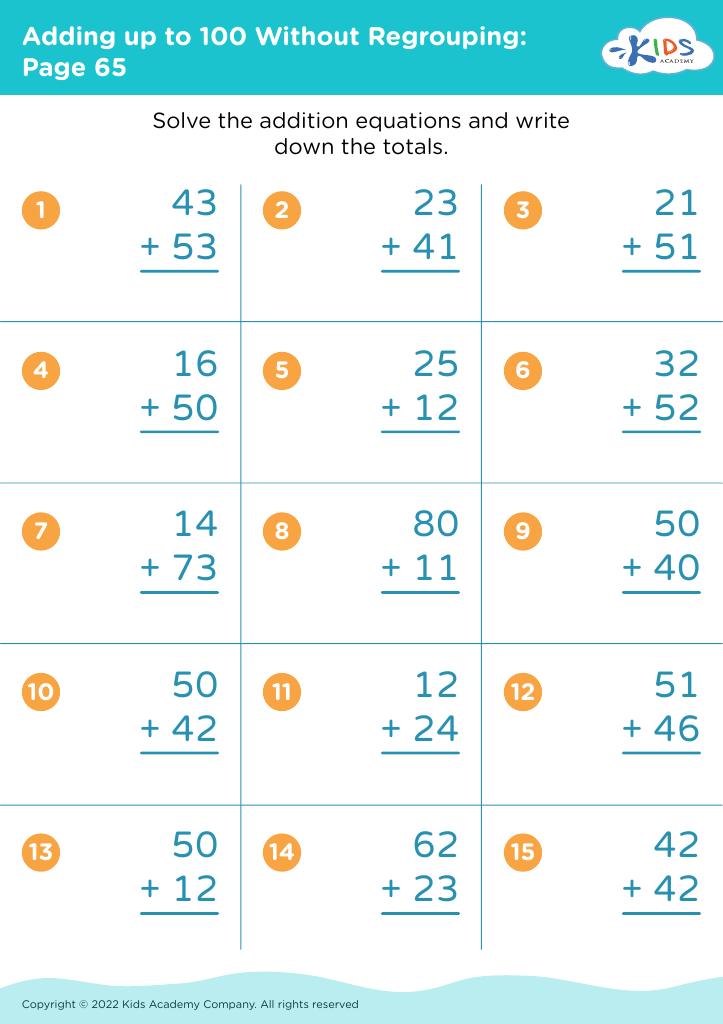
Adding up to 100 Without Regrouping: Page 65
Worksheet
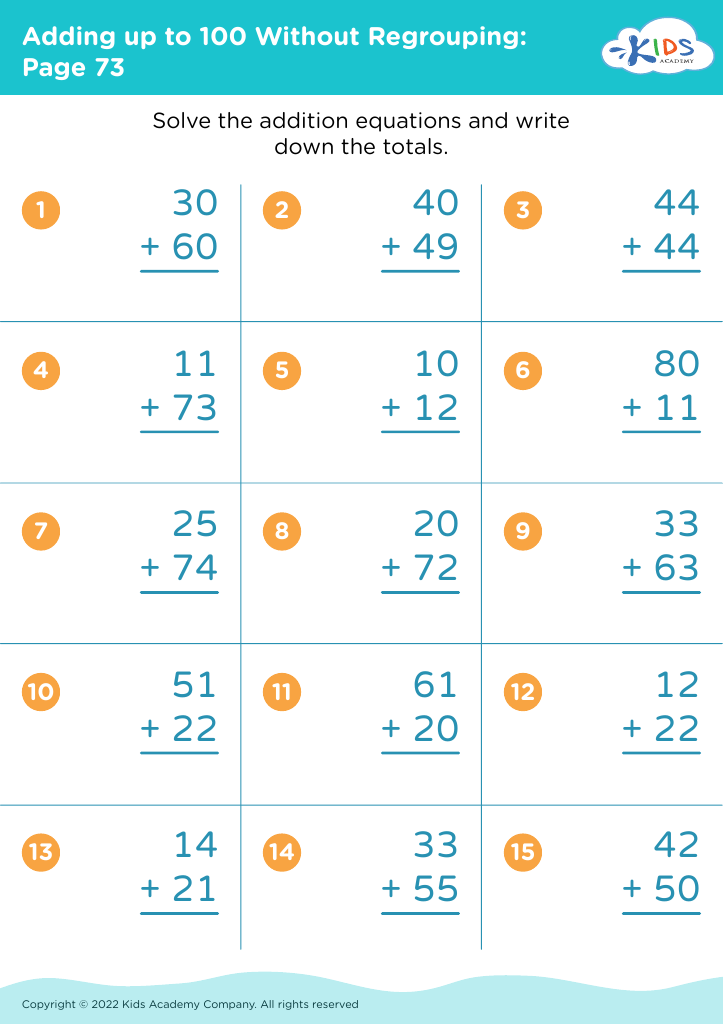
Adding up to 100 Without Regrouping: Page 73
Worksheet
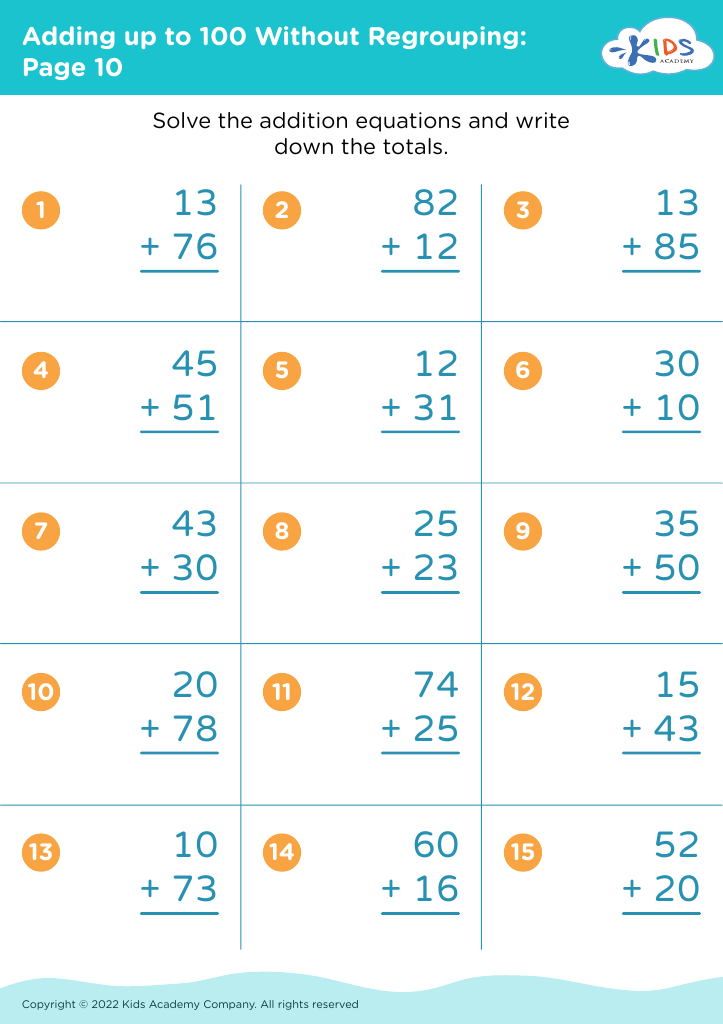
Adding up to 100 Without Regrouping: Page 10
Worksheet
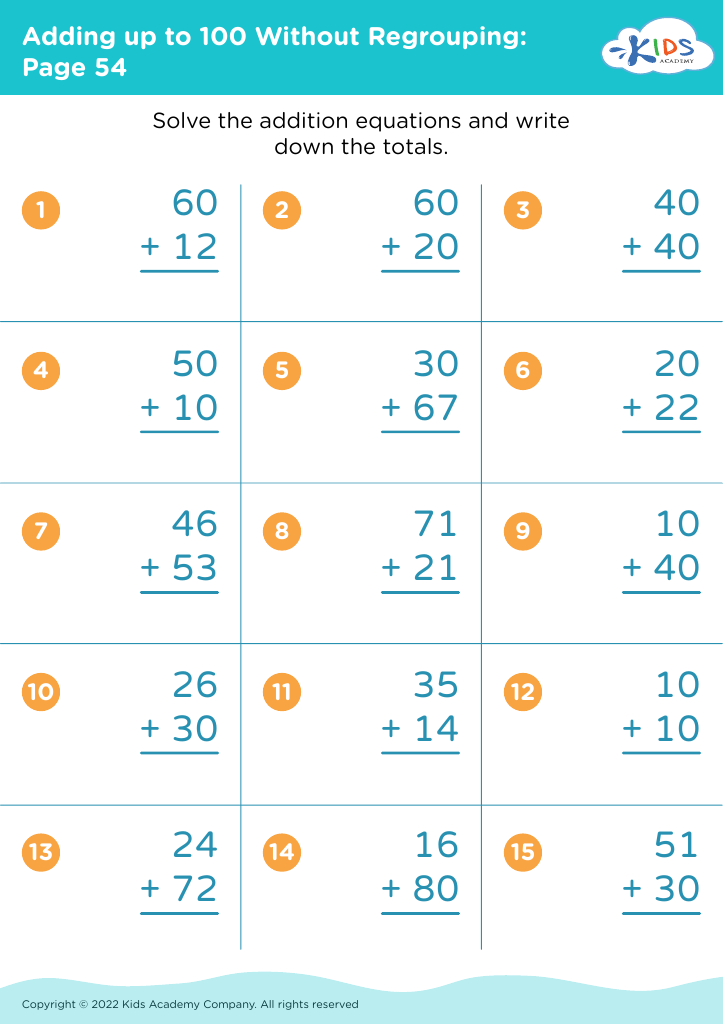
Adding up to 100 Without Regrouping: Page 54
Worksheet
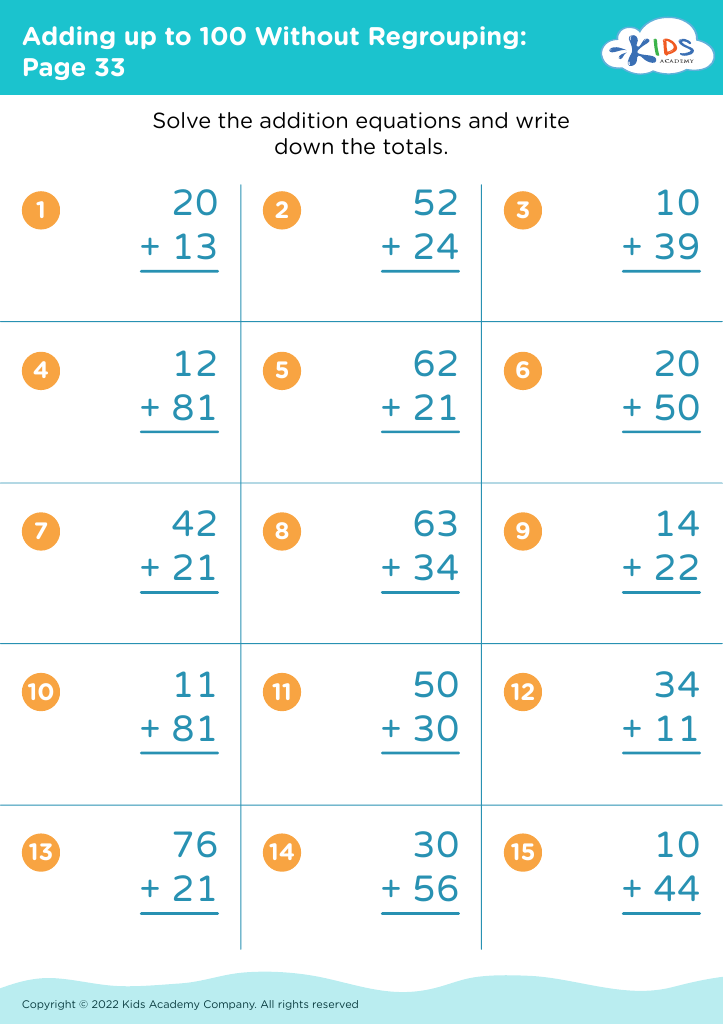
Adding up to 100 Without Regrouping: Page 33
Worksheet
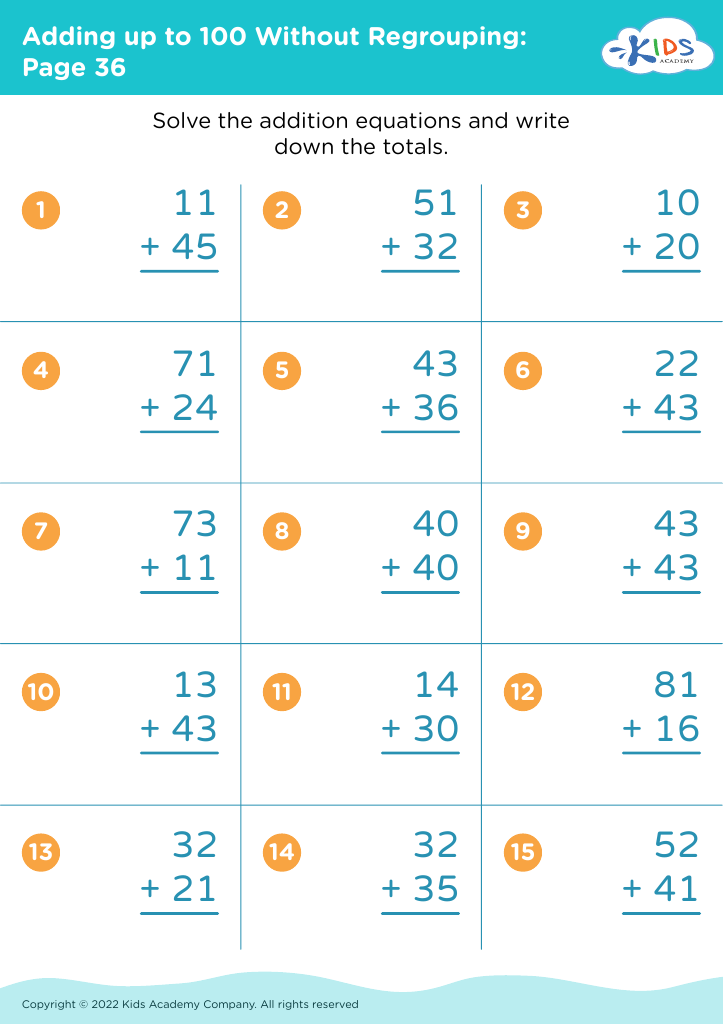
Adding up to 100 Without Regrouping: Page 36
Worksheet
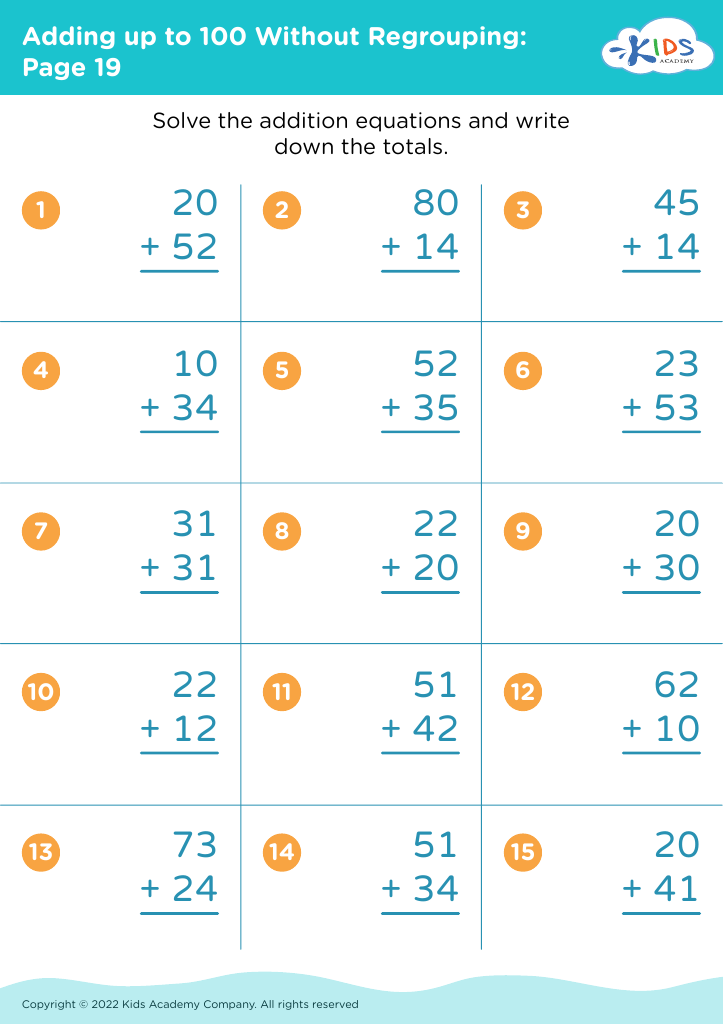
Adding up to 100 Without Regrouping: Page 19
Worksheet
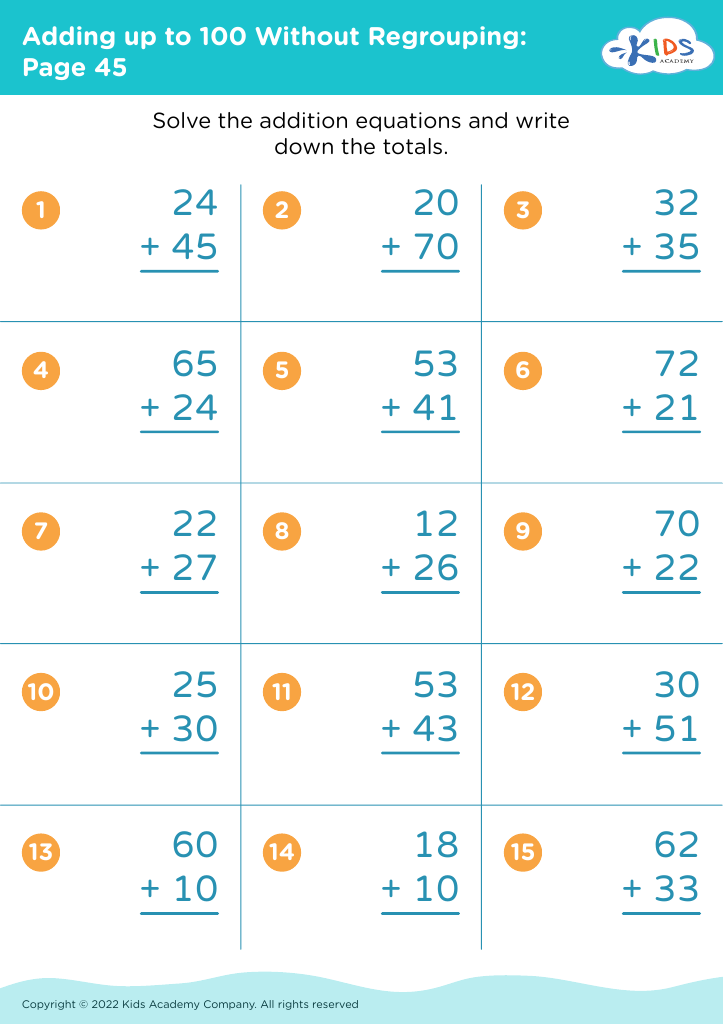
Adding up to 100 Without Regrouping: Page 45
Worksheet
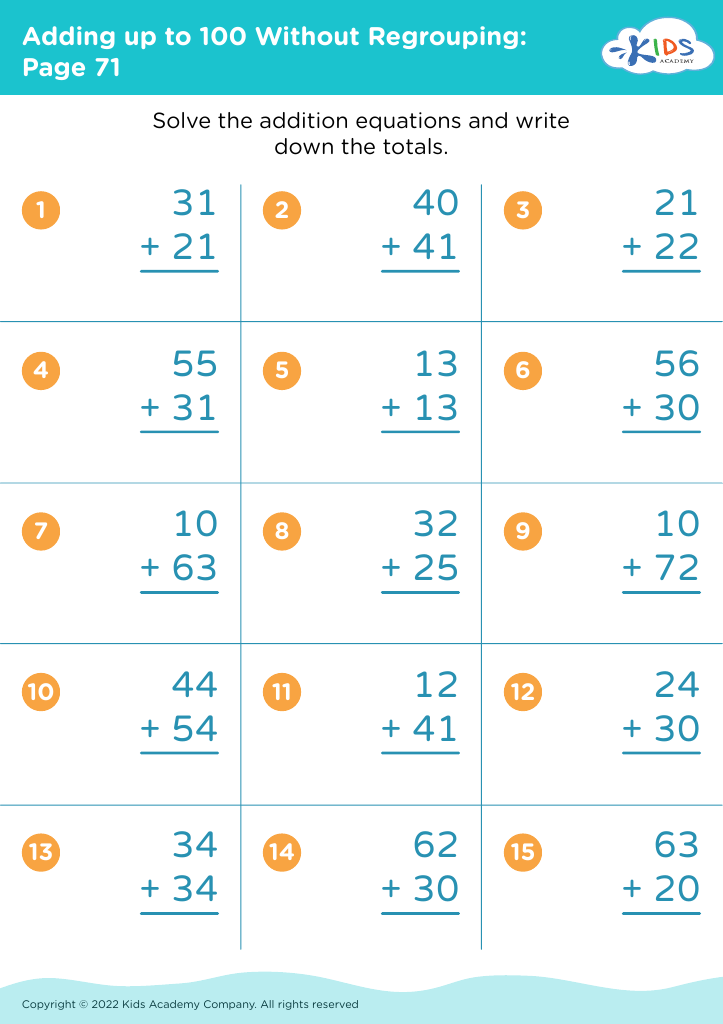
Adding up to 100 Without Regrouping: Page 71
Worksheet
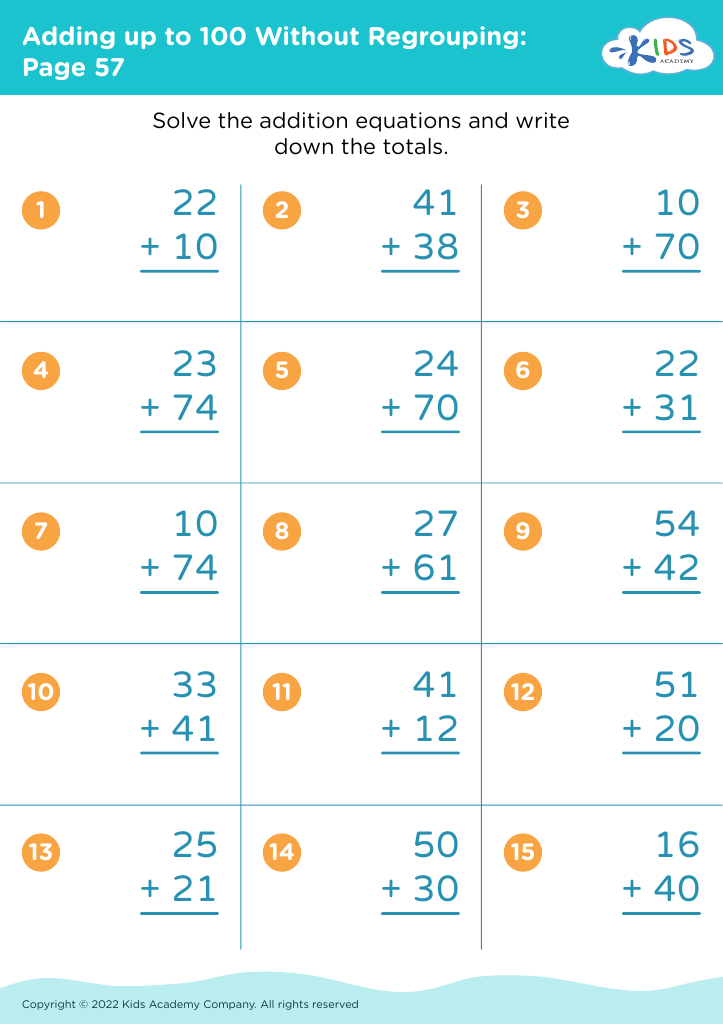
Adding up to 100 Without Regrouping: Page 57
Worksheet
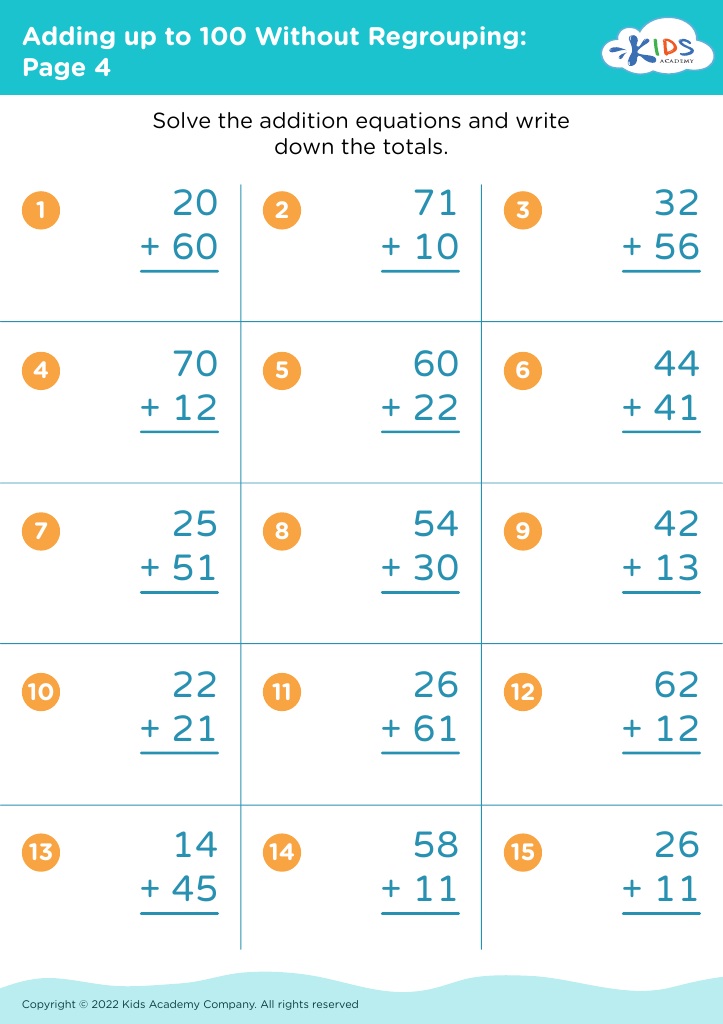
Adding up to 100 Without Regrouping: Page 4
Worksheet
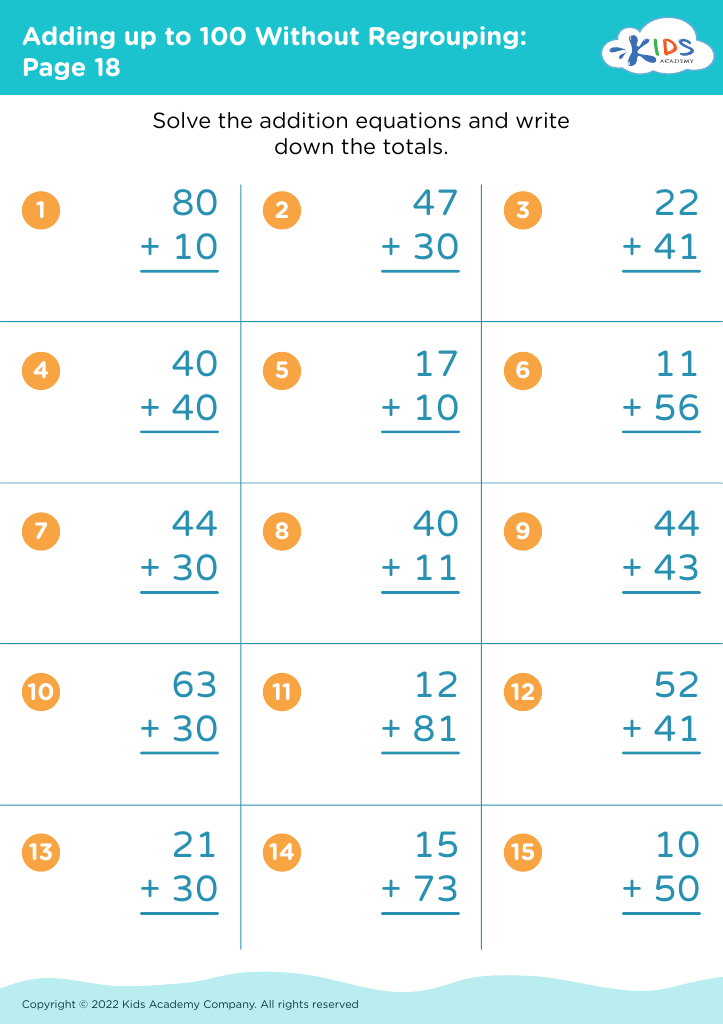
Adding up to 100 Without Regrouping: Page 18
Worksheet
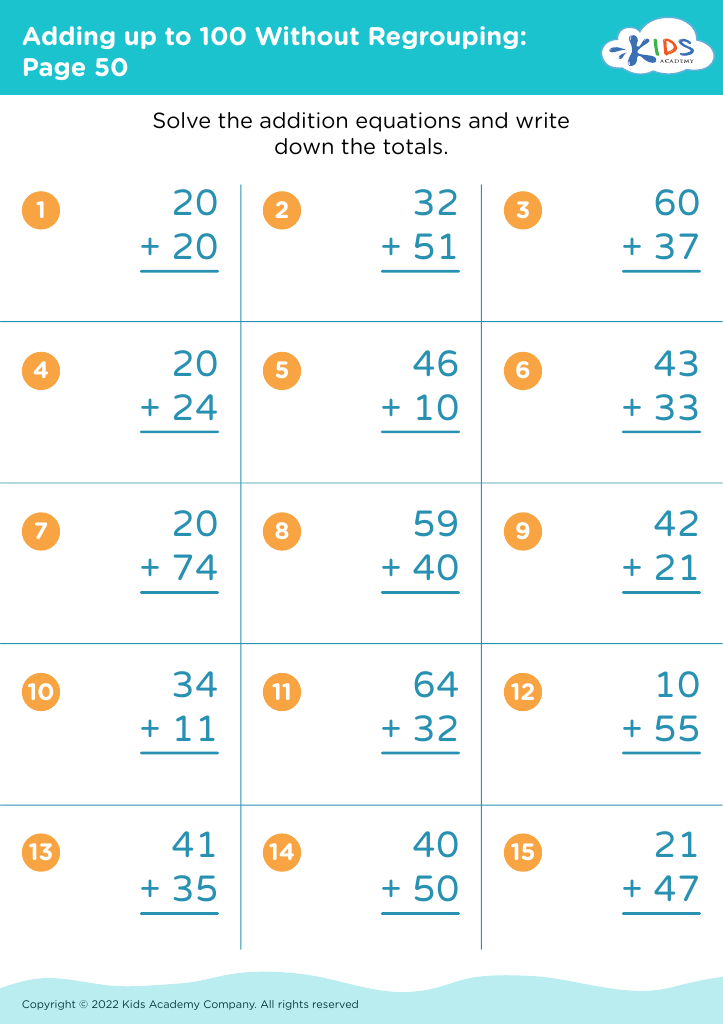
Adding up to 100 Without Regrouping: Page 50
Worksheet
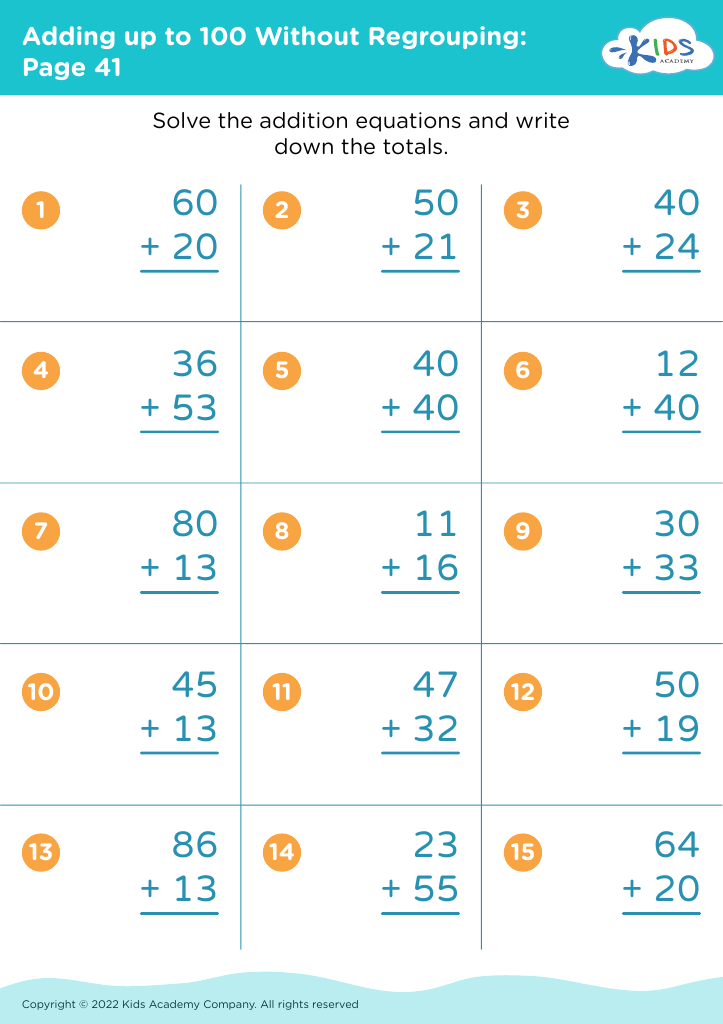
Adding up to 100 Without Regrouping: Page 41
Worksheet
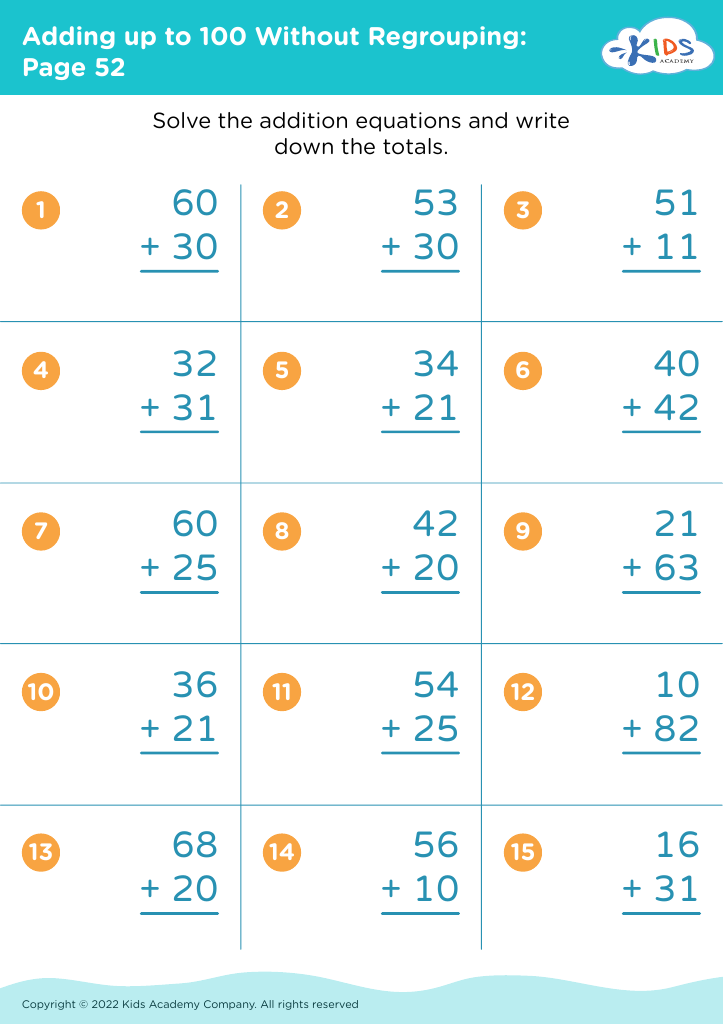
Adding up to 100 Without Regrouping: Page 52
Worksheet
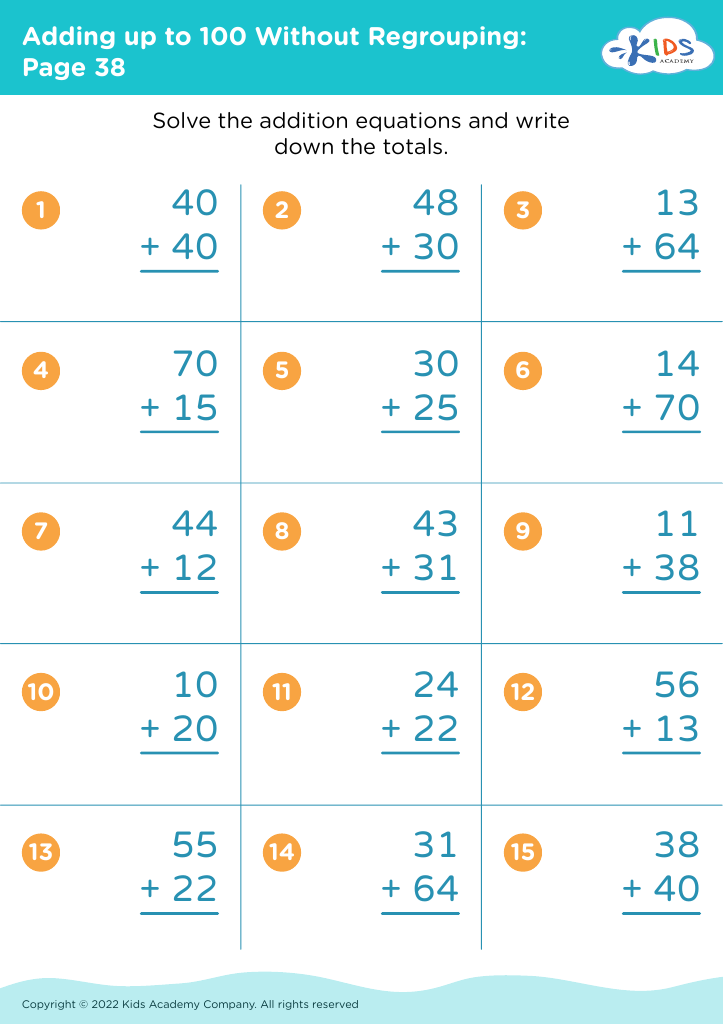
Adding up to 100 Without Regrouping: Page 38
Worksheet
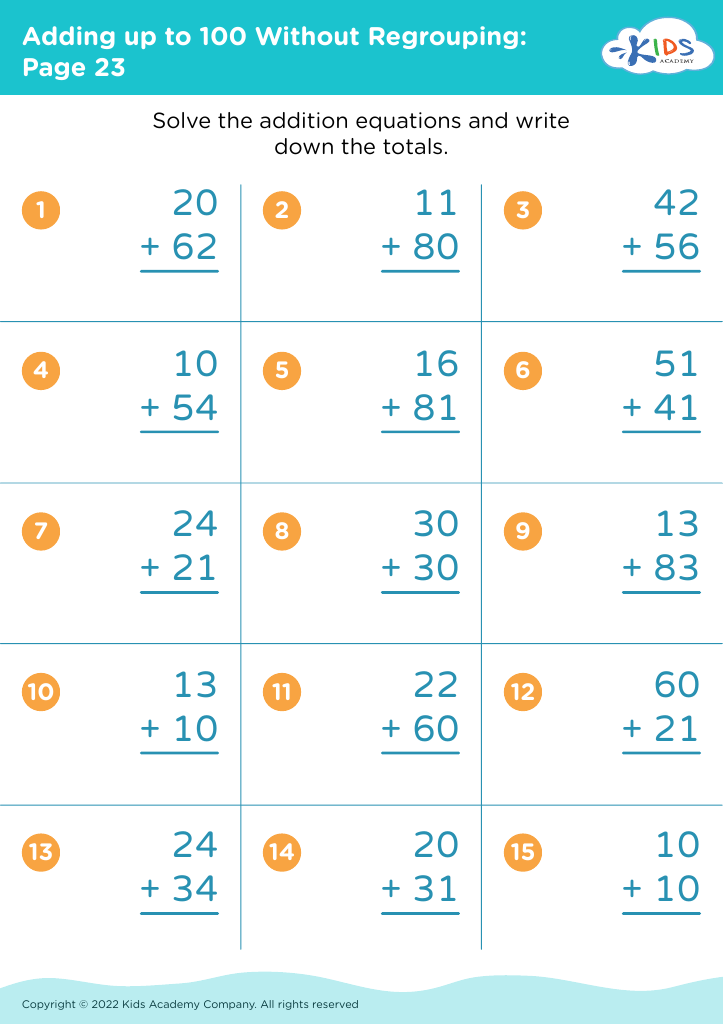
Adding up to 100 Without Regrouping: Page 23
Worksheet
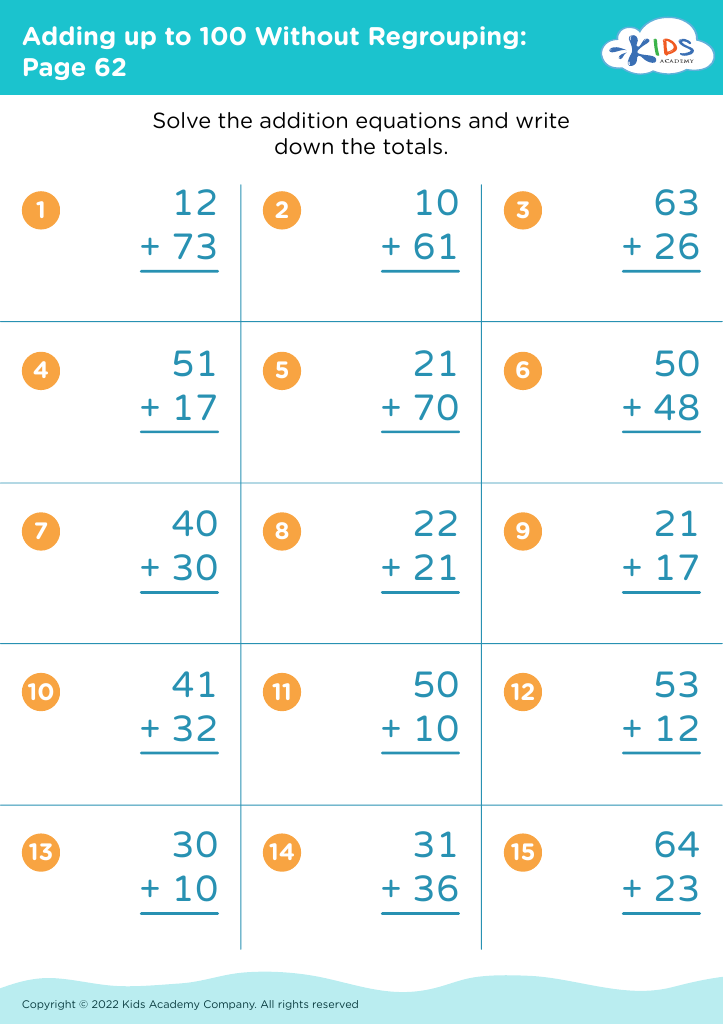
Adding up to 100 Without Regrouping: Page 62
Worksheet


Understanding fractions, particularly in the context of adding up to 100 without regrouping, is crucial for children aged 5-7 for several reasons. First, it lays a strong mathematical foundation. Fractions represent parts of a whole, and recognizing this concept helps young learners develop number sense, which is essential for advanced mathematics. By introducing addition involving fractions in a straightforward manner, we help students grasp how numbers work together, fostering confidence and competency in math skills.

Second, understanding fractions allows children to engage in everyday situations that involve sharing, dividing, and making sense of quantities. This practical application can enhance critical thinking and problem-solving skills, as children learn to apply mathematical reasoning in real-world contexts.

Moreover, fractions are a stepping stone to more complex concepts they'll encounter later in school. By familiarizing them with adding fractions up to 100 without regrouping, we ensure they have the necessary tools for future success in mathematics.

Finally, supporting their learning creates a collaborative environment between parents and teachers, fostering a positive attitude toward math. Encouraging exploration of fractions promotes curiosity and cultivates a lifelong appreciation for learning that can positively influence their educational journey.