Addition Practice Adding up to 100 Worksheets for Ages 5-7
8 filtered results
-
From - To
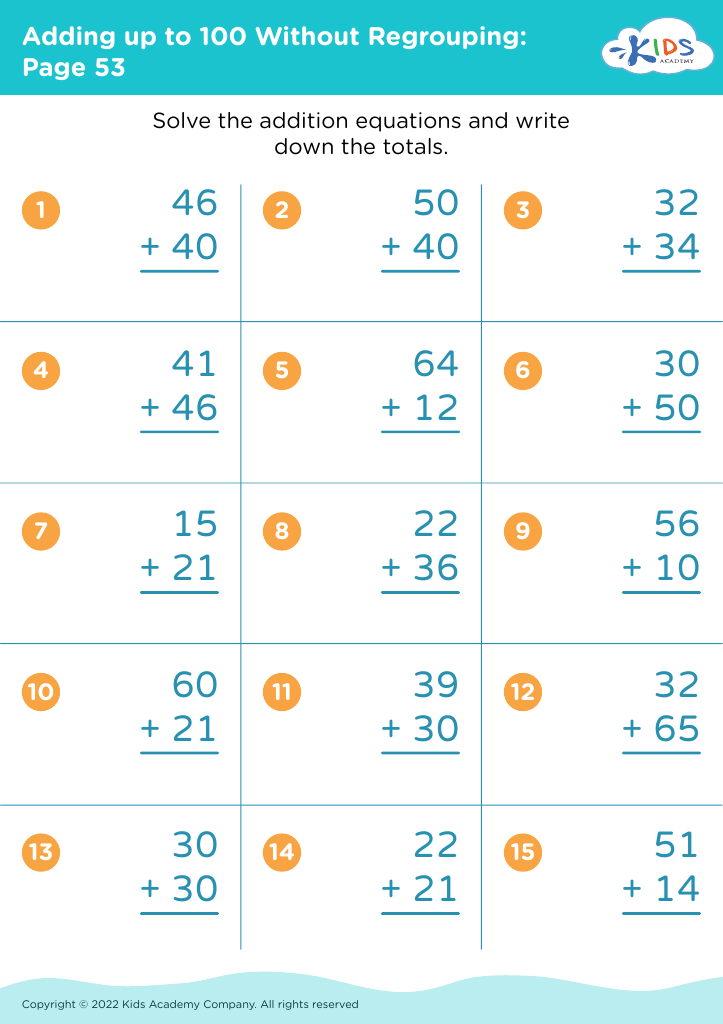
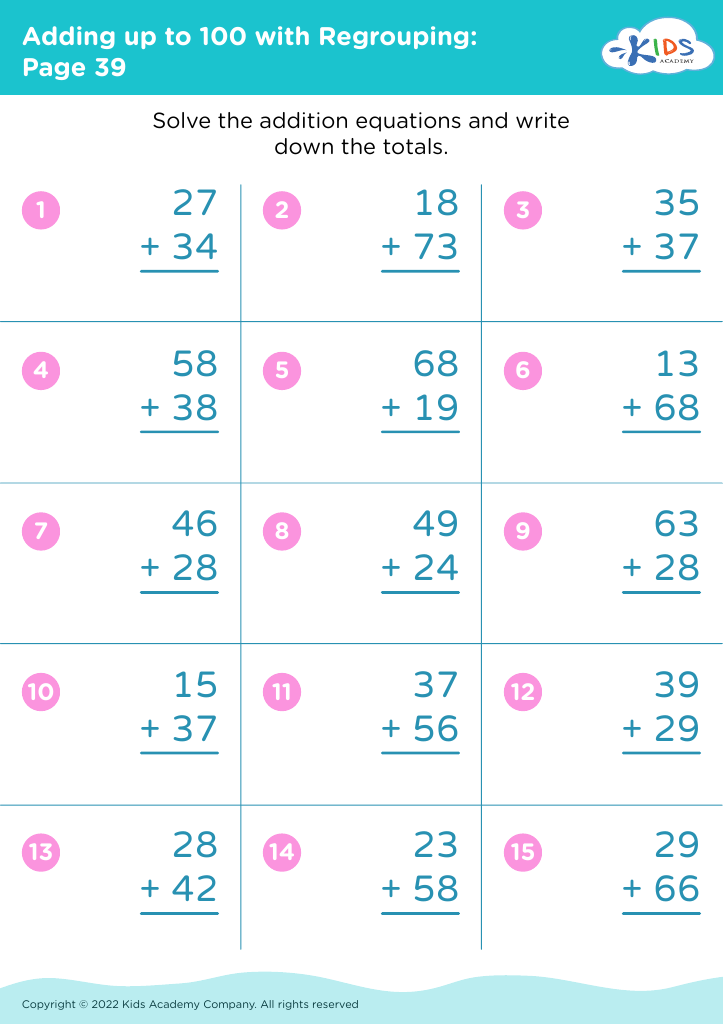
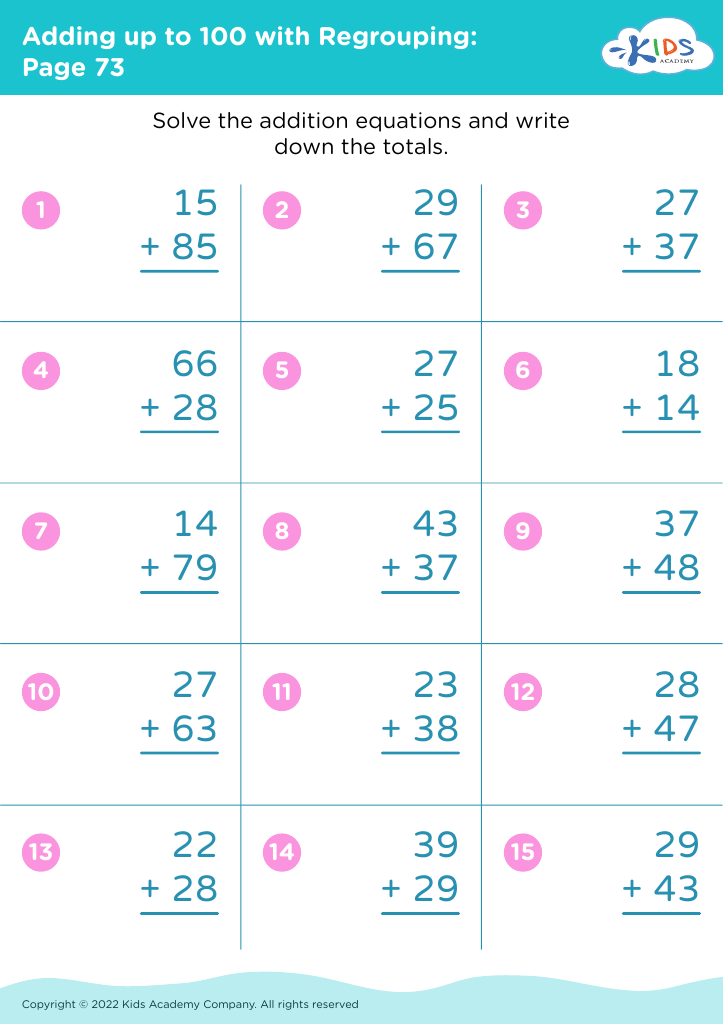
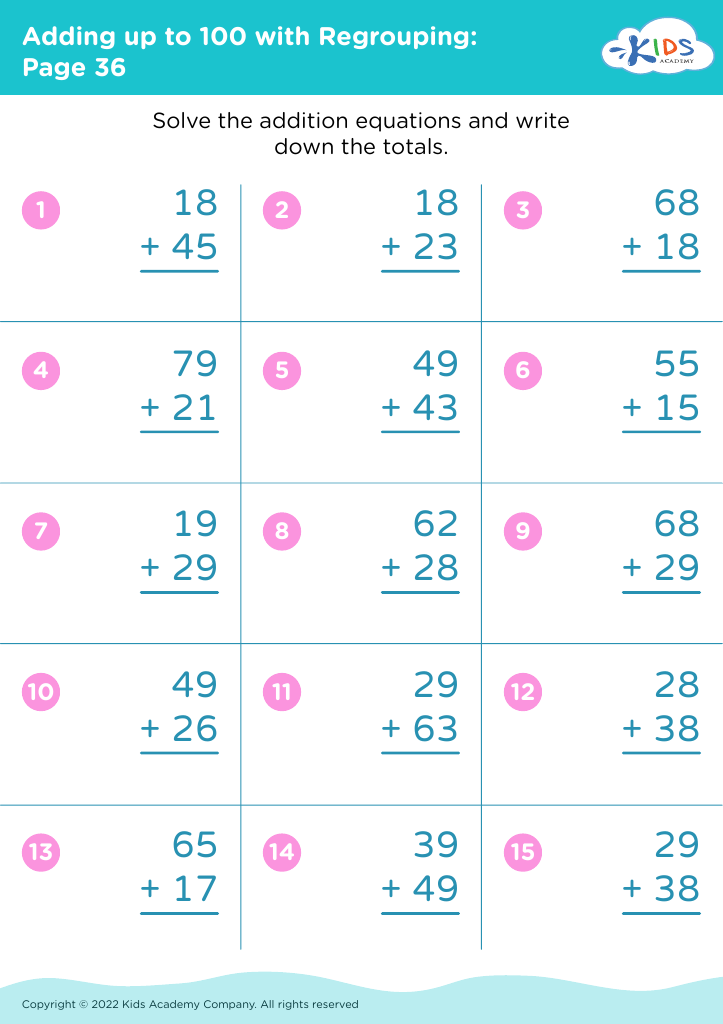
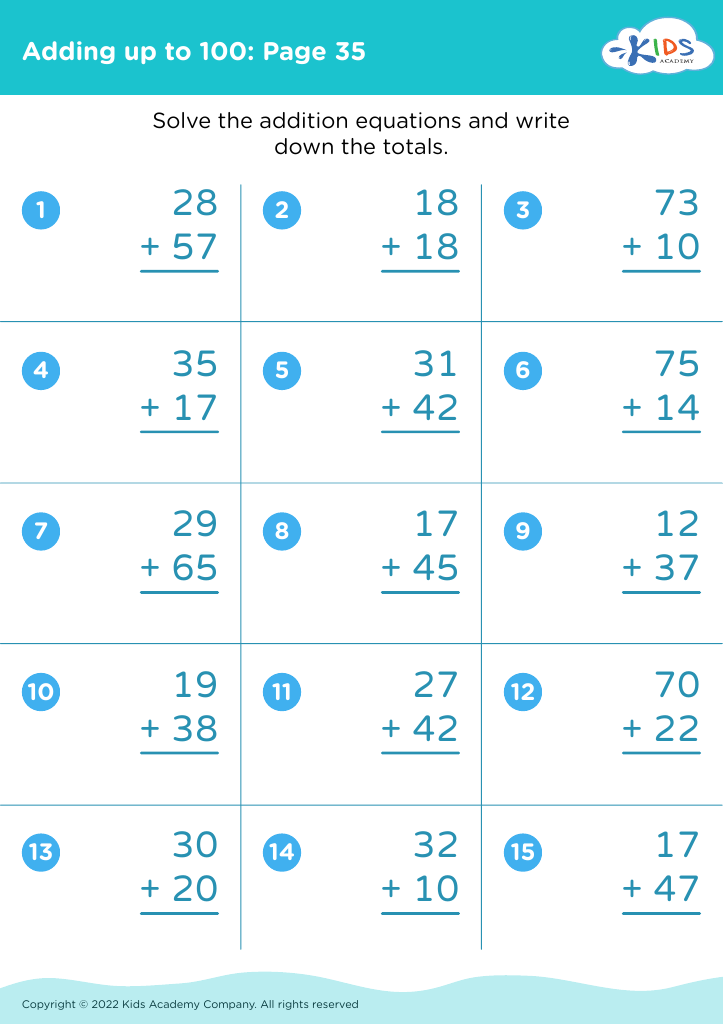
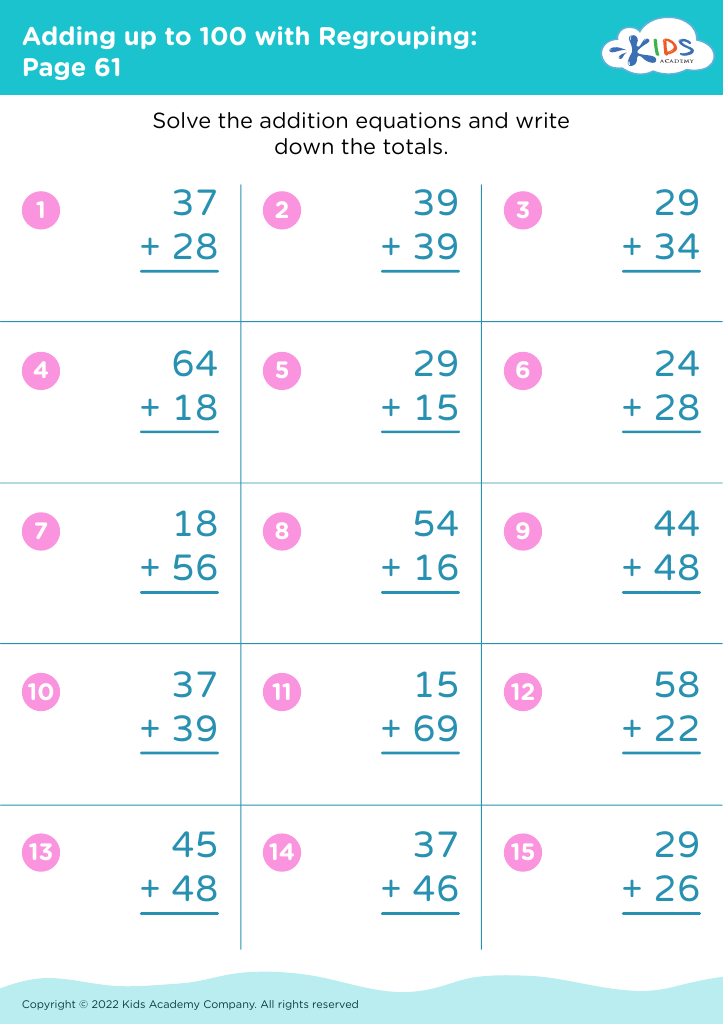
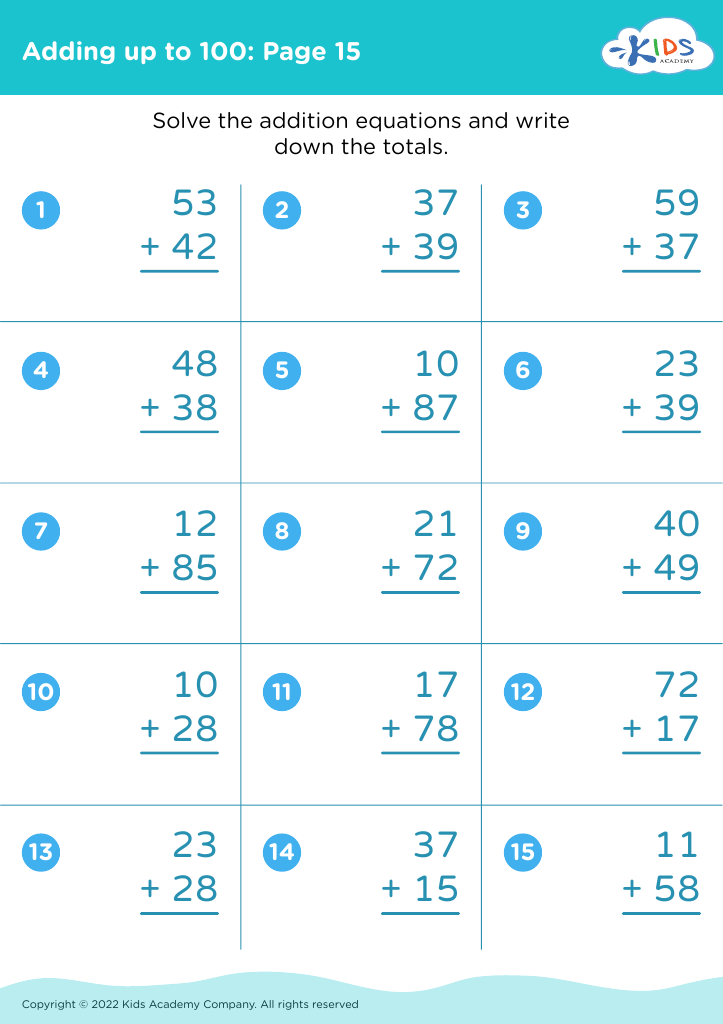
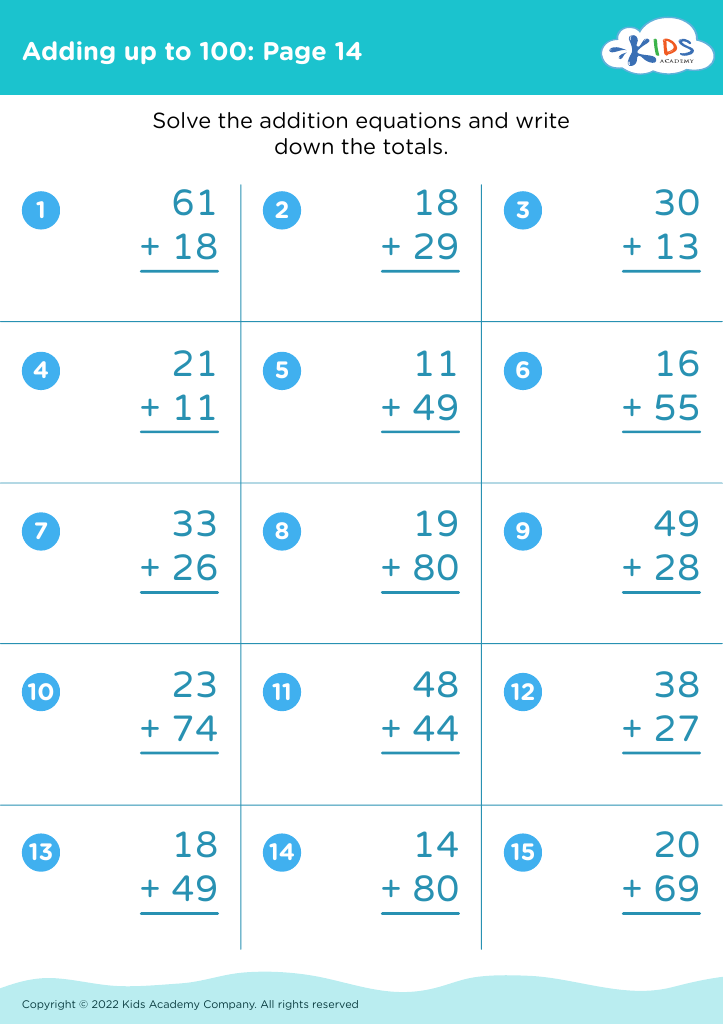
Enhance your child's math skills with our "Addition Practice Adding up to 100" worksheets, designed specifically for kids ages 5-7! These engaging and colorful worksheets offer a fun way for young learners to master addition up to 100. Featuring various activities that cater to different learning styles, your child will enjoy practicing essential math concepts through interactive exercises. Each worksheet helps build confidence and improve problem-solving abilities, making learning enjoyable and effective. Perfect for at-home learning or classroom use, these addition worksheets set a strong foundation for future mathematical success. Download and start adding today!





%20(1).jpg)

Addition practice up to 100 is crucial for children aged 5-7 as it forms the foundation for their mathematical understanding. At this stage, children are developing essential cognitive skills; consistent practice helps reinforce number sense, encouraging them to recognize quantities and operate with them confidently.
Firstly, mastering basic addition improves children's problem-solving skills, enabling them to tackle more complex math concepts later on, such as subtraction, multiplication, and division. This early stage is when mathematical fluency begins to take shape, setting the tone for future learning.
Additionally, practicing addition boosts children's confidence when dealing with mathematics. As they gain mastery in adding numbers up to 100, their self-efficacy grows, leading them to approach math challenges positively and persistently. This can reduce math anxiety, a common issue for many young learners.
Moreover, a solid grasp of addition contributes to real-world applications, such as interpreting cash transactions or handling measurement in cooking, making math relevant in daily life. In summary, investing time in addition practice not only enhances academic abilities but also enriches children's overall cognitive and life skills, thereby laying a robust groundwork for future learning and personal development.








