Basic arithmetic skills Adding up to 100 Worksheets for Ages 5-7
3 filtered results
-
From - To
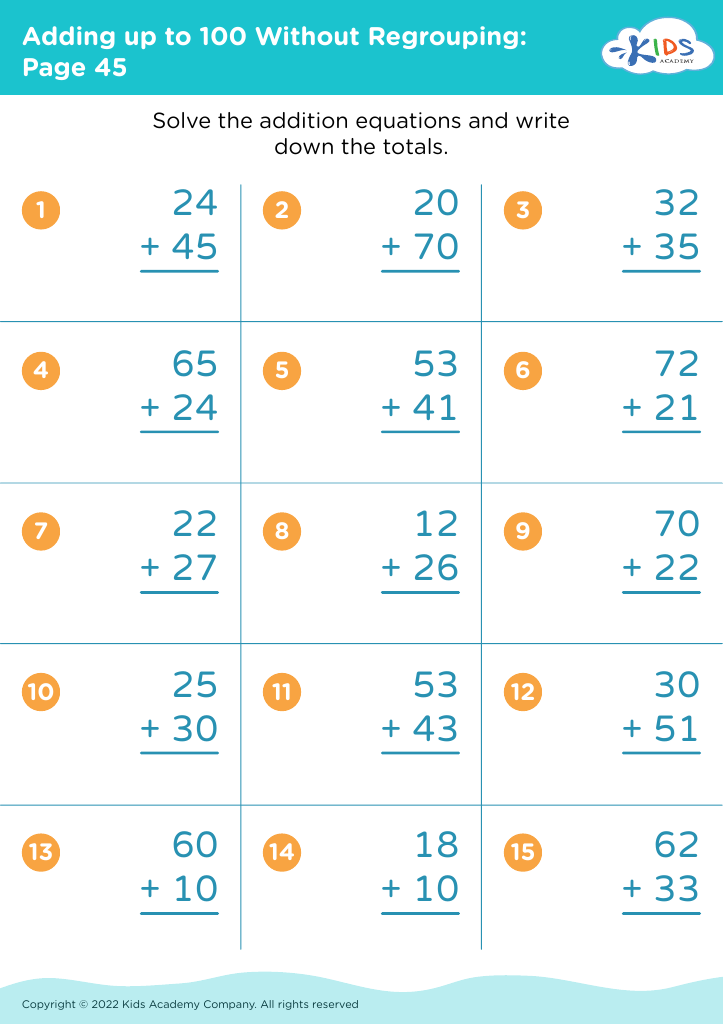
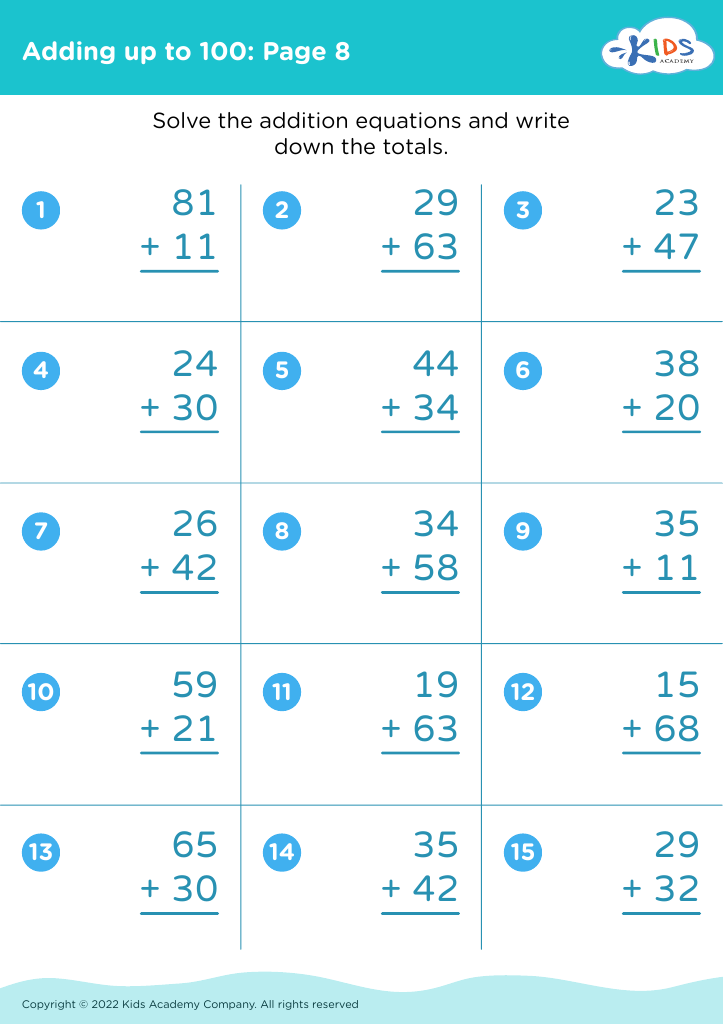
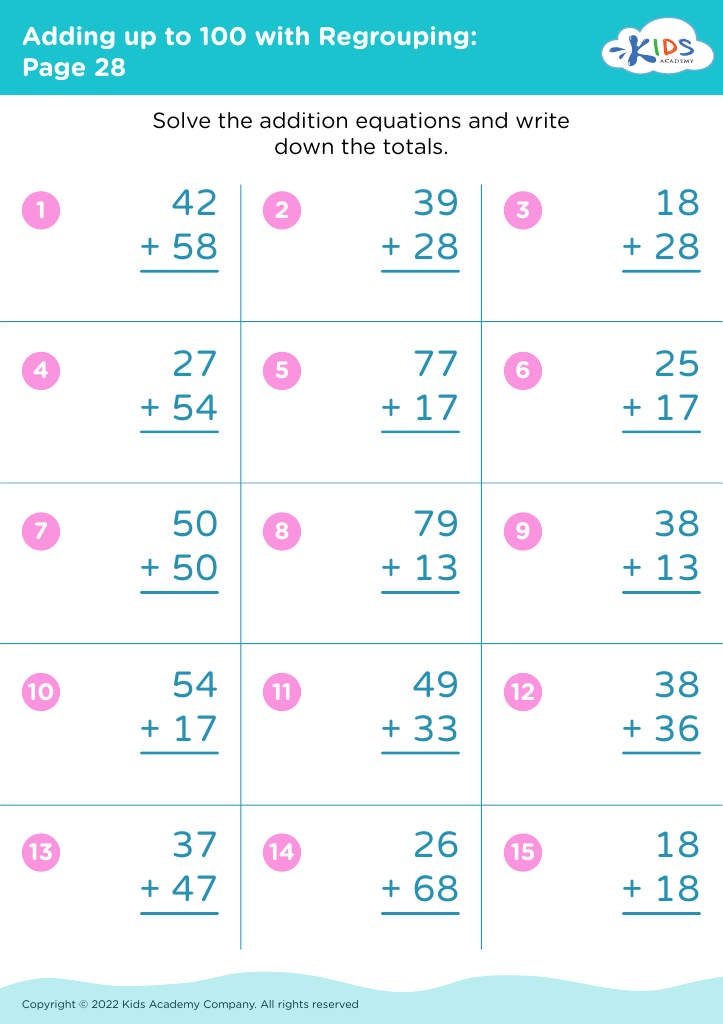
Unlock your child's potential with our "Basic Arithmetic Skills: Adding Up to 100 Worksheets" designed for ages 5-7. These engaging, interactive worksheets focus on foundational math skills, helping young learners practice addition in a fun and supportive environment. Each activity is carefully crafted to reinforce understanding of numbers and promote confidence in basic arithmetic. As children work through our varied exercises, they develop essential problem-solving skills and number recognition. Perfect for home or classroom use, our worksheets make learning math enjoyable and effective. Help your child build a strong mathematical foundation today with our colorful, easy-to-use resources!



%20(1).jpg)



Basic arithmetic skills, especially adding up to 100, are crucial for children aged 5-7 as they lay the foundation for future learning in math and critical thinking. At this developmental stage, youngsters begin to understand numbers and their relationships, making it essential for parents and teachers to prioritize these skills. Mastering addition up to 100 helps children develop number sense, enabling them to comprehend larger numbers and more complex mathematical concepts as they progress in school.
Furthermore, having a strong grasp of basic addition fosters confidence. When children can easily manipulate numbers, they become more optimistic about tackling math-related challenges. This is critical in a competitive academic environment where self-esteem can significantly impact overall performance.
Additionally, arithmetic skills are not just academic; they are practical. Children often encounter situations where they need to add numbers to solve everyday problems, such as counting objects, handling money, or understanding time. Empowering children with basic addition skills equips them with essential tools for navigating life beyond the classroom.
Ultimately, prioritizing basic arithmetic skills ensures that children are well-prepared for future math education and equipped with critical thinking abilities necessary for everyday problem-solving.








