Comparing Fractions Adding up to 100 Worksheets for Ages 5-7 - Page 2
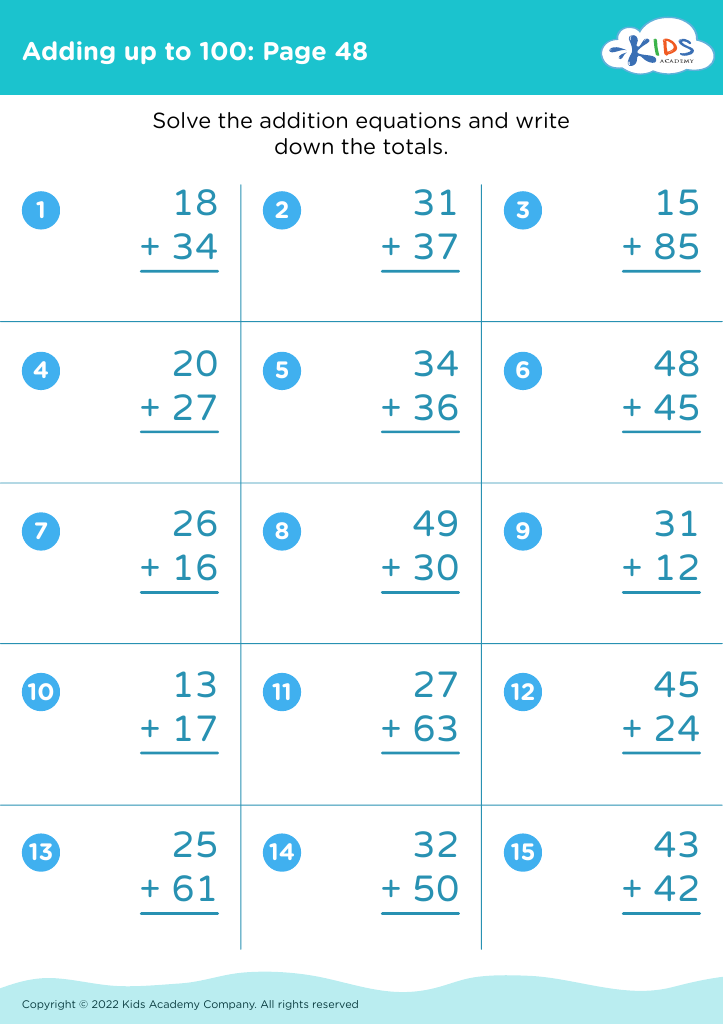
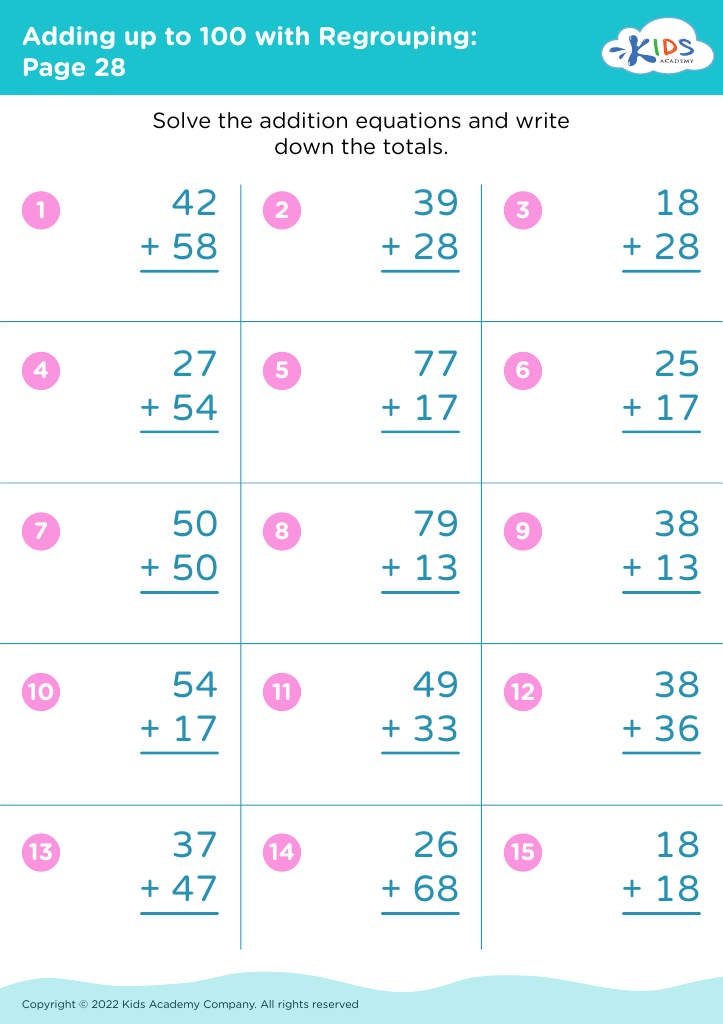
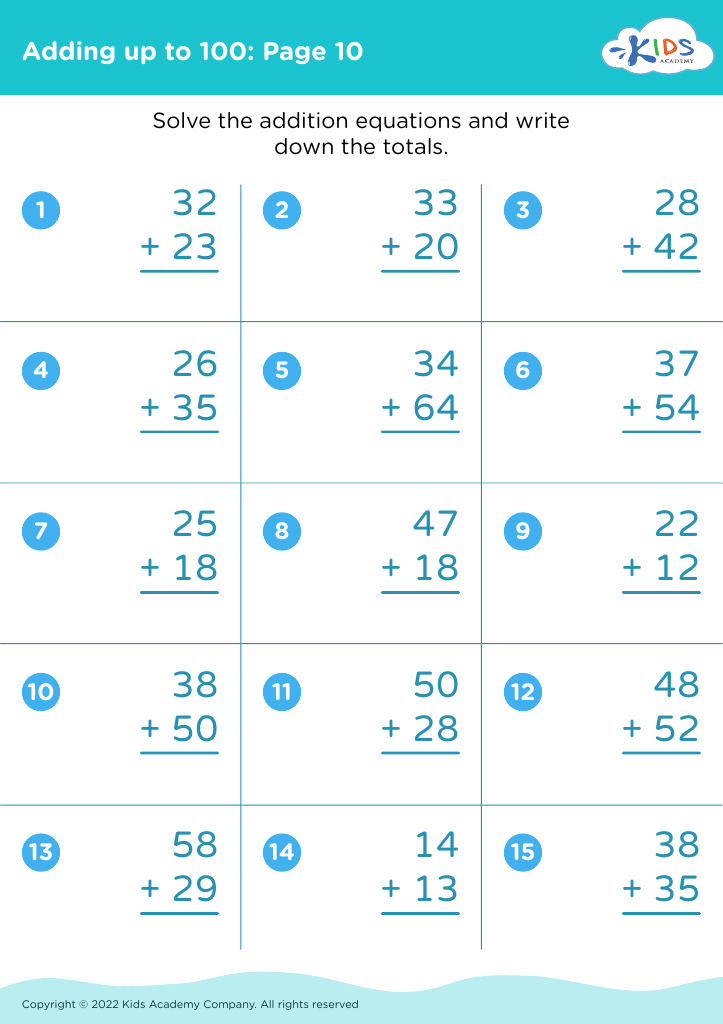
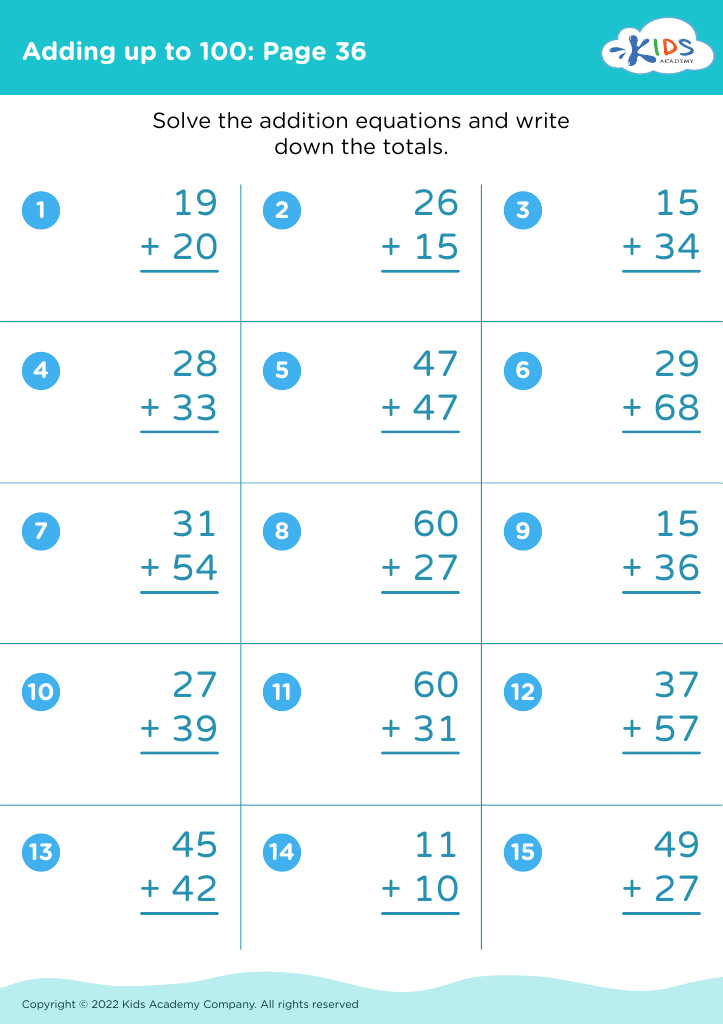


%20(1).jpg)





Teaching young students to compare fractions that sum up to 100 is crucial for several reasons. Firstly, it builds a foundational understanding of fractions, which is a core concept in mathematics. By learning to compare fractions, children develop critical thinking skills as they assess parts of a whole, a skill that extends beyond math to everyday decision-making.
This concept is particularly beneficial for ages 5-7, when children are forming their initial understanding of numbers and relationships between them. Engaging with fractions that add up to 100 also introduces the idea of percentages, enhancing their ability to comprehend real-life situations, such as pie charts or measuring ingredients without overwhelming them with complex calculations.
Furthermore, this early exposure fosters numerical fluency and lays the groundwork for future math concepts, making more advanced topics like algebra or data analysis easier to grasp. Parents and teachers can use relatable examples, like dividing a pizza or a birthday cake, to make learning fun and relevant.
Empowering children with these basic skills not only builds their confidence in math but also encourages a positive attitude toward learning, paving the way for lifelong enthusiasm for education. Overall, understanding fractions is a stepping stone to successful numeracy.








