Enhancing problem-solving skills Adding up to 100 Worksheets for Ages 5-7
3 filtered results
-
From - To
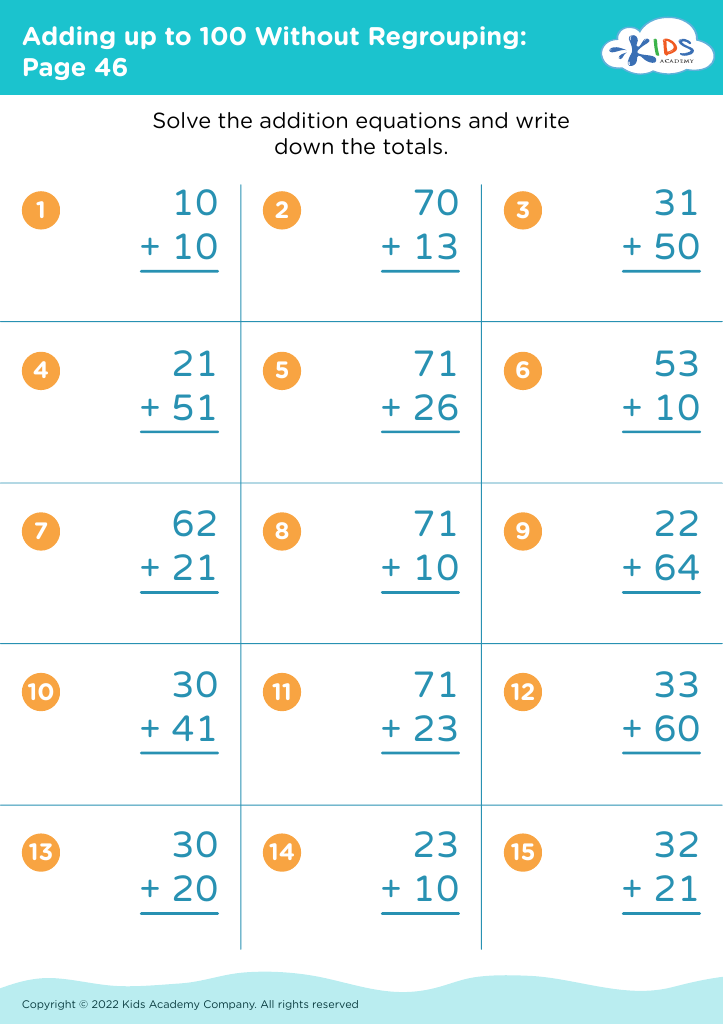
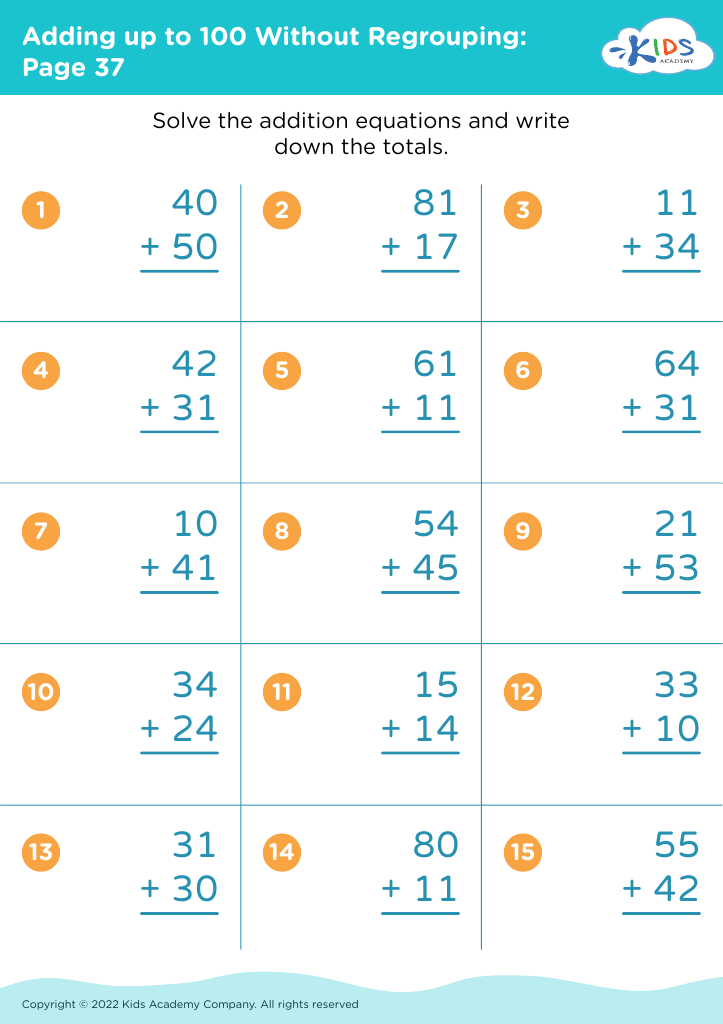
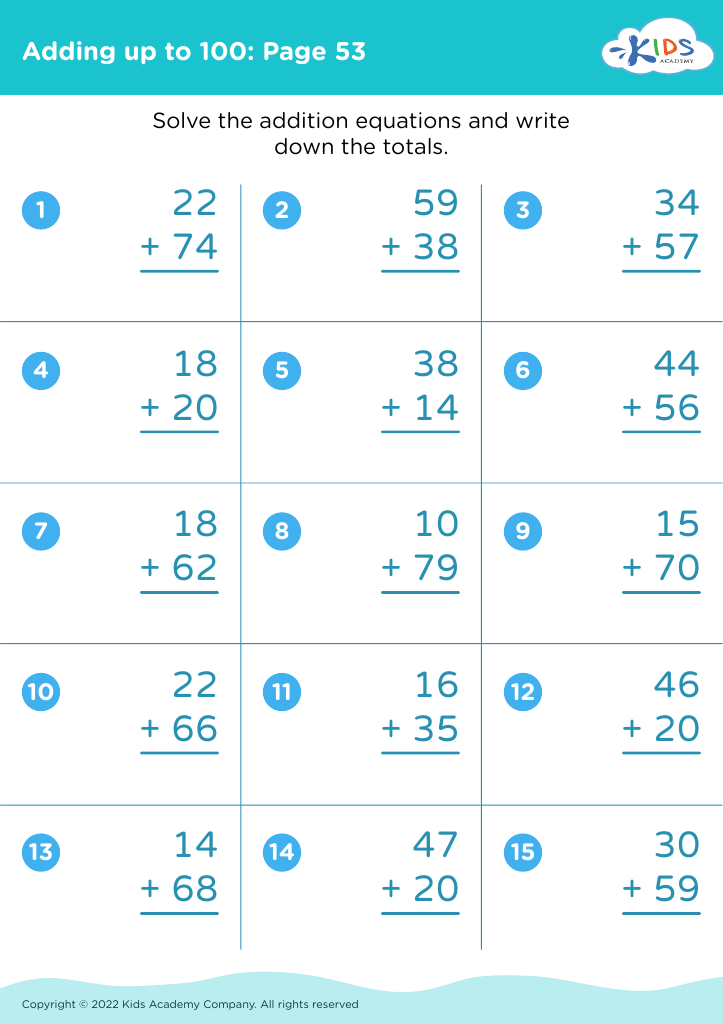
Enhance your child's problem-solving skills with our engaging "Adding Up to 100" worksheets designed for ages 5-7. These fun and interactive activities encourage critical thinking as kids explore various mathematical concepts. By solving addition problems and engaging with visual aids, young learners will develop a strong foundation in mathematics. Our worksheets not only help improve computational skills but also foster logical reasoning and boost confidence in problem-solving abilities. Perfect for home or classroom use, these resources provide an enjoyable way for children to master counting and addition while preparing them for future math learning. Start your child's journey to success today!






%20(1).jpg)
Enhancing problem-solving skills, particularly in the context of adding up to 100, is crucial for children aged 5-7. This early stage of development lays the groundwork for critical thinking and mathematical comprehension. By engaging in activities that promote mental agility with numbers, children strengthen their ability to analyze situations, identify solutions, and implement strategies.
For parents and teachers, fostering these skills is not just about math; it is about nurturing children who can face challenges with confidence. As children practice combining numbers to reach a total of 100, they learn to think logically, make connections, and develop perseverance when faced with difficulties. This understanding encourages a growth mindset, teaching them that challenges are opportunities for learning.
Moreover, these skills extend beyond academics. Children equipped with effective problem-solving abilities are better prepared for real-world scenarios, fostering resilience and adaptability. This makes education more relevant and prepares them for future complexities in life. By supporting and encouraging problem-solving skills in young learners, parents and teachers contribute to holistic development, helping children become confident, competent individuals capable of navigating both academic and everyday challenges.








