Following instructions Adding up to 100 Worksheets for Ages 5-7
4 filtered results
-
From - To
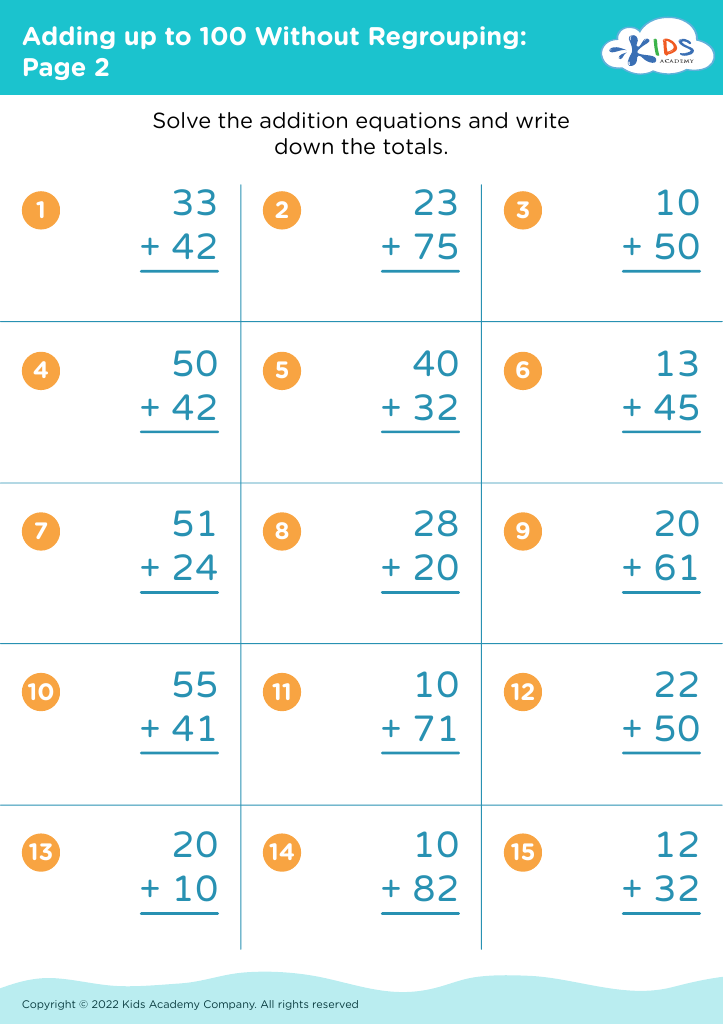
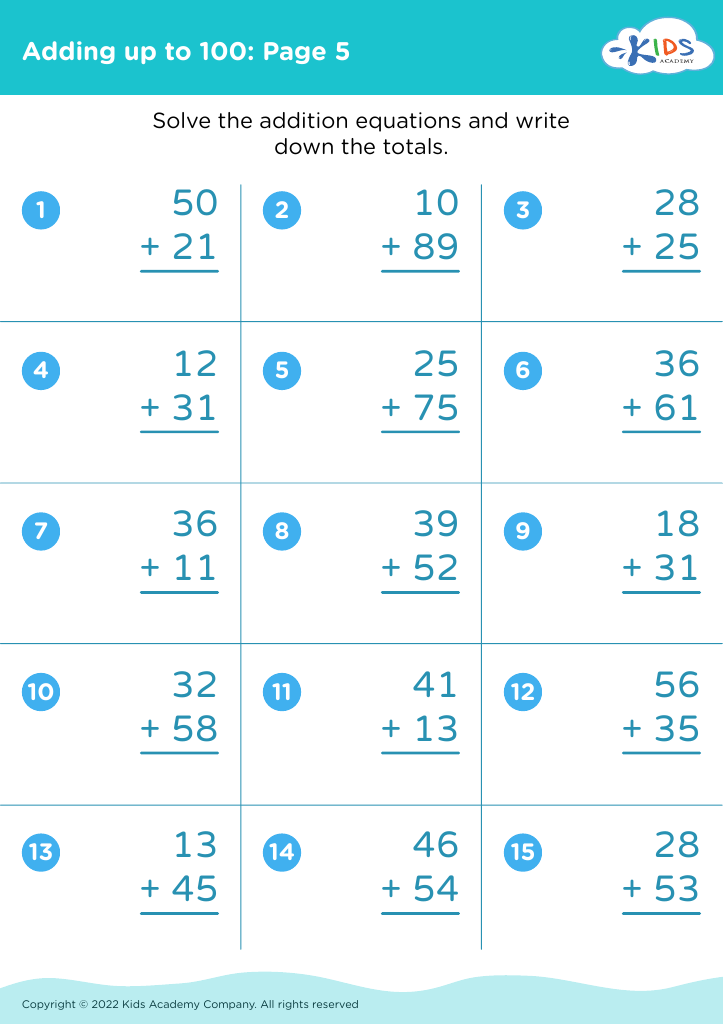
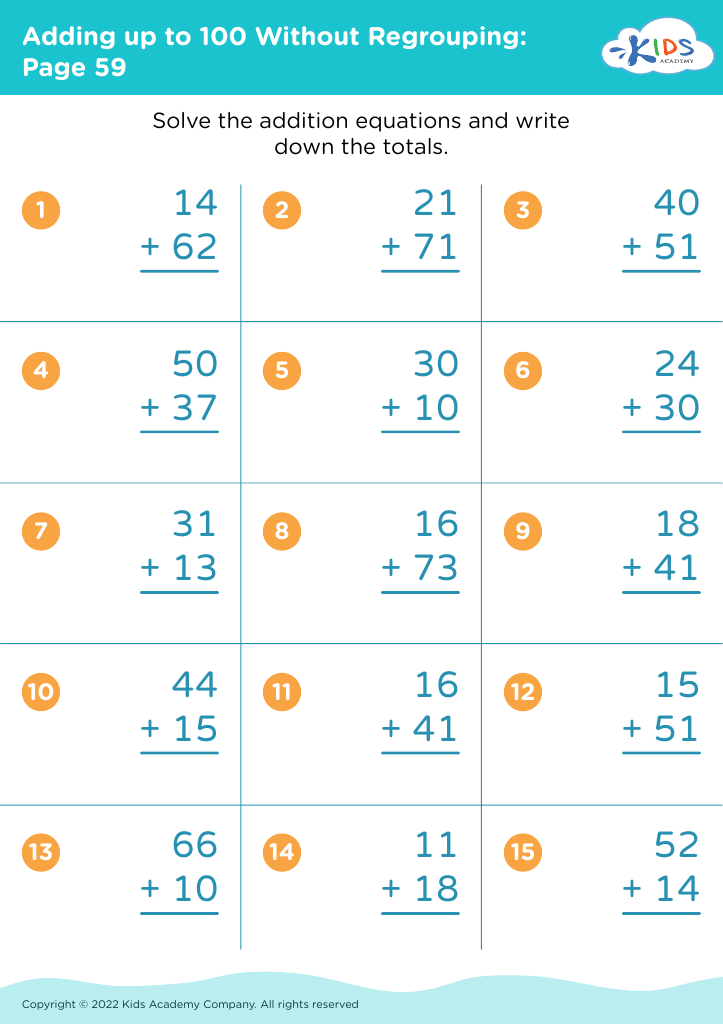
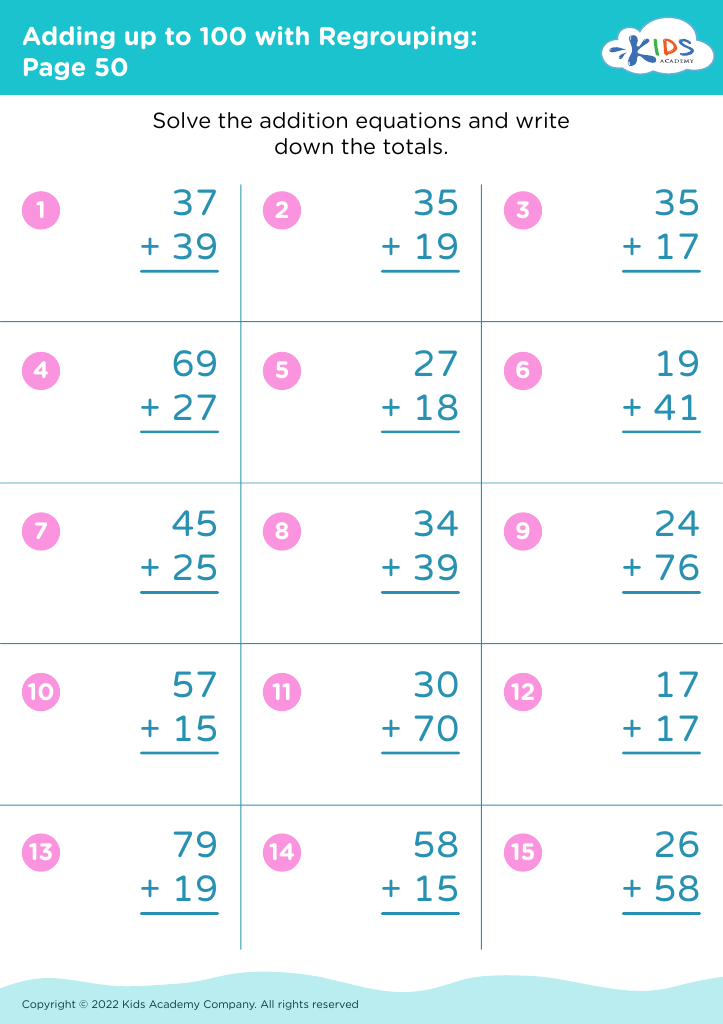
Our "Following Instructions Adding Up to 100 Worksheets" are meticulously designed for children aged 5-7 to sharpen their math skills. These engaging fun-filled worksheets guide young learners through the process of adding numbers up to 100 while teaching them to follow detailed instructions. By combining educational content with captivating exercises, our worksheets help kids develop logical thinking, concentration, and accuracy. Perfect for use in classrooms or at home, these printable resources promote a love of math and comprehensive learning experience. Set the foundation for your child's success in mathematics with our expertly crafted worksheets today!





%20(1).jpg)

Parents and teachers should prioritize teaching children ages 5-7 to follow instructions and perform basic math calculations like adding up to 100 due to its crucial role in their cognitive and social development. Firstly, following instructions is fundamental for classroom success and everyday activities. It helps children understand how to interact with others respectfully, complete tasks efficiently, and build a strong foundation for later, more complex learning. Young students who master following directions tend to exhibit better focus, self-control, and cooperation with peers and adults.
On the other hand, learning to add up to 100 enhances numeracy skills, which are essential for everyday problem-solving and future academic achievements. Basic math competence lays the groundwork for more advanced concepts in mathematics, such as multiplication and division. It also helps children develop logical thinking and boosts their confidence in handling numbers. Moreover, these skills are practical; children use them to count money, measure ingredients in recipes, or even estimate the time for completing tasks.
Together, these skills are not only pivotal for academic success but also for fostering independence, confidence, and the ability to navigate daily situations effectively. Therefore, a strong emphasis on these concepts benefits children's overall development and preparation for future challenges.








